Table of Contents >> Show >> Hide
- Start With a Clear Decorating Vision
- Prep the Tree Before You Decorate
- Decorate in the Right Order
- How to Choose a Color Scheme That Works
- Tree Decorating Tips for Small Spaces
- Common Christmas Tree Decorating Mistakes to Avoid
- How to Make the Tree Feel Personal
- Christmas Tree Decorating Experiences and Real-Life Lessons
- Conclusion
Note: Body-only HTML, ready for direct web publishing.
Decorating a Christmas tree sounds simple until you’re standing in the living room holding a tangled wad of lights, a ribbon spool that suddenly has opinions, and a box of ornaments that somehow contains both a glitter snowflake and a tiny pickle. The good news? A beautiful tree is not reserved for professional stylists or people who alphabetize their wrapping paper. With the right order, a smart color plan, and a little holiday confidence, anyone can create a tree that looks polished, warm, and full of personality.
If you’ve ever wondered how to decorate a Christmas tree without making it look like the decorations lost a wrestling match, this guide will walk you through the process step by step. From choosing a theme and fluffing the branches to layering Christmas tree lights, ribbon, ornaments, and the topper, you’ll learn how to build a tree that feels cohesive instead of chaotic. Whether you love a classic red-and-green look, a glamorous metallic style, or a sentimental family tree full of handmade treasures, the same decorating principles apply.
The secret is less about buying more stuff and more about using what you have with intention. Think of your tree like a well-dressed holiday guest: it needs a strong base, a few standout details, and enough sparkle to make an entrance without shouting, “I got dressed in the dark.”
Start With a Clear Decorating Vision
Before you hang a single ornament, decide what you want your Christmas tree to feel like. Not just look like, feel like. Cozy? Elegant? Nostalgic? Playful? Rustic? Modern? This simple step saves you from the classic holiday mistake of trying to make one tree do twelve jobs at once.
A helpful trick is to choose two or three descriptive words before you decorate. For example, your tree might be “classic, warm, and sentimental” or “minimal, natural, and airy.” Once you have that direction, your decorating choices become much easier. Ribbon, ornaments, garland, and even the tree skirt all start working together instead of competing for attention like cousins at a cookie exchange.
Popular Christmas Tree Style Ideas
A traditional Christmas tree usually leans into red, green, gold, plaid, and family ornaments. A modern tree may use black, white, metallics, or a restrained palette with sleek shapes. A rustic tree often includes wood ornaments, pinecones, burlap ribbon, dried orange slices, and natural textures. A whimsical tree might feature colorful ornaments, candy-inspired details, playful banners, and handmade decorations that do not take themselves too seriously. Frankly, neither should we.
If your home already has a strong design style, let the tree echo it. A farmhouse living room pairs beautifully with soft ribbon, warm lights, and earthy textures. A more glam space can handle shimmering ornaments, velvet ribbon, mirrored finishes, and dramatic picks. Matching the tree to the room helps it feel intentional rather than borrowed from another zip code.
Prep the Tree Before You Decorate
The biggest difference between a tree that looks professionally styled and one that looks a little tired is the setup. Real or artificial, your tree needs preparation before the decorations go on.
If you are using an artificial Christmas tree, fluff every branch. Yes, every branch. This part is not glamorous, but it matters. Spread the tips, separate flat sections, and shape the silhouette so the tree looks full from top to bottom. A rushed fluff job is basically the holiday version of leaving the house with one eyebrow done.
For a real tree, check the shape from several angles and place the fullest side toward the room. Rotate it until the tree looks balanced from your most common viewing spot. Once the tree is positioned, test the lights if it is pre-lit and make sure the stand feels stable before you get emotionally attached to the topper.
Make the Tree Look Fuller
If your tree has gaps, don’t panic. Many beautiful trees do. You can disguise thin areas by bending branches into empty spots, placing some ornaments deeper inside the tree, using ribbon to add movement, and layering in picks, faux greenery, berries, or pinecones. Visual depth is one of the best Christmas tree decorating ideas because it makes the tree feel rich without requiring an all-out shopping spree.
Decorate in the Right Order
One of the most useful answers to the question of how to decorate a Christmas tree is this: use a consistent order. It keeps the process organized and prevents you from redoing everything halfway through.
The best sequence is usually lights first, then ribbon or garland, then larger ornaments, followed by medium and smaller ornaments, and finally the topper and tree skirt or collar. That order helps you create layers instead of a surface-only look.
Step 1: Add Christmas Tree Lights
Lights create the foundation of the tree, so don’t treat them like an afterthought. If you want a glowing, dimensional look, weave the lights from the inside out rather than wrapping them only around the outer edge. This gives the tree depth and makes it sparkle from within, which is much more magical than a flat ring of light around the perimeter.
You can use warm white lights for a classic and cozy effect, multicolor lights for a nostalgic vibe, or a mix if your style leans playful. As you add them, step back every so often and squint. It sounds silly, but it helps you spot dark patches quickly. If a section looks gloomy, add more lights there.
If you prefer an easy approach, spiral the lights around the tree. If you want more control, divide the tree into visual sections and light each one evenly. Both methods work; the right one is the one that does not end with you muttering at a plug in festive frustration.
Step 2: Layer Ribbon or Garland
Ribbon and garland bring movement to a tree. They also help fill empty spaces and guide the eye around the design. If you’re using ribbon on a Christmas tree, avoid wrapping it too tightly like a candy cane. Instead, tuck it into the branches in soft loops or cascading sections. This creates a fuller, more elegant look.
Wide ribbon works especially well when you want a designer-style tree. Velvet ribbon adds richness, plaid feels classic, burlap reads rustic, and metallic ribbon can make even a simple tree feel dressed up. Garland works the same way but gives you a different texture. Beaded garland feels traditional, tinsel gives a vintage wink, and natural garlands made of wood beads, dried citrus, or felt shapes can make the tree feel unique.
If you can’t decide between ribbon and garland, use both, but keep the colors coordinated. Layering textures is beautiful. Layering chaos is a different holiday theme entirely.
Step 3: Hang the Largest Ornaments First
Start with statement ornaments and sentimental favorites. Put them in the most visible spots first so they don’t get crowded out later. Then place your larger ornaments around the tree, spacing them evenly. This creates balance and gives the eye anchor points.
A smart trick is to place some larger ornaments deeper inside the branches rather than hanging every piece at the tips. This creates depth and helps fill sparse areas. Then add medium ornaments, followed by smaller ones near the top and outer edges. The mix of size is what makes a tree feel collected and layered instead of flat.
If you’re working with a color palette, vary the finishes. Combine matte, shiny, glittered, glass, felt, velvet, wood, or ceramic pieces to create contrast. Trees look more interesting when they mix texture and scale, even if the colors stay tight.
Step 4: Add Picks, Sprays, and Finishing Details
This is the step that takes a tree from “nice” to “whoa, did you secretly hire someone?” Decorative picks and sprays can include faux berries, frosted branches, magnolia leaves, metallic stems, feathers, bells, or floral accents. Tuck them into the branches where the tree needs extra height, fullness, or sparkle.
Pinecones, cinnamon bundles, handmade ornaments, and dried citrus slices also work beautifully here. These details add charm and make the tree feel personal. They are especially useful if you want a tree that looks styled but not overly polished.
Step 5: Top It Off
The topper finishes the tree, so choose one that fits the overall look. A star or angel feels traditional, while oversized bows, sprays, sculptural branches, or clustered ribbon loops feel more modern or dramatic. Whatever you choose, secure it properly so it does not tilt like it has had too much eggnog.
Then finish the base with a tree skirt, basket, or collar. This step matters more than people realize. The bottom of the tree frames everything above it, and a polished base makes the whole setup look complete.
How to Choose a Color Scheme That Works
One of the easiest ways to make your Christmas tree look intentional is to limit your color palette. You do not need to ban variety, but giving yourself a focused scheme helps the tree feel cohesive. A good rule is to stick with two to four main colors, then repeat them across ribbon, ornaments, picks, and the base.
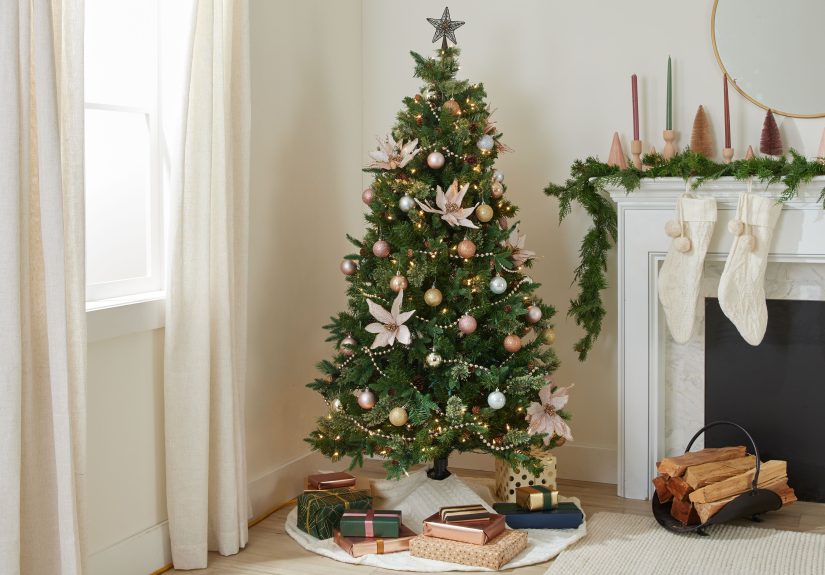
Classic combinations include red and gold, silver and white, blue and champagne, green and copper, or blush with rose gold. For a softer look, use creams, taupe, wood tones, and muted metallics. For a family tree full of collected ornaments, let one element pull it together, such as matching ribbon or consistent warm lighting.
If you love sentimental ornaments from every decade of your life, you do not need to hide them. Just give them a supportive cast. Neutral ribbon, clear lights, and a simple tree skirt can make an eclectic ornament collection look meaningful rather than messy.
Tree Decorating Tips for Small Spaces
Not every home has room for a soaring tree, and that’s okay. A smaller tree can still be stunning. In apartments, entryways, bedrooms, or home offices, tabletop trees and slim trees work beautifully. In fact, smaller trees often look more intentional because every decoration gets its moment.
Choose lightweight ornaments, use fewer but better decorations, and lean into one theme. A mini tree with velvet ribbon, tiny brass bells, and warm lights can look incredibly charming. You can also create multiple smaller trees throughout the house instead of putting all the holiday pressure on one giant evergreen in the corner.
If floor space is truly limited, wall-mounted tree shapes made from lights or garland can still deliver festive impact. They’re practical, creative, and a lot less likely to be knocked over by pets, toddlers, or one very enthusiastic uncle.
Common Christmas Tree Decorating Mistakes to Avoid
The first mistake is skipping the fluffing and setup stage. The second is adding ornaments before the lights. The third is trying to use every decoration you own at once. More is not always better. Better is better.
Another common issue is hanging all the ornaments at the same depth. Trees look more dimensional when some ornaments sit deep inside the branches and others hang at the edges. Also, avoid choosing ribbon, garland, ornaments, and topper separately without checking whether they share a visual language. A glamorous topper on a rustic tree can work, but only if the contrast feels deliberate.
Finally, don’t forget to step back. The tree may look balanced up close and completely lopsided from across the room. Every few minutes, walk away and look at the whole picture. Your eyes will catch uneven spots faster than your hands will.
How to Make the Tree Feel Personal
The best Christmas tree decorating ideas are the ones that reflect the people who live in the house. A beautiful tree can absolutely be stylish, but it should also feel human. Add handmade ornaments from your kids, vacation ornaments from memorable trips, heirloom decorations from grandparents, or quirky pieces that make everyone laugh.
You can even build a theme around your family’s interests. Book lovers might hang tiny books and paper stars. Bakers can use gingerbread ornaments and ribbon that looks like bakery twine. Music lovers can add brass bells and note-shaped ornaments. A tree does not have to look identical to a store display to be successful. Sometimes the best-decorated tree is the one that tells the clearest story.
Christmas Tree Decorating Experiences and Real-Life Lessons
Some of the best decorating wisdom does not come from a catalog photo. It comes from real life, where one strand of lights doesn’t work, the dog steals a felt ornament, and somebody in the family insists the ugly reindeer decoration is “part of the tradition now.” Those experiences are exactly what make Christmas tree decorating memorable.
One common experience is realizing that the tree you loved as a kid was probably not perfect at all. It just felt magical because everyone participated. Maybe the ornaments were uneven. Maybe the ribbon looked suspiciously improvised. Maybe the topper leaned slightly to the left for ten straight Decembers. But the tree still worked because it held meaning. That lesson matters: a well-decorated tree is not just balanced and beautiful, it also carries memory.
Another real-life lesson comes from people who switch from random decorating to decorating with a plan. The first year they choose a color palette and decorate in layers, the difference is dramatic. Suddenly the tree feels calm, intentional, and expensive even when many of the ornaments are old. This surprises a lot of people. They assume they need all new décor, when what they actually need is order, spacing, and restraint. Holiday miracle, but make it practical.
Families with children often discover that a two-zone tree is a lifesaver. The lower half can hold kid-friendly decorations, handmade ornaments, soft pieces, and anything with sentimental value. The upper half can carry the breakable glass ornaments, the fancy ribbon loops, and the things you don’t want used in a living-room soccer game. Everyone gets creative freedom, and the tree still looks polished from across the room.
People with pets learn quickly that decoration placement is strategic. Delicate ornaments move upward. Ribbon tails get tucked in tighter. Shiny pieces that resemble toys are used sparingly near the base. Cat owners, especially, become accidental design engineers by December 3. Oddly enough, those adjustments often improve the tree because they force you to edit and simplify.
There is also something special about the experience of decorating the tree a little at a time. Instead of doing everything in one whirlwind evening, some families fluff the tree on one day, add lights the next, and save ornaments for a slower night with music and snacks. That approach turns decorating into a season rather than a task. The tree becomes part of the holiday rhythm, not just another box to check.
And then there are the trees that tell a life story. The ornament from a first apartment. The handmade star from a school craft table. The souvenir from a honeymoon, a baby’s first Christmas, or a year when the budget was tight but the creativity was high. Those trees may not follow every design rule, but they often end up being the most beautiful because they feel deeply lived in.
So yes, learning how to decorate a Christmas tree the right way absolutely helps. A smart order, a clear style, and thoughtful layering can transform the whole room. But the final touch is always personality. The tree that gets remembered is rarely the one that looked the most expensive. It’s the one people gathered around, laughed near, photographed in front of, and quietly admired after the house had gone to sleep and the lights were the only thing glowing.
Conclusion
When you break it down, how to decorate a Christmas tree is really about three things: structure, style, and story. Start with a strong base, layer lights and ribbon with intention, distribute ornaments by size and depth, and finish with details that make the tree feel like yours. Whether your style is classic, modern, rustic, whimsical, or a joyful mash-up of all four, a beautiful Christmas tree comes together when every element has a purpose.
And remember, the goal is not perfection. The goal is a tree that lights up the room and makes people want to linger a little longer. If it also makes your living room smell like pine, cinnamon, and minor triumph, even better.