Table of Contents >> Show >> Hide
- 1) Planet Nine: The Solar System’s Alleged “Bigfoot”
- 2) Saturn’s Rings: Ancient Crown or Recent Smash-Up?
- 3) Saturn’s North-Polar Hexagon: Weather With a Geometry Degree
- 4) Jupiter’s Great Red Spot: Why Won’t It Quit (and Why Is It Shrinking)?
- 5) Uranus: A Planet on Its Side (and Still Not Acting Normal)
- 6) Venus: The Planet That Spins Backward and Can’t Keep Time
- 7) Mars Methane: Now You See It, Now You Don’t
- 8) Ocean Worlds: Enceladus’ Vents and Europa’s Ghost Plumes
- 9) Where Did Earth’s Water Come From (and Did Asteroids Deliver the Ingredients of Life)?
- 10) The Sun’s Hot Corona: Why Is the “Atmosphere” Hotter Than the Surface?
- Conclusion: The Solar System Is Familiar… Until You Look Closely
- Experiences: 10 Ways to Feel These Solar System Mysteries Up Close (About )
Our solar system has been taking scientists on a very expensive scavenger hunt for centuries. We’ve mapped planets, landed rovers, sampled asteroids, and flown probes so close to the Sun that their heat shields deserve their own holiday. And yet, the neighborhood still has secrets that make researchers shrug, argue politely in journals, and then ask for more funding.
Below are 10 confounding solar system mysteries that remain stubbornly unsolved (or only partially solved). Along the way, you’ll see why these puzzles matter to planetary science, how they shape future missions, and why “space mysteries” aren’t just clickbaitthey’re basically the fuel of discovery.
1) Planet Nine: The Solar System’s Alleged “Bigfoot”
Somewhere far beyond Neptune, a hypothetical world nicknamed Planet Nine may be tugging on distant icy objects like an unseen puppet master. The idea: several odd, elongated orbits in the Kuiper Belt look “clustered,” as if something massive is shepherding them. NASA notes the planet is still theoretical, with estimates often described as several Earth masses and an orbit that could take many thousands of years.
What makes it confounding
The same patterns could also be explained by observational bias (we notice what’s easiest to detect), or by the combined gravity of many small objects. In other words: it might be a planet… or it might be the universe messing with our statistics. Either way, the hunt continuesand the outer solar system keeps its poker face.
2) Saturn’s Rings: Ancient Crown or Recent Smash-Up?
Saturn’s rings look clean and bright, which once led many scientists to suspect they’re relatively young. But newer modeling argues the “cleanliness” might be misleadingmicrometeoroid impacts can behave in ways that don’t necessarily dirty the rings as quickly as assumed. Meanwhile, NASA research also shows Saturn is actively losing ring material through “ring rain,” where icy particles and charged water-related material spiral down into the planet.
What makes it confounding
Put simply: we’re not sure when the rings formed or exactly how long they’ll last. Are they an ancient relic from the solar system’s early chaos, or a comparatively recent cosmic fender-bender? Saturn is gorgeous, but it’s also quietly littering.
3) Saturn’s North-Polar Hexagon: Weather With a Geometry Degree
Saturn has a massive hexagon-shaped jet stream at its north polean atmospheric pattern first glimpsed decades ago and later studied in detail by the Cassini mission. NASA describes it as a long-lived, rotating feature that still isn’t fully explained, despite years of data that answered some questions and raised new ones.
What makes it confounding
Nature usually doesn’t do straight linesyet Saturn’s clouds seem to love six crisp sides. The leading ideas involve waves and wind-speed gradients that can “lock” a polygon into place. But the full recipewhy it formed, why it persists, and how deep it goesremains one of the coolest unsolved problems in planetary atmospheres.
4) Jupiter’s Great Red Spot: Why Won’t It Quit (and Why Is It Shrinking)?
Jupiter’s Great Red Spot is the celebrity storm of the solar system: huge, swirling, and photogenic. But it’s also changing. NASA reports observations showing the Spot has shrunk dramatically compared with past measurements, continuing a long-term trend that’s been tracked for decades.
What makes it confounding
A storm lasting for centuries already feels like cheating. A storm that lasts for centuries while changing size and shape is basically taunting us. Scientists are still working to pin down how the Spot maintains itself, what energy sources feed it, and whether interactions with smaller storms help keep it goingor slowly drain it like a planetary battery.
5) Uranus: A Planet on Its Side (and Still Not Acting Normal)
Uranus famously rotates “sideways,” with an extreme axial tilt that makes its seasons… dramatic. But the real head-scratcher has been its energy budget. For years, Uranus seemed oddly faint in internal heat compared with Neptune. More recent analyses (including NASA-associated work) suggest Uranus may be warmer than previously thought, and JPL has also highlighted how the Voyager 2 flyby likely occurred during unusual solar wind conditions that skewed our understanding.
What makes it confounding
The tilt hints at a violent pastpossibly a giant impact or a sequence of gravitational shoves. The heat puzzle hints at missing pieces in how ice giants form and evolve. And because Uranus-like planets may be common in other planetary systems, solving Uranus helps us interpret exoplanets, not just our own oddball.
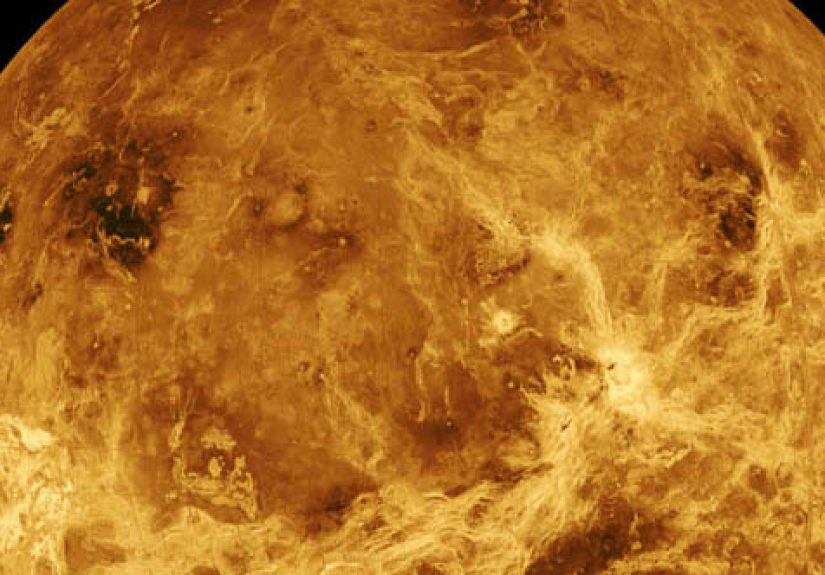
6) Venus: The Planet That Spins Backward and Can’t Keep Time
Venus rotates retrograde (opposite most planets) and does it so slowly that a Venus day is famously longer than its year. NASA’s Venus facts lay out the mind-bending basics: sunrise on Venus would come from the “wrong” direction, and the timeline of day and night is wildly different from Earth’s.
What makes it confounding
Venus isn’t just slowit’s inconsistent. Observations comparing decades of data suggest Venus’ rotation rate (and thus length of day) can vary over time. Explanations range from atmospheric forces to internal dynamics and tidal effects, but no single story wraps everything into a neat bow. Venus is like a broken clock that refuses to even be wrong the same way twice.
7) Mars Methane: Now You See It, Now You Don’t
Methane on Mars is the ultimate “wait, what?” gas because it can be linked to geologyor lifedepending on its source. NASA has described how methane detections can appear near the surface and then vanish in broader atmospheric measurements, potentially due to daily mixing cycles that dilute the gas above certain altitudes.
What makes it confounding
Different instruments have reported different results: spikes here, silence there. If methane is being produced today, something is making itand something is also destroying or hiding it fast. The mystery isn’t just “is there methane?” but “why does Mars treat methane like a magic trick?”
8) Ocean Worlds: Enceladus’ Vents and Europa’s Ghost Plumes
If you want a real sci-fi vibe, look at the icy moons. NASA’s Cassini findings point to hydrothermal activity on Enceladus, supported by evidence consistent with hot water interacting with rock beneath the ice. Meanwhile, Hubble observations have suggested possible water vapor plumes on Europa that may erupt intermittently, potentially lofting material from a subsurface ocean into space.
What makes it confounding
Plumes are the dream: they could let spacecraft “taste” an ocean without drilling through ice. But Europa’s plume evidence has been tricky and inconsistent, and Enceladus’ chemistry raises fresh questions about energy sources and long-term stability. These aren’t just mysteriesthey’re mission magnets.
9) Where Did Earth’s Water Come From (and Did Asteroids Deliver the Ingredients of Life)?
Earth is wet. The solar system is mostly not. That mismatch has fueled decades of debate about whether water arrived via asteroids, comets, internal outgassing, or some combination. NASA has highlighted evidence linking comet and asteroid materials to Earth’s oceans, and sample-return science keeps sharpening the picture.
What makes it confounding
NASA’s analysis of OSIRIS-REx material from asteroid Bennu reported carbon-rich content and evidence of water-related componentsexactly the kind of chemistry that makes researchers wonder how much early Earth “ordered delivery” from space. The big mystery isn’t whether impacts happenedthey did. It’s how the proportions worked out and how chemistry scaled from “ingredients” to “life.”
10) The Sun’s Hot Corona: Why Is the “Atmosphere” Hotter Than the Surface?
The Sun’s outer atmosphere (the corona) is vastly hotter than the visible surface. That’s backwards in the way that makes thermodynamics roll its eyes. NASA has explained leading suspects like magnetic reconnection (including small-scale “nanoflares”) and wave-driven heating. Parker Solar Probe has helped by flying through regions we used to only theorize about, gathering data at record-breaking distances.
What makes it confounding
Multiple mechanisms may be working at once, and the corona is a complicated, magnetically tangled place. Each new dataset answers one question and spawns three more, which is either frustratingor the most honest definition of “science” you’ll ever hear.
Conclusion: The Solar System Is Familiar… Until You Look Closely
The big lesson from these mysteries of our solar system is that “known” and “understood” are not the same thing. We can photograph Saturn’s hexagon and still debate its physics. We can watch Jupiter’s Great Red Spot shrink and still argue about its life cycle. We can detect hints of water worlds and still not know how often they vent their secrets into space.
That’s the fun part. These puzzles guide where NASA and other organizations aim their next missions, what instruments get built, and how we interpret planets beyond our own. The solar system isn’t done surprising usand honestly, it would be rude if it stopped now.
Experiences: 10 Ways to Feel These Solar System Mysteries Up Close (About )
You don’t need a billion-dollar probe to “experience” solar system mysteries. You just need curiosity, a little patience, and a willingness to be impressed by things that look like dots until you learn what they are. Start with the easiest win: spend one evening tracking the planets with a free sky app. The first time you realize that bright “star” is actually Jupiterand that its light left the planet roughly 30–50 minutes agoyou’ll feel the scale of the solar system in your chest.
Next, pick one mystery and follow it like a TV series. For example: make Mars methane your “weekly drama.” Read a short update, learn one new term (like “atmospheric mixing”), and watch how evidence evolves. Science is less “big reveal” and more “season finale cliffhanger,” and you get to watch the writers’ room in real time.
If you have access to a small telescope (or a local astronomy club), aim it at Saturn. Seeing the rings with your own eyestiny, bright, unmistakably ring-shapedturns the “how old are they?” debate from abstract to personal. You’ll also understand why people have been obsessed for 400 years. Saturn does not photograph like a lie.
Want a Venus experience without the 900°F hospitality? Try observing Venus at different times over a few months and note its phase (yes, like the Moon). The “planet that spins backward” will still look like a brilliant bead of light, but now you’ll know it’s hiding a rotational identity crisis under those clouds. That’s the fun: ordinary-looking objects become weird once you learn their biography.
For Jupiter’s Great Red Spot, use high-quality public images and compare them across years. You can literally watch a centuries-old storm change shape. It’s like time-lapse weather on a world that has no solid ground under its cloudsjust deeper clouds, more pressure, and even more reasons to question your life choices.
For the Sun’s corona mystery, try safely viewing solar activity through reputable live feeds or community observatories (never look directly at the Sun without proper protection). Pay attention to terms like “magnetic reconnection” and “solar wind,” and you’ll start to see how the corona isn’t just an academic puzzleit affects space weather, satellites, and power grids.
Finally, make it social. Go to a planetarium show, join a star party, or hop into a space livestream. These mysteries feel biggerand more realwhen you’re hearing other humans react to them in real time. The solar system is confusing, yes. But it’s also an open invitation: come look closer.