Table of Contents >> Show >> Hide
- What “Might Have Looked Radically Different” Really Means
- 1) Washington Monument The Unbuilt “Temple” Base
- 2) Empire State Building The Airship Terminal That Never Was
- 3) Golden Gate Bridge Almost Not a Suspension Bridge
- 4) The Pentagon A Different Site Could’ve Changed the Shape
- 5) One World Trade Center The Spire That Sparked a Identity Crisis
- 6) Notre-Dame Cathedral A Restoration Crossroads After the Fire
- 7) Sagrada Família The “Finish Line” Keeps Moving
- 8) Eiffel Tower The “Temporary” Landmark That Almost Vanished
- 9) Statue of Liberty The Earlier Concept That Pointed Somewhere Else
- 10) Sydney Opera House If the Original Vision Had Stayed in Charge
- What These Almost-Alternate Icons Have in Common
- How to Enjoy the “What-If” Versions When You Visit
- Experience Section: Walking Through the Architectural Multiverse (Extra )
Iconic buildings feel inevitablelike the skyline always meant to look that way, and your camera roll was destined to include that exact angle.
But architecture is basically a long-running series of “Wait, can we afford that?” meetings, mixed with politics, weather, engineering reality checks,
and the occasional “The public is not ready for this yet” panic.
In other words: many famous structures you think you know had alternate designs, abandoned features, or near-misses that could’ve changed their look
in a big, headline-grabbing way. Some were cut for budget. Some were changed for safety. Some were altered after a disaster. And some were simply
reined in because a grand idea met a stubborn thing called physics.
What “Might Have Looked Radically Different” Really Means
This isn’t about tiny tweaks like swapping one window style for another. These are the “alternate-universe” changes: a missing base that would’ve made
a monument look like a whole different building; a spire that sparked a global debate over whether it was art or just… equipment; a bridge that nearly
wasn’t a suspension bridge at all. Think early blueprints, competition entries, restoration crossroads, and “value engineering” decisions that quietly
reshape history.
1) Washington Monument The Unbuilt “Temple” Base
Today, the Washington Monument is the definition of clean and minimal: a giant obelisk that looks like it was designed by someone who loves
straight lines and hates clutter. But early plans imagined something much more theatricalan ornate base with a circular colonnade and monumental
sculpture. Picture a classical “temple” wrapped around the bottom, turning the site into an architectural event, not just a tall point on the map.
Funding and practicality pushed the project toward a simpler obelisk. The result is timeless, but it’s also a reminder that “iconic” sometimes means
“the version we could actually finish.”
2) Empire State Building The Airship Terminal That Never Was
The Empire State Building is already a flex. But for a moment, it was trying to be a flex with parking. The spire was conceived with the idea that
airships could dock thereyes, like a floating bus pulling into a station 1,000+ feet above Manhattan.
High winds and real-world logistics quickly ruined the party. The airship-terminal dream faded, and the spire became what it’s famous for today:
a dramatic crown and a broadcasting powerhouse. Still, imagine the skyline if blimps routinely “parallel parked” at the top. Manhattan traffic would
have extended into the clouds… and somehow still been late.
3) Golden Gate Bridge Almost Not a Suspension Bridge
The Golden Gate Bridge looks so perfectly “Golden Gate Bridge” that it’s easy to assume the design was obvious from day one. It wasn’t. Early concepts
included a different structural approach, and the bridge’s final elegance came after debate, refinement, and the realization that aesthetics matter
when you’re building a world-famous landmark in one of the most photographed places on Earth.
Even the look we take for grantedlike the signature International Orangewas the product of deliberate study. A different structural choice or a
more “invisible” color strategy would have changed not just the bridge’s style, but how it reads against ocean, fog, and hills.
4) The Pentagon A Different Site Could’ve Changed the Shape
The Pentagon’s five-sided form is so famous it’s practically its own logo. But that shape wasn’t born purely from symbolismit was tied to the
geometry of the original proposed site. As planning evolved and the location shifted, the pentagon concept stayed, becoming more refined and
“purely geometric” over time.
In an alternate timeline, a different site geometry might have encouraged a different footprint altogetherless instantly recognizable, less
“pentagon-shaped,” and maybe one fewer trivia question on every U.S. history quiz.
5) One World Trade Center The Spire That Sparked a Identity Crisis
One World Trade Center was designed to be a symbolic anchor for Lower Manhattan, and its uppermost structure became a surprisingly emotional issue:
was it an architectural spire (part of the intended design), or an exposed antenna (more “utility” than “poetry”)?
Earlier plans envisioned a sheathed, sculptural capmore seamless, more finished. Later changes simplified the top, and the building’s silhouette
shifted with it. It’s a great example of how a “small” change at the very top can reframe the identity of the entire tower from miles away.
6) Notre-Dame Cathedral A Restoration Crossroads After the Fire
After the 2019 fire, Notre-Dame became more than a restoration projectit became a question: rebuild exactly as it was, or reimagine parts of it for
the 21st century? The debate wasn’t just theoretical; proposed concepts ranged from contemporary spires to modern roof ideas that would have visibly
announced “new era.”
Ultimately, the push centered on restoring the cathedral’s familiar profile, including the spire form people recognize from postcards and movie shots.
Still, that brief window of uncertainty shows how even a centuries-old icon can end up at a fork in the road.
7) Sagrada Família The “Finish Line” Keeps Moving
The Sagrada Família is famous partly because it’s unfinished, which is a very bold branding strategy when your construction timeline spans generations.
But what’s especially “alternate-universe” here is how completion depends on modern engineering, funding cycles, and unresolved urban-planning conflicts.
Additions and finishing elementsespecially major access planscould change how the basilica meets the city around it. The building’s look is tied not
only to Gaudí’s vision, but also to what today’s Barcelona will actually allow to be built around it.
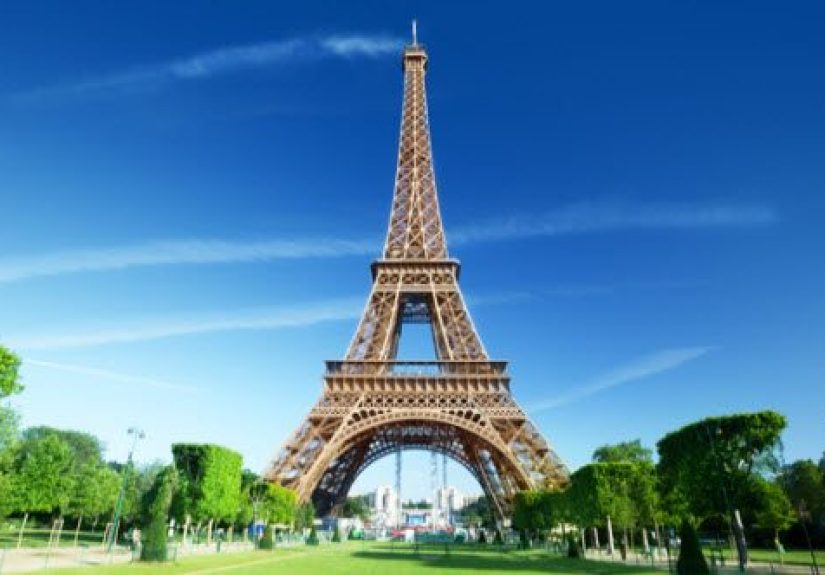
8) Eiffel Tower The “Temporary” Landmark That Almost Vanished
The Eiffel Tower is the ultimate “How is this not permanent?” structureyet it was once expected to be temporary, with plans that it could be dismantled
after a limited term. If that had happened, Paris would’ve lost one of the most recognizable silhouettes on Earth.
Instead, the tower proved usefulespecially for communicationsturning a potential teardown into a long-term keep. It’s a reminder that sometimes
the thing that saves an icon isn’t romance or tradition; it’s practical value. (Nothing says “stay forever” like being helpful.)
9) Statue of Liberty The Earlier Concept That Pointed Somewhere Else
Lady Liberty feels inseparable from New York Harbor. Yet the creative lineage behind the statue includes earlier concept work that wasn’t originally
aimed at the same setting or message. Early ideas explored a monumental torch-bearing figure in a different contextmore “beacon” than “immigration-era
symbol.”
Even within the Statue of Liberty’s own story, design decisions mattered: details of posture, styling, and symbolism could have pushed the final
impression in a more overtly classical directionor toward something that read as a completely different cultural statement.
10) Sydney Opera House If the Original Vision Had Stayed in Charge
The Sydney Opera House is a global icon of modern expressionist designbut the building’s story includes conflict, budget blowouts, and major interior
changes after its architect, Jørn Utzon, departed the project. The exterior “sails” still define the landmark, but interior layouts and performance
functionality evolved in ways that shaped how the building works and feels inside.
In the “what if” versionwhere the original vision remained fully intactthe Opera House might have offered a more unified, consistent relationship
between its sculptural exterior and its performance spaces. The building we got is stunning; the building that might have been is one of architecture’s
most famous sliding-doors moments.
What These Almost-Alternate Icons Have in Common
- Budget is the invisible architect. Grand bases, sculptural cladding, and complex features often lose to cost.
- Engineering grows up fast. Concepts that look great on paper can get humbled by wind, weight, materials, and maintenance.
- Public opinion is real power. Especially during restorations or memorial projects, “what people expect to see” matters.
- A tiny decision can change the whole silhouette. Spires, colors, and base treatments can rewrite a structure’s identity.
- Time creates second drafts. Fires, renovations, new technology, and changing city needs create new design chapters.
How to Enjoy the “What-If” Versions When You Visit
If you want to spot the ghost of an alternate design, look for these:
- Visitor centers and museum exhibits: They often display early models, competition drawings, and “before it was simplified” concepts.
- Plaques and timelines: The best ones mention redesigns, pauses, political drama, and “plan B” moments.
- Guided tours: Docents love a good “here’s what almost happened” storybecause it’s the human part of architecture.
- Your own perspective shift: Stand far away, then move close. The “big idea” reads from a distance; the compromises show up in details.
Experience Section: Walking Through the Architectural Multiverse (Extra )
There’s a special kind of fun in seeing a famous structure in person and realizing you’re looking at a final draftnot the only draft. The experience
isn’t just “Wow, that’s tall” or “That’s prettier than the photos.” It’s the mental click when you learn the building had a rival design, a missing
component, or a moment where history almost took a different turn.
Start with the way your brain reacts to an icon you’ve seen a thousand times on screens. The first sight is usually a recognition rush: “Ohthere it is.”
But the second wave is where the alternate-history perspective kicks in. You imagine the Washington Monument with a massive colonnaded base that turns the
site into something like a ceremonial campus. You picture the Empire State Building with airship passengers stepping out into the wind, clutching their hats,
praying their luggage doesn’t become a tiny falling object of doom.
Some of the best “what-if” experiences happen indoorswhere models and drawings live. When you see an early concept sketch, you feel how bold the original
intent was, before budgets and politics trimmed it into something buildable. It can change the way you read the finished structure. The Golden Gate Bridge,
for example, stops being “just a bridge” and becomes a curated visual event: form, color, and landscape working together because someone cared how it looked
in fog and sunlight, not just whether it could carry traffic.
Restoration crossroads bring a different flavor of experience: the tension between memory and reinvention. With places like Notre-Dame, you can practically
feel the debate in the airshould an icon show its scars and evolve, or return to a familiar shape that reassures the world it’s still itself? When you
stand near a rebuilt landmark, the emotional impact isn’t only in the stone and timber; it’s in the collective decision behind it. That decision becomes
part of what you’re “visiting.”
And then there are the living projectsstructures like the Sagrada Famíliawhere your experience includes time itself. You’re not just touring a building;
you’re watching a long narrative unfold. The cranes, scaffolds, and newly completed elements aren’t distractions. They’re the story. You leave with a strange
feeling that your photos captured a temporary version of a future iconlike you accidentally visited a landmark mid-transformation and got a limited-edition
view.
If you want to lean into this mindset, try a simple ritual the next time you visit a major structure: spend one minute looking at it as it is, then one
minute imagining it as it almost was. Ask yourself what changedmoney, safety, public taste, technology, tragedy, ego, timeand whether the final version is
better, or just more survivable. That’s the real thrill of iconic architecture: it isn’t frozen perfection. It’s the version of a bold idea that made it
through reality and still managed to look legendary.