Table of Contents >> Show >> Hide
Yellow flowers in the garden can feel a little sneaky. One minute you think, “Aw, that’s cheerful,” and the next minute you realize the cheerful little trespasser has colonized the lawn, elbowed your tomatoes, and made itself very comfortable between patio stones. If that sounds familiar, welcome to the annual game of Is it a wildflower or a weed?
The truth is, plenty of common weeds with yellow flowers are easy to mistake for something harmless, especially in spring and early summer when everything looks fresh, innocent, and deeply committed to photosynthesis. Some grow low and hug the ground. Others shoot up like they pay rent. A few are merely annoying. A few are aggressive. And one or two deserve a respectful amount of side-eye and long sleeves.
This guide breaks down 13 weeds with yellow flowers you may spot in your yard, lawn, flower beds, or vegetable garden this year. Along the way, you’ll learn how to identify them, where they tend to show up, and what makes each one a nuisance. Because weed control starts with weed identification, not with panic-weeding everything yellow in sight.
Why yellow-flowered weeds are so easy to miss
Many yellow flowering weeds blend into the landscape because they mimic useful or familiar plants. Some resemble clover. Some look like miniature daisies. Some have rosettes that sit quietly until they bloom. Others only become obvious after they’ve already set seed and invited the whole extended family over.
That is why the best approach is to look beyond the flower color. Check the leaves, stems, growth habit, and root system. A single yellow bloom does not tell the whole story. In the weed world, details matter.
13 weeds with yellow flowers to watch for this year
1. Dandelion
Dandelion is the celebrity weed of suburban America. Everyone knows the bright yellow flower, but fewer people pay attention to the clues that matter most: a basal rosette of jagged leaves, hollow flower stalks, and that fluffy white seed head that sends offspring into the zip code next door.
If you spot a single yellow flower on a leafless stalk, there is a good chance it is dandelion. It thrives in lawns, planting beds, sidewalk cracks, and any patch of soil that looks mildly available. The long taproot makes it frustrating to remove by hand unless you get the whole thing out. Miss a chunk of root, and congratulations, you may be gardening with dandelion again next week.
2. Yellow Woodsorrel
Yellow woodsorrel is one of the most commonly misidentified weeds in gardens and lawns. At first glance, it looks a lot like clover. But look closer and you’ll notice the heart-shaped leaflets. That tiny difference is the botanical version of a fake mustache.
This weed produces delicate yellow flowers and often pops up in beds, containers, and disturbed soil. It can spread by seed with surprising enthusiasm, and mature seedpods can fling seeds away from the parent plant. In other words, it is not just growing; it is launching a franchise.
3. Black Medic
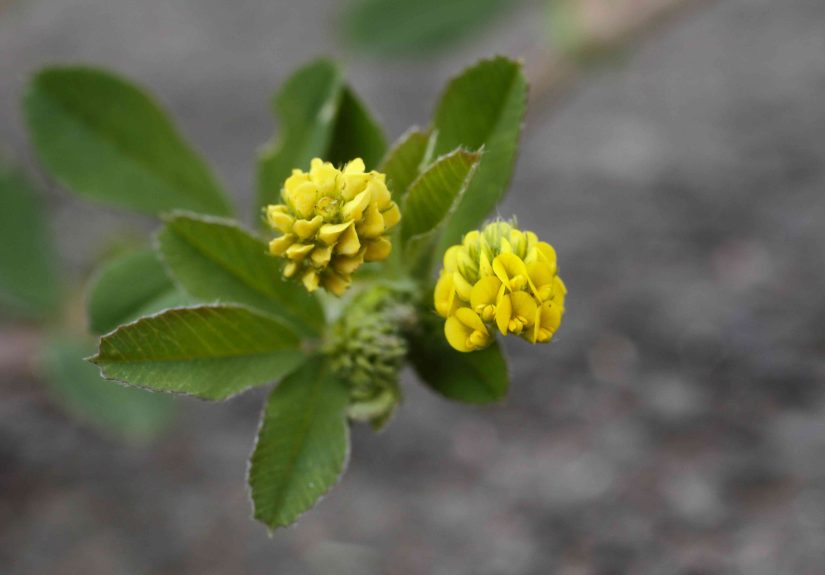
Black medic also gets mistaken for clover, but its yellow flower clusters and slightly different leaflet shape help separate it from the crowd. It often appears in thin, dry, low-fertility turf and compacted garden edges.
In lawns, black medic is often less a random invader and more a sign that the turf is stressed. It sprawls low, forms small yellow blooms, and later develops dark seedpods. If your grass is struggling and black medic is thriving, the weed is basically holding up a sign that says, “Your lawn has issues.”
4. Common Catsear (False Dandelion)
Common catsear, also called false dandelion, is a classic look-alike. It has a basal rosette and yellow flowers, but unlike true dandelion, it often produces branched stems with multiple flower heads. Its leaves are usually hairy, which makes it look a bit rougher and less polished than its famous cousin.
Catsear is often found in lawns, pastures, and neglected beds. If your “dandelion” has fuzzy leaves and branching stems, you may be dealing with catsear instead. Think of it as the indie version of dandelion: similar vibe, more texture.
5. Hawkweed or Hawksbeard
Hawkweed and hawksbeard species can show up as bright yellow troublemakers in lawns and open garden spaces. They often have hairy leaves, dandelion-like blooms, and a tendency to spread where turf or groundcovers are weak.
Some types stay in rosettes close to the ground, while others send up taller flowering stems. Because these weeds can resemble dandelions at a glance, gardeners sometimes ignore them until patches become obvious. By then, the weed has already settled in and filed for permanent residency.
6. Buttercup
Buttercup sounds charming because, frankly, it has good branding. In the wrong place, however, it can be a stubborn perennial weed. Many buttercups produce shiny yellow flowers and prefer moist or poorly drained areas, though some species can also survive in thin turf or rough garden ground.
If you have yellow flowers on somewhat hairy stems and the plant seems happiest in damp conditions, buttercup is a strong suspect. In lawns and borders, it spreads fast enough to become more than a cute spring cameo.
7. Lesser Celandine
Lesser celandine is the kind of plant that looks innocent right up until it takes over. It blooms early in spring with glossy yellow flowers and forms dense mats of shiny leaves. In a woodland edge or shady ornamental bed, it can spread aggressively and crowd out other plants.
This one is especially tricky because it appears before many desirable plants wake up for the season. By the time you admire the cheerful yellow flowers, it may already be knitting itself into the soil with bulblets and tubers. Pretty? Yes. A problem? Also yes.
8. Prickly Lettuce
Prickly lettuce tends to announce itself vertically. It starts with a basal rosette, then bolts into a tall, awkward plant with yellow, dandelion-like flowers. One of the key identification features is a row of prickles along the underside of the leaf midrib.
It often appears in disturbed ground, fence lines, vegetable plots, and dry corners of the yard. If a weed looks like lettuce that has had a bad attitude for several months, prickly lettuce is a likely match.
9. Sowthistle
Spiny sowthistle and perennial sowthistle both produce yellow composite flowers and release fluffy seeds that drift on the wind. They are often upright, milky-sapped weeds with clasping leaves that can look glossy or prickly depending on the species.
These weeds are very good at showing up where you did not ask for height. Beds, borders, cracks, and vegetable gardens are all fair game. If you let them mature, the seedheads disperse quickly, which is nature’s way of saying, “See you everywhere soon.”
10. Common Purslane
Common purslane is low, spreading, and succulent, with thick stems and fleshy leaves. Its yellow flowers are small, but the mat-forming habit makes it easy to notice once it gets going. It loves heat, open soil, and vegetable gardens where you’ve recently disturbed the ground.
Purslane is one of those weeds that looks almost too juicy to be troublesome, but it is persistent and prolific. Pulling it after seed set is a losing game, and fragments can sometimes survive long enough to make you regret your optimism.
11. Yellow Nutsedge
Yellow nutsedge is technically a sedge, not a grass, which is one reason it survives so many attempts at casual lawn management. It has yellowish to straw-colored flower spikelets, bright green leaves, and a triangular stem. That triangular stem is a big clue. If you roll it between your fingers and it feels like geometry, you are probably dealing with nutsedge.
It thrives in wet or poorly drained soil and often grows faster than surrounding turf. In garden beds, it can weave through mulch and ornamental plantings with maddening confidence.
12. Wild Parsnip
Wild parsnip is not the weed to handle casually. It produces yellow flower umbels and can grow tall along edges, rough ground, and neglected garden margins. The major issue is not just competition with other plants. The sap can cause severe skin irritation and blistering when combined with sunlight.
If you see a tall weed with umbrella-shaped yellow flower clusters, do not yank first and ask questions later. Correct identification matters here. This is the weed equivalent of a plant that looks at you and says, “Touch me and learn a lesson.”
13. Cinquefoil
Cinquefoil species can creep through lawns and garden spaces, producing small yellow five-petaled flowers. Some spread by stolons and hug the ground, which makes them easy to miss until they form patches.
They often appear in lower-fertility soils and thinned turf. Because the flowers are relatively small and cheerful, gardeners sometimes ignore them at first. That works out great for the cinquefoil and less great for everyone else.
How to tell similar yellow weeds apart
If several of these sound annoyingly similar, that is because they are. Here are a few quick distinctions that can save you a lot of mistaken pulling:
Dandelion vs. catsear: dandelion usually has one flower per hollow stalk, while catsear often has branched stems and hairy leaves.
Yellow woodsorrel vs. black medic: woodsorrel leaflets are heart-shaped, while black medic has more typical trifoliate leaflets and clustered yellow blooms.
Prickly lettuce vs. sowthistle: both can be tall with yellow flowers, but prickly lettuce often has prickles on the underside of the leaf midrib.
Grass vs. yellow nutsedge: nutsedge has a triangular stem and grows fast in wet soil.
Buttercup vs. lesser celandine: both have yellow flowers, but lesser celandine forms glossy low mats early in spring, while buttercups often have more upright habits depending on species.
What yellow weeds may be telling you about your garden
Weeds are not just pests. They are also clues. Black medic and cinquefoil often show up where turf is weak or soil fertility is low. Nutsedge points to drainage issues. Purslane loves hot, open, disturbed soil. Woodsorrel often appears in beds, containers, and fertile garden spaces where light reaches bare soil.
That means the best weed strategy is not just removal. It is also prevention. Improve drainage, mulch bare soil, thicken turf, avoid letting weeds flower and set seed, and deal with small infestations before they become neighborhood legends.
Conclusion
Spotting weeds with yellow flowers in your garden this year does not mean your yard is doomed. It just means your plants are participating in one of gardening’s oldest traditions: uninvited guests showing up exactly where they are least wanted.
The key is learning the difference between a harmless volunteer, a persistent lawn weed, and a truly aggressive spreader. Once you know what you are seeing, you can choose the right fix, whether that means hand-pulling, improving soil conditions, adjusting irrigation, or giving a particularly nasty weed the respect it deserves. Yellow flowers can be charming, but in the wrong place, charm is not a management plan.
of Real-World Gardening Experience With Yellow-Flowered Weeds
One of the most useful lessons I have learned about yellow-flowered weeds is that they rarely arrive all at once. They show up in waves, almost like the garden is running a seasonal casting call. Early spring tends to belong to buttercups, lesser celandine, and dandelions. Then the weather warms, the soil dries out a bit, and suddenly woodsorrel, black medic, and purslane start auditioning for the role of “plant you definitely did not buy.” By midsummer, taller weeds like prickly lettuce and sowthistle try to steal the show.
In real gardens, these weeds are also incredible opportunists. I have seen yellow woodsorrel pop up in expensive containers as if it had personally paid for the potting mix. I have seen purslane appear in a freshly weeded vegetable bed with the kind of confidence most people reserve for walking into a reunion wearing sunglasses. And I have seen dandelions grow in places that seem to contain equal parts gravel, disappointment, and neglect.
What stands out most over time is how often these weeds reveal something about the space they invade. Yellow nutsedge is practically a flashing sign for moisture problems. Black medic often appears where lawn vigor is weak. Purslane loves disturbed, open soil. Lesser celandine has a special talent for exploiting early spring before the rest of the garden wakes up. Once you start noticing patterns, weed identification becomes less about memorizing names and more about reading the garden like a detective novel with chlorophyll.
There is also a humbling side to all of this. A lot of yellow-flowered weeds are genuinely pretty. That is part of what makes them so effective. A small patch of buttercup can look charming for about two and a half minutes, right up until you realize it is spreading. A stand of dandelions can look cheerful until the seedheads form and the wind turns your yard into a distribution center. Gardeners are basically in a long-term relationship with plants that know how to weaponize cuteness.
The biggest practical takeaway from experience is simple: tiny weeds are easier to manage than established ones. Every gardener knows this in theory. Every gardener also ignores it at least once while saying, “I’ll get that tomorrow.” Tomorrow, of course, is how you end up dealing with mature sowthistle, multiple dandelions, and a suspicious patch of woodsorrel that definitely was not there last week.
It also helps to avoid thinking about all yellow weeds the same way. Some are annual annoyances. Some are perennial headaches. Some are warning signs. Some are merely misplaced. And a few, like wild parsnip, move beyond nuisance territory and into the category of “do not be casual around this plant.”
So if you spot one of these yellow-flowered weeds this year, do not panic. Get curious. Look at the leaves, stems, bloom shape, and where it is growing. The better you get at recognizing these plants, the less the garden feels like chaos and the more it feels like a conversation. Sometimes an irritating conversation, yes, but still a conversation.