Table of Contents >> Show >> Hide
- Why Fall-Blooming Perennials Deserve a Spot in Every Garden
- 25 Perennials That Light Up the Fall Garden
- 1. Agastache
- 2. Aster
- 3. Hardy Chrysanthemum
- 4. Sedum
- 5. Helenium
- 6. Goldenrod
- 7. Black-Eyed Susan
- 8. Blanket Flower
- 9. Coreopsis
- 10. Joe-Pye Weed
- 11. Japanese Anemone
- 12. Turtlehead
- 13. Obedient Plant
- 14. Boltonia
- 15. Russian Sage
- 16. Perennial Sunflower
- 17. Toad Lily
- 18. Montauk Daisy
- 19. Leadwort
- 20. Cardinal Flower
- 21. Liatris
- 22. Pitcher Sage
- 23. Mexican Bush Sage
- 24. Autumn Crocus
- 25. Veronica
- How to Make These Fall Perennials Look Even Better
- Gardener Experiences: What It Really Feels Like to Build a Fall Garden
- Conclusion
- SEO Tags
If your garden starts looking sleepy the second summer packs its bags, it is time to recruit better employees. Fall-blooming perennials are the overachievers of the flower world: they show up late, work hard, and keep the border from looking like it gave up after Labor Day. With the right mix of plants, your yard can keep producing rich color, texture, and pollinator activity well into autumn.
The secret is not planting just one “fall flower.” A great fall garden layers shapes, bloom times, and foliage effects. Think daisy forms, spiky blooms, airy wands, domed clusters, and a few dramatic late-season stars that make the whole space glow. Some of these perennials bloom only in autumn, while others start in summer and simply refuse to quit. Either way, they earn their keep.
Below are 25 perennials that can keep your landscape lively when the weather cools. Some thrive in hot, sunny borders. Others prefer part shade and richer soil. A few are practically bulletproof. A few are diva-ish in the charming, worth-it way. Together, they can turn a fading yard into a proper fall performance.
Why Fall-Blooming Perennials Deserve a Spot in Every Garden
Fall garden perennials do more than add color. They extend the season, support bees and butterflies when nectar sources are shrinking, and give your beds a second wave of interest after midsummer favorites fade. They also pair beautifully with ornamental grasses, seed heads, pumpkins, evergreens, and all those golden, copper, and wine-colored tones that autumn does so well.
For the best results, combine plants with different heights and habits. Put tall bloomers like Joe-Pye weed, perennial sunflower, or asters toward the back. Use mounded plants like mums, sedum, and Montauk daisy in the middle. Tuck shade lovers such as turtlehead and toad lily into cooler corners. Suddenly, your fall garden stops being a backup act and becomes the main event.
25 Perennials That Light Up the Fall Garden
1. Agastache
Agastache brings upright spikes in shades of purple, pink, orange, red, or white, often with a light herbal fragrance that hummingbirds seem to treat like a dinner bell. It blooms for a long stretch and handles dry conditions better than many flowering perennials once established.
2. Aster
Asters are the classic fall finishers. Their daisy-like flowers arrive in purple, pink, blue, lavender, and white, and they look especially good woven through grasses or planted near sedum. If your autumn garden needs a confetti moment, start here.
3. Hardy Chrysanthemum
Yes, mums are popular for a reason. Hardy garden mums create dense mounds packed with flowers in gold, rust, burgundy, bronze, white, and pink. They deliver instant seasonal color and can work beautifully in borders when treated as true perennials instead of disposable porch decor.
4. Sedum
Sedum, especially upright types like ‘Autumn Joy,’ is the calm, reliable friend every garden needs. Its succulent foliage looks tidy through summer, then flat flower heads shift from pale tones to rosy pink and deeper seedhead shades in fall. It is drought-tolerant, sturdy, and easy to style with almost everything.
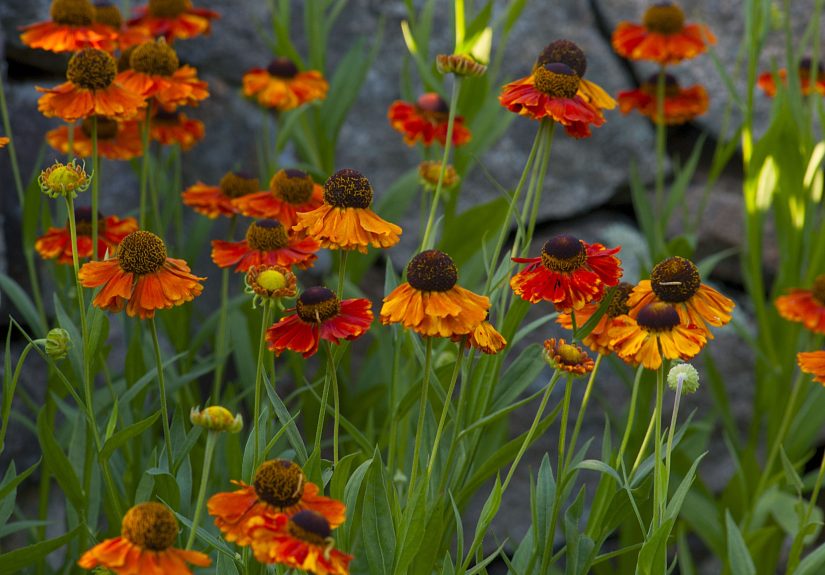
5. Helenium
Also called sneezeweed, helenium offers warm shades of copper, red, orange, and yellow right when the garden starts craving spice tones. The flowers have a cheerful, slightly retro look, and they shine in sunny beds. If your fall border needs more “pumpkin patch energy,” helenium delivers.
6. Goldenrod
Goldenrod deserves a better publicist. Its golden sprays brighten the landscape in late summer and fall, and despite the myths, it is not the main cause of hay fever. In a mixed planting, goldenrod turns ordinary borders into something glowing and painterly.
7. Black-Eyed Susan
Black-eyed Susan carries bright yellow flowers with dark centers from summer into fall. It is easy to grow, easy to love, and excellent for gardeners who want reliable color without a complicated care routine. It also plays nicely with asters, grasses, and purple-toned companions.
8. Blanket Flower
Blanket flower brings fiery reds, oranges, and yellows that look as though someone turned a sunset into petals. It thrives in sunny, well-drained spots and keeps flowering when fussier plants are already writing dramatic farewell letters.
9. Coreopsis
Coreopsis is one of the best long-blooming perennials for gardeners who want months of color. Many varieties continue into fall, especially when deadheaded. The flowers are often yellow, but you can also find pink, bicolor, and softer buttery shades for more subtle planting schemes.
10. Joe-Pye Weed
Joe-Pye weed is the tall, statuesque perennial that makes a border feel intentional. Its mauve-pink flower domes bring a soft, hazy richness to late-season gardens and attract plenty of pollinators. Plant it where you want height, movement, and a little wildflower swagger.
11. Japanese Anemone
Japanese anemone is elegant without being fussy-looking. The blooms float above the foliage on wiry stems, usually in pink or white, and they lend a light, airy quality to the border. It is especially useful when you want fall color that feels refined rather than loud.
12. Turtlehead
Turtlehead is a terrific choice for part shade and moist soil. Its snapdragon-like flowers bloom in pink, white, or purple tones from late summer into fall. It is one of those plants that quietly improves a difficult spot and then makes you wonder why you did not plant more of it sooner.
13. Obedient Plant
Obedient plant earns its memorable name because individual flowers can be nudged to one side and temporarily stay put. More importantly, it offers tall spikes of pale pink, rosy lavender, or white flowers that brighten late-season borders and make useful cut flowers.
14. Boltonia
Boltonia looks a bit like a cloud of tiny asters and is wonderful for adding softness to the back of a border. Its white or lightly tinted daisy flowers bloom from late summer to frost, creating a fresh contrast against richer autumn tones.
15. Russian Sage
Russian sage adds a misty blue-purple haze that cools down hot fall color schemes in the best way. It loves sunny, well-drained locations and reads as both floral and architectural. In other words, it is pretty and useful, which is garden gold.
16. Perennial Sunflower
Perennial sunflower gives you that familiar sunny yellow look without needing to replant every year. Many types bloom from late summer into fall and can become striking tall accents in naturalistic or cottage-style gardens.
17. Toad Lily
For shade gardeners who are tired of hearing “just grow hostas,” toad lily is a delightful surprise. Its orchid-like, speckled flowers appear late in the season and reward anyone who bothers to look closely. It is not flashy from across the yard, but up close it is unforgettable.
18. Montauk Daisy
Montauk daisy opens crisp white flowers with yellow centers in fall, just when many borders begin leaning heavily into darker tones. That clean white pop can brighten a bed instantly and pairs beautifully with ornamental grasses, asters, and sedums.
19. Leadwort
Leadwort, also called hardy plumbago, earns its place with bright blue flowers and striking red-toned fall foliage. It is a low-growing option that can spill around the front of beds, fill sunny edges, and provide color contrast when yellows and oranges dominate nearby.
20. Cardinal Flower
Cardinal flower brings electric red spikes that stand out like neon in a late-season border. It prefers richer, consistently moist soil and looks spectacular near water features or in beds that do not dry out quickly. When it is happy, it does not whisper.
21. Liatris
Liatris adds vertical spikes in purple, pink, or white and brings a different texture from typical daisy-shaped fall flowers. Some types bloom earlier, while others carry interest into late summer and fall. The flower spikes also make excellent companions for looser, mound-forming plants.
22. Pitcher Sage
Pitcher sage, or prairie salvia, offers sky-blue flowers at the end of the growing season. That clear blue is surprisingly rare in autumn borders, which makes this perennial especially valuable. It also fits beautifully into prairie-style and pollinator-friendly gardens.
23. Mexican Bush Sage
In warm climates, Mexican bush sage becomes a late-season showstopper with velvety purple flower spikes. It is ideal for gardeners who want lush color and a softer, almost glowing texture in the fall landscape. In cooler regions, it may be treated more cautiously, but where it thrives, it truly shines.
24. Autumn Crocus
Autumn crocus feels almost magical because the flowers rise seemingly out of nowhere. The goblet-shaped blooms appear in soft pink to lilac tones and are perfect for adding a surprise note near paths or in smaller garden spaces. They may be delicate-looking, but they create serious drama.
25. Veronica
Veronica, also known as speedwell, offers upright spikes in blue, purple, pink, or white and can bloom for an impressively long season. In a fall garden, it helps bridge the gap between summer bloomers and autumn specialists, making the whole planting feel more continuous and intentional.
How to Make These Fall Perennials Look Even Better
The trick to a colorful autumn garden is not simply collecting plants like a gardener on a caffeine-fueled shopping spree. It is combining them well. Start with bloom timing. Use early fall stars such as black-eyed Susan, Russian sage, and coreopsis to carry the border into September. Add peak fall performers like asters, mums, sedum, goldenrod, and Japanese anemone for October. Then use foliage, seed heads, and ornamental partners to stretch interest even longer.
Color matters, too. For a classic fall look, mix gold, copper, burgundy, and plum. That makes combinations like helenium with sedum and asters especially effective. For a softer look, pair white Montauk daisy, pale pink Japanese anemone, and blue pitcher sage. If your yard is shady, try turtlehead, toad lily, and cardinal flower in moisture-retentive soil. If your yard bakes in full sun, lean on agastache, blanket flower, sedum, Russian sage, and goldenrod.
Maintenance is refreshingly simple. Deadhead repeat bloomers like coreopsis and blanket flower to encourage new flowers. Pinch some taller plants earlier in the season if you want bushier growth and fewer flops. Most importantly, plant with the site in mind. A sun-lover in wet shade will sulk. A moisture-loving perennial in dry heat will stage a tiny botanical protest. Match the plant to the place, and the whole garden gets easier.
Gardener Experiences: What It Really Feels Like to Build a Fall Garden
One of the most common experiences gardeners have with fall borders is realizing, a little too late, that the garden looked amazing in June and then suspiciously tired by September. It happens all the time. The peonies have gone quiet, the spring bulbs are long gone, and the midsummer bloomers are starting to look like they need a nap and a glass of water. That is usually the moment when gardeners discover the value of fall-blooming perennials. They are not just “nice extras.” They are the plants that keep a landscape from losing momentum.
Another common experience is surprise. Gardeners often expect autumn color to come mostly from trees and shrubs, then plant asters or sedum and suddenly realize the flower beds can still be the stars of the show. The first time a patch of asters opens all at once, it can completely change how the yard feels. Bees arrive. Butterflies drift through. The light gets lower and warmer. Even a small bed starts looking layered and alive again.
There is also the practical joy of discovering which plants are easygoing. Sedum rarely asks for much. Black-eyed Susan and blanket flower often bloom with cheerful determination. Russian sage keeps its cool in hot, dry spots. These are the plants that make gardeners feel smarter than they actually were when they bought them. And frankly, every gardener deserves a few of those victories.
Shade gardeners have their own version of this experience. It is easy to assume bright fall flowers belong only in sunny borders, but plants like turtlehead and toad lily prove otherwise. Seeing unusual late blooms in a part-shade bed can feel like unlocking a secret level in a video game, only with less screen time and more mulch. Suddenly, that awkward side yard or woodland edge becomes interesting instead of just “the place where grass gave up.”
Many gardeners also notice that fall beds change how they use their outdoor space. In summer, the garden can feel busy and exuberant. In fall, it often feels calmer, richer, and more textured. People linger longer. They notice seed heads, grasses, bees, and changing foliage. The garden becomes less about quick flashes of color and more about atmosphere. Asters beside goldenrod, or Japanese anemone beside a weathered fence, can create a scene that feels almost cinematic.
Then there is the lesson every gardener learns eventually: not every plant belongs everywhere. Maybe the cardinal flower dried out. Maybe the mum never returned. Maybe the obedient plant became a little too obedient to its own expansion plans. That trial-and-error phase is part of the experience, too. A fall garden gets better year by year because gardeners get better at reading their site, adjusting combinations, and choosing plants that truly fit their light, soil, and moisture conditions.
In the end, growing a great fall garden feels a lot like learning good timing. Instead of letting the season wind down, you plan for the encore. And when that encore arrives in shades of ruby, gold, violet, rose, cream, and electric blue, it feels less like the end of the gardening year and more like one last standing ovation.
Conclusion
A colorful fall garden does not happen by accident. It comes from choosing perennials that bloom late, pairing them thoughtfully, and giving each one the conditions it prefers. The reward is a landscape that stays lively when other gardens start fading out. Whether you love the bold cheer of mums and black-eyed Susans, the airy elegance of Japanese anemones, or the pollinator appeal of asters and goldenrod, there is no shortage of ways to keep autumn beds looking rich and alive.
If your garden usually peaks early and then tapers off, this is your sign to fix that. Add a few of these late-season performers, and your fall flower garden can become the most memorable part of the entire growing season.