Table of Contents >> Show >> Hide
- Quick Strategy First: Make the Space Work Like a System
- Vertical Wins: Use Walls, Doors, and “Airspace”
- 1) Take cabinets to the ceiling (or fake it)
- 2) Add open shelves where you actually reach
- 3) Install a simple wall rail with S-hooks
- 4) Use a pegboard as flexible “vertical cabinetry”
- 5) Swap the knife block for a magnetic strip
- 6) Add a narrow spice ledge (yes, it can be tiny)
- 7) Make the backsplash pull double duty
- 8) Hang pots and pans (if your cabinets are crying)
- 9) Turn your window sill into micro-storage
- 10) Use the “other side” of a peninsula or island
- Cabinet & Drawer Ideas That Unlock Hidden Space
- 11) Add pull-out shelves in deep base cabinets
- 12) Claim toe-kick space with a hidden drawer
- 13) Add vertical dividers for trays and boards
- 14) Turn a narrow gap into a pull-out pantry
- 15) Fix corner cabinets with a real corner solution
- 16) Add an under-shelf basket or stick-on under-shelf drawer
- 17) Use shelf risers to double stack inside cabinets
- 18) Store lids vertically (not in a leaning pile of chaos)
- 19) Create a modular “command drawer”
- 20) Add a pull-out trash/recycling station
- Counter Space Hacks: Prep More Without Adding Square Footage
- 21) Use an over-the-sink cutting board or rolling drying rack
- 22) Add a stove-top cover for “instant island” energy
- 23) Bring in a slim rolling cart instead of a bulky island
- 24) Consider a pull-out butcher block or flip-up counter
- 25) “Corral” countertop essentials so clutter doesn’t spread
- 26) Create an appliance home (so they don’t live on your counters)
- Real-Life Experiences: 10 Lessons from People Who Actually Cook in Tiny Kitchens
- Lesson 1: “If it doesn’t have a home, it becomes counter clutter.”
- Lesson 2: The most valuable storage is between knee and eye level
- Lesson 3: Open shelving works best when it’s limited
- Lesson 4: Pull-outs feel expensive because they save time daily
- Lesson 5: The corner cabinet is either fixedor it’s avoided forever
- Lesson 6: “Vertical storage is the cheat code.”
- Lesson 7: Counter space is less about size and more about emptiness
- Lesson 8: A rolling cart is the MVP for renters
- Lesson 9: The “two-minute reset” prevents weekend chaos
- Lesson 10: The best small kitchens prioritize function over “stuff”
- Conclusion
- SEO Tags
A small kitchen is basically a very efficient ship’s galleyexcept your crew is hungry, the seas are made of mail, and someone keeps asking,
“Where’s the other lid?” The good news: you don’t need a bigger kitchen to cook comfortably. You need better strategy.
The secret is using every planewalls, doors, cabinet ceilings, toe-kicks, awkward corners, and even that mysterious space above the fridge
where dust bunnies go to earn their PhDs. Below are 26 smart, realistic small kitchen ideas that help you gain storage, counter space, and sanityoften without remodeling.
Quick Strategy First: Make the Space Work Like a System
Before you buy bins, hooks, or a rolling cart that “sparks joy,” take five minutes to do what organizers call a kitchen workflow check:
where you prep, where you cook, where you plate, and where you clean. In a tiny kitchen, convenience beats “perfect” design every time.
The goal is simple: keep the most-used tools between knee and eye level, and make the far corners earn their rent.
Vertical Wins: Use Walls, Doors, and “Airspace”
1) Take cabinets to the ceiling (or fake it)
That gap above upper cabinets is basically a dust shelf. Extending cabinets up (or adding matching boxes/trim) turns dead air into storage for rarely used items
like holiday platters, slow cookers, or the waffle maker you swear you’ll use “every weekend.”
2) Add open shelves where you actually reach
One or two open shelves can replace bulky uppers and make a small kitchen feel lighter. Keep it practical: everyday plates, bowls, and glasses go here.
If you’re not naturally tidy, limit open shelving to a short run so it stays “styled,” not “storm aftermath.”
3) Install a simple wall rail with S-hooks
A metal rail system holds utensils, measuring cups, potholders, and even small baskets for garlic/onions. It’s adjustable, easy to clean, and keeps
your go-to tools off the counter but still within arm’s reach.
4) Use a pegboard as flexible “vertical cabinetry”
Pegboards aren’t just for garages. Add hooks and tiny shelves to store pans, strainers, mugs, or spices. The best part: it can evolve with your habits.
Rearrange it in minutes when you realize your “daily” whisk is actually a “monthly” whisk.
5) Swap the knife block for a magnetic strip
A wall-mounted magnetic knife strip clears counter space and keeps knives accessible near your prep zone. Bonus: it discourages the chaotic drawer toss
that turns “grab a paring knife” into a mini action movie.
6) Add a narrow spice ledge (yes, it can be tiny)
A shallow ledgejust deep enough for spice jarsuses slim wall space efficiently. Place it near the stove, but not so close that heat and steam
turn your paprika into a mystery clump.
7) Make the backsplash pull double duty
Consider a magnetic backsplash zone or a mounted utensil bar instead of more countertop canisters. The backsplash is already “work space,”
so letting it store tools keeps your counters clear for prep.
8) Hang pots and pans (if your cabinets are crying)
A wall rack or ceiling-mounted pot rack can free a shocking amount of cabinet space. Keep it curated: store the pieces you use weekly,
and keep the once-a-year stockpot somewhere less… public.
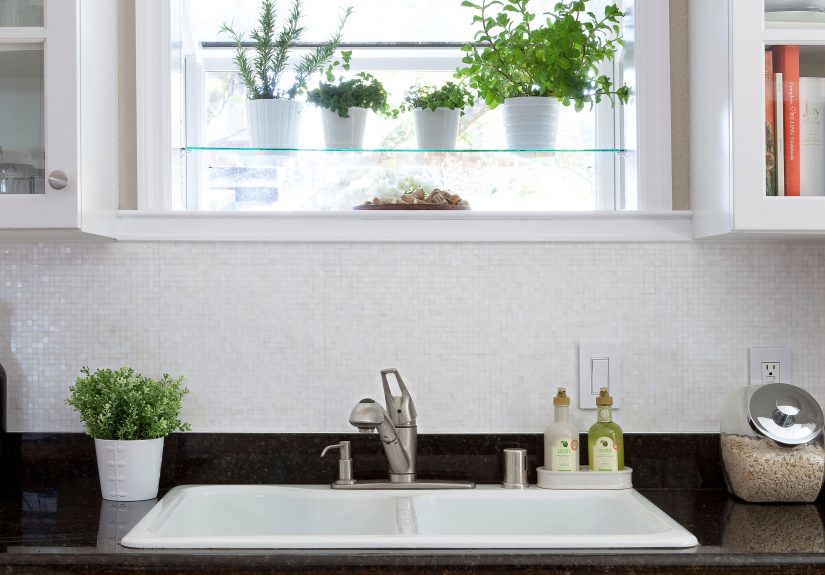
9) Turn your window sill into micro-storage
If you have a kitchen window, use the sill for a slim tray of essentials (soap, sponge, a small plant) or a tight row of frequently used jars.
Just don’t block the lightbrightness is “free square footage” for the eye.
10) Use the “other side” of a peninsula or island
If you have a peninsula, add shallow shelves or hooks on the outward-facing side for cookbooks, baskets, or even a paper towel holder.
That exterior panel can be storage, not a decorative wall pretending to be busy.
Cabinet & Drawer Ideas That Unlock Hidden Space
11) Add pull-out shelves in deep base cabinets
Pull-outs stop the “cabinet black hole” problem. Pots, pans, and appliances come to youno kneeling, no flashlight, no archaeology.
Even one pull-out near the stove can dramatically improve daily cooking flow.
12) Claim toe-kick space with a hidden drawer
The toe-kick (that recessed strip under lower cabinets) is often unused. A shallow pull-out is perfect for sheet pans, cooling racks,
placemats, or cutting boardsflat items that otherwise topple like kitchen dominoes.
13) Add vertical dividers for trays and boards
Vertical storage keeps baking sheets, muffin tins, and cutting boards upright and easy to grab. It prevents stacks that require lifting six pans
just to reach the one you want. Your wrists will send a thank-you note.
14) Turn a narrow gap into a pull-out pantry
That skinny space beside the fridge or stove can become a pull-out pantry or spice rack. It’s ideal for oils, spices, canned goods,
and snacksespecially in a tiny kitchen where every inch matters.
15) Fix corner cabinets with a real corner solution
Corners can be either “lost forever” or “actually useful.” Lazy Susans, swing-out trays, or corner drawers bring items forward instead of forcing you
to crawl inside the cabinet like you’re spelunking for Tupperware.
16) Add an under-shelf basket or stick-on under-shelf drawer
If your cabinet shelves have headroom, add an under-shelf basket for wraps, napkins, or snack bars. Some under-shelf drawers attach without tools,
creating a bonus “mini drawer” out of thin air.
17) Use shelf risers to double stack inside cabinets
A simple riser adds a second level for mugs, bowls, or pantry staples. Clear or wire risers keep visibility high,
which matters because “out of sight” often becomes “accidentally repurchased.”
18) Store lids vertically (not in a leaning pile of chaos)
Use a lid rack, a file organizer, or adjustable pegs in a drawer to keep lids upright. You’ll stop playing the daily game of
“Is this the lid for the skillet, the pot, or my emotional support container?”
19) Create a modular “command drawer”
Use small bins inside one drawer for measuring spoons, clips, small gadgets, and backup tools. In a small kitchen, a chaotic junk drawer
spreads clutter fast. A command drawer contains itlike a tiny storage bouncer.
20) Add a pull-out trash/recycling station
Pull-out bins keep trash off the floor and free up valuable “under-sink real estate” for cleaning supplies. If you compost,
consider a small countertop container that empties into a larger hidden bincleaner and easier to maintain.
Counter Space Hacks: Prep More Without Adding Square Footage
21) Use an over-the-sink cutting board or rolling drying rack
Workstation-style accessories can create temporary prep space right over the sink. An over-the-sink cutting board is great for chopping,
while a roll-up drying rack can handle dishes and then disappear when you need the sink back.
22) Add a stove-top cover for “instant island” energy
A fitted cover (especially for electric or induction surfaces) creates extra counter space when the stove is off.
It’s ideal for small kitchens with limited landing zonesjust store it safely when you’re cooking.
23) Bring in a slim rolling cart instead of a bulky island
A narrow rolling cart can be a prep station, coffee bar, or pantry overflow. Choose one with locking wheels and shelves.
Park it where it helps mostthen tuck it away when you need the floor space back.
24) Consider a pull-out butcher block or flip-up counter
Some base cabinets can be retrofitted with a pull-out work surface. A wall-mounted flip-up table is another smart option for tight layouts.
These surfaces shine in small kitchens because they appear only when needed.
25) “Corral” countertop essentials so clutter doesn’t spread
Use one tray for the daily crewsalt, pepper, oil, coffee toolsso it looks intentional and stays contained.
A tray also makes wiping counters faster, and in a tiny kitchen, fast cleanup is basically a superpower.
26) Create an appliance home (so they don’t live on your counters)
If you can’t build an appliance garage, dedicate a cabinet or cart shelf to small appliances. Store them near outlets if possible.
Keeping the toaster, blender, and mixer off the counter instantly makes a small kitchen feel bigger and calmer.
Real-Life Experiences: 10 Lessons from People Who Actually Cook in Tiny Kitchens
A small kitchen looks cute in photosuntil dinner hits and you’re juggling a cutting board, a colander, and your patience.
Here are ten experience-based lessons commonly shared by people who cook often in compact kitchens.
Lesson 1: “If it doesn’t have a home, it becomes counter clutter.”
Tiny kitchens punish “temporary” piles. People find that assigning a specific home to high-use items (coffee supplies, knives, cooking oils)
prevents the slow creep of stuff across every surface. One tray or one drawer zone can change the whole vibe.
Lesson 2: The most valuable storage is between knee and eye level
People who enjoy cooking tend to move daily tools into that comfort band: plates, pans, knives, and spices. Rarely used items go up high or down low.
This single shift reduces bending, rummaging, and the “Why am I sweating before I even started cooking?” feeling.
Lesson 3: Open shelving works best when it’s limited
Many small-kitchen owners love open shelves for everyday dishesuntil the shelf becomes a visual junk drawer.
The most successful setups keep open shelves short and curated, while the rest of the storage stays behind closed doors.
Lesson 4: Pull-outs feel expensive because they save time daily
Even one pull-out shelf in a deep base cabinet can feel like a major upgrade. People often describe it as “suddenly having a bigger kitchen,”
because accessing cookware stops being a physical task and becomes a simple motion.
Lesson 5: The corner cabinet is either fixedor it’s avoided forever
Without a Lazy Susan or swing-out tray, people tend to avoid corner cabinets entirely, which wastes prime storage.
Once a corner solution is installed, the cabinet becomes perfect for bulky items like mixing bowls, small appliances, or pantry backstock.
Lesson 6: “Vertical storage is the cheat code.”
Hooks, rails, pegboards, and magnetic strips keep essentials accessible without sacrificing drawers.
People often start small (one rail near the stove) and expand because it reduces daily friction in a way bins alone can’t.
Lesson 7: Counter space is less about size and more about emptiness
Tiny-kitchen cooks frequently say that the real win is keeping counters clear, not adding a new surface.
When appliances live in cabinets and daily items are corralled, even a small counter can feel “enough” for real cooking.
Lesson 8: A rolling cart is the MVP for renters
In rentals where you can’t drill or remodel, a slim rolling cart acts as prep space, storage, and a mobile pantry.
People love being able to roll it next to the stove while cooking, then move it away when they want breathing room.
Lesson 9: The “two-minute reset” prevents weekend chaos
Many small-kitchen households adopt a short nightly routine: clear counters, return tools to homes, run the dishwasher, and wipe surfaces.
Because the kitchen is small, the reset is quickand it stops tomorrow’s breakfast from starting in a mess.
Lesson 10: The best small kitchens prioritize function over “stuff”
People who enjoy their tiny kitchens tend to own fewer duplicates and skip gadgets that only do one job.
The payoff is real: less clutter, faster cooking, easier cleaning, and a kitchen that feels like a workspacenot a storage closet.
Conclusion
Small kitchens don’t need to feel crampedthey need to feel intentional. When you use vertical space, upgrade the hard-to-reach areas,
and protect your counters from clutter creep, you create a kitchen that’s easier to cook in every single day.
Start with one category (walls, cabinets, or counters), choose two ideas, and build momentum. Tiny changes add up fastkind of like snacks.