Table of Contents >> Show >> Hide
- Why high-touch surfaces deserve more attention
- 1. Light Switches, Doorknobs, and Door Pulls
- 2. Faucet Handles and Appliance Handles in the Kitchen and Bathroom
- 3. Phones, Remotes, and Other Handheld Electronics
- So do you really need to clean these every day?
- A simple 5-minute daily high-touch cleaning routine
- Common mistakes that make daily cleaning less effective
- The bottom line
- What this habit feels like in real life: a longer, more personal look
You know that one corner of the baseboard you judge yourself for? Relax. It’s probably not the reason your home feels a little grimy. The real troublemakers are the surfaces you touch all day without even noticing: the little switches, handles, screens, and buttons that quietly collect fingerprints, grease, crumbs, and whatever else your hands picked up between breakfast, emails, and that dramatic attempt to carry six grocery bags in one trip.
These are called high-touch areas, and they matter more than a lot of the spots people obsess over. Why? Because they’re in constant circulation. A countertop may look messy, but a light switch or refrigerator handle can be touched dozens of times in a day and almost never get cleaned. That’s a pretty impressive PR campaign for something the size of a cracker.
If you want a home that actually feels cleaner, not just one that looks presentable from ten feet away, start here. A smart daily cleaning routine for a few high-touch surfaces can make a bigger difference than spending an hour angrily dusting decorative objects no one should have bought in the first place.
Why high-touch surfaces deserve more attention
High-touch surfaces are exactly what they sound like: the areas your hands return to over and over again. Think doorknobs, light switches, faucet handles, appliance pulls, phones, remote controls, and similar everyday touchpoints. They’re easy to miss because they’re small, familiar, and rarely covered in obvious mess. But invisible buildup is still buildup.
There’s also a practical reason to prioritize them. In the kitchen and bathroom, these surfaces often get touched before hands are fully clean and after they’ve been used for food prep, pet care, garbage duty, or basic everyday living. That makes them a prime place for grime to linger. Add kids, guests, roommates, or pets, and your touchpoints basically become a group project.
Cleaning vs. disinfecting: they are not the same thing
Before we get into the three areas, here’s the quick, unglamorous truth: cleaning and disinfecting are cousins, not twins. Cleaning removes dirt, grease, and residue. Disinfecting uses a product designed to reduce germs on the surface. If a surface is visibly dirty, you usually need to clean it first. Otherwise, you’re basically asking a disinfectant to perform a magic trick through a layer of mystery sauce.
In most homes, routine cleaning is the foundation. During cold and flu season, after guests come over, or when someone in the house is sick, a more deliberate disinfecting step makes extra sense. The key is using the right product for the surface and following the label, especially on electronics and sealed finishes.
1. Light Switches, Doorknobs, and Door Pulls
This first group deserves to be bundled together because these entry and transition points get touched constantly. We slap a light switch when our hands are full. We grab a doorknob after handling packages, laundry, shoes, backpacks, and sometimes raw chicken if we’re having a particularly chaotic evening. Door pulls on the pantry, bathroom, and bedroom closets don’t get much more dignity either.
Why people forget them
They don’t usually look dirty. A switch plate may have a few fingerprints, but it rarely screams for help the way a greasy stovetop does. That visual subtlety is exactly why these surfaces get ignored. They blend into the room, even though they’re among the most frequently touched spots in the house.
And once you stop noticing them, they disappear from your cleaning checklist. You wipe the counter, fluff the pillows, straighten the rug, and somehow skip the one thing every person in the house touched on the way in.
How to clean them daily without making it a whole production
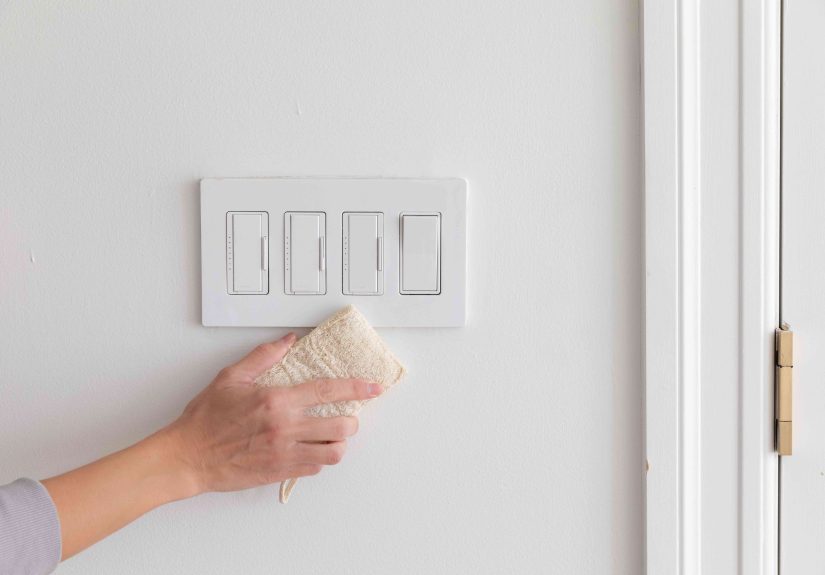
The easiest method is a quick wipe-down with a disinfecting wipe or a microfiber cloth lightly dampened with an appropriate cleaner. For light switches, avoid soaking the plate. You want the surface cleaned, not the electrical system introduced to moisture like it’s a spa treatment.
Focus on the spots people actually touch: the switch itself, the plate around it, the front and back of the doorknob, and the edge of the door where hands naturally land. In a busy household, a one-minute evening pass through the kitchen, bathroom, and main entryway can keep these high-touch surfaces from becoming permanent grime collectors.
If you want the highest payoff, prioritize the front door, bathroom light switch, bedroom doorknobs, pantry handle, and any closet or laundry pulls used multiple times a day. These are the sneaky MVPs of daily contact.
2. Faucet Handles and Appliance Handles in the Kitchen and Bathroom
If there were an award for “most likely to be touched with suspicious hands,” faucet handles would win by a landslide. Think about the sequence: you touch the bathroom faucet before your hands are washed. You grab the kitchen faucet while cooking, rinsing produce, wiping spills, or managing dishes. Then there are the refrigerator handle, microwave button, dishwasher pull, oven handle, cabinet knobs, and trash can lid. It’s a whole little ecosystem of sticky fingerprints and invisible grime.
Why this area matters so much
The kitchen is already one of the busiest zones in the house, and some of the germiest home items identified by cleaning and food-safety experts are in or near it. That doesn’t mean you need to live in fear of your refrigerator handle. It does mean you should stop pretending the handle is magically cleaning itself because the stainless steel looks nice from across the room.
Bathroom faucet handles have a similar problem. They’re touched right before handwashing and again immediately after, often with damp hands that leave residue behind. And because they’re small, shiny, and somewhat decorative, people tend to treat them like jewelry instead of cleaning priorities.
The daily fix that actually works
At the end of the day, wipe the faucet handles, refrigerator pull, microwave controls, cabinet hardware around the food prep area, and the dishwasher handle. That sounds like a lot, but in practice it’s about five minutes, tops. Keep the cloth or wipes where you’ll use them: under the sink, beside the dish soap, or in a bathroom drawer.
For surfaces with obvious grease or food splatter, clean first with soap and water or a suitable all-purpose cleaner. Then, if you’re disinfecting, use the product according to the label and let it stay wet for the recommended contact time. That last part is where people rush. We tend to wipe, feel productive, and walk away before the product has actually had time to do its job.
Also, this is a good place to avoid one of the most common cleaning mistakes: randomly mixing products. More chemicals does not equal more clean. It equals regret, fumes, and possibly opening every window in the house while questioning your life choices.
3. Phones, Remotes, and Other Handheld Electronics
Now for the category that most people know they should clean but absolutely do not clean often enough: handheld electronics. Your phone goes to the kitchen, the couch, the bed, the car, the store, the office, and maybe the bathroom, though we are not here to judge. Much. Remotes get passed around by every member of the household, often while people snack, sneeze, or recover from a cold under a throw blanket they also haven’t washed recently.
Why electronics are such major high-touch items
Phones and remotes aren’t just touched frequently; they’re touched absentmindedly. That makes them easy to contaminate and easy to forget. You may wash your hands after handling raw meat or coming in from outside, then immediately pick up the same phone you used earlier while shopping or sitting in the waiting room at the dentist. Your hands are clean. Your phone is not. Congratulations on the reunion.
Remote controls are similar. They’re full of buttons and tiny crevices, they circulate among multiple people, and they rarely make it onto anyone’s regular cleaning list. Yet they’re one of the most-handled objects in a living room or bedroom.
How to clean electronics without ruining them
Always start with the manufacturer’s instructions. That’s the rule. In general, power devices down first, never spray liquid directly onto them, and use a wipe or soft lint-free cloth that’s appropriate for electronics. Many phones can be gently wiped on the exterior with approved alcohol-based wipes, but you still want to avoid getting moisture into openings or using harsh chemicals not meant for the surface.
For remote controls, remove the batteries if you’re doing a more detailed clean, then wipe the outer shell and carefully clean around the buttons with a lightly dampened cloth or cotton swab. No soaking, no spraying into crevices, no “it’ll probably be fine” energy. That’s how remotes end up in the junk drawer graveyard.
If you share a workspace, add your keyboard, mouse, earbuds, and phone stand to this category too. They’re all part of the same high-touch family, and they all benefit from quick, consistent attention.
So do you really need to clean these every day?
For a busy household, yes, daily is a smart baseline for these three groups. If you live alone, rarely have visitors, and are solid about hand hygiene, you may be able to scale back some items to a few times a week. But the reason daily works so well is not that your home is dangerous without it. It’s that a tiny daily habit keeps buildup from becoming gross, sticky, or overwhelming.
Think of it like wiping down the kitchen counter after dinner. You’re not performing a medical intervention. You’re preventing tomorrow’s grime from becoming next weekend’s problem.
A simple 5-minute daily high-touch cleaning routine
Want this to become automatic? Try this order every evening:
Minute 1: Entry and bathroom touchpoints
Wipe the front doorknob, entry light switch, bathroom doorknob, and bathroom light switch.
Minute 2: Bathroom faucet and flush area
Wipe the faucet handles, sink edge, and toilet handle or button.
Minute 3: Kitchen handles
Hit the faucet, refrigerator handle, microwave controls, dishwasher pull, and cabinet knobs near food prep areas.
Minute 4: Personal electronics
Clean your phone, remote control, keyboard, and mouse using products safe for those surfaces.
Minute 5: Final pass
Check the spots you touched while cleaning: spray bottle handle, caddy handle, and trash lid. Tiny detail, big difference.
Common mistakes that make daily cleaning less effective
Mistake one: cleaning only what looks dirty. The whole point of high-touch surfaces is that they can be dirty long before they look dirty.
Mistake two: ignoring contact time. If the label says the surface needs to stay wet for several minutes, a quick swipe-and-dry routine will not deliver the same disinfecting result.
Mistake three: using the wrong product on electronics. Phone screens and remotes are not the place for random kitchen sprays or overly wet cloths.
Mistake four: mixing cleaners. Bleach and ammonia are never a fun chemistry experiment.
Mistake five: making the routine too big. If your daily list has 27 items, it won’t become a habit. If it has three zones and takes five minutes, you’ll actually do it.
The bottom line
If you only change one thing about your cleaning routine, make it this: stop focusing only on the biggest surfaces and start paying attention to the most-touched ones. Light switches and doorknobs, faucet and appliance handles, and phones and remotes are the three high-touch areas most likely to be overlooked and most likely to benefit from a quick daily clean.
It’s not flashy. No one is going to walk into your house and gasp, “Wow, what a beautifully maintained bathroom light switch.” But your home will feel fresher, your routine will feel smarter, and those tiny daily touchpoints won’t quietly collect a week’s worth of grime while you’re busy alphabetizing the spice rack for no reason.
What this habit feels like in real life: a longer, more personal look
The funny thing about cleaning high-touch areas every day is that you usually don’t notice the problem until you finally start noticing the pattern. The first few days, it feels almost silly. You wipe the bathroom faucet and think, “This handle was probably fine.” You swipe the refrigerator pull and wonder whether you’ve become the kind of person who has a strong opinion about microwave buttons. Then, around day three or four, you start seeing it.
You notice the smudges around the light switch that somehow reappear daily. You realize the pantry handle gets sticky even when the rest of the kitchen looks clean. You catch yourself picking up your phone while cooking, setting it down, washing your hands, and then immediately touching the same phone again. It’s humbling. Also slightly rude, if we’re being honest.
What surprises most people is not that these spots get dirty. It’s how fast they do. In a real household, with real schedules, people are moving constantly. Someone runs in from outside and flips the hall light. Someone else opens the fridge while packing lunch. A child turns on the bathroom tap with hands that have recently explored the floor, the dog, and possibly a mysterious sticky object. None of this is dramatic. It’s just ordinary life. And ordinary life leaves residue.
That’s why a daily wipe-down feels so satisfying once it becomes a habit. You’re no longer waiting until surfaces look grimy enough to deserve attention. You’re interrupting the buildup before it settles in. The house starts to feel cleaner in a quieter way. Not “show home” clean. More like “nothing in here feels tacky, dingy, or vaguely questionable” clean. That’s a very underrated category.
There’s also a mental benefit. Small daily tasks tend to reduce the dread of weekend cleaning. When the doorknobs, remotes, faucets, and appliance handles have been getting regular attention, deep cleaning feels less like a rescue mission. You’re maintaining instead of recovering. And maintenance is a lot less exhausting than trying to remove a week’s worth of fingerprints from every hard surface while muttering that no one in this house respects a clean kitchen.
Another real-life advantage is convenience. Once you place the right supplies in the right spots, the habit becomes almost automatic. A wipe near the bathroom sink. A cloth under the kitchen sink. A safe electronics cleaner near the desk or media console. Suddenly the whole thing feels less like a chore and more like closing the kitchen at night or tossing laundry in the hamper. It becomes part of the rhythm of the house.
And yes, it can feel a little ridiculous to clean a remote control on a Tuesday night. But it feels a lot less ridiculous than getting sick, seeing a crusty light switch up close in daylight, or discovering your refrigerator handle has somehow become the greasiest object in the known universe. A tiny daily habit won’t make your home perfect, but it does make it calmer, cleaner, and a lot easier to live in. Honestly, that’s a pretty great return on five minutes.