Table of Contents >> Show >> Hide
- Before You Start: Convection Oven Cleaning Basics
- Way #1: Manual Deep Cleaning (Best for Most Convection Ovens)
- Way #2: Steam Cleaning (Fast, Low-Stress, Great for Light Messes)
- Way #3: Self-Clean Cycle (Best for Heavy, Baked-On Messes)
- Which Method Should You Use?
- Common Mistakes to Avoid When Cleaning a Convection Oven
- How Often Should You Clean a Convection Oven?
- Final Thoughts
- Extra Experience Notes: 500+ Words of Real-World Cleaning Lessons
- SEO Tags
A convection oven is basically a regular oven that went to engineering school: it cooks with heat and a fan, so food browns faster and more evenly. The downside? It also spreads grease and splatter around like it’s trying to decorate the interior for you. If your convection oven now smells like “last month’s lasagna,” don’t worryyou’re not alone, and you don’t need a hazmat suit.
This guide breaks down 3 safe and effective ways to clean a convection oven: a manual deep-clean method, a steam-clean method, and the self-clean cycle. You’ll also get convection-specific tips (important), common mistakes to avoid, and a practical routine to keep your oven from turning into a smoke machine every time you bake cookies.
Before You Start: Convection Oven Cleaning Basics
Cleaning a convection oven is similar to cleaning a standard oven, but there’s one key difference: convection models circulate hot air with a fan, usually behind a vented panel at the back. That means you need to be extra careful about where you apply cleaner and how aggressively you scrub.
What makes convection ovens a little different?
- Air vents and fan areas: Avoid slathering paste into vents or spraying liquids directly into openings.
- Interior coating matters: Many ovens have porcelain or specialty finishes that can scratch if you use abrasive pads.
- Door gasket: Be gentle around the gasket (the soft seal around the door). Damaging it can affect performance.
- Model-specific cleaning modes: Your oven may offer Steam Clean, Self Clean, or a brand-specific quick-clean option.
Quick prep checklist
- Make sure the oven is completely cool.
- Remove racks, trays, pans, thermometers, and anything else inside.
- Lay towels or an old cloth under the door to catch drips.
- Open a window or turn on the vent hood if you’re doing a deep clean.
- Check your owner’s manual for model-specific instructions (always worth it).
Way #1: Manual Deep Cleaning (Best for Most Convection Ovens)
If you want the safest, most universally recommended method, this is it. A manual clean gives you control, works on almost every convection oven, and is ideal when you want to avoid heavy heat cycles. It takes more elbow grease, but your oven won’t roast itself at 900°F in the process.
Why this method works
A baking soda paste helps loosen baked-on grime, while vinegar (or lemon juice) helps break down residue and lift the paste away. It’s effective, budget-friendly, and less harsh than many commercial oven cleaners. It’s also a smart option if your oven’s self-clean cycle makes you nervous or leaves lingering odors.
What you’ll need
- Baking soda
- Water
- White vinegar or lemon juice
- Soft cloths or microfiber cloths
- Non-scratch sponge
- Plastic scraper (optional, but helpful)
- Dish soap (optional for extra grease-cutting)
Step-by-step manual cleaning method
1) Remove racks and loose debris
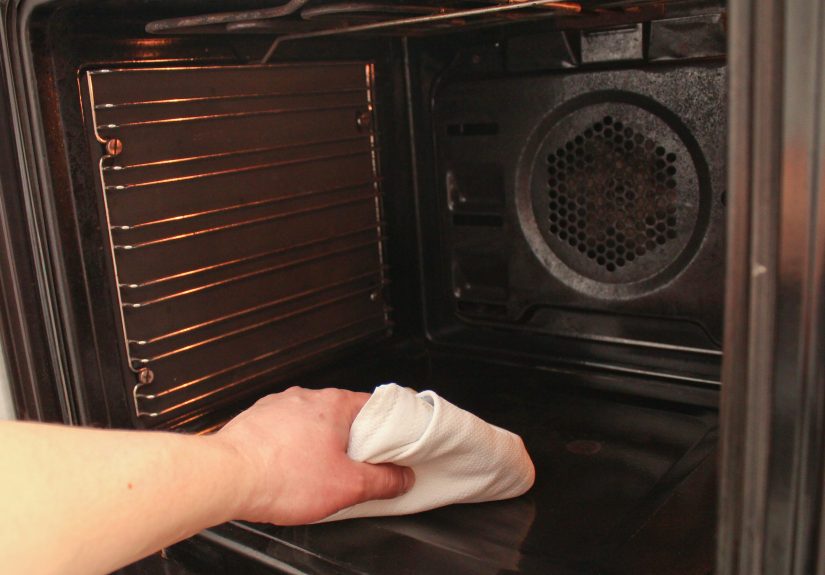
Take out the oven racks and accessories. Wipe out loose crumbs and dry debris first so you’re not smearing wet grime around later. If your convection oven has visible splatter near the back vent area, wipe it gently with a damp cloth instead of pushing dirt into the openings.
2) Make a baking soda paste
Mix baking soda and water into a thin, spreadable paste. A good rule of thumb is roughly 1/2 cup baking soda + a few tablespoons of water. If your oven is large or very dirty, make more. You can add a small amount of dish soap for extra degreasing power.
3) Apply the paste (carefully)
Spread the paste over the oven floor, side walls, and inside of the door. Avoid heating elements, gas vents, and fan openings. In a convection oven, treat the rear fan/vent area like a “gentle zone”wipe around it, don’t pack cleaner into it.
4) Let it sit
Let the paste work for at least 1 hour. For stubborn buildup, let it sit overnight. This is where the magic happens (or at least the less-annoying scrubbing later).
5) Clean the racks separately
Soak the racks in a sink, tub, or large container with hot water, baking soda, and a little vinegar or dish soap. Let them soak for at least an hour, then scrub with a non-scratch pad. Dry them fully before putting them back.
6) Wipe and lift residue
Wipe the baking soda paste off with a damp cloth or sponge. For stubborn spots, use a plastic scraper or sprinkle a bit of dry baking soda onto a damp sponge and gently scrub.
7) Finish with vinegar or lemon juice
Spray or wipe the surfaces with white vinegar (or lemon juice diluted with water) to remove leftover baking soda residue. Wipe dry with a soft cloth.
8) Clean the oven door glass
The door glass is usually the messiest part because it catches all the splatter and somehow every casserole in history. Use the same baking soda paste on the inside glass, let it sit, then wipe clean. For baked-on marks, scrape carefully with a plastic scraper or, if your model allows and you’re experienced, a razor scraper used very gently at the correct angle.
Manual cleaning tips for convection ovens
- Use non-abrasive tools to protect the oven’s interior finish.
- Do not scrub the door gasket.
- Do not use harsh commercial oven cleaners unless your manual explicitly says it’s okay.
- Wipe up fresh spills after the oven coolsfuture you will be grateful.
Way #2: Steam Cleaning (Fast, Low-Stress, Great for Light Messes)
Steam cleaning is the “maintenance mode” of oven cleaning. It’s quick, lower heat, and ideal for fresh spills, light grease, and the kind of mess you notice before it becomes a science project. Many modern convection ovens include a Steam Clean setting. If yours doesn’t, you can still do a DIY steam clean.
When steam cleaning is the best choice
- Light splatter or recent spills
- Routine maintenance between deep cleans
- You want less smoke and odor than a high-heat self-clean cycle
- You need a quicker cleaning session
Option A: Use your oven’s Steam Clean cycle
If your convection oven has a built-in Steam Clean function, this is the easiest path. In many models, the process is simple: remove racks (though some brands allow racks to stay in), add water to the oven bottom or tray, start the cycle, then wipe out loosened soil afterward.
Basic Steam Clean steps
- Remove racks and accessories (unless your model manual says they can stay in).
- Wipe or scrape loose crumbs and grease from the oven bottom.
- Add the recommended amount of water (commonly about 1 cup).
- Run the Steam Clean cycle.
- After the cycle ends and the oven cools, wipe out moisture and loosened grime with a soft cloth.
Important detail: water guidance varies by brand and model. Some manufacturers suggest tap water, while others recommend filtered or distilled water to reduce mineral residue. This is exactly why your owner’s manual is the MVP of oven cleaning.
Option B: DIY steam clean (if your oven has no Steam Clean mode)
No Steam Clean button? No problem. You can still use steam to loosen grime before wiping or doing a manual clean.
DIY steam clean method
- Remove racks and accessories.
- Place an oven-safe dish or pot with water inside the oven.
- Heat the oven (many guides recommend a moderate-to-high temp briefly, such as around 450°F, depending on your model).
- Turn it off and let the steam soften residue.
- Once cool enough, wipe down the interior with a sponge or cloth.
If grime remains, follow up with the manual baking soda method. Steam cleaning is excellent for loosening messes, but it won’t always remove thick, carbonized buildup on its own.
Convection-specific steam-clean note
Steam and convection fans can coexist just fine, but after cleaning, make sure the oven interior is wiped dryespecially around the rear vented/fan cover and door edges. Leaving standing moisture behind can create streaks, odors, or mineral marks over time.
Way #3: Self-Clean Cycle (Best for Heavy, Baked-On Messes)
The self-clean cycle is the “big boss” method. It uses high heat to reduce baked-on grease and food residue to ash that you wipe away later. It’s effective for serious grime, but it’s also the method that deserves the most caution and preparationespecially in a busy household.
How the self-clean cycle works
Self-cleaning ovens typically use intense heat (often in the 800°F to 900°F range) to burn off residue. Some ovens also offer a lower-intensity steam-based cleaning option, but the traditional self-clean cycle is the one that gets really hot. Expect some odor and possibly smokethis can be normal during the cycle.
When to use self-clean
- Heavy, baked-on residue that manual cleaning would take forever to remove
- Burnt spills on the oven floor that keep smoking
- Periodic deep cleaning (not every week)
How to run a self-clean cycle safely
1) Remove racks and accessories
This is a big one. Many manufacturers and cleaning experts recommend removing racks before self-cleaning because the extreme heat can discolor or damage them. (Some steam-clean cycles may allow racks to stay inbut self-clean usually does not.)
2) Wipe up loose spills first
Don’t ask the self-clean cycle to do all the work. Wipe up heavy grease or puddled spills first. This helps reduce smoke and improves results.
3) Ventilate your kitchen
Turn on the range hood, open windows, and keep the kitchen ventilated. A self-clean cycle can produce odor and smoke, especially if there’s a lot of residue.
4) Keep pets (especially birds) away
Fumes from self-cleaning cycles can be a problem for pets, and birds are especially sensitive. If you have birds, move them to another closed, well-ventilated room before running the cycle.
5) Let the cycle finish and the oven cool completely
The oven door usually locks during self-clean. Once the cycle ends and the oven cools, the door unlocks. Wipe away the ash with a damp cloth.
When NOT to use self-clean
- If your owner’s manual warns against frequent use
- If your kitchen ventilation is poor
- If you recently used commercial oven cleaner (some brands warn against this)
- If you only have light messessteam or manual cleaning is usually easier
Which Method Should You Use?
Choose manual cleaning if…
- You want maximum control and gentle cleaning
- Your oven has a delicate finish or you’re cautious about self-clean
- You’re cleaning around convection vents/fan areas and want precision
Choose steam cleaning if…
- You clean regularly and catch spills early
- You want a fast, low-effort refresh
- You’re doing maintenance between deep cleans
Choose self-clean if…
- Your oven has heavy buildup and keeps smoking
- You want the most powerful built-in cleaning option
- You can ventilate well and follow the manual carefully
Common Mistakes to Avoid When Cleaning a Convection Oven
- Using metal scrubbers inside the cavity: They can scratch the finish.
- Coating heating elements or vents with cleaner: This can cause smoke or damage.
- Scrubbing the door gasket: It’s easy to damage and affects the seal.
- Leaving racks in during self-clean: Many racks don’t tolerate self-clean temperatures well.
- Ignoring the manual: Cleaning instructions vary by brand and model.
- Waiting too long: Fresh spills are easy. Ancient spills fight back.
How Often Should You Clean a Convection Oven?
A practical rule is to deep-clean your oven about every 3 months, but the real answer depends on how often you cook. If you roast, broil, or bake multiple times a week, you may need more frequent touch-ups. If you only use the oven occasionally, quarterly cleaning is often enough.
The best habit? Wipe up spills once the oven cools. A 60-second cleanup today can save you a 2-hour scrubbing session later.
Final Thoughts
Cleaning a convection oven doesn’t have to be miserable. The trick is choosing the right method for the mess: manual cleaning for control, steam cleaning for quick upkeep, and self-clean for heavy buildup. If you clean a little more often (and avoid attacking the fan vents like they insulted your family), your oven will stay cleaner, cook better, and smell less like “burnt mystery.”
In short: clean smarter, not harderand let your convection oven go back to doing what it does best: making food crispy in all the right places.
Extra Experience Notes: 500+ Words of Real-World Cleaning Lessons
One of the most common experiences people have with convection oven cleaning is underestimating how fast grime builds up. Because convection ovens circulate hot air so efficiently, small splatters don’t just stay where they landthey can dry onto multiple surfaces, especially near the back wall and door glass. A lot of people assume, “It still looks mostly fine,” and then a few weeks later they notice smoke during preheating. That smoke is usually the oven politely reminding you that dinner from three Tuesdays ago is still living rent-free inside the cavity.
Another very real experience: the oven door glass always looks worse than expected. Even people who wipe the stovetop daily are often shocked when they finally clean the inside of the oven door and realize they’ve been peeking through a grease-tinted window for months. The baking soda paste method tends to be the crowd favorite here because it’s simple and forgiving. Letting the paste sit does most of the work, which is great for anyone who hates aggressive scrubbing. The biggest lesson? Patience beats force. If the grime doesn’t come off easily, another round of soaking usually works better than pressing harder.
Steam cleaning also gets a lot of love once people try it correctly. A common mistake is expecting steam clean to remove years of buildup in one cycle. It won’t. But for light messes and regular maintenance, it’s incredibly helpful. Many users say steam cleaning feels like a “reset button” after a busy week of cooking. It softens residue just enough that a quick wipe-down becomes easy, and the oven feels fresh again without turning the kitchen into a hot, smoky sauna. The key experience-based tip here is to wipe the oven right after it cools from the cycleif you wait too long, loosened grime can settle again and you lose the advantage.
Self-cleaning cycles are where experiences vary the most. Some people swear by them; others use them sparingly because of the smell. The people who have the best results usually do a few things first: they remove the racks, wipe up heavy spills, and ventilate the kitchen well. The people who have the worst results often skip those steps and then wonder why the oven smells dramatic. Self-cleaning can absolutely work well, but it’s not a shortcut for basic prep. Think of it more like a finishing method than a magic spell.
There’s also a very practical lesson that comes up over and over: regular “mini cleans” are more effective than rare “hero cleans.” Wiping away fresh splatter after the oven cools, cleaning the door glass once a month, and using steam clean for light messes can dramatically reduce how often you need a full deep-clean. This routine also makes convection-specific cleaning safer, because you’re less likely to attack hardened grime around vents and fan areas with heavy scrubbing.
Finally, one of the best real-world habits is keeping a simple oven-cleaning kit nearby: baking soda, vinegar, microfiber cloths, and a non-scratch sponge. When everything is in one place, people are much more likely to clean small messes right away. It sounds almost too basic, but convenience matters. If your cleaning supplies are easy to grab, your convection oven stays cleaner, your food tastes better, and your smoke alarm gets to enjoy a quieter life.