Table of Contents >> Show >> Hide
- Before You Start: 2 Minutes That Save You 20
- Way #1: The 50/50 Vinegar-Water Wipe (Best for Road Film & Maintenance)
- Way #2: Vinegar + Baking Soda Paste (Best for Light Haze & Yellow Tinge)
- Way #3: Vinegar Prep + Polish + Seal (Best for Real Oxidation)
- Quick Comparison: Which Vinegar Method Should You Use?
- Troubleshooting: When Results Look Weird (or Disappointing)
- How to Keep Headlights Clear Longer
- When Vinegar Isn’t the Right Tool
- Real-World Experiences: What People Notice When Cleaning Headlights with Vinegar (About )
- Conclusion
If your headlights look like they’ve been sneaking snacks in a dusty attic (cloudy, yellow, and a little embarrassed),
you’re not alone. Most modern headlights are made from polycarbonate plastic, and over time they develop a film from
road grime, bugs, hard-water spots, andmost importantlyUV-related oxidation that makes the lens look foggy.
Here’s the good news: vinegar is a cheap, accessible cleaner that can absolutely helpespecially for surface haze and
greasy buildup. Here’s the even better news: when vinegar isn’t enough, it still plays a useful supporting role as the
“prep step” that makes polishing and sealing work better. This guide walks you through three vinegar-based methods,
from quick maintenance to “okay, these lights are basically frosted cornflakes.”
Why it matters: Cloudy headlights don’t just make your car look tired; they can reduce effective light on the road.
AAA has reported major light loss with clouded lenses compared with new ones.[1] And independent safety research links
better headlight performance with fewer nighttime crashes and pedestrian crashes.[2]
Before You Start: 2 Minutes That Save You 20
What you’ll need (for all three methods)
- White distilled vinegar (the regular 5% stuff)
- Microfiber cloths (at least two)
- Spray bottle (optional, but your wrists will thank you)
- Warm water
- Painter’s tape (recommended, especially if you like your paint)
Quick prep
- Work on cool headlights. If the lens is warm, cleaning solutions evaporate too fast and can streak.
- Rinse first. Loose grit is basically sandpaper with a bad attitude.
- Tape the edges. Vinegar is mild, but it can strip wax and you don’t need surprise “detail work” today.
- Check where the fog is. If the cloudiness is inside the housing (condensation), cleaning the outside won’t fix it.
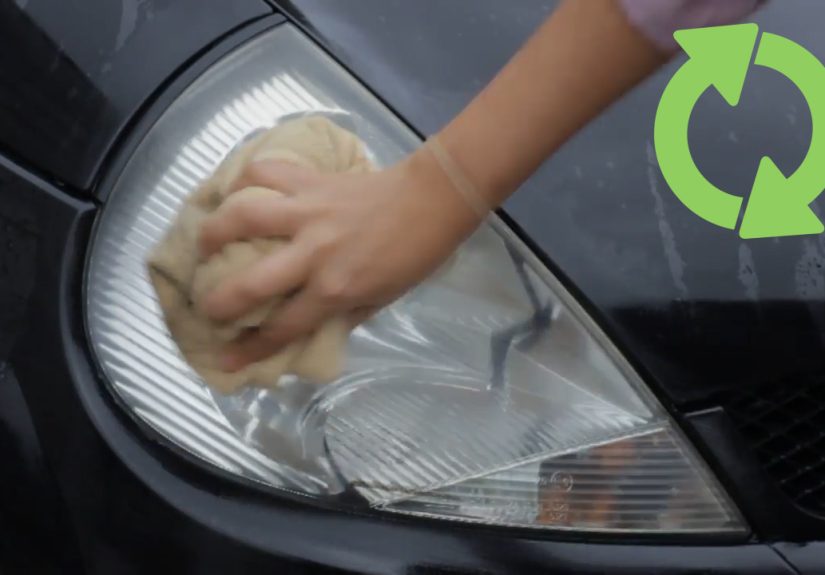
Way #1: The 50/50 Vinegar-Water Wipe (Best for Road Film & Maintenance)
Think of this as the “everyday shower” method. It won’t erase deep yellow oxidation, but it can remove surface grime,
oily film, salt residue, and light mineral spottingespecially if you do it regularly.
What to mix
- 1:1 vinegar and water (example: 1 cup vinegar + 1 cup water)
Step-by-step
- Pour the vinegar-water mix into a spray bottle.
- Spray the headlight lens until it’s evenly wet (not dripping into every crevice like a waterfall).
- Let it sit for 30–60 seconds to soften bug splatter and film.
- Wipe with a microfiber cloth using gentle, overlapping strokes.
- Flip to a clean side of the cloth and buff dry.
- Rinse with clean water if you used a heavy spray, then dry again to prevent water spots.
When this works best
- You park outside and get that dull “road varnish” look on the lens
- You see bug splatter or oily film after highway driving
- Your headlights look mostly clear in shade but hazy in direct sun
Pro tip
If you wash your car every couple weeks, add this vinegar wipe after the wash. Maintenance cleaning can slow the buildup
that makes oxidation look worse than it is.
Way #2: Vinegar + Baking Soda Paste (Best for Light Haze & Yellow Tinge)
When haze sticks around after the 50/50 wipe, you need a little “gentle grit.” Baking soda provides mild abrasiveness,
and vinegar helps loosen grime. AAA has specifically discussed vinegar-and-baking-soda paste as a DIY headlight cleaning hack.[3]
What you’ll need
- Baking soda
- White vinegar
- Small bowl or cup
- Microfiber cloth or soft toothbrush
Mixing ratio
Try a paste using roughly 2 parts vinegar to 1 part baking soda (adjust until it’s spreadable).[3]
It may fizz a bittotally normal.
Step-by-step
- Rinse and dry the headlight.
- Apply the paste to the lens with a microfiber cloth (or soft toothbrush for the edges).
- Rub in gentle circles for 2–4 minutes. You’re polishingno need to audition for an arm-wrestling league.
- Let it sit for 1 minute.
- Rinse thoroughly with clean water.
- Dry with a clean microfiber cloth.
- Repeat once if needed.
What this can and can’t do
- Can: improve light surface clouding, remove stubborn film, brighten dull lenses a noticeable amount
- Can’t: permanently fix heavy oxidation (the “yellow helmet visor” look) without a polishing/sealing step
Specific example
If your lens looks “kind of foggy” in daylight but still transparent enough to see the reflector pattern behind it,
this paste method often gives a satisfying improvement in under 10 minutes.
Way #3: Vinegar Prep + Polish + Seal (Best for Real Oxidation)
Let’s be honest: true headlight oxidation isn’t just dirt. It’s a degraded outer layer and/or coating that needs to be leveled and polished.
Major restoration processes typically involve cleaning, sanding/polishing, and then protecting the lens again.[4]
Vinegar’s job here is to be the prep and cleanup MVP: it removes oils and film so your polish (and later your sealant) can bond
more evenly. Then the polishing step handles the fog, and the sealing step keeps your hard work from fading fast.
Option A: Light oxidation (no sanding) polish after vinegar
- Pre-clean: Use the 50/50 vinegar-water spray from Way #1. Wipe and dry completely.
- Mask: Tape around the headlight edges to protect paint and trim.
- Polish: Apply a plastic polish or mild rubbing compound to a foam applicator pad.
- Work the surface: Rub in overlapping passes for 3–5 minutes per lens. Add a little more polish if it dries out.
- Buff: Wipe residue with a clean microfiber cloth.
- Inspect: If it’s clearer but still hazy, do a second polish pass before sealing.
- Seal: Apply a UV protectant made for headlights (or the sealant that comes in many kits). Skipping this is how haze boomerangs back.
Option B: Heavy oxidation vinegar prep, then restoration kit or wet sanding
If the lens looks yellow, chalky, or “permanently fogged,” polishing alone may not cut it. Many reputable guides and kit instructions emphasize
that restoring clarity requires removing the degraded outer layer, often via progressive abrasives, then polishing.[4]
- Pre-clean: Vinegar-water spray, wipe, and dry.
- Mask thoroughly: Use painter’s tape around the entire perimeter (double-layer if you’re sanding). Kits often stress this step to avoid damage.[5]
- Level the oxidation: Use a headlight restoration kit or wet sand with progressively finer grits (keep the surface wet).
- Polish: Buff until the lens turns from “frosted” to clear.
- Final wipe: Light vinegar-water wipe to remove polishing oils, then dry.
- Seal: Apply a UV sealant or protective coating designed for headlights.
Why sealing matters (the step most DIYers skip)
Some restoration methods remove the factory UV-resistant layer. 3M’s technical materials discuss UV coatings/outer layers and note that removing them can
compromise UV resistance and make the lens yellow sooner if left unprotected.[4] Consumer testing has also found restoration can make a meaningful
difference, but durability variesmeaning protection and maintenance matter.[6]
Quick Comparison: Which Vinegar Method Should You Use?
| Method | Best For | Time | How Long It Typically Lasts |
|---|---|---|---|
| Way #1: 50/50 Vinegar-Water Wipe | Film, bugs, grime, light dullness | 5–10 minutes | Days to a few weeks (maintenance) |
| Way #2: Vinegar + Baking Soda Paste | Light haze and mild yellow tinge | 10–15 minutes | Weeks (depends on sun exposure) |
| Way #3: Vinegar Prep + Polish + Seal | True oxidation and serious cloudiness | 30–90 minutes | Months to 1–2+ years (varies with sealing and environment) |
Troubleshooting: When Results Look Weird (or Disappointing)
“It’s streaky.”
Usually leftover oils or evaporation. Re-wipe with the 50/50 vinegar mix and buff dry with a fresh microfiber.
“It’s clearer in spots, but patchy overall.”
That’s often uneven oxidation removal. Step up from Way #1 to Way #2, or from Way #2 to a polish/restoration kit (Way #3).
“It’s cloudy inside the housing.”
External cleaning won’t fix internal moisture. You may be dealing with a failed seal, vent issue, or condensation that needs a different repair approach.
“It got better… then got worse fast.”
Classic “no protection” problem. Oxidation returns more quickly if the lens is left without UV protection after abrasion or polishing.[4]
Seal it next time.
How to Keep Headlights Clear Longer
- Wash regularly: grime accelerates the “foggy” look.
- Do the vinegar wipe monthly: it’s fast and slows buildup.
- Top with protection: use a headlight-specific UV sealant after polishing/restoration.
- Park smart: shade and garage parking reduce UV exposure.
When Vinegar Isn’t the Right Tool
Vinegar is great for cleaning and mild brightening. But consider replacement or professional restoration if you see:
- Deep cracks or heavy pitting
- Peeling or crazing that won’t polish out
- Moisture trapped inside the housing
- Glass headlights (treat differentlydon’t sand like plastic)
Real-World Experiences: What People Notice When Cleaning Headlights with Vinegar (About )
Most people try vinegar on headlights for the same reason they try it on coffee makers and shower doors: it’s cheap, it’s already in the house, and it
feels oddly satisfying to watch dull surfaces start to behave. In everyday use, the first thing many drivers notice with the 50/50 vinegar-water wipe is
how much “invisible grime” comes off even when the headlights don’t look that dirty. The microfiber cloth tells the truth. A lens that seemed merely
“a little dull” can leave a surprising gray film on the towelespecially after rainy weeks, highway driving, or winter road salt.
The second common experience is the “wait… why does it look better from this angle but not that one?” moment. That’s a clue you’re dealing with two
different problems: surface film (easy) and oxidation (stubborn). Vinegar shines at removing the first problem, so the lens looks clearer in shade or
straight-on. But under direct sunlight, oxidation still shows up as a yellow cast or hazy veil. That’s usually when people graduate to the vinegar +
baking soda paste. The paste often creates an immediate “brighter” look, mainly because it removes more contamination and lightly polishes the surface.
The key lesson people learn here is pressure control: gentle circles, frequent rinsing, and stopping before the lens feels gritty or looks scuffed.
Another pattern: drivers who use the paste method on very oxidized headlights often report that the improvement is realbut not dramatic. That’s not a
failure; it’s physics. Heavy oxidation is essentially a damaged outer layer, and household cleaners can’t magically rebuild plastic. Still, many folks
find this “medium win” valuable: the headlights look cleaner, the car looks cared for, and nighttime visibility can feel a bit less murky. It’s also a
confidence boosterbecause once you’ve cleaned and taped the area successfully, tackling a restoration kit feels less intimidating.
When people go all-in with a kit or polishing step (Way #3), the most consistent “wow” moment is the transformation from a uniformly frosted look to a
clear lens where you can see the internal reflector details again. But the biggest real-world lesson is what happens after the wow: if you don’t protect
the lens, the fog comes back faster than expected. Drivers often describe it as, “It looked perfect for a month… then it faded.” That’s why the sealing
step becomes the make-or-break habit. People who seal (and occasionally re-top with protection) tend to report results lasting through seasons, not just
a weekend.
Finally, there’s the practical “life improvement” experience: cleaner headlights make your car feel newer without the price tag of replacement assemblies.
For commuters, the benefit is less about showroom shine and more about feeling calmer on dark roadsespecially in rain, when light scatter and glare can
make everything look flatter. Even if vinegar is only the first step, it’s often the step that gets the whole project moving: quick win, clean lens,
clearer plan, and fewer excuses.
Conclusion
Vinegar is a smart, low-cost way to clean headlightsespecially for surface film and routine maintenance. When haze is mild, vinegar plus baking soda
can brighten things up without special tools. And when oxidation is the real culprit, vinegar still earns its keep as the prep step that helps polishing
and sealing work more evenly. Pick the method that matches your lens condition, protect your paint, and don’t skip the sealing step if you do any serious
polishing. Your future night-driving self will be grateful.