Table of Contents >> Show >> Hide
- Way #1: Use Breeding Records + Watch for a Return to Heat
- Way #2: Look for Physical and Behavioral Changes (Without Falling for the “She Looks Round” Trap)
- Way #3: Confirm with Reliable Testing (AKA: Stop Guessing and Let Science Do Its Job)
- A Quick Timeline Cheat Sheet (So You Know When to Look for What)
- Practical Tips Once You Think She’s Pregnant
- Frequently Asked Questions (Because Goats Inspire Questions)
- Conclusion: The Smart Way to Tell if a Goat Is Pregnant
- Barn Stories & Real-World Experience (The “I Learned This the Hard Way” Edition)
Goats are masters of plausible deniability. One day your doe is flirting with the buck like she’s starring in a barnyard rom-com, and the next she’s acting like she doesn’t know him and never has. So… is she pregnant, or is she just being a goat?
The truth is: you can guess pregnancy from behavior and body changes, but the only way to know is with a reliable test (or a calendar so accurate it deserves its own trophy). Below are three practical, farmer-friendly ways to tell if a goat is pregnantranked from “cheap and cheerful” to “science, but make it barn-safe.”
This guide is written for everyday goat keepers, whether you have a single backyard doe or a herd with enough personality to start a reality show. We’ll keep it real, we’ll keep it useful, and yeswe’ll keep your fingers away from any “DIY internal exams.”
Way #1: Use Breeding Records + Watch for a Return to Heat
If you want the most accurate pregnancy “test” that costs $0, start here: dates and patterns. Goats run on biology’s schedule, and biology is basically a very judgmental accountant.
1) Know what “returning to heat” looks like
During breeding season, many does cycle about every 18–22 days. If your doe was bred and then doesn’t come back into heat around that window, pregnancy is a strong possibility.
Common heat (estrus) signs include: tail flagging, restlessness, vocalizing, seeking the buck, swollen vulva, and clear mucus. Some does are dramatic. Others are subtle. Either way, the pattern matters more than a single moment.
2) Put “Day 0” on the calendar and do the math
Goat gestation typically runs 145–155 days, with an average around 150 days. That means if you have a confirmed breeding date, you can predict a due window and plan feed, housing, and kidding supplies.
Example: If breeding happened on September 1, count forward about 150 days. That lands you near late January. Your real “kidding watch” window is usually a bit widerbecause does don’t own watches and do not respect your weekend plans.
3) The caveat: goats love loopholes
“No return to heat” is helpful, but it’s not foolproof. Some does have silent heats (they cycle but don’t show obvious signs). Others may show “false heat” behavior even while pregnant. Seasonal breeding can also blur the signalsespecially if you’re breeding out of season or your buck is more “meh” than motivating.
Bottom line: records + heat observation are your best first filter. If she doesn’t return to heat on schedule, move to Way #2 and Way #3 for confirmation.
Way #2: Look for Physical and Behavioral Changes (Without Falling for the “She Looks Round” Trap)
Your eyes can absolutely pick up cluesespecially once you know what to look for and when to look. But here’s the caution label: a goat can look “pregnant” for reasons that include hay belly, parasites, bloat, rich feed, or pure attitude.
Early pregnancy (first 3–6 weeks): subtle shifts, not a baby bump
Early on, you may notice changes like:
- Calmer temperament (or occasional crankinesshormones are a team sport)
- Appetite changes (some eat more, some get pickier)
- Less interest in the buck (though some does still flirt out of habit)
At this stage, body shape isn’t very reliable. If someone tells you they can “see pregnancy” at two weeks from across the pasture, that person is either a wizard or selling something.
Mid-pregnancy (about 2–4 months): the “barrel” begins
As pregnancy progresses, the abdomen often expandssometimes more on one side depending on fetal position and rumen fill. You might notice:
- Gradual abdominal widening (more than just a post-buffet hay belly)
- Improved coat shine and overall “glow” in some does
- Increased rest, less sprinting-around-for-no-reason energy
Tip: Take a quick photo from the side and from behind every 2–3 weeks. It sounds silly until it’s suddenly brilliant. The camera doesn’t get distracted by cute ears.
Late pregnancy (final 4–6 weeks): this is when signs get louder
Late gestation is when physical signs become more convincing:
- Udder development (“bagging up”) experienced does may start earlier, first-time does often wait until closer to kidding.
- Changes around the tail head and ligaments as kidding approaches, tail-area ligaments often feel softer or “saggier.”
- Vulva changes may look longer or slightly swollen as kidding nears.
- Fetal movement in some does, you can see or feel gentle kicks when she’s relaxed (especially in thinner does).
The key word is timing. Udder fill can be a strong clue, but it’s not a universal countdown timer. Some does barely bag up until days before kidding. Others develop earlier but don’t deliver right away.
Don’t get fooled: common “pregnant look-alikes”
Before you throw a baby shower in the feed room, consider:
- Hay belly: rumen fill makes even non-pregnant goats look like they’re smuggling a yoga ball.
- Parasites: heavy worm loads can cause potbelly and poor conditionalways keep a deworming plan guided by fecal testing.
- Bloat or digestive upset: can create sudden, alarming expansion and is an emergency if severe.
- Pseudopregnancy (hydrometra): fluid buildup in the uterus can mimic pregnancy signs, including belly growth.
If your doe looks very pregnant but you can’t confirm kids with a test, keep pseudopregnancy on your radar. It’s one of the big reasons Way #3 exists.
Way #3: Confirm with Reliable Testing (AKA: Stop Guessing and Let Science Do Its Job)
If you need certaintybecause you’re managing nutrition, planning kidding pens, or trying to avoid surprise midnight deliveries testing is the gold standard. Your two most common options are ultrasound and blood testing.
Option A: Ultrasound (fast, practical, and very “I can actually see it”)
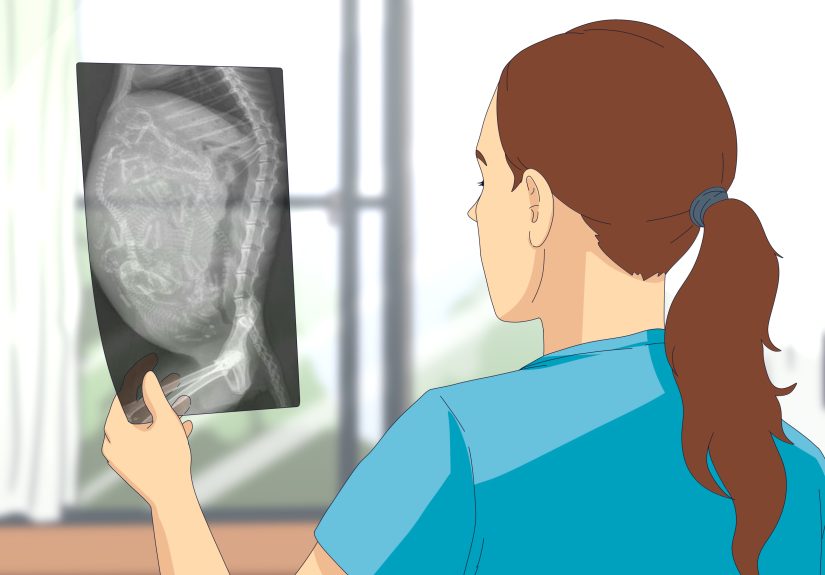
Ultrasound is widely used for pregnancy confirmation in goats. A common field approach is transabdominal ultrasound (probe on the belly), which can detect pregnancy as early as around 30 days, and tends to be more accurate after roughly 45 days. Some practitioners also use transrectal ultrasound, which can detect earlier (often around 20 days) but is more time-consuming.
Why ultrasound is great:
- Confirms pregnancy visually (embryo/fetus and structures can be identified by a trained person)
- Can estimate fetal numbers best in early-to-mid gestation (helpful for managing late-pregnancy nutrition)
- Helps spot problems like pseudopregnancy (fluid without fetuses)
Pro move: If you’re running a herd, schedule ultrasounds so you can separate confirmed pregnant does from open does and tighten your breeding plan.
Option B: Blood pregnancy tests (convenient, but timing matters)
Blood tests commonly look for pregnancy-associated proteins produced by the placenta. Many producers use lab-based tests (often discussed under brand names), which are typically reliable when drawn at the right timecommonly around 30 days after breeding for goats.
Why blood tests are popular:
- No special equipment on-farm (just proper sampling and shipping)
- Useful for screening a lot of does quickly
- Often cost-effective compared with repeated “wait and see” feeding and housing
The caution label: certain reproductive conditions (including pseudopregnancy) can confuse the picture, and no test is perfect if the timing is off or if early embryonic loss happens after testing. If the result conflicts with what you’re seeing, ultrasound is often the tie-breaker.
Option C: “Can I just… feel it?” (Please don’t make your goat hate you)
In late pregnancy, an experienced handler might feel fetal movement from the outside when a doe is relaxed. But internal palpation is not a DIY project. In goats, it’s easy to cause stress or injury if you don’t know exactly what you’re doing. If you want hands-on confirmation, call a veterinarian or experienced reproductive technician.
A Quick Timeline Cheat Sheet (So You Know When to Look for What)
- Day 0–21: Mark breeding date. Watch for a return to heat. No return is a cluenot a guarantee.
- Day 30–45: Good window to start confirming with ultrasound (earlier possible in skilled hands). Blood tests are often used around this period depending on the lab’s guidelines.
- Day 45–85: Ultrasound can be useful for pregnancy confirmation and (often) fetal counting.
- Day 100–150: Physical signs become more reliable: belly shape, udder development (especially closer to kidding), and kidding-prep behaviors.
- Final weeks: Udder filling, softening around the tail head, nesting behavior, and “I would like everyone to leave me alone” vibes.
Practical Tips Once You Think She’s Pregnant
Feed like a professional, not like a panicked fan
Early pregnancy doesn’t require dramatic diet changes, but late pregnancy and lactation do. Overfeeding concentrates too early can cause problems; underfeeding late pregnancy can also be risky. Aim for consistent forage quality, clean water, appropriate minerals, and body condition monitoring.
Plan for the due window (not a single due date)
Because the normal gestation range spans roughly 145–155 days, plan a kidding window. Set up a clean kidding area, check fencing, and stock basics: gloves, lubricant, iodine for navels, clean towels, a kid warming method, and your vet’s number.
Know when “weird” is urgent
Sudden severe abdominal swelling, refusal to eat, grinding teeth, weakness, or labored breathing can signal emergencies. Pregnancy can raise the stakes for digestive and metabolic issues. When in doubt, call a veterinarian.
Frequently Asked Questions (Because Goats Inspire Questions)
“She didn’t return to heatdoes that mean she’s definitely pregnant?”
It’s a strong clue, especially in breeding season, but not absolute. Silent heats, seasonal shifts, or reproductive conditions can mimic the pattern. If you need certainty, confirm with ultrasound or a properly timed blood test.
“My doe looks pregnant but the timing doesn’t add up. What gives?”
Hay belly, parasites, digestive issues, and pseudopregnancy can all create “pregnant-looking” bodies. If her size changes don’t match your breeding record, consider testing sooner rather than later.
“Can a doe act like she’s in heat while pregnant?”
Yes, some does show behavior that looks like heat even when pregnant. That’s why the best approach is layered: records + observation + confirmation testing when needed.
Conclusion: The Smart Way to Tell if a Goat Is Pregnant
If you want the cleanest, most reliable approach, stack your evidence: (1) track breeding and watch heat cycles, (2) look for timed physical changes, and (3) confirm with ultrasound or a properly timed blood test.
And remember: goats are wonderfully inconsistent. The goal isn’t to become a goat mind-reader (tempting as that sounds), but to make decisionsfeeding, housing, health checksbased on the best information you can get. Your future self, holding a warm, squirmy kid at 2:13 a.m., will thank you.
Barn Stories & Real-World Experience (The “I Learned This the Hard Way” Edition)
The first time I tried to figure out if a doe was pregnant, I did what most optimistic goat keepers do: I stared at her belly like it was a crystal ball. Every day I’d walk out to the pen, squint, tilt my head, and think, “Yep… that looks slightly more round than yesterday.” Spoiler: goats can look 12% more round after a single enthusiastic meal. If “roundness” were a diagnostic tool, every doe in America would be due tomorrow.
The second thing I learned is that goats are not obligated to follow the script you wrote in your head. I once had a doe who never really “showed” early, didn’t bag up much until late, and acted completely normalright up until she started pawing at bedding with the determination of someone trying to dig to China. That’s when it hit me: behavior changes are often more useful than belly-watching, but only if you know what’s normal for that specific goat. Some does are affectionate by default. Others are born with the soul of a grumpy librarian. Pregnancy may turn the sweetheart into a boundary-setting queen, or it may turn the grump into a nap-focused philosopher. Your best “experience-based” tool is familiarity.
Then there’s the lesson I call “The Calendar Saves Friendships.” When I started writing down breeding dates and heat cycles, everything got easier. If a doe didn’t return to heat around the 18–22 day mark, I could raise my confidence from “maybe” to “probably.” If she did return, I didn’t waste months feeding her like she was carrying twins and a secret third kid. Records don’t just help you predict kidding; they help you make smarter choices about feed, pen space, and when to call for testing.
Speaking of testing: the first time I watched a vet confirm pregnancy on ultrasound, my brain went, “Oh. That is… dramatically better than guessing.” Seeing a fetus (or more than one) turns the whole conversation from vibes to facts. It also changes how you manage the doe. If you know she’s carrying multiples, you can be more thoughtful about late-pregnancy nutrition and observation. And if you find out she’s not pregnant, you can rebreed sooner instead of playing the world’s slowest waiting game.
Finally, the big experience lesson: always keep a small “humility budget” for curveballs. I’ve seen does test pregnant and later come up open, likely due to early loss. I’ve seen “open” does turn out to be pregnant because the sample timing was off. And I’ve seen pseudopregnancy fool people who had been raising goats longer than I’d been alive. That’s why the best approach is layered. Watch the cycle, watch the goat, and when you need certaintytest. In the barn, confidence is nice. Confirmation is nicer.