Table of Contents >> Show >> Hide
- First, a quick reality check (and why “stranger danger” is outdated)
- Way 1: Build a “hard-to-grab” routine (before the approach)
- Way 2: Use “No–Go–Tell” to break the script (when something feels wrong)
- Way 3: Turn “almost” into “never again” (what to do right after you get away)
- Specific examples: how the 3 ways look in real life
- What NOT to do (aka: don’t help the bad plan succeed)
- 1-minute checklist: remember this under stress
- Bonus: of experience-based lessons (what people often say helped)
- Conclusion: Safety doesn’t require fearjust a plan
Important note: If you believe you’re in immediate danger, call 911 (U.S.). If you’re reading this for prevention (the best time to read it), you’re already doing the right thing.
Let’s be honest: the phrase “abduction attempt” sounds like a movie trailer voiceover. But real life is usually quietersomeone testing boundaries, trying to isolate you, or trying to get you to follow a “quick favor” script. The goal of personal safety isn’t to win a fight. It’s to avoid the situation, and if it starts, to break the script and get away.
This guide focuses on practical, non-heroic steps that work in everyday places: sidewalks, parking lots, stores, schools, transit stops, and online spaces that can lead to in-person meetings. You’ll get three clear strategies, plus examples and a 1-minute checklist you can actually remember under stress.
First, a quick reality check (and why “stranger danger” is outdated)
Most safety programs now focus on situations and behaviors, not “what a bad person looks like.” Why? Because risky situations can involve strangers or someone you recognize (a neighbor, an acquaintance, a friend-of-a-friend). Safety isn’t about profiling peopleit’s about spotting tactics like secrecy, pressure, isolation, and “come with me” urgency.
So instead of memorizing a thousand rules, you’ll use three ways to stay safer:
- Way 1: Build a “hard-to-grab” routine (prevention before anything happens).
- Way 2: Use a simple response that creates distance and attention (if someone approaches or pressures you).
- Way 3: Report fast and tighten your safety net (so “almost” doesn’t become “next time”).
Way 1: Build a “hard-to-grab” routine (before the approach)
If safety had a secret ingredient, it would be this: make yourself harder to isolate. People who intend harm often look for conveniencesomeone distracted, alone, rushed, or in a spot where no one can see what’s happening.
1) Pick routes and habits that keep you around people and light
Choose well-lit paths, stay near open businesses when possible, and avoid “shortcut traps” like empty alleys, isolated stairwells, or quiet corners of parking structures. If you can, travel with a friendthere’s safety in numbers, and also in having a second set of eyes when your brain is busy thinking about literally anything else.
If you’re a parent or caregiver, think in “safe routes” and “safe places,” not just “be careful.” If you’re a teen, the same idea applies: know where you’d go fast if you felt uneasyan open store, a security desk, a front office, a crowded entrance.
2) Reduce “easy target” signalswithout turning into a paranoid raccoon
You don’t need to walk around like a bodyguard in sunglasses. You just want to avoid being fully checked out. A few small shifts help:
- Head up sometimes: glance around, especially when leaving buildings, getting into cars, or waiting alone.
- Limit distractions: keep volume low enough to hear footsteps, bikes, and cars.
- Keys ready before you reach your car/home: don’t linger outside searching your bag like it’s a scavenger hunt.
3) Use “three W’s” and a check-in rule (especially for teens)
A strong safety routine includes communication. Teens going out alone can use a simple standard: Who you’re with, Where you’ll be, and When you’ll be back. It’s not about control; it’s about making sure someone would notice quickly if plans suddenly change.
Build a habit of checking in if you change locations. If you’re meeting anyone newespecially someone first met onlinemake “public place + trusted person knows” non-negotiable. No exceptions for “but they seem nice.” Lots of unsafe situations start with someone seeming nice.
4) Know who to approach for help (and who not to)
If you’re lost or feel threatened, don’t wander around hoping your face says “I need assistance.” Go directly to a safe helper:
- uniformed security or police
- a store employee with a name tag
- a parent with kids nearby
- a busy front desk (school, gym, community center)
Also: a key safety concept taught in many child-safety programs is that adults should ask other adults for help, not children. If an adult tries to pull you into a “help me” situation (lost pet, directions, carrying something), you can refuse and move away without guilt. You’re not being rude; you’re being safe.
Way 2: Use “No–Go–Tell” to break the script (when something feels wrong)
When an approach happens, your job is not to debate, educate, or give someone closure. Your job is to create distance and get to safety. Many safety programs teach some version of a simple pattern:
- No: set a boundary quickly and clearly.
- Go: move awaydon’t stay put.
- Tell: get to a trusted adult/authority and report it.
It sounds almost too simple, which is exactly why it works: your brain can remember it when your heart is doing drum solos in your chest.
1) Use a loud, clear boundary phraseand keep moving
Short beats clever. Think:
- “No.”
- “Back off.”
- “I can’t help you.”
- “Stop. Don’t come closer.”
Then move. Don’t stop to explain. Don’t stop to apologize. Predators often rely on social pressure: making you feel rude, dramatic, or “mean.” Here’s your permission slip: be rude. Polite is for dinner parties, not danger.
2) Create distance fast: change direction, go toward people, go inside
If someone is trying to get you to come closerto a car window, a doorway, behind a building, into an elevatortreat that as a giant blinking sign that says: Distance. Now.
Practical moves that reduce risk quickly:
- Step away and angle toward open, populated places (storefronts, lobbies, crowds).
- Cross the street or change direction if you feel followed.
- If a vehicle is pacing you: turn and go the opposite direction toward people and light. Don’t approach the car.
- Go where cameras and staff are (front desks, checkouts, entrances).
3) Make it obvious it’s an emergency: volume + specific words
If you need attention, don’t rely on “Help!” alone. People sometimes misread it as a joke, an argument, or “not my business.” Use specific phrases that clearly signal danger, such as:
- “This person is trying to take me!”
- “I don’t know this person!”
- “Call 911!”
Be loud while you move toward safety. The goal is to attract witnesses and disrupt the situation. Most importantly: try to stay in public space and avoid being moved somewhere private. That “second location” is where danger tends to increase.
4) If someone tries to grab you: escape the hold and get away
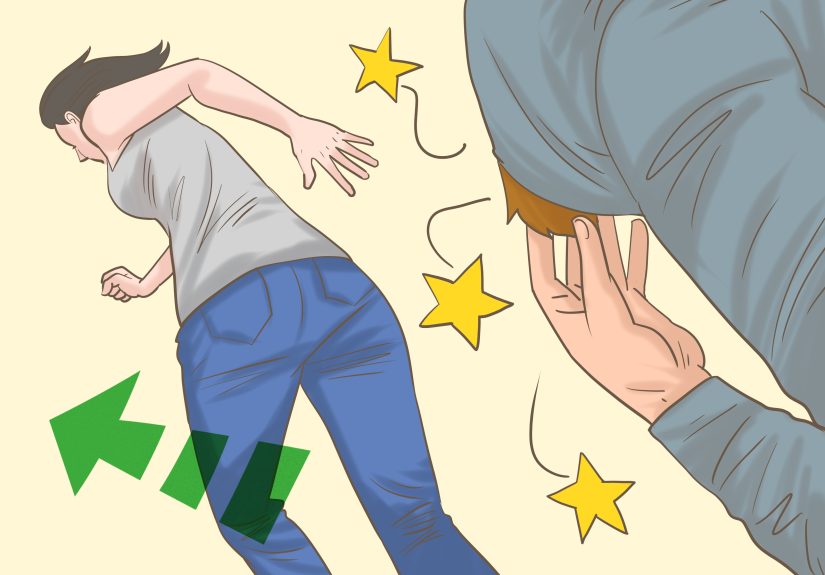
This isn’t about learning martial arts in the middle of a panic. It’s about one priority: break contact and create distance. If someone grabs you, focus on pulling away, making noise, and moving toward people. Don’t freeze because you’re “not sure.” If your instincts are yelling, listen.
If you want extra preparation, consider a reputable self-defense or personal-safety class that emphasizes awareness, boundary-setting, and escapenot brawling.
Way 3: Turn “almost” into “never again” (what to do right after you get away)
Many people walk away from a scary moment and try to shrug it off. Totally understandable. Also: that’s how patterns continue. Reporting and documenting helps protect you and othersand it can create a faster response if the person targets someone else later.
1) Get to a safe place and contact help immediately
As soon as you’re safe:
- Call 911 if there was an immediate threat, attempted grabbing, stalking, or coercion.
- Tell a trusted adult/authority right away (school staff, security, parent/guardian).
- If a child is missing or endangered, the U.S. has resources like NCMEC’s hotline (1-800-843-5678).
2) Write down details while they’re fresh (your memory is on a timer)
Adrenaline is great for sprinting. It’s terrible for storing details neatly in your brain. As soon as you can, note:
- where it happened (exact spot, nearby business, cross street)
- time and direction of travel
- description (height, clothes, distinguishing features)
- vehicle info (color, make/model, any part of the plate)
- what was said (“offered a ride,” “asked for help,” “told you to come closer”)
Even partial details can help police or security match other reports or camera footage.
3) Tighten your safety plan (without living in a bunker)
After an incidentor even as preventionupgrade your everyday plan:
- Create a family code word/password for pickup changes or emergencies.
- Set check-in expectations for teens (“text when you arrive,” “call if plans change”).
- Practice scenarios so your brain isn’t making a first-time decision under stress.
- Review online safety: keep meetups public, verify identities, and tell someone where you’ll be.
This isn’t about fear. It’s about reducing uncertainty. A simple plan lowers panic and increases speed.
Specific examples: how the 3 ways look in real life
Scenario A: “Can you help me find my lost dog?”
What’s happening: a stranger tries to pull you into a helpful-kid/helpful-teen role, often toward a car or a secluded spot.
Use Way 2: “No, I can’t help,” keep moving, go toward a business or group of people, and tell a trusted adult/employee. If you want to help in a safe way, you can say, “Ask the cashier/security,” while you keep distance.
Use Way 3: report the approach to staff/security with a clear description.
Scenario B: A car slows down and matches your walking speed
What’s happening: pacing is a red flagespecially near schools, transit stops, or quiet streets.
Use Way 2: don’t approach the window. Turn and move in the opposite direction toward people and light. Head to a lobby, open store, or any staffed building.
Use Way 3: note the vehicle details and report immediately.
Scenario C: Someone you “kind of know” insists you come with them
What’s happening: pressure + urgency + isolation is a bad combo, even if the person isn’t a stranger.
Use Way 2: “No,” and go to a public area. Call someone you trust on speaker while you move.
Use Way 3: tell a trusted adult or authority what happened. If you feel uneasy about backlash, remember: the goal is safety, not keeping the peace.
Scenario D: An online contact wants to meet “somewhere private”
What’s happening: online grooming can include secrecy, flattery, gifts, and pressure to meet in person.
Use Way 1: public meetups only (or no meetup), plus someone you trust knows where you are. If they resist those basics, that’s your answer.
Use Way 3: if there’s coercion, threats, or exploitation, report it to a trusted adult and local authorities.
What NOT to do (aka: don’t help the bad plan succeed)
- Don’t debate. “I have to go” is a complete sentence.
- Don’t step closer to a vehicle to “hear better.” Increase distance instead.
- Don’t worry about being rude. Safety beats social comfort.
- Don’t keep it secret afterward. Tell someone quickly; patterns matter.
- Don’t assume danger looks dramatic. It often starts as “small” boundary testing.
1-minute checklist: remember this under stress
- Notice: something feels off? Trust that signal.
- No: clear boundary (“No. Back off.”).
- Go: move toward people/light/staffed places.
- Noise: “Call 911!” / “I don’t know this person!”
- Tell: report immediately; share details while fresh.
Bonus: of experience-based lessons (what people often say helped)
These are composite, real-world-style scenarios based on common patterns in safety education and public reportsnot anyone’s private story.
1) The “I didn’t want to be dramatic” moment. A teen walking home noticed a car pass twice, slow down, then idle near the curb. Nothing “happened,” so the teen almost ignored ituntil the car matched their pace again. The lesson they described later was simple: the body notices patterns before the brain writes a perfect explanation. They crossed the street, turned into a busy storefront, and asked an employee to call a parent. The employee didn’t question it; they just helped. The big takeaway: you don’t need proof to choose safety. Acting early is what kept it from becoming an emergency.
2) The parking lot favor. A young adult loading groceries heard, “Heycan you help me lift something?” The person stood near a van with a partially open side door. It felt awkward to refuse. But the shopper remembered a basic rule: adults can ask other adults for help, especially staff. They said, “No,” shut their trunk, and walked back toward the store entrance. The person didn’t follow. The lesson: distance is your friend, and your “polite voice” is optional when something feels staged.
3) The online pressure campaign. A teen chatted with someone for weeks, then the person pushed for a private meetup: “Don’t tell your parentsthey won’t understand.” That secrecy request was the bright red flag. The teen showed a trusted adult the messages. The meetup never happened. The lesson: secrecy is a tactic. Safe people don’t need you isolated from your support system. Another takeaway is that telling an adult early can feel embarrassing for five minutes, but it can prevent months of fearor worse.
4) The “make it obvious” shout. In a crowded place, someone grabbed a child’s wrist and started moving quickly. The child yelled a specific phrasesomething like “I don’t know you!”and the surrounding adults immediately turned to look. The grabber let go and blended into the crowd. The lesson: specific words cut through confusion. Crowds can be safer when you give bystanders a clear signal that help is needed.
5) The after-action report that protected someone else. A student reported a suspicious approach near campus housing: a description, the vehicle color, and the time. A few days later, security connected it to another report and increased patrols in the area. The student later said the most surprising part was how much “small information” mattered. The lesson: reporting isn’t overreacting. It’s how communities spot patternsand how “almost” becomes “not again.”
Conclusion: Safety doesn’t require fearjust a plan
Thwarting an abduction attempt isn’t about being the toughest person on the street. It’s about being prepared to do three things well: reduce isolation (Way 1), create distance and attention fast (Way 2), and report and strengthen your safety net (Way 3). Your instincts are valuable data. Your voice is a tool. And your best “win” is getting yourself (or your child) home safeno movie trailer required.