Table of Contents >> Show >> Hide
- What “mansplaining” actually means (and what it doesn’t)
- Where the term came from and why it spread like wildfire
- Why mansplaining shows up so often (hint: it’s not just about “rude guys”)
- Why the Bored Panda roundup works: it’s catharsis with receipts
- Calling out mansplainers online: satisfying, risky, and sometimes necessary
- How to respond to mansplaining without losing your mind (or your job)
- If you’re worried you might be mansplaining (congrats, you’re already ahead)
- So… should we “shame them online”?
- Extra experiences and patterns people recognize (a longer look)
- Conclusion
There are few things more energizing than watching someone confidently explain your own job to youespecially when you’ve been doing it since before they discovered the “reply” button.
That delicious mix of disbelief, annoyance, and “is this a prank?” is the exact fuel that powers viral mansplaining callouts.
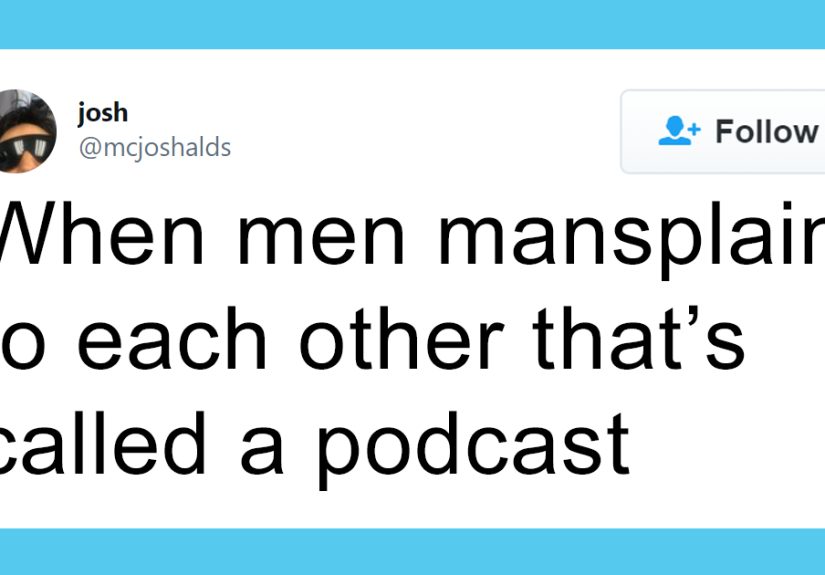
Bored Panda’s roundup “30 Women Who Had Enough Of Mansplainers And Shamed Them Online” taps into a very familiar pattern: a woman states a fact, shares expertise, or simply exists in a comment section
and someone swoops in to “helpfully” correct her, often with peak confidence and minimal accuracy. The internet, being the internet, does what it does best: screenshots, clapbacks, and a public lesson in humility.
What “mansplaining” actually means (and what it doesn’t)
“Mansplaining” is not “a man explaining something.” If that were the case, every dad teaching a kid to tie shoes would be sentenced to internet jail.
The term generally points to a specific vibe: a condescending explanation delivered with the assumption that the listeneroften a womancouldn’t possibly know the basics, even when she’s clearly the expert.
The three classic ingredients
- Assumption of ignorance: “Let me break this down…” when you never askedand your credentials are sitting right there.
- Dismissal of expertise: Talking over you, ignoring what you said, or treating your knowledge as “cute.”
- Overconfidence + under-listening: The explanation gets longer as the facts get shakier. (A bold strategy.)
It’s also worth saying: not every awkward explanation is mansplaining. Sometimes people are just nervous, excited, socially clumsy, or genuinely trying to help. The difference is usually in the
assumptions and the toneand whether the person adjusts when they realize you already know.
Where the term came from and why it spread like wildfire
The modern conversation around mansplaining is strongly linked to writer Rebecca Solnit’s essay “Men Explain Things to Me,” which describes that now-famous experience of being lectured about a book
that she, in fact, wrote. The label caught on because it gave people a quick name for a pattern they’d been living for years: being doubted, corrected, and spoken over in ways that felt less like
conversation and more like a one-person TED Talk you didn’t subscribe to.
Once a phenomenon has a name, it becomes easier to spotand harder to excuse. Social media then did its thing: it turned private frustration into public examples.
The result? A steady stream of “Sir, I am literally the subject-matter expert” moments that are equal parts maddening and hilariously revealing.
Why mansplaining shows up so often (hint: it’s not just about “rude guys”)
Mansplaining thrives where confidence is rewarded and listening is optional. In many cultures and workplaces, people unconsciously treat male voices as more “default-authoritative,”
while women are asked to “prove it” more often. That bias can show up in who gets interrupted, whose ideas get credited, and who gets treated like a beginner.
Common settings where it explodes
- Work meetings: You present a plan; someone restates it louder and gets praised for “great thinking.”
- STEM and technical spaces: Asking a simple question triggers a 900-word lecture that begins with “Actually…”
- Health and fitness: A woman mentions her own body, and a stranger materializes with a theory and a spreadsheet.
- Traditionally “male-coded” hobbies: Cars, gaming, investing, sportswhere gatekeeping often wears a lab coat.
- Online comments: The world’s largest stage for people who are wrong in high definition.
Research and reporting on conversational dynamics (including interruptions and speaking time) helps explain why these interactions feel so familiar.
When you’re consistently spoken over or second-guessed, “being explained to” stops feeling neutral and starts feeling like a power move.
Why the Bored Panda roundup works: it’s catharsis with receipts
Collections like Bored Panda’s are popular because they do two things at once:
they validate the “I thought it was just me” feeling, and they offer a mini masterclass in responsesespecially the funny, sharp, and cleanly-worded kind.
The most common patterns behind viral “shaming” posts
- The confident correction: Someone corrects a woman… using information she already provided.
- The expertise erasure: A professional is treated like an intern because she doesn’t “look” like the stereotype.
- The tone police bonus round: If she pushes back, suddenly the problem is that she’s “angry,” not that he’s wrong.
- The double-down: The more he’s corrected, the more he explains. (The internet calls this “digging.”)
And yes, the “shamed them online” part is key. These posts often include screenshots so the audience can see exactly what happenedand why the response landed.
In a world where people can deny tone, screenshots are the emotional equivalent of HD replay.
Calling out mansplainers online: satisfying, risky, and sometimes necessary
Public callouts can be effective because they create social consequences for behavior that’s often dismissed as “not a big deal.”
They also help set norms: talk to women like peers, assume competence, and don’t explain basics to someone who didn’t ask.
What callouts do well
- They document patterns: Especially when the same behavior repeats across industries and spaces.
- They educate by example: A good clapback shows boundaries and logic without a 10-page essay.
- They build solidarity: People realize the issue isn’t “my personality,” it’s a common dynamic.
Where callouts can backfire
- Pile-ons and harassment: The target may get dogpiled beyond what’s reasonable or safe.
- Context collapse: A tiny snippet can hide nuance (rare, but real).
- Derailment: The conversation becomes “is the word mansplaining divisive?” instead of “why aren’t we listening?”
A thoughtful approach is: correct the behavior, protect your energy, and avoid turning accountability into cruelty.
The goal is respect and learningnot a public execution for being socially clueless on a Tuesday.
How to respond to mansplaining without losing your mind (or your job)
The best response depends on your context: is this a stranger in the comments, a coworker, a boss, a client, or someone you actually like?
Below are options that range from diplomatic to “bless your heart, sir.”
Low-drama, high-impact replies
- Ask a clarifying question: “What makes you think I’m unfamiliar with this?”
- Name the assumption: “I’m the one who built this process, so we’re on the same page.”
- Redirect to facts: “That’s not accurate. Here’s the correct info.”
- Close the loop: “ThanksI’ve got it from here.”
- Use the “receipt” calmly: “Here’s the documentation / data / link to the earlier message.”
Workplace-specific moves
- Reclaim your idea in real time: “Yesthis connects to what I proposed earlier: [repeat key point].”
- Invite structure: “Can we let people finish before responding?”
- Document patterns: If it’s chronic and career-impacting, keep notes with dates and examples.
- Use allies strategically: A teammate can say, “Let’s hear her finish,” or “She already covered that.”
Online survival tactics
- Decide if they’re reachable: Some people want dialogue; others want a stage.
- Limit your labor: You don’t owe a dissertation to a username with an anime avatar (no offense to anime).
- Use platform tools: Mute, block, reportpeace is productive.
If you’re worried you might be mansplaining (congrats, you’re already ahead)
A quick self-check can prevent the whole situation. Before explaining, ask yourself:
- Did they ask? If not, consider: “Want my thoughts?”
- What do they already know? Start with: “How familiar are you with X?”
- Am I talking more than listening? If yes, pause and invite their view.
- Am I assuming incompetence? Especially when the person’s background suggests expertise.
- Can I add value instead of taking the spotlight? Sometimes support looks like silence.
Also: if someone tells you your tone came off condescending, you don’t have to agree with every detail to adjust.
“Got itI didn’t mean it that way, and I’ll be more mindful” is a power move.
So… should we “shame them online”?
Sometimes public pushback is the only thing that gets attentionespecially when private correction fails or when a pattern harms people.
But “shaming” is a blunt tool. Used carefully, it can reset norms. Used carelessly, it can turn into cruelty or distraction.
A healthier framing is: hold the behavior accountable. That can mean a witty quote-tweet, a calm correction, a boundary, a block,
or a workplace conversation backed by policy. The point is the same: women’s knowledge is not a debate topic.
Extra experiences and patterns people recognize (a longer look)
Across workplaces, hobbies, families, and comment sections, people describe a surprisingly consistent set of “mansplaining moments.”
Even when the details differ, the emotional arc is familiar: you share something you know, someone assumes you don’t, and you’re suddenly stuck in a conversation where you’re being treated like
the intern in your own life.
One common experience happens in meetings: a woman lays out a plan, complete with risks, timelines, and the “please don’t do this part because it will set everything on fire” warning.
A colleague then repeats the same plan in simpler wordssometimes even removing the most important nuanceand the room reacts like they’ve just witnessed innovation.
The woman is left deciding whether to correct the record (and risk being labeled “difficult”) or let the credit drift away like a balloon at a birthday party.
Many people learn a practical tactic here: calmly restate your point and attach your name to it“Yes, that’s what I proposed earlier: the phased rollout with the compliance check.”
Another pattern shows up in technical spaces. A woman asks a targeted questionsomething like, “Does this API rate-limit per user or per token?”
Instead of answering, someone replies with an intro-to-the-internet lecture, as if she’s never seen a keyboard before. The best responses tend to be short and surgical:
“I’m familiar with the basics. I’m asking specifically about rate-limits.” If the person still won’t answer, that’s a clue the goal wasn’t helping; it was performing expertise.
Health and fitness conversations bring a special flavor of mansplaining because they mix confidence with the human bodyan area where people feel weirdly entitled to give advice.
Women talk about being “corrected” on their own symptoms, training plans, or nutrition choices by strangers with no relevant background.
A boundary that works well is direct but neutral: “Thanks, but I’m working with a professional,” or “I’m not looking for advice.”
It’s amazing how quickly “I didn’t ask” functions as a spiritual cleansing ritual.
Then there’s the hobby gatekeeping experience: walking into a hardware store, a music shop, a game store, or a car forum and being treated like you wandered into the wrong building.
People describe being asked questions that feel less like curiosity and more like an audition: “Oh, you like that band? Name three songs.”
The emotional punch isn’t the questionit’s the assumption that you must prove you belong. A funny but effective deflection is to mirror it:
“Sureafter you answer mine: what makes you think I don’t?”
Online, many women describe a final pattern: the “tone trap.” If they respond politely, they’re ignored. If they respond firmly, they’re accused of being rude.
Recognizing that trap helps people stop negotiating with it. You can choose a response style that protects your energy rather than chasing approval:
short correction, no debate, and then disengage. Not every comment deserves your timeespecially the ones that confuse confidence with correctness.
Conclusion
Mansplaining isn’t just an annoying internet tropeit’s a visible symptom of deeper habits around whose voices we treat as authoritative.
That’s why Bored Panda-style roundups resonate: they package a frustrating dynamic into something people can recognize, laugh at, and learn from.
The best outcomes aren’t “gotcha” momentsthey’re better conversations: more listening, fewer assumptions, and a little humility before hitting “send.”