Table of Contents >> Show >> Hide
- Why Small Walk-In Closets Need a Smarter Plan
- 33 Clever Small Walk-In Closet Ideas
- 1. Start With a Full Closet Edit
- 2. Use Double Hanging Rods
- 3. Take Storage All the Way to the Ceiling
- 4. Choose Slim Matching Hangers
- 5. Add Shelf Dividers for Sweaters and Jeans
- 6. Install Wall Hooks for Everyday Items
- 7. Use the Back of the Door
- 8. Replace a Swing Door With a Curtain
- 9. Add Better Lighting
- 10. Use Clear Bins for Accessories
- 11. Label Everything That Is Not Obvious
- 12. Create a Shoe Wall
- 13. Store Off-Season Clothing Elsewhere
- 14. Add a Narrow Drawer Unit
- 15. Use Drawer Dividers
- 16. Try a Closet Tower
- 17. Use Corners With Purpose
- 18. Keep the Floor as Clear as Possible
- 19. Add a Slim Hamper
- 20. Use Matching Baskets for Visual Calm
- 21. Install Floating Shelves
- 22. Add a Mirror to Expand the Space Visually
- 23. Use a Light Color Palette
- 24. Add Bold Wallpaper for Personality
- 25. Create an Outfit Planning Zone
- 26. Use Acrylic Organizers for Jewelry and Small Items
- 27. Separate Daily Items From Special Occasion Pieces
- 28. Use Vertical Bag Storage
- 29. Add a Small Rug
- 30. Use Modular Closet Systems
- 31. Add a Charging Station
- 32. Store Luggage Strategically
- 33. Build a Maintenance Routine
- Small Walk-In Closet Layout Tips That Make a Big Difference
- Budget-Friendly Small Walk-In Closet Upgrades
- Common Small Walk-In Closet Mistakes to Avoid
- Real-Life Experience: What Actually Makes a Tiny Walk-In Closet Work
- Conclusion: Small Closet, Big Transformation
A small walk-in closet is a little like a suitcase before vacation: full of potential, slightly chaotic, and one bad decision away from sitting on it just to make it close. The good news? You do not need a mansion-sized dressing room, a marble island, or a chandelier the size of a wedding cake to create a closet that feels organized, stylish, and easy to use.
With smart planning, even a compact walk-in closet can become a hardworking storage zone that keeps your clothes visible, your shoes off the floor, and your mornings a lot less dramatic. The secret is using every inch with intention: walls, corners, doors, shelves, rods, drawers, lighting, and even that awkward little gap you have been pretending not to see.
Below are 33 clever small walk-in closet ideas to transform your space without turning your home into a construction site. Whether you are working with a narrow closet, a builder-grade setup, or a tiny dressing area that currently looks like laundry sneezed everywhere, these practical ideas will help you maximize storage, improve flow, and make your closet feel custom.
Why Small Walk-In Closets Need a Smarter Plan
A small walk-in closet cannot survive on random shelves and wishful thinking. When square footage is limited, every item needs a job and every zone needs a purpose. Instead of thinking only about how much you can fit, think about how easily you can see, reach, and return each item. A beautiful closet that becomes a mess in three days is not a design success; it is just clutter wearing lipstick.
The best small walk-in closet design ideas usually combine open storage, closed storage, vertical space, good lighting, and simple daily habits. You want a closet that supports how you actually live, not an imaginary version of yourself who folds sweaters with museum-level precision at 11 p.m.
33 Clever Small Walk-In Closet Ideas
1. Start With a Full Closet Edit
Before buying bins, shelves, or velvet hangers, remove everything and sort your wardrobe. Keep what fits, flatters, and supports your current lifestyle. Donate, sell, recycle, or repair the rest. A small walk-in closet feels instantly bigger when it is not storing jeans from three life chapters ago.
2. Use Double Hanging Rods
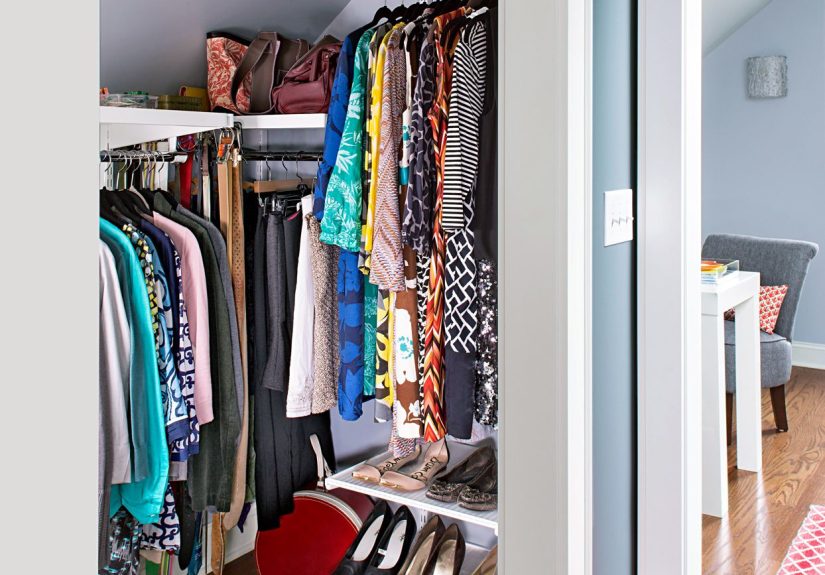
Double hanging rods are one of the fastest ways to maximize a small walk-in closet. Use the upper rod for shirts, blouses, and jackets, and the lower rod for pants, skirts, or folded-over trousers. This simple layout can nearly double your hanging space without expanding the room.
3. Take Storage All the Way to the Ceiling
In a compact closet, the upper wall is prime real estate. Add high shelves for seasonal clothes, luggage, keepsake boxes, or rarely used accessories. Keep a slim step stool nearby so the top shelf does not become a mysterious attic where sweaters go to retire.
4. Choose Slim Matching Hangers
Bulky hangers eat up rod space fast. Slim, matching hangers create a cleaner look and allow clothing to hang more evenly. Velvet or nonslip hangers are especially helpful for silky tops, dresses, and lightweight jackets that like to perform dramatic floor dives.
5. Add Shelf Dividers for Sweaters and Jeans
Open shelves can quickly become leaning towers of denim. Shelf dividers keep folded stacks upright and separated by category. Use them for sweaters, jeans, sweatshirts, handbags, or workout clothes so every pile behaves itself.
6. Install Wall Hooks for Everyday Items
Empty wall space is often overlooked in small walk-in closets. Add hooks for robes, belts, hats, scarves, bags, or the outfit you plan to wear tomorrow. Hooks are inexpensive, easy to install, and perfect for items that need quick access.
7. Use the Back of the Door
If your closet has a swing door, use the back of it for extra storage. An over-the-door organizer can hold shoes, accessories, hair tools, scarves, or small handbags. It is a simple way to create storage without sacrificing floor space.
8. Replace a Swing Door With a Curtain
In very tight rooms, a traditional door can block movement. Replacing it with a curtain, sliding door, or pocket door can make the closet easier to enter and use. Choose a curtain fabric that matches your bedroom for a soft, intentional look.
9. Add Better Lighting
A dark closet makes navy look black, black look mysterious, and your left shoe nearly impossible to find. Add LED strip lights, puck lights, or a small flush-mount fixture to brighten shelves and corners. Good lighting makes the space feel bigger and helps you actually see what you own.
10. Use Clear Bins for Accessories
Clear bins are ideal for scarves, clutches, seasonal accessories, and small clothing categories. Because you can see what is inside, you are less likely to buy duplicates or forget what you already have. Add labels for extra organization points.
11. Label Everything That Is Not Obvious
Labels are not just for people who alphabetize their spice racks for fun. In a small walk-in closet, labels help maintain order by giving every category a clear home. Use simple labels for bins such as “winter hats,” “travel,” “belts,” “workout gear,” or “special occasion.”
12. Create a Shoe Wall
If shoes are taking over the floor, move them up. Use adjustable shelves, cubbies, angled shoe racks, or stackable clear boxes to create a dedicated shoe zone. Keep everyday pairs at eye level or lower, and place formal or seasonal shoes higher up.
13. Store Off-Season Clothing Elsewhere
A small walk-in closet should prioritize the clothes you wear now. Store bulky coats, holiday outfits, and off-season pieces in under-bed containers, labeled bins, or spare luggage. Your closet should not feel like it is preparing for all four seasons at once.
14. Add a Narrow Drawer Unit
If floor space allows, a slim drawer unit can replace messy piles with hidden storage. Use drawers for underwear, socks, workout wear, jewelry, sunglasses, or folded T-shirts. Closed drawers reduce visual clutter and make the closet feel calmer.
15. Use Drawer Dividers
Drawers are helpful, but drawer dividers are what stop them from becoming tiny fabric jungles. Use dividers to separate socks, undergarments, ties, belts, watches, and small accessories. The more specific the category, the easier the system is to maintain.
16. Try a Closet Tower
A closet tower adds structure to a small walk-in closet by combining shelves, drawers, and hanging rods in one vertical unit. Place it in the center of a wall or in a corner to divide zones. It gives the closet a more custom look without requiring a full renovation.
17. Use Corners With Purpose
Corners are where closet space often goes to nap. Add corner shelves, curved rods, hooks, or stacked baskets to make those awkward areas useful. A corner can hold handbags, hats, folded denim, or accessories that do not need daily access.
18. Keep the Floor as Clear as Possible
A clear floor makes a small walk-in closet feel larger immediately. Avoid storing loose shoes, bags, and laundry piles on the ground. Use shoe racks, baskets, wall hooks, and hampers to lift clutter off the floor and improve flow.
19. Add a Slim Hamper
A small hamper keeps worn clothes from forming a dramatic mountain in the corner. Choose a narrow, lidded, or collapsible hamper that fits under shelves or beside a drawer unit. If your closet is extremely tight, use a hanging laundry bag instead.
20. Use Matching Baskets for Visual Calm
Matching baskets create a polished look and hide items that are not especially pretty, such as shapewear, lint rollers, or backup shoelaces. Choose woven baskets for warmth, fabric bins for softness, or clear containers for visibility.
21. Install Floating Shelves
Floating shelves are excellent for small walk-in closet storage because they can fit into narrow wall sections. Use them for handbags, perfume, folded knits, hats, or display-worthy shoes. They also add a boutique feeling without taking up much room.
22. Add a Mirror to Expand the Space Visually
A mirror is both practical and magical. It helps you check outfits, reflects light, and makes a small walk-in closet feel more open. Use a full-length mirror on the door, a mirrored cabinet front, or a narrow wall-mounted mirror.
23. Use a Light Color Palette
Light colors can make a compact closet feel brighter and cleaner. White, cream, soft gray, pale beige, and warm wood tones are classic choices. If you love color, add it through wallpaper, bins, art, or a painted ceiling instead of overwhelming every wall.
24. Add Bold Wallpaper for Personality
A small walk-in closet is a perfect place to take a design risk. Peel-and-stick wallpaper can make the space feel intentional and stylish without a major commitment. Try a subtle stripe, botanical print, geometric pattern, or moody floral for instant charm.
25. Create an Outfit Planning Zone
Add one hook, valet rod, or pull-out hanger for planning outfits. Use it to hang tomorrow’s clothes, steam a shirt, or compare pieces before getting dressed. It is a tiny feature that can make mornings feel far less frantic.
26. Use Acrylic Organizers for Jewelry and Small Items
Acrylic organizers keep jewelry, sunglasses, watches, and hair accessories visible and tidy. They work well on shelves, inside drawers, or on top of a narrow dresser. Seeing your accessories helps you use them instead of accidentally turning them into buried treasure.
27. Separate Daily Items From Special Occasion Pieces
Your everyday wardrobe should be the easiest to reach. Place work clothes, favorite jeans, daily shoes, and go-to accessories in prime zones. Store formalwear, costumes, sentimental items, and rarely used pieces higher, lower, or farther back.
28. Use Vertical Bag Storage
Handbags can waste shelf space if they are tossed in a pile. Use shelf dividers, hooks, cubbies, or clear bag organizers to store them vertically. Stuff soft bags with tissue or fabric inserts so they keep their shape.
29. Add a Small Rug
A rug can make a small walk-in closet feel like a real dressing space instead of a storage cave. Choose a low-profile rug that will not block doors or drawers. A washable option is best if shoes live in the closet.
30. Use Modular Closet Systems
Modular closet systems are useful because they can grow and change with your wardrobe. Look for adjustable rods, moveable shelves, add-on drawers, and customizable accessories. This flexibility is especially valuable in small spaces where needs change over time.
31. Add a Charging Station
If you use smartwatches, earbuds, styling tools, or a handheld steamer, create a tiny charging station. Keep cords contained in a drawer, basket, or cable box. This keeps electronics from drifting around the bedroom like lost little robots.
32. Store Luggage Strategically
Luggage takes up space, but it can also become storage. Use empty suitcases to hold off-season clothing, travel accessories, or extra bedding. Place them on high shelves or in the least-used corner so they do not block daily access.
33. Build a Maintenance Routine
The smartest small walk-in closet idea is not a product; it is a habit. Spend five minutes each week returning items to their homes, removing dry-cleaning bags, matching shoes, and resetting shelves. A tiny closet stays beautiful when clutter never gets a full-time lease.
Small Walk-In Closet Layout Tips That Make a Big Difference
Before installing anything permanent, map your closet by category. Decide where long hanging clothes should go, where shoes will live, which shelves will hold folded items, and where accessories should be stored. A small closet works best when the layout follows your daily routine.
For example, if you dress for work every morning, keep workwear near the entrance and weekend clothes farther back. If shoes are your biggest problem, prioritize shelving over extra hanging rods. If you own more folded clothes than dresses, drawers and shelves may be more useful than full-length hanging space.
Also consider visibility. Open shelves are convenient for items you use often, while closed bins and drawers are better for less attractive categories. When everything is visible all the time, a closet can feel busy. When everything is hidden, you may forget what you own. A balanced mix usually works best.
Budget-Friendly Small Walk-In Closet Upgrades
You do not have to spend thousands of dollars to improve a compact closet. Start with the basics: matching hangers, labels, shelf dividers, hooks, and better lighting. These affordable changes can make the closet feel cleaner and more functional in a single afternoon.
If you have a little more budget, add adjustable shelves, a slim drawer unit, or a modular closet kit. If you are ready for a bigger project, consider custom built-ins that fit your exact dimensions. The best investment is the one that solves your real problem, not the one that looks prettiest on social media.
Common Small Walk-In Closet Mistakes to Avoid
Buying Organizers Before Decluttering
Storage products cannot fix too many belongings. Declutter first, then buy organizers based on what remains.
Ignoring Lighting
A poorly lit closet feels smaller and makes outfit planning harder. Even simple battery-powered lights can improve the space.
Using Too Many Tiny Bins
Micro-organization can become annoying if every sock needs its own zip code. Use small bins for small items, but keep categories practical.
Forgetting About Maintenance
A closet system only works if you can keep using it. Choose solutions that match your habits, not an imaginary lifestyle involving daily sweater origami.
Real-Life Experience: What Actually Makes a Tiny Walk-In Closet Work
After working through many small-space storage problems, one thing becomes obvious: the most successful small walk-in closet is not always the most expensive one. It is the one that matches the owner’s real routine. A person who wears jeans, sneakers, and casual shirts five days a week does not need a closet designed like a formalwear showroom. Someone with a large shoe collection should not devote every wall to hanging rods. The closet should serve the wardrobe, not the other way around.
In real homes, the biggest transformation often starts with removing what does not belong. Many small walk-in closets are secretly storing old shopping bags, empty boxes, forgotten gifts, outdated clothes, and random household items. Once those leave, the closet suddenly has breathing room. It is not glamorous, but decluttering is the closet equivalent of opening a window.
The next improvement that consistently matters is visibility. When people can see their clothes, they wear more of them. Clear bins, open shelves, labeled baskets, and good lighting reduce the “I have nothing to wear” feeling, even when the wardrobe has not changed. Visibility also prevents overbuying. If you can see six black cardigans, you are less likely to bring home lucky number seven.
Another real-life lesson is that convenience beats perfection. A beautiful storage system that requires too many steps will eventually fail. If you wear the same handbag every day, give it an easy hook. If you change shoes at the closet entrance, put the shoe rack there. If you always drop workout clothes in a pile, add a basket exactly where the pile usually forms. Do not fight your habits; design around them.
Lighting is also surprisingly emotional. A dim closet can make getting dressed feel like a scavenger hunt. A bright closet feels cleaner, more cheerful, and more luxurious. Even inexpensive LED strips or motion-sensor lights can make a compact closet feel custom. Add a mirror nearby, and suddenly the room feels more like a boutique and less like a storage closet with commitment issues.
Finally, the best small walk-in closets leave a little empty space. This may sound strange when storage is limited, but cramming every inch creates stress. A small gap on a shelf, a little room between hangers, or an empty hook for tomorrow’s outfit makes the closet easier to maintain. Space is not wasted when it helps the system function. In fact, that breathing room may be the most luxurious feature of all.
Conclusion: Small Closet, Big Transformation
A small walk-in closet can be stylish, efficient, and genuinely enjoyable to use when it is planned with purpose. The key is to combine smart storage ideas with realistic habits: double your hanging space, use vertical shelves, brighten the room, label hidden storage, clear the floor, and keep daily items within easy reach. Add a mirror, a rug, or wallpaper for personality, and your compact closet can feel less like a cramped storage zone and more like a mini dressing room.
You do not need a huge budget or a celebrity-size wardrobe wall to create a closet that works beautifully. Start with one problem area, solve it well, and build from there. Before long, your small walk-in closet may become the most organized square footage in your home. Your laundry chair may feel betrayed, but that is a sacrifice worth making.