Table of Contents >> Show >> Hide
- Why “Outdated” Dining Rooms Feel Fresh Again
- 1. Wallpapered Dining Rooms
- 2. China Cabinets, Hutches, and Display Pieces
- 3. Rattan, Cane, and Bamboo Dining Furniture
- 4. Art Deco and Retro Glam Dining Rooms
- How to Bring Back Old Dining Room Style Without Making It Feel Dated
- Homeowner Experiences: What It’s Really Like to Live With These “Outdated” Dining Room Styles Again
- Conclusion
For a while, the dining room felt like the formal cousin nobody invited to the fun part of the house. Kitchens got the islands, living rooms got the giant sectionals, and dining rooms were left holding a dusty chandelier and a vague memory of holiday ham. But designers are changing their minds, and fast. The modern dining room is no longer a stiff, special-occasion-only museum of matching wood furniture. It is becoming warmer, richer, moodier, and far more interesting.
That shift has brought an unexpected side effect: several supposedly outdated dining room styles are back in style. Not in a copy-and-paste, “let’s pretend it’s 1993 again” way, thankfully. Instead, designers are reviving older looks with better materials, softer edges, smarter proportions, and much more personality. In other words, the old dining room got a glow-up.
If you have ever stared at a wallpapered dining room, a china cabinet, or a woven rattan chair and thought, “Wait… is this chic again?” the answer is yes. Very yes. Below are four outdated dining room styles making a big comeback, plus how designers are updating them for homes that actually live well today.
Why “Outdated” Dining Rooms Feel Fresh Again
Before we get into the four styles, it helps to understand why this comeback is happening. Homeowners are tired of rooms that feel flat, anonymous, and a little too internet-approved. After years of pale woods, minimalist everything, and perfectly matched sets, the pendulum is swinging toward spaces that feel collected, expressive, and human.
Dining rooms are especially suited to that shift. They are naturally social spaces. People linger in them. They tell stories in them. They celebrate birthdays in them, negotiate with toddlers in them, and occasionally pretend a Tuesday pasta dinner deserves candlelight. Because of that, designers are treating dining rooms less like background space and more like emotional space. That means color, texture, display, history, and even a bit of drama are welcome again.
So yes, the “dated” dining room is back. It just returned with better lighting and a stronger sense of self.
1. Wallpapered Dining Rooms
Why it went out of style
There was a stretch when wallpapered dining rooms were seen as too busy, too formal, or too committed. People ripped out floral prints, painted everything greige, and decided one sad accent wall was the safest possible choice. The result was often neat, fine, and about as memorable as plain toast.
Why designers love it now
Now, wallpaper is back because dining rooms can handle a little theater. This room is one of the best places in the house to go bold, whether that means a botanical print, a scenic mural, a geometric Art Deco-inspired pattern, or a moody grasscloth with subtle texture. Dining rooms are enclosed enough to carry a strong wall treatment, yet public enough for that treatment to feel intentional rather than random.
The updated version is less about making the room look fussy and more about creating atmosphere. Wallpaper can make a modest dining room feel jewel-box special. It can soften a modern table, add movement to boxy architecture, or set up a whole mood before anyone even sits down. If your table is simple, wallpaper becomes the outfit. If your furniture is more traditional, wallpaper can keep the room from feeling too serious.
A few especially current directions include landscape murals, oversized florals, plaid patterns, chinoiserie-inspired scenes, and warm-toned papers that feel layered rather than loud. Even better, designers are using wallpaper beyond the obvious walls. A papered ceiling, for example, can turn a plain dining room into the kind of space people accidentally compliment twice.
How to make it work today
Choose wallpaper that supports the furniture instead of competing with it. If your table has strong grain or your chairs are upholstered in pattern, let the wallpaper be tonal or textural. If your furniture is quiet, wallpaper can do the heavy lifting. The trick is balance. You want “wow,” not “why is the room yelling at me?”
2. China Cabinets, Hutches, and Display Pieces
Why they went out of style
For years, hutches and china cabinets got a bad reputation. They were seen as bulky, old-fashioned, and too tied to formal entertaining. Minimalism told everyone to hide everything. Open shelving got trendy. Built-ins took over. Meanwhile, the poor hutch was treated like a giant wooden apology from 1987.
Why designers love them now
Now those same storage pieces are coming back because they do something many newer interiors forgot how to do: they show a life. A dining room display cabinet can hold glassware, platters, linens, candles, ceramics, heirlooms, flea market finds, or the oddly charming bowl you bought on vacation and swore had a story. These pieces bring utility and personality at the same time.
The comeback version is lighter and more curated. Think glass-front hutches, vintage sideboards, antique armoires, or dark wood cabinets paired with modern lighting and contemporary art. Instead of making the room feel heavy, they ground it. Instead of reading as clutter, they create layered storage that feels deliberate and lived-in.
They also solve a very real problem: where to put entertaining essentials without making the dining table look like a staging zone for every meal. A good cabinet keeps serving pieces accessible, keeps the room functional, and adds visual height along the wall. That is a lot of work for one piece of furniture. Frankly, it deserves a thank-you note.
How to make it work today
Skip the overcrowded display. Style a cabinet with breathing room. Mix useful items with decorative ones. Stack plates, add a few books, include a bowl or vase with sculptural shape, and leave some negative space so the eye can rest. If the cabinet is ornate, keep the styling simple. If the cabinet is plain, the objects inside can bring the fun.
3. Rattan, Cane, and Bamboo Dining Furniture
Why it went out of style
Woven materials like rattan, cane, and bamboo were once dismissed as too beachy, too boho, or too “sunroom in a rental vacation house.” In many homes, they were overused or paired with themes so obvious they practically came with a seashell soundtrack.
Why designers love them now
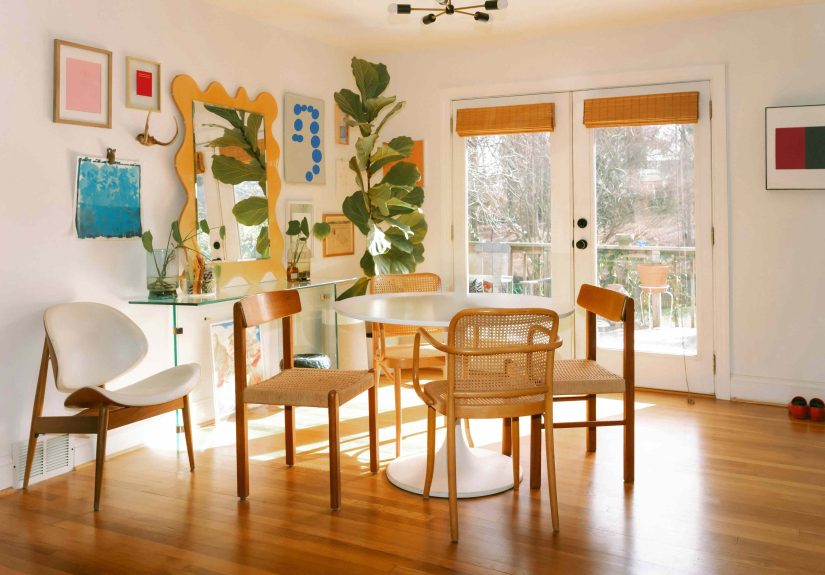
Today, natural woven materials feel fresh again because they add exactly what many dining rooms need: texture, warmth, and visual ease. A room full of hard surfaces can feel cold in a hurry. Add woven-back chairs, a rattan pendant, or a bamboo-framed cabinet, and suddenly the room relaxes. It becomes less showroom, more gathering place.
Designers also love these materials because they play well with almost everything. They soften dark woods. They warm up stone tables. They keep painted walls from feeling flat. They bring a casual note to formal architecture and a handcrafted note to modern spaces. In short, they are the design equivalent of someone who gets along with every group at the dinner party.
The current take is more refined than the old all-wicker-everything approach. Instead of filling the room with woven pieces, designers use one or two moments of natural texture to break up heavier elements. A pair of cane dining chairs at the heads of the table, a rattan light fixture over a walnut table, or bamboo details against a moody wall color can feel elegant instead of expected.
How to make it work today
Use woven materials as contrast, not a theme. Pair them with plaster walls, brass accents, upholstered seats, or darker woods so the room feels layered. Keep the palette grounded. Warm whites, olive, chocolate, rust, navy, and black all help woven textures look sophisticated rather than overly coastal.
4. Art Deco and Retro Glam Dining Rooms
Why it went out of style
There was a time when glam dining rooms felt a bit too shiny, too symmetrical, or too committed to “fancy.” Chrome, lacquer, geometric motifs, velvet, and dramatic silhouettes were sometimes written off as relics from old hotels, movie sets, or that one aunt who never met a mirrored console she didn’t love.
Why designers love it now
But now, retro glamour is back because people want dining rooms to feel special again. Not stuffy. Not fake-formal. Just special. Art Deco-inspired shapes, sculptural chairs, polished finishes, rich fabrics, and high-contrast palettes all bring presence to a room that is supposed to host meaningful moments.
The new version is edited. Designers are not asking you to recreate a jazz club in your suburban breakfast room. They are pulling select ideas from Deco and other retro eras: curved chair backs, geometric light fixtures, glossy finishes, deep color, fluting, chrome details, and velvet upholstery. These elements add polish without turning the room into costume design.
This is also where outdated can become incredibly chic. A pedestal table with a dramatic base, a smoky glass chandelier, a moody burgundy wall, or a set of low-back upholstered chairs can make the dining room feel tailored and memorable. It is a look that works especially well when balanced with quieter pieces, like matte walls, simple drapery, or antique wood for contrast.
How to make it work today
Pick two or three glamorous elements and stop there. Maybe it is velvet chairs, a geometric light fixture, and a lacquered bar cabinet. Maybe it is chrome details, a rich paint color, and a table with a sculptural base. The goal is elegance with restraint. You want your guests to think, “This room is stunning,” not, “Are we being seated for a cabaret?”
How to Bring Back Old Dining Room Style Without Making It Feel Dated
The secret to reviving any old-school dining room look is editing. The styles that are back in fashion are not returning exactly as they were. Designers are mixing old and new, not choosing one camp and declaring war on the other.
Start with one anchor: wallpaper, a hutch, woven chairs, or a glam chandelier. Then build around it with contrast. Pair a vintage cabinet with modern art. Use wallpaper with a clean-lined table. Add rattan to a room with darker, moodier paint. Mix an antique wood sideboard with sleek upholstered seating. These combinations keep the room from feeling frozen in time.
Also pay attention to comfort. One major difference between the old dining room and the current one is that today’s version is meant to be used. Chairs should be comfortable enough for dessert and long conversation. Lighting should be flattering. Storage should be practical. If the room only looks good in photographs and no one wants to sit there for more than twelve minutes, the design has missed the point.
Homeowner Experiences: What It’s Really Like to Live With These “Outdated” Dining Room Styles Again
One of the most interesting things about these revived dining room styles is how people respond to them after they actually live with them. On paper, a hutch, wallpaper, or a few woven chairs can seem like purely decorative choices. In real life, they change the way a room feels and how often it gets used.
Homeowners who bring wallpaper back into the dining room often say the space suddenly has identity. Before, it may have felt like a pass-through zone with a table in it. After wallpaper, it feels like a destination. Meals slow down. Dinner with friends feels more intentional. Even takeout somehow looks more put-together under a dramatic light fixture and a wall treatment with actual personality. That is the sneaky power of atmosphere: it makes ordinary moments feel slightly more ceremonial, in the best way.
People who reintroduce a hutch or china cabinet usually discover something else: they use their nice things more often. Platters come out on weeknights. Candlesticks stop living in a mystery box in the hall closet. Glassware gets rotated instead of forgotten. A display cabinet does not just store objects; it puts them back into daily life. The room becomes more functional because everything has a place, and more personal because what is visible tells a story.
Woven materials create a different kind of experience. They make dining rooms feel less precious. Cane-back chairs, a bamboo accent, or a rattan light fixture introduce warmth that invites people to relax. The room reads as finished, but not uptight. That matters for families, especially in homes where the dining room has to work hard. It may host homework at 4 p.m., dinner at 7 p.m., and birthday cake on the weekend. Texture helps the space absorb all of that life without feeling cold or overly staged.
Retro glam elements have perhaps the strongest emotional effect. A room with velvet, contrast, shine, and sculptural forms feels elevated. People tend to sit up a little straighter, light the candles, and linger longer. It does not have to be expensive or overdone. Sometimes one dramatic chandelier and a saturated paint color are enough to create that mood. The experience is less about luxury for luxury’s sake and more about giving the room occasion, even on an average night.
Another common experience is surprise. Many homeowners assume bringing back an older style will make the room feel old. Instead, if the pieces are mixed thoughtfully, the room feels richer and more original than a brand-new matching set ever could. A vintage cabinet next to contemporary art. A mural wallpaper behind a simple table. A woven chair under a polished brass pendant. These contrasts are what make the room feel current.
In the end, that may be the biggest lesson from this comeback: the best dining rooms do not feel trendy in a disposable way. They feel inhabited. They feel layered. They feel like people actually gather there. And once a dining room starts doing that, it stops being a forgotten formal zone and becomes one of the most rewarding spaces in the house.
Conclusion
Outdated dining room styles are back, but not because designers ran out of new ideas. They are back because many of those older ideas had something today’s homes need more of: warmth, character, mood, and usefulness. Wallpaper adds atmosphere. Hutches add storage and soul. Rattan and bamboo soften hard edges. Art Deco glamour reminds us that dining rooms should feel a little special.
The smartest way to use these trends is not to recreate the past exactly. It is to borrow from it with intention. Keep the personality, lose the stiffness, and let the dining room feel like a place people actually want to gather. Because if a room can hold your everyday meals and still look ready for a celebration, that is not outdated at all. That is just good design.