Table of Contents >> Show >> Hide
- Before You Start: What You’ll Need for Streak-Free Windshield Cleaning
- Way #1: The “Two-Towel” Method with an Automotive Glass Cleaner
- Way #2: DIY Vinegar + Distilled Water (Great for Haze and Light Film)
- Way #3: Isopropyl Alcohol “De-Grease” for Interior Windshield Film (Off-Gassing Haze)
- Way #4: Clay Bar Your Windshield to Remove Bonded Contaminants
- Way #5: Attack Hard Water Spots, Mineral Deposits, and “Stuck-On” Gunk
- Why Windshields Get Streaky (So You Can Stop the Cycle)
- Windshield Cleaning FAQs
- Conclusion: Clean Glass, Clear Mind (and Fewer Surprise Streaks)
- Real-World Experiences & Lessons From Cleaning Windshields (Extra )
A clean glass windshield is one of those “boring” car-care wins that quietly makes everything better: safer night driving,
less glare, clearer road signs, and fewer mysterious streaks that only appear when the sun hits at the exact angle that makes you question your life choices.
The good news? You don’t need a detailing degree. You need the right tools, the right technique, and a plan for the type of mess you’re dealing with
(dusty film, bug splatter, oily interior haze, or hard-water spots that look like your windshield got sprinkled with sadness).
In this guide, you’ll get five proven ways to clean a car windshield inside and outranging from quick maintenance wipes to “this stain has been here since
the last ice age” fixes. Along the way, you’ll learn what causes streaks, how to avoid common mistakes, and how to keep your auto glass cleaner longer.
Before You Start: What You’ll Need for Streak-Free Windshield Cleaning
- 2–4 clean microfiber towels (glass-specific or low-pile works best)
- Automotive glass cleaner (ammonia-free is safest, especially for tinted windows)
- Distilled water (helps prevent mineral streaks)
- Spray bottle (for DIY mixes)
- Optional: isopropyl alcohol, white vinegar, clay bar kit, glass polish, razor scraper, reach tool for the inside
Quick safety note
Avoid harsh abrasives on glass (and be extra cautious if you have aftermarket tint). If you’re using a razor scraper or polishing compound,
work slowly and carefully. Also: clean in the shade when possibleheat makes cleaners flash-dry and streak.
Way #1: The “Two-Towel” Method with an Automotive Glass Cleaner
This is the best everyday method for most people because it’s fast, effective, and doesn’t require chemistry class.
The core idea is simple: one towel cleans, one towel buffs. If you only use one towel, you often just smear cleaner and dirt around until it dries into streaks.
Best for
- Routine cleaning (dust, fingerprints, light road film)
- Inside + outside windshield maintenance
- Streak-free finish when you want it to look “invisible”
Steps
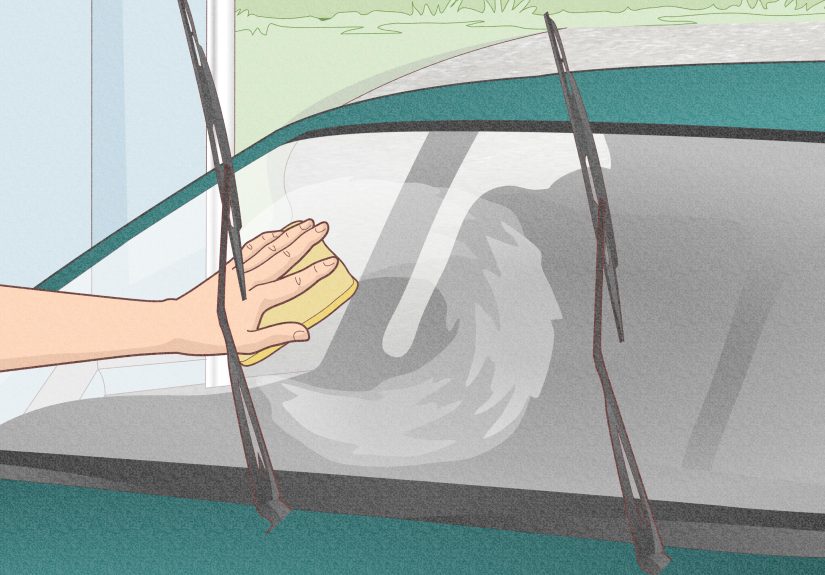
- Start dry: Use a dry microfiber to lightly wipe the windshield and remove loose dust and grit.
-
Apply cleaner smartly:
If the glass is cool, you can spray lightly on the glass. If it’s warm, spray the cleaner onto your towel instead
(less evaporation = fewer streaks). - Wipe with pressure: Use overlapping strokes. Don’t “tickle” the glasslight pressure often leaves oily residue behind.
-
Buff immediately: Use a second, clean, dry microfiber towel to buff until clear.
This step is where streaks go to die. -
Use different directions inside vs. outside:
Wipe the interior horizontally and the exterior vertically. If you see a streak later, you’ll instantly know which side it’s on.
Pro tips that save your sanity
- Use less product than you think. Too much cleaner can leave residue.
- Flip towels often. Once a towel face loads up, you’re basically polishing your windshield with yesterday’s grime.
- Don’t clean in direct sun. The cleaner dries too fast and streaks like it’s auditioning for a zebra role.
Way #2: DIY Vinegar + Distilled Water (Great for Haze and Light Film)
If your windshield has a mild haze or that “why does it look greasy even though it’s clean?” vibe, vinegar can help cut through residue.
The key is using distilled water to reduce mineral spotting.
Best for
- Light interior haze and everyday film
- Budget-friendly cleaning with common household ingredients
- People who enjoy telling friends, “It’s just vinegar,” like you’re a wizard
Mix options
- Option A (simple): 1:1 white vinegar + distilled water
- Option B (stronger but still gentle): 1 part vinegar to 3 parts water
- Optional: 1–3 drops of dish soap (tiny amounttoo much soap causes streaking)
Steps
- Spray the solution onto a microfiber towel (especially for interior glass to protect your dash and seats).
- Wipe the windshield in overlapping strokes, working top to bottom.
- Immediately buff with a second dry towel until the glass looks crystal clear.
Example
If your interior windshield looks “foggy” at nightstreetlights seem to bloom and headlights feel extra blinding
that’s often residue or film. A vinegar mix followed by a dry buff can dramatically reduce glare.
Way #3: Isopropyl Alcohol “De-Grease” for Interior Windshield Film (Off-Gassing Haze)
The inside of a windshield can build up a stubborn oily film from plastics, cleaners, smoke, and normal interior “life.”
Alcohol is excellent at cutting greaseespecially when the glass looks clean but still smears.
Best for
- Interior haze that returns quickly
- Smokers film or oily residue
- Brand-new cars where interior materials can leave a film over time
Two effective approaches
-
Alcohol wipe + glass cleaner finish:
Lightly dampen a microfiber with isopropyl alcohol, wipe the interior windshield, then follow with your glass cleaner and a final buff. -
DIY mix (advanced):
50% rubbing alcohol + 50% water + a small capful of white vinegar in a spray bottle.
(Always test on a small corner first, especially around tint edges.)
Steps
- Dry wipe first to remove dust (dust + liquid = mud paste you didn’t ask for).
- De-grease with alcohol on a towel (or your alcohol-based mix sprayed onto the towel).
- Finish clean with an automotive glass cleaner and buff dry with a fresh microfiber.
Common mistake
Using one towel for everything. You’ll just redistribute the oily film. Treat the alcohol step as “lifting” the grime,
then use a clean towel to remove it completely.
Way #4: Clay Bar Your Windshield to Remove Bonded Contaminants
Sometimes your windshield isn’t “dirty”it’s contaminated. Road tar mist, tree sap specks, industrial fallout, and other particles can bond to glass.
If your windshield feels rough even after washing (or your wipers chatter), a clay bar can pull contaminants out and restore slickness.
Best for
- Rough-feeling glass
- Wiper chatter caused by contamination
- Bug residue and stubborn specks that laugh at glass cleaner
Steps
- Wash first. Don’t clay a gritty windshieldclaying should be done on clean glass.
- Lubricate heavily. Use a clay lubricant or a glass-safe quick detailer.
- Glide the clay lightly. Minimal pressure. Let the clay do the work.
- Wipe and inspect. You should feel the surface get smoother as you go.
- Finish with glass cleaner and buff dry.
Aftercare
Once the glass is squeaky clean and smooth, it’s a great time to replace worn wiper blades and consider a hydrophobic coating
for improved rainy-day visibility.
Way #5: Attack Hard Water Spots, Mineral Deposits, and “Stuck-On” Gunk
Hard water spots are the windshield equivalent of permanent marker energy. They often require either gentle abrasion (polish)
or careful mechanical removal (scraper). Choose your level based on how severe the deposits are.
Best for
- Mineral spots and etched water stains
- Stubborn bug remains, sap dots, paint overspray on glass
- Windshield spots that reappear immediately after cleaning
Option A: Razor scraper (careful, controlled)
- Work on a cool windshield in the shade.
- Lubricate the area with glass cleaner or soapy water.
- Hold the razor at a shallow angle and gently scrape the deposit (never dig the edge into the glass).
- Wipe clean and buff dry.
Option B: Glass polish (for spots and light etching)
- Use a dedicated glass polish (often cerium oxide-based) following the product instructions.
- Work a small area at a time with a microfiber applicator or polishing pad.
- Wipe residue off thoroughly and re-clean the glass afterward.
Finish strong: protect the clean
After deep cleaning, consider applying a glass protectant or rain-repellent product to help water bead and roll off.
It won’t stop all contamination, but it can make future cleaning easier and improve wet-weather visibility.
Why Windshields Get Streaky (So You Can Stop the Cycle)
- Cleaning in heat or direct sun: cleaner flashes dry before you buff.
- Dirty towels: fabric softener, lint, or leftover detergent can smear.
- Too much product: excess cleaner dries into residue.
- Skipping the dry buff: the “buff towel” is the streak-free secret weapon.
- Interior film: you clean the outside perfectly… and the inside still looks foggy at night.
Windshield Cleaning FAQs
Is ammonia actually bad for car glass?
Ammonia isn’t inherently “bad” for plain glass, but it can damage window tint over timebubbling, discoloration, or breakdown.
If you’re not 100% sure about tint, choose an ammonia-free automotive glass cleaner.
Should I spray cleaner directly on the windshield?
On the exterior: usually fine on cool glass. On warm/hot glass: spraying the towel instead helps prevent streaks from rapid evaporation.
On the interior: spraying the towel helps protect dashboards, screens, and upholstery from overspray.
What’s that greasy haze on the inside?
Often it’s a film from interior plastics, cleaners, or smoke residue. Use an alcohol-based de-grease step (Way #3),
then finish with glass cleaner and a clean buff towel.
Can I use paper towels?
You can, but microfiber generally works better for streak-free results and leaves less lintespecially on a windshield where glare makes every tiny fiber feel personal.
Conclusion: Clean Glass, Clear Mind (and Fewer Surprise Streaks)
If you remember just three things: use clean microfiber towels, avoid direct sun, and always do a final dry buff.
For everyday cleaning, the two-towel method is king. For haze and film, vinegar or alcohol can de-grease what glass cleaner alone can’t.
And if the windshield still looks messy after cleaning, it may be contaminated or mineral-stainedtime for a clay bar, polish, or careful spot removal.
The payoff is immediate: better visibility, less glare, and a windshield so clear you’ll forget it’s there (which is the best possible windshield experience).
Real-World Experiences & Lessons From Cleaning Windshields (Extra )
People usually don’t think about windshield cleaning until a very specific moment: you’re driving at night, a lifted truck behind you turns on headlights
bright enough to power a small city, and suddenly your windshield looks like it’s covered in petroleum jelly. That’s the classic “interior film” experience
the outside may be clean, but the inside has a thin oily layer that scatters light and creates glare. The most common lesson drivers learn is that
“clean” and “clear” aren’t the same thing. The fix that feels most “aha!” in real life is doing an alcohol de-grease step and then buffing
with a truly clean towel. It’s not dramatic like an engine rebuild, but the visibility difference can be huge.
Another shared experience: the “I cleaned it twice and it still streaks” spiral. In many cases, the culprit isn’t the cleanerit’s the towel.
Microfiber that has been washed with fabric softener (or tossed in with linty cotton laundry) can leave smears or tiny fibers behind. A lot of weekend
detailers eventually adopt a simple ritual: keep a small stack of glass-only microfibers that never touch wax, tire shine, or interior dressings.
The moment you use the same towel you used on the dashboard, you’re basically seasoning your windshield with oils and wondering why it won’t behave.
Then there’s the “road trip windshield”bugs, sap, and gritty splatter that seems to fuse to glass during highway speeds. The everyday glass cleaner method
can struggle here, so many people discover the power of claying the windshield. The first time someone runs a clay bar over glass and feels
it go from slightly rough to smooth like a phone screen, it’s oddly satisfying. The practical payoff is also real: wipers glide more quietly, and the
windshield seems easier to wipe clean afterward.
Hard-water spots create their own special kind of frustration. You wash the car, wipe the glass, buff it… and the spots stare back like tiny ghosts.
This is where drivers learn that mineral deposits can require a different approachpolish, a careful scrape, or repeated targeted cleaning.
The lesson most people share is to start gentle and step up only as needed. A mild approach (vinegar mix or a dedicated glass cleaner) may handle fresh spots,
while older, etched deposits might need glass polish. Rushing straight to aggressive abrasion can cause more harm than good, especially around tint edges
or if you’re not lubricating properly.
Finally, there’s the “why does it look worse after I clean it?” momentusually caused by cleaning in direct sun. Plenty of people have experienced
the heartbreak of a freshly cleaned windshield that looks perfect in the driveway, then turns into a streaky mess the second sunlight hits it.
The fix is boring but reliable: clean in shade, use less product, and do that final buff while the surface is still slightly damp.
Windshield cleaning is less about buying the fanciest bottle and more about controlling variablesheat, towel cleanliness, and technique.
When you get those right, the glass stops fighting you and starts acting like, well… glass.