Table of Contents >> Show >> Hide
- Why AI SDRs moved from hype to real GTM infrastructure
- The headline result everyone keeps quoting: $1M+ in 90 days
- What’s actually worked in the first six months
- 1. Starting with inbound, not going straight to cold outbound chaos
- 2. Using AI for qualification and routing, not just for writing emails
- 3. Tight human oversight on the highest-risk moments
- 4. Measuring pipeline quality, not just meetings booked
- 5. Redesigning the workflow instead of bolting AI onto broken process
- What has not worked nearly as well
- The real data everyone is asking for
- So, should every company deploy an AI SDR?
- The next six months: fewer slogans, more operating discipline
- Experience from the field: what six months of AI SDRs really feels like
- Conclusion
Six months ago, “AI SDR” sounded like one of those phrases that could either change your pipeline forever or end up living next to your office Peloton: expensive, optimistic, and mostly used for moral support. Fast-forward, and the conversation has gotten a lot more serious. Sales teams are no longer asking whether AI can write an email. They are asking whether AI can qualify inbound, book meetings, revive dead leads, keep outbound moving, and help a lean team create real revenue without setting the CRM on fire.
The answer, based on real market data and recent case studies, is yesbut only with a giant asterisk. AI SDRs are working best when they are plugged into a clean system, assigned a narrow job, measured against pipeline and revenue instead of vanity activity, and supervised by humans who know the difference between “automated” and “out of control.” The teams winning with AI SDRs are not replacing judgment. They are replacing delay, repetition, and the tragic ritual of sending the same follow-up for the ninth time with slightly different punctuation.
Why AI SDRs moved from hype to real GTM infrastructure
The biggest reason AI SDRs gained traction is simple: sellers spend too much time not selling. Modern sales teams are buried in research, list building, follow-up, admin work, CRM cleanup, and trying to remember who downloaded a whitepaper four Tuesdays ago. AI fits naturally into this mess because the SDR function contains many repeatable workflows: first response, lead qualification, account research, routing, meeting scheduling, email drafting, multi-touch follow-up, and basic objection handling.
That does not mean every SDR task should be handed to a bot wearing a digital headset. It means AI is especially good at the top and middle of the funnel, where speed matters, consistency matters, and dropping a lead at the wrong moment can quietly cost revenue. Inbound is often the first place AI proves itself because speed-to-lead is brutally unforgiving. If a buyer lands on your website with intent and your team responds three hours later, that “hot lead” has often become someone else’s demo.
That is why some of the strongest AI SDR results today are coming from inbound coverage. AI never asks for coffee, never forgets a shift handoff, and never says, “I’ll reply after lunch,” right before a buyer vanishes into a competitor’s calendar. For organizations with meaningful website traffic or event lead flow, AI SDRs are not just a productivity play. They are a revenue capture mechanism.
The headline result everyone keeps quoting: $1M+ in 90 days
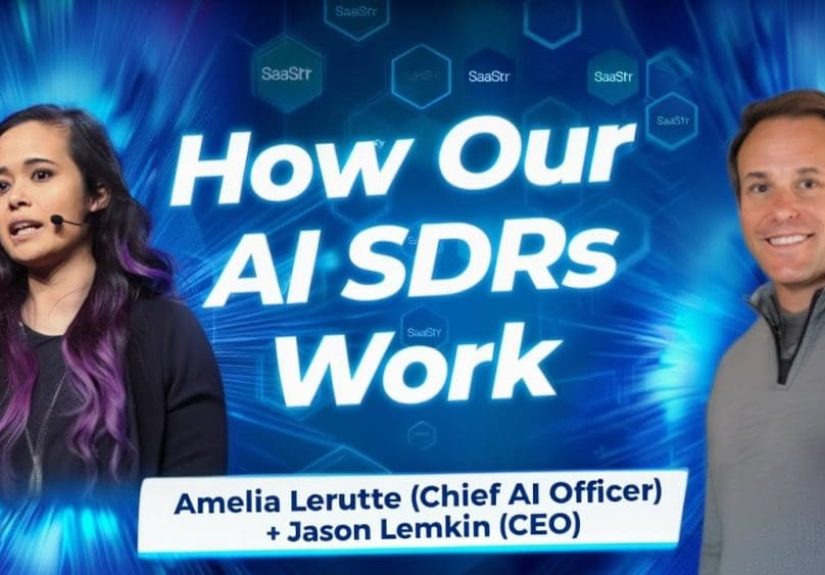
One of the most talked-about examples comes from SaaStr’s public breakdown of its AI SDR experiments. After layering in an inbound AI SDR, the company reported more than $1 million in closed revenue in 90 days, over $2.5 million in pipeline from agent-booked meetings, and a month in which roughly 70% to 71% of closed-won business came from AI-qualified inbound. That is not a rounding error. That is not “nice efficiency.” That is the kind of performance that gets a CRO to stop pretending this is a side project.
Still, the smarter lesson is not “copy the number and celebrate early.” The lesson is where the number came from. It came from a motion where AI could operate with clear signals: website visitors, existing context, buying intent, fast routing, and immediate engagement. In other words, the AI SDR succeeded because it was placed in an environment where context was rich and friction was low.
That pattern shows up elsewhere too. Qualified’s customer stories have highlighted companies increasing pipeline, doubling meetings booked, and handling a large share of inbound interactions around the clock. Demandbase reported doubled pipeline and meaningful time savings. Vanilla reported a 2X increase in meetings booked, a 135% month-over-month increase in leads, and AI handling most visitor interactions. The common thread is not magic. It is fast, contextual follow-up at scale.
What’s actually worked in the first six months
1. Starting with inbound, not going straight to cold outbound chaos
If there is one practical takeaway from early adopters, it is this: inbound AI SDRs usually reach value faster than outbound AI SDRs. Inbound leads come with intent. Someone visited the site, clicked something, came from a campaign, asked a question, or showed up after an event. That context gives AI a fighting chance to say something relevant instead of sending a painfully cheerful email to a person who has never heard of your company and is probably in a budget meeting.
Outbound AI can work, but it needs stronger guardrails. It requires clean data, accurate ICP definitions, better deliverability infrastructure, suppression rules, message testing, and human review. When teams skip those basics, AI does what software always does: it helps them make mistakes faster.
2. Using AI for qualification and routing, not just for writing emails
The lowest form of AI adoption in sales is asking it to draft an email and calling that a strategy. The stronger use case is full workflow execution: detect intent, qualify against rules, route intelligently, schedule the meeting, log the interaction, and surface next steps. That is where the revenue impact appears. AI that only writes copy saves a few minutes. AI that moves buyers through the funnel saves opportunities.
HubSpot’s 2025 sales data reinforces this. Reps say AI saves time, improves personalization, and surfaces better insights. In practice, that means the best-performing teams are not treating AI as a novelty writing assistant. They are using it as workflow infrastructure.
3. Tight human oversight on the highest-risk moments
The companies getting good outcomes are not going “fully autonomous” in the dramatic science-fiction sense. They are using human-in-the-loop reviews for high-value accounts, unusual objections, pricing discussions, compliance-sensitive language, and handoff points. AI handles the repetitive steps. Humans step in where trust, nuance, or judgment matter most.
This matters because B2B buying is messy. Buying groups are larger, more stakeholders are involved, and deals rarely move in a straight line. Gong’s research has shown that more internal coordination often correlates with better outcomes, while 6sense continues to show the importance of multi-threading inside accounts. An AI SDR can help identify and sequence the motion, but a human team still needs to own the bigger buying strategy.
4. Measuring pipeline quality, not just meetings booked
Early AI SDR programs looked impressive on screenshots and weak in board meetings because they focused on meetings booked instead of opportunity quality. That phase is ending. Serious teams now track conversion to opportunity, pipeline sourced, stage progression, show rates, deal size, win rate, and closed-won contribution.
This is exactly why the strongest case studies stand out. They do not just say, “Our agent had lots of chats.” They say, “Here is pipeline, here is revenue, here is speed, here is cost saved, and here is the portion of buyer engagement handled automatically.” That is the scoreboard that matters.
5. Redesigning the workflow instead of bolting AI onto broken process
McKinsey’s broader AI research makes an uncomfortable but useful point: the biggest gains come when companies redesign workflows, not when they simply layer AI onto old habits. That is painfully true in sales. If your routing rules are inconsistent, your CRM is half-confession and half-fan fiction, and your reps disagree on what a qualified lead even is, an AI SDR will not save you. It will expose you.
Successful deployments usually involve tightening SLAs, standardizing qualification logic, cleaning up fields, reducing tool sprawl, and defining clear handoff rules between AI, SDRs, AEs, and RevOps. Glamorous? No. Effective? Very.
What has not worked nearly as well
Spraying generic outbound at scale
The old bad habit of “more volume equals more pipeline” becomes even worse with AI. Generic outbound at machine speed is still generic outbound. Prospects do not suddenly enjoy irrelevant messaging just because it was generated in 0.7 seconds. If anything, low-quality AI outreach burns domains, damages brand trust, and gives human reps the digital equivalent of cleaning up after a toddler with a paint bucket.
Ignoring data readiness
Salesforce and Clari/Salesloft research both point to the same problem: data quality and fragmented systems are now major blockers to AI performance. If records are incomplete, duplicates are rampant, and intent signals are trapped across tools, agents will make weaker decisions. That is why so many teams are consolidating tools and prioritizing data hygiene before scaling AI deeper into the revenue engine.
Running AI SDRs without owner accountability
AI SDRs need a clear owner. Not five stakeholders who all say they “support the initiative” while no one monitors outputs, updates prompts, manages tests, or reviews exceptions. The best setups typically have one accountable operator or small cross-functional group spanning sales, RevOps, and marketing. No owner, no learning loop. No learning loop, no compounding gains.
The real data everyone is asking for
Across the market, the most useful AI SDR metrics are becoming surprisingly consistent:
- Speed-to-lead: especially for inbound and post-event follow-up.
- Meeting quality: show rates, qualification rate, and conversion to opportunity.
- Pipeline created: not influenced pipeline theater, but sourced or clearly attributed pipeline.
- Closed-won contribution: how much real revenue touches the AI-assisted funnel.
- Coverage hours: nights, weekends, and overflow periods where human teams usually miss engagement.
- Cost efficiency: hours saved, headcount leverage, and cost per opportunity created.
- Deliverability and reply quality: because bad data and bad targeting still punish AI-first programs.
Industry research supports the shift from hype to measurable impact. Outreach has reported that many teams using AI are seeing pipeline increases, while HubSpot’s survey shows AI leading other sales tech categories on perceived ROI. Salesforce data suggests sellers expect meaningful time savings from agents in research and drafting. But perhaps the most important point from the broader research is that AI value is highest when tied directly to workflows in marketing and sales, where revenue impact is visible.
So, should every company deploy an AI SDR?
Not exactly. Companies with strong inbound traffic, event volume, or a clear qualification bottleneck are usually the best candidates first. Companies with weak data hygiene, vague ICPs, poor CRM discipline, or a habit of buying seven tools before fixing one process should slow down. AI SDRs are amplifiers. They amplify good systems into better ones, and bad systems into cautionary LinkedIn posts.
The smartest rollout is often phased. Start with one use case. Inbound qualification is a favorite. Then move into event follow-up, lead reactivation, or tightly scoped outbound for specific segments. Build the operating rhythm. Review transcripts. Audit routing. Inspect deal quality. Then expand. That is how AI SDR programs mature from “cool demo” to real GTM leverage.
The next six months: fewer slogans, more operating discipline
The market is already moving past the lazy question of whether AI will “replace SDRs.” That framing misses the point. The better question is how sales development changes when software can handle more of the repetitive work instantly, continuously, and at scale. In many teams, the SDR role is becoming less about manual activity production and more about judgment, orchestration, personalization at key moments, and strategic account engagement.
That future is not anti-human. It is anti-waste. The winners will not be the companies with the loudest AI branding or the most cartoon robot mascots. They will be the teams that combine cleaner data, tighter processes, stronger measurement, and thoughtful human oversight. The dream is not to create a robotic sales floor. The dream is to stop letting revenue leak out of the funnel because nobody replied before dinner.
Experience from the field: what six months of AI SDRs really feels like
Here is the part most polished case studies skip: the first six months of AI SDR deployment usually feel less like a grand transformation and more like operating a very fast intern who works 24/7, never sleeps, learns quickly, and occasionally says something that makes everyone in RevOps stare at the ceiling.
Month one is mostly setup and humility. You discover your routing logic is messier than expected. Your CRM has duplicate accounts with slightly different spellings. Your lead stages include terms nobody can define consistently. Marketing says one thing counts as hand-raise intent, sales says another, and the AI agent sits there waiting for adults to make a decision. This stage is deeply unsexy, but it is where the real work begins.
Month two is where early wins appear. You start seeing instant follow-up on inbound traffic. Event leads get contacted while the coffee from the conference booth is still warm. A few meetings book on nights or weekends. Somebody posts a screenshot in Slack and suddenly half the company becomes an AI expert for twenty-three minutes. Morale goes up because the system is visibly doing work that used to get delayed or missed.
Month three is where the metrics become real enough to matter. Not every meeting is perfect, of course. Some are too early. Some are lightly qualified. Some are booked with people who were curious, not committed. But if the program is set up well, opportunity creation starts to stabilize, response times shrink dramatically, and the human team starts spending more time on actual selling and less time on calendar Tetris and repetitive follow-up.
Month four is where discipline matters most. This is usually when companies are tempted to over-expand. They want the AI SDR to do outbound, inbound, reactivation, renewals, upsell alerts, event follow-up, objection handling, and probably water the office plants. The mature teams resist this urge. They inspect what is working, tighten prompts, improve suppression rules, and build better exception handling. The immature teams try to turn one strong use case into twelve mediocre ones.
By month five, the emotional shift is obvious. Skeptics stop asking whether AI SDRs are “real” and start asking where else they can help. Reps become more comfortable because they see AI taking the drudgery, not the relationships. Managers begin caring less about activity count and more about coverage, speed, conversion, and quality. The organization moves from experimentation to operating model.
By month six, the companies getting the most value all seem to arrive at the same conclusion: AI SDRs are not a shortcut around good sales process. They are a force multiplier for good sales process. If your systems are clean, your ownership is clear, and your metrics point to revenue instead of vanity, AI SDRs can produce serious results. If not, they become another expensive reminder that software cannot fix confusionit can only scale it. That may be the most honest data point of all.
Conclusion
Six months into the AI SDR wave, the early verdict is no longer mysterious. AI SDRs absolutely can create pipeline, qualify inbound, accelerate follow-up, and in the right setup, contribute to seven-figure revenue outcomes in surprisingly short windows. But the breakthrough does not come from automation alone. It comes from pairing AI with better process, better data, narrower use cases, stricter measurement, and humans who still know when to step in.
That is the real story everyone is asking for. Not whether AI SDRs are good or bad. Not whether robots are taking over the bullpen. The real story is that AI SDRs work best when companies stop treating them like a stunt and start treating them like part of the revenue system.