Table of Contents >> Show >> Hide
- 1. Start with a Spring Cleaning Game Plan, Not a Panic Attack
- 2. Declutter Before You Deep-Clean (Always)
- 3. Work One Space at a Time with the “Empty, Sort, Reset” Method
- 4. Use Time-Boxing Tricks So You Actually Start
- 5. Set Up Smart Storage with the 80/20 Rule
- 6. Make Decluttering Decisions Easier with Simple Rules
- 7. Build Maintenance Into Your Spring Reset
- Real-Life Spring Cleaning Experiences and What You Can Learn
- Ready to Spring Clean Like a Pro?
The first warm breeze hits, the birds start acting like they run the neighborhood, and suddenly your
house looks like it’s been hoarding winter since November. That’s your cue: it’s spring cleaning time.
But instead of randomly attacking dust bunnies and shoving sweaters into bins you’ll “sort later,”
why not borrow the exact strategies professional organizers use with their clients? Pros don’t just
clean; they build simple systems so your home stays calmer long after the mop is put away.
These seven pro organizer-approved tips for spring cleaning will help you clear clutter, deep-clean
smarter, and set up a space that’s easier to maintain the rest of the year. No perfection required,
just a plan, some trash bags, and the willingness to let go of that broken gadget you “might fix
someday.”
1. Start with a Spring Cleaning Game Plan, Not a Panic Attack
Professional organizers rarely walk into a home and just “see what happens.” They start with a plan:
which rooms matter most, how much time is available, and what the priorities are. A written spring
cleaning plan keeps you from jumping between ten unfinished projects and calling it quits in defeat.
Begin by listing your home’s zones: entryway, kitchen, living room, bedrooms, bathrooms, storage
spaces. Then rank them by impact. High-traffic areas like the kitchen and family room usually give you
the biggest visual and emotional payoff when they’re clean and clutter-free.
Next, block time realistically. Many organizers recommend short, focused sessions15 to 30 minutes per
taskrather than marathon cleaning days that leave you exhausted and surrounded by half-sorted piles.
You can assign one room per weekend, or one category (like “linens” or “paperwork”) per day.
Pro tip: treat your list like a menu, not a guilt trip. On a low-energy day, choose an easy win like
“wipe baseboards in hallway.” On a high-energy day, go for a bigger bite, like “declutter kitchen
cabinets.”
2. Declutter Before You Deep-Clean (Always)
If you scrub, dust, and mop around piles of stuff you don’t even like, you’re not spring cleaning;
you’re just shining your clutter. That’s why professional organizers push one golden rule:
declutter first, clean second.
Start with the most visible and frequently used spaces: kitchen counters, the coffee table, bathroom
vanity, entryway hooks and shoe racks. These areas collect everyday cluttermail, random chargers,
half-used products, “temporary” pilesthat make your home feel messy even when the floor is technically
clean.
Use simple categories organizers love:
- Keep – You use it, love it, or truly need it.
- Donate – It’s in good shape, just not for you anymore.
- Trash/Recycle – Broken, expired, or nobody’s favorite.
- Relocate – It belongs in another room (more on that in a moment).
To keep momentum, schedule a donation drop-off or pickup before you even start. Many organizers
recommend this to prevent the “donation pile” from turning into long-term floor decor. Once the
clutter is gone, cleaning becomes faster, easier, and way more satisfying.
3. Work One Space at a Time with the “Empty, Sort, Reset” Method
Instead of floating from corner to corner, pros usually attack one contained area at a time:
a single drawer, shelf, closet, or cabinet. A common method is:
Empty → Sort → Clean → Reset.
- Empty the space completely.
- Sort items by categorycleaners, snacks, toiletries, office supplies, etc.
- Clean the now-empty shelf, drawer, or surface.
- Reset only what you truly want to keep, in a way that makes sense.
This method works for everything from your fridge to your linen closet. In the kitchen, you might pull
everything out of the pantry, group items by type, toss expired foods, wipe the shelves, then restock
with most-used items at eye level. In the bathroom, you can gather all skincare and makeup, discard
expired products, and corral the rest into bins based on daily use versus occasional use.
The key is to finish the area before moving on. Professional organizers are big on completion because a
tiny, fully reset zone (like a perfectly organized junk drawer) gives you a burst of motivation to keep
going. It’s proof that progress is happening, even if the rest of the house still looks mid-project.
4. Use Time-Boxing Tricks So You Actually Start
One of the biggest reasons spring cleaning never gets off the ground is that it feels huge. Pro
organizers borrow time-boxing tricks to make starting less scary. Two favorites:
-
The 20/10 method: 20 minutes of focused cleaning, followed by a
10-minute break. You can repeat this cycle for as long as your schedule (or patience) allows. -
The 15-minute blitz: Set a timer for 10–15 minutes and race the clock on one mini
taskclearing a counter, sorting shoes, or wiping down one bathroom.
These methods do two things: they give you a clear start and end, and they keep perfectionism from
taking over. You don’t have to “finish the whole house today.” You just need to do the next 15 or 20
minutes. Once you’re moving, it’s much easier to keep going.
Time-boxing also helps families and roommates pitch in. Everyone can handle a single round of “timer
cleaning,” and you can assign zones: kids handle toy pickup while adults do surfaces and donation bags.
5. Set Up Smart Storage with the 80/20 Rule
Spring cleaning isn’t just about making things spotless today; it’s about making your space easier to
keep tidy tomorrow. That’s where organizers’ storage strategies come inespecially the
80/20 organizing rule.
The idea: use only about 80% of any shelf, drawer, or bin, and leave 20% breathing room. That extra
space makes it easier to see what you own, return items to “home,” and add seasonal things without
overstuffing. Think of it as a clutter buffer.
As you reset each space:
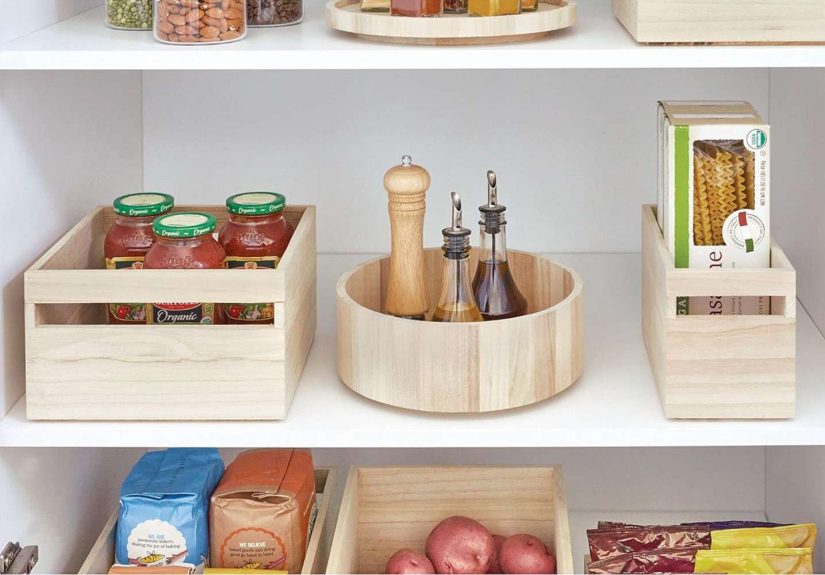
- Give the most-used items prime real estateeye-level shelves, front of the closet, top drawer.
-
Limit categories with simple boundaries: one basket for spare cords, one bin for cleaning rags, one
shelf for backup toiletries. -
Use basic organizersbins, drawer dividers, hooks, shelf risersto create clear “parking spots” for
groups of items.
Pro tip: don’t buy a trunk-load of pretty bins before you declutter. Many organizers call this one of
the biggest mistakes people make. First figure out what’s staying, then measure and choose containers
that fit the stuff and the spacenot the other way around.
6. Make Decluttering Decisions Easier with Simple Rules
Spring cleaning forces you into dozens of tiny decisions: keep or toss, donate or store, display or put
away. Professional organizers make this easier by using clear, pre-set rulesso you don’t negotiate
with every single sweater and souvenir.
Here are a few decision rules organizers often recommend:
-
The “Would I buy this again at full price?” test: If the answer is no, it may not be
worth the space it takes up. -
The one-year rule (with exceptions): If you haven’t used or worn it in a year,
consider letting it goexcluding true keepsakes, special-occasion items, and important documents. -
Limit by container: Choose the container first (one box for kids’ keepsakes, one bin
for seasonal decor), then only keep what comfortably fits inside. -
Pre-scheduled donation: Book a donation pickup or mark a date on your calendar to
drop items off, so you’re less likely to second-guess your decisions.
For sentimental items, many experts suggest choosing the “best of the best” rather than keeping
everything. Keep the one concert T-shirt you actually wear, or photograph collections of bulky items
(like kids’ artwork) before letting most of them go. You’ll preserve the memory without storing
unnecessary clutter.
7. Build Maintenance Into Your Spring Reset
The secret pro organizers don’t always advertise? Spring cleaning isn’t a one-time miracle. It’s a
reset that works best when you pair it with simple maintenance habits. Otherwise, you’re just signing
up to redo the same exhausting project next year.
As you spruced up each space, layer in maintenance routines, such as:
-
Daily resets: 5–10 minutes at night to put things back “home” in the kitchen and
living room. - Weekly reviews: A quick sweep for out-of-place items, laundry piles, and mail clutter.
-
Monthly mini-declutters: Choose a small spacejunk drawer, bathroom cabinet, or a
shelfand do a 10-minute tidy. -
Seasonal edits: Each season, rotate clothing, check expiration dates, and donate
items that no longer fit your life.
For bigger or risky jobslike cleaning gutters, washing high exterior windows, deep carpet cleaning, or
heavy-duty garage clear-outsdon’t hesitate to outsource. Many organizers encourage hiring trades or
cleaning services for tasks that are dangerous, time-intensive, or simply not your strength. It’s still
part of taking care of your home.
Real-Life Spring Cleaning Experiences and What You Can Learn
Tips are great, but seeing how they work in real life helps them stick. Here are a few common spring
cleaning “stories” that professional organizers describeand how the strategies above turn chaos into
calm.
The Overwhelmed Small-Apartment Dweller
Picture a one-bedroom apartment with no entryway and a tiny closet. Shoes pile up by the door, the
kitchen counter doubles as a mail station, and the only table is buried under “temporary” stuff. When
spring rolls around, the idea of a full deep clean feels impossible.
In this scenario, an organizer might start by creating a simple game plan: Day 1 is for the entry zone,
Day 2 for the kitchen surfaces, Day 3 for the closet. The renter uses the “empty, sort, reset” method
on a single cabinet at a time, sets a 20-minute timer for each session, and commits to just one small
win per evening.
After a week, the entry area gets a low-profile shoe rack and a wall hook for keys. The kitchen counter
only holds essentials and a small tray for mail. The closet is far from Pinterest-perfect, but there’s
breathing room on the hanging rod thanks to the “Would I buy this again?” rule and a strict limit on
how many sweatshirts are allowed. It’s not a total makeoverit’s a realistic upgrade that actually
lasts.
The Busy Family with Too Many “Just in Case” Items
In a busy household, every surface can turn into a landing zone: sports gear in the hallway, half-done
school projects on the dining table, kitchen counters lined with rarely used gadgets. Parents want a
cleaner home but feel like clutter multiplies faster than they can clear it.
Here, pros often focus on decluttering before buying any storage. The family walks through a few
high-traffic spaces and asks: “Do we use this regularly?” or “Would we actually miss this?” The “just in
case” stash of old water bottles, extra vases, and mystery cords gets narrowed down to what the family
truly uses.
They create kid-friendly categoriesone basket for school supplies on the table, one bin by the door
for sports gear, one shelf section for board games. Each container is intentionally kept about 80% full
so children can easily find and put away their things. A Sunday “reset” becomes a family habit: music
on, timer set for 20 minutes, everyone putting items back in their zones.
The result isn’t a showroom house; it’s a lived-in space where clutter still happens, but it’s easier to
tame because everything has a home and the family has a routine.
The “All or Nothing” Perfectionist
Another very common pattern is the spring cleaner who wants to do everything perfectly or not at all.
They dream of a magazine-ready pantry, color-coded closets, and immaculate floorsbut the sheer scale
of that dream keeps them from starting.
Professional organizers help by breaking that all-or-nothing thinking. Instead of “declutter the whole
house,” they suggest focusing on one pain point, like the bedroom nightstand or the bathroom counter.
The person uses a 15-minute timer, clears just that area, and applies a few decision rules: toss
duplicates, keep only what’s used weekly on the surface, and give everything a designated spot.
Over time, these small wins build confidence. The perfectionist starts to see that “good enough” can
feel incredibly peaceful. A functional pantry with labeled bins and some empty space beats an elaborate,
color-coded system they never have time to maintain.
The Allergy Sufferer Who Needs a True Reset
Spring can be brutal for people with allergies. Dust, pollen, and pet dander seem to find every
surface. For them, spring cleaning isn’t just about aesthetics; it’s about feeling physically better at
home.
In an allergy-focused spring reset, the plan starts with decluttering and then prioritizes tasks that
reduce dust and trapped allergens: washing pillow covers and blankets, vacuuming under and behind
furniture, cleaning vents, and rotating the mattress. Hard surfaces get wiped top to bottom, and
frequently handled itemsremotes, doorknobs, drawer pullsget regular attention.
Organizers may also suggest simplifying surfaces to make routine cleaning easier: fewer knick-knacks on
shelves, clear bedside tables, and closed storage for items that tend to gather dust. A monthly reminder
to wash bedding and a weekly schedule for quick dusting help keep things under control well after the
spring deep clean is done.
Whether you live in a studio apartment or a busy family home, the themes are the same: start small,
make decisions with simple rules, give your stuff clear homes, and build maintenance right into your
routine. Spring cleaning isn’t about suddenly becoming a different person; it’s about designing a home
that works with your real life.
Ready to Spring Clean Like a Pro?
Spring cleaning doesn’t have to be a once-a-year punishment. When you approach it the way professional
organizers dodeclutter first, work one space at a time, use time limits, and leave breathing room in
your storageyou’re not just cleaning; you’re resetting how your home functions.
Start with one room, one shelf, or even one drawer. Set a timer, grab a donation bag, and let those
“maybe someday” items go. A calmer, fresher home is built one small, intentional decision at a timeand
this spring is the perfect moment to begin.