Table of Contents >> Show >> Hide
- Quick Snapshot: What “Artisan Imperial Grey” Typically Means
- Why Imperial Grey Is a Sneaky-Smart Color Choice
- Performance: What the Artisan Does Best
- Tilt-Head Design: Convenience You’ll Notice Every Time You Bake
- What’s in the Box (And What You’ll Probably Buy Later Anyway)
- Imperial Grey in the Real Kitchen: What You Can Make (With Specific Examples)
- Stand Mixer Attachments: The “Oops, I Built a Hobby” Effect
- Cleaning, Care, and the “Please Don’t Let This Become Complicated” Section
- Buying Advice: When the Artisan Imperial Grey Is the Right Move
- FAQ: Fast Answers to Common “Should I?” Questions
- Conclusion: The Imperial Grey Artisan Is a Classic… With Better Kitchen Manners
- Real-World Experiences: What Living With the KitchenAid Artisan Imperial Grey Feels Like (Extra )
Some kitchen tools earn their spot on the counter. Others earn a shrine. The
KitchenAid Artisan Imperial Grey Stand Mixer somehow does bothworking like a small appliance
while quietly serving as kitchen décor that says, “Yes, I make bread. No, I will not be joining your sourdough group chat.”
If you’ve been eyeing the Artisan line for years (or you’ve just fallen for that moody, grown-up gray), this deep dive breaks down
what you’re actually getting, what it’s best at, what it’s not best at, and how to decide if Imperial Grey is your kitchen’s
new neutral.
Quick Snapshot: What “Artisan Imperial Grey” Typically Means
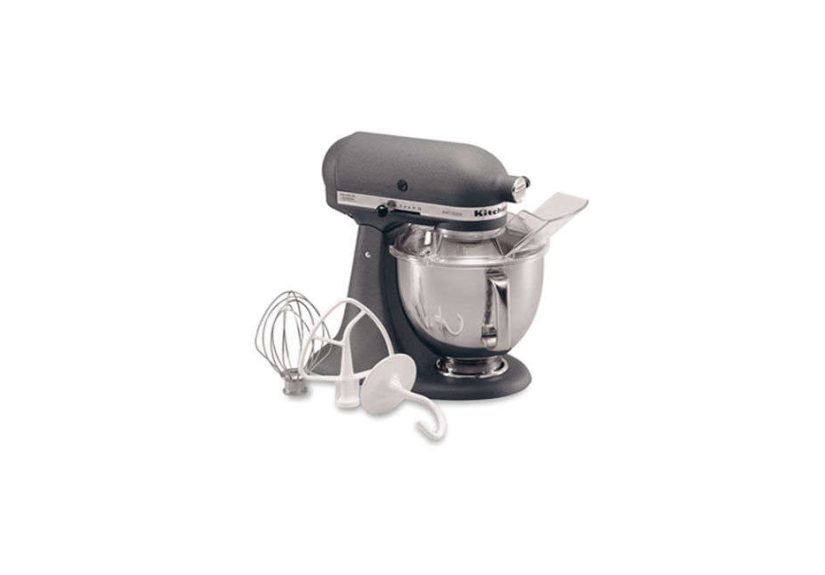
In most U.S. listings, “Imperial Grey” refers to a KitchenAid Artisan Series tilt-head mixer in the classic 5-quart classoften the
KSM150PS family. That’s the iconic silhouette: tilt-head design, 10 speeds, a handled stainless-steel bowl, and the
familiar front hub that turns the mixer into a “culinary center” once you start adding attachments.
At-a-Glance Specs (Typical for the KSM150PS-Style Artisan)
- Capacity: 5-quart bowl (big enough for everyday baking and entertaining batches)
- Speed settings: 10 speeds (from slow stir to fast whip)
- Motor rating: commonly listed around 325 watts for this Artisan tilt-head class
- Design: tilt-head for easier access when adding ingredients or swapping attachments
- Weight/size: around the low-20-lb range; footprint roughly 9” wide and ~14” deep; head-up clearance can be closer to ~17.5”
Translation: it’s a true “do most things well” home mixerstrong enough for cookie dough and enriched bread dough, nimble enough for frosting,
and steady enough that it won’t do the cha-cha across your counter unless you’re really asking for trouble.
Why Imperial Grey Is a Sneaky-Smart Color Choice
Let’s talk about the elephant in the kitchen: color. A stand mixer is one of the few appliances that
expects to be seen. Imperial Grey sits in that sweet spot between “statement piece” and “plays well with others.”
It’s darker than a light silver, typically warmer than a cold stainless look, and it tends to hide smudges and flour dust better than
glossy white or black. It’s the espresso martini of mixer colors: not loud, but definitely not boring.
Practical bonus: if your kitchen leans modern (black hardware, white cabinets), Imperial Grey looks intentional. If your kitchen leans cozy
(wood tones, warm lights), Imperial Grey reads “classic.” Either way, it’s a counter-friendly color that doesn’t demand you redecorate your life
to match it.
Performance: What the Artisan Does Best
1) Mixing batters and cookie dough (the Artisan’s natural habitat)
The Artisan’s 5-quart bowl capacity is ideal for the stuff most home bakers actually make: cookie dough, brownie batter, cake batter, banana bread,
and the occasional “I’m bringing something to the party” dessert.
A real-world example: a classic chocolate chip cookie dough that starts with creaming butter and sugar. On lower speeds, the flat beater can
aerate without flinging sugar into the next zip code. Once flour goes in, you can keep the speed moderate and let the mixer do the work
and if you use the pouring shield correctly (more on that later), you’ll dramatically reduce the “countertop snowfall.”
2) Whipping: cream, meringues, and fluffy things that feel like magic
This is where the wire whip shines: whipped cream, Swiss meringue buttercream, egg whites for macarons, and even quick emulsions like mayo.
The Artisan’s multiple speed steps make it easier to ramp up gradually instead of blasting your ingredients into foam with emotional damage.
3) Dough: great for enriched doughs; okay for frequent heavy kneading (with common sense)
The Artisan tilt-head is often praised as a strong all-around performer, and many testers find it handles typical home baking tasksincluding
kneading doughwithout drama. Where you want to be realistic is frequency and intensity. If you’re kneading stiff dough daily for large loaves,
bagels, or extra-low-hydration doughs, a larger bowl-lift model can be a better long-haul choice. But for pizza night, cinnamon rolls,
brioche, and sandwich bread? The Artisan is very much in its comfort zone.
Tilt-Head Design: Convenience You’ll Notice Every Time You Bake
Tilt-head mixers are popular for a reason: you flip the head up, add ingredients, scrape the bowl, or swap attachments without wrestling the machine.
It’s the difference between “I’ll make frosting” and “I’ll make frosting… after I stretch.”
Counter-space reality check
Tilt-head convenience comes with one small catch: you need clearance above the mixer to raise the head. If your mixer lives under cabinets,
measure first. Many owners store the mixer on the counter and slide it forward when neededeasy, but worth planning for.
What’s in the Box (And What You’ll Probably Buy Later Anyway)
For the typical Artisan (KSM150PS family), the standard kit is refreshingly practical:
- 5-quart handled stainless-steel bowl (dishwasher-safe)
- Coated flat beater (paddle)
- Coated dough hook
- 6-wire whip
- Pouring shield
The coated attachments: helpful, with one small “be nice to them” rule
Coated beaters are convenient because they’re easier to clean and don’t react with ingredients like acidic batters.
The tradeoff is that coatings can chip if they’re treated like a medieval weapon in the dishwasher rack.
Use them normally, avoid banging them around, and you’ll likely be fine.
The wire whip isn’t always dishwasher-friendly
This varies by model and materials, but many reviewers recommend hand-washing the wire whip to keep it looking good longer.
(It’s a whisk. It deserves a spa day.)
Imperial Grey in the Real Kitchen: What You Can Make (With Specific Examples)
Example 1: “Party batch” chocolate chip cookies
The 5-quart bowl is often described as large enough for big cookie batches (think: multiple dozen). You can cream butter and sugar,
mix in eggs and vanilla, then add dry ingredients gradually at low speed to avoid flour clouds. Finish with chocolate chips on a slow speed,
or fold in by hand if you want to prevent overmixing. The Artisan’s steady build helps keep everything consistent.
Example 2: Shredded chicken (yes, really)
This is one of the “why didn’t I do this sooner?” tricks: add warm, cooked chicken to the bowl, use the flat beater, and mix on low.
In under a minute, you get perfectly shredded chicken for tacos, meal prep bowls, or the kind of salad that makes you feel like you have your
life together.
Example 3: Pizza dough on a weeknight
Combine water, yeast, flour, and salt, then let the dough hook knead until it becomes smooth and elastic. The key is speed discipline:
start slow, increase gradually, and don’t crank it like you’re trying to launch the dough into orbit. Give the motor breaks for very stiff doughs,
and you’ll get consistent results without stressing the machine (or your patience).
Stand Mixer Attachments: The “Oops, I Built a Hobby” Effect
The Artisan’s front power hub is one of its biggest advantages. Start with a mixer, end up making pasta, grinding meat, shredding vegetables,
and possibly considering a lifestyle change.
Attachments people actually use (not just “fantasy kitchen” stuff)
- Pasta roller/cutter set: for fresh sheets and noodles without hand-cranking
- Food grinder: for burgers, meatballs, sausages, and grinding cooked meats for spreads
- Slicer/shredder: for cheese, carrots, potatoes, and salad prep that doesn’t take an eternity
- Ice cream maker bowl: for homemade ice cream and sorbet (dangerously fun)
- Spiralizer: for veggie noodles and quick prep
The upgrade many owners rave about: a flex-edge beater
One common complaint with any stand mixer is stopping to scrape the bowl. A flex-edge beater (sold separately) adds a silicone edge that scrapes
as it mixesespecially handy for creaming butter, mixing batters, and keeping ingredients from clinging to the sides like they pay rent there.
Cleaning, Care, and the “Please Don’t Let This Become Complicated” Section
Good news: daily care is simple.
- Wipe the body: a damp cloth handles most splatters.
- Bowl cleaning: the stainless bowl is typically dishwasher-safe, but hand-washing keeps it pristine.
- Attachments: coated beaters are often dishwasher-safe; wire whips are frequently recommended for hand-wash.
- Pouring shield: rinse promptly after use (sugar + time = sticky regret).
Noise and wobble: what’s normal?
Stand mixers aren’t silent monks. Some noise is normal, especially at higher speeds. Slight head movement can happen with heavy doughs or very
high speedsbut if it’s excessive, checking that the head is locked and that the bowl is properly seated usually solves it. Reviewers often mention
the Artisan is stable, but it’s still a powerful motor moving dense ingredientsphysics will be physics.
Buying Advice: When the Artisan Imperial Grey Is the Right Move
Choose the Artisan Imperial Grey if you:
- Bake regularly (cookies, cakes, frosting, quick breads, occasional yeast dough)
- Want a 5-quart capacity that’s flexible for family meals and entertaining
- Love the tilt-head convenience and easier bowl access
- Want attachment compatibility to expand beyond mixing
- Prefer a neutral, design-friendly color that won’t clash with future kitchen changes
Consider a bowl-lift model instead if you:
- Make large batches of stiff dough frequently (bagels, big sourdough mixes, heavy whole-grain doughs)
- Want maximum stability for near-daily kneading or very large batch sizes
- Prefer a larger bowl capacity (6–8 quarts) as your default
FAQ: Fast Answers to Common “Should I?” Questions
Is Imperial Grey the same as “Grey”?
Retailers sometimes simplify names or rotate colors over time. “Imperial Grey” is commonly used as a specific color label for certain listings,
while KitchenAid also offers other greys across different collections. If you care about an exact shade, compare official product photos and retailer
images before buying.
Will a 5-quart mixer be big enough?
For most home kitchens: yes. It’s a versatile size that can handle small batches (whipping cream) and party batches (cookie dough) without forcing
you into a bulky footprint.
Is the Artisan “powerful enough”?
For standard home baking, it’s widely considered a top-tier choice. If your primary goal is frequent heavy dough work, you may want a larger,
heavier-duty bowl-lift model. Otherwise, the Artisan is a strong all-around performer.
Conclusion: The Imperial Grey Artisan Is a Classic… With Better Kitchen Manners
The KitchenAid Artisan Imperial Grey Stand Mixer hits that rare sweet spot: iconic design, practical everyday performance,
and enough versatility to grow with your cooking ambitions. It’s excellent for batters, frosting, and most home dough tasks, and it opens the door to
a huge ecosystem of attachments that can genuinely save time. Imperial Grey adds a modern, understated vibe that looks good on the counter and
behaves well in real life (meaning it doesn’t show every single smudge like a glossy black appliance that’s mad at you).
If you want one mixer that can handle weeknight pizza dough, weekend cupcakes, and holiday cookie marathonswithout requiring you to earn a culinary
degreethis is a smart, satisfying pick.
Real-World Experiences: What Living With the KitchenAid Artisan Imperial Grey Feels Like (Extra )
Day-to-day, the Artisan Imperial Grey tends to become the kitchen equivalent of a reliable friend who always shows up with snacks. The first thing
most people notice isn’t even the performanceit’s how often it gets used once it’s already out. When a stand mixer lives in a cabinet, it becomes
a “special occasion” appliance. When it lives on the counter, it becomes a Tuesday appliance. And that’s where the Imperial Grey color quietly helps:
it looks intentional, like it belongs, so you don’t feel pressured to hide it away after every bake.
A typical week might look like this: you start with something harmlesswhipped cream for berries. The wire whip goes on in seconds, you tap the speed
up gradually, and suddenly you’re making clouds. Then you realize you can whip egg whites for omelets that feel restaurant-level. A few days later,
you’re creaming butter and sugar for cookies, and you notice the mixer frees up your hands to measure the next ingredient without rushing. It sounds
small, but it changes the vibe. Baking becomes calmer. You’re not juggling a hand mixer and a bowl with one elbow while whispering, “Please don’t fling
flour into my soul.”
The tilt-head design is one of those features you don’t fully appreciate until you use it repeatedly. Need to add cocoa? Flip the head up. Need to
switch from paddle to whisk? Flip. Need to scrape the bowl? Flip. The motion becomes automatic. And because the bowl is handled, moving heavy mixtures
(cookie dough, mashed potatoes, shredded chicken) is less awkwardno “wet hands plus slippery bowl” circus act.
Imperial Grey also has a very practical “I hide mess better than I should” advantage. A light dusting of flour on a pale mixer can look like a crime
scene. On Imperial Grey, it’s barely noticeable until you’re ready to wipe it down. The same goes for fingerprints. You still clean it (because, you
know, civilized society), but you’re not cleaning it constantly just to keep it looking decent.
One of the most common “experience upgrades” is adding a flex-edge beater later. People often describe it as a tiny quality-of-life improvement that
makes batters feel smoother and reduces stop-and-scrape moments. And then attachments happen. Pasta on a weekend. Shredded veggies for a slaw that
actually tastes fresh. Ice cream experiments that start wholesome and end with “cookie butter swirl” like a delicious plot twist.
Over time, the Artisan tends to shift from “nice appliance” to “default method.” Instead of kneading by hand, you reach for the dough hook. Instead
of whisking forever, you let the mixer handle it. And that’s the real experience: the Imperial Grey Artisan doesn’t just make specific recipes easier
it lowers the friction of cooking at home. More baking, less effort, fewer dishes, and a kitchen that feels like it’s on your side.