Table of Contents >> Show >> Hide
- Why Nani Marquina Still Matters
- The Collection That Put Natural Texture Front and Center
- Why This Collection Was Ahead of Its Time
- How the Collection Fits Into Real Interiors
- Luxury Without the Usual Drama
- What Designers Can Learn From It
- Experience: Living With a Rug Like This Changes a Room
- Conclusion
Some designers make products. Nani Marquina makes arguments. Her rugs have long insisted that the thing under your coffee table does not have to be a polite background player that quietly collects crumbs and tolerates furniture legs. It can be art, architecture, craft, memory, and mood all at once. So when a new collection arrives from Spain’s rug doyenne, design people tend to lean in a little closer, as if the floor itself just started telling a more interesting story.
That is exactly what makes this collection worth talking about. At first glance, it feels calm, tactile, and almost modest. Then you notice the layers: the natural fibers, the irregular textures, the subtle tonal shifts, the way handmade techniques are allowed to stay visible instead of being polished into oblivion. This is not the sort of rug collection that screams for attention like a peacock in a crystal showroom. It is smarter than that. It seduces slowly, with depth, warmth, and enough material intelligence to make even a minimalist pause mid-scroll.
Marquina has spent decades proving that rugs can be contemporary without losing their soul. That balance is the secret sauce here. The collection nods to tradition, but it never feels dusty. It celebrates natural materials, but it does not drift into crunchy cliché territory. And it feels luxurious, not because it is flashy, but because it understands one of design’s oldest truths: texture can do what noise never could.
Why Nani Marquina Still Matters
To understand why this collection lands so well, it helps to know why Nani Marquina still holds such a distinct place in modern design. She founded Nanimarquina in 1987, and over time the company evolved into a family-run design house known for rethinking what a rug could be. Instead of treating rugs as final decorative add-ons, Marquina treated them as central design objects with their own identity, craft language, and emotional pull.
That sounds obvious now, but it was not always the norm. For years, rugs were often sold with the emotional energy of printer paper: practical, flat, and vaguely beige. Marquina changed the conversation by bringing together strong visual ideas, artisan techniques, and materials with real personality. The result was a body of work that felt global, handmade, and distinctly modern.
She also built a reputation for experimentation. Some collections leaned into graphic geometry. Others explored hand-spun wool, embroidered surfaces, or fibers that introduced a more rustic, organic feel. There were rugs made from recycled bicycle inner tubes, socially conscious projects tied to artisan communities, and later collections that pushed sustainability even further through reused wool and other recycled natural materials. In other words, Marquina did not just join the rug conversation. She kept moving the furniture around until the conversation got better.
The Collection That Put Natural Texture Front and Center
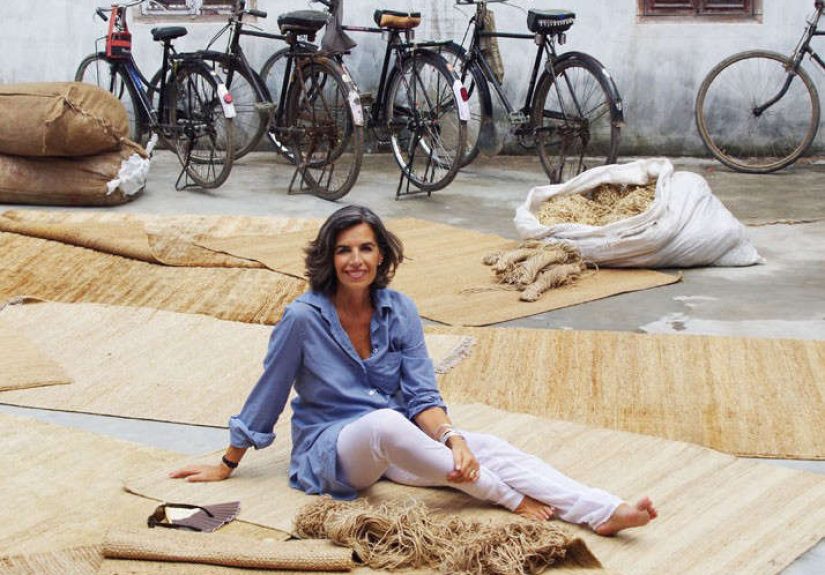
The collection behind the title A New Collection from Spain’s Rug Doyenne is especially compelling because it distilled Marquina’s strengths into a deceptively simple idea: let natural fibers speak. The line was introduced as a Natural collection, and its material palette included nettle, Afghan wool, silk, and jute. One standout design, the Vegetal rug, used hand-spun jute and showcased soft tonal variation rather than loud patterning.
That material mix matters. Jute brings dryness, earthiness, and visible grain. Wool adds body and warmth. Silk lends a quiet sheen that catches light without turning the rug into a disco ball. Nettle, meanwhile, gives the collection a slightly unexpected edge, which is exactly the kind of choice that separates a design thinker from someone who just discovered the word “organic” five minutes ago.
What Marquina understood then, and what still feels fresh now, is that natural does not have to mean boring. In weaker hands, a natural-fiber rug can veer into one of two unfortunate zones: beach-house cliché or expensive doormat. This collection avoids both. The textures are nuanced, the color story is restrained but not sleepy, and the surfaces have enough irregularity to feel alive. That irregularity is key. Handmade work should not pretend to be machine-perfect. The slight shifts in tone and weave are not flaws. They are the whole point.
Quiet Color, Big Impact
One of the most impressive things about the collection is its confidence in understatement. The palette is not trying to knock you unconscious with color. Instead, it uses earthy neutrals, soft grays, garnet tones, and other grounded shades that let the fibers do part of the visual work. This is color as atmosphere, not color as stunt casting.
That choice makes the rugs unusually versatile. They can anchor a minimalist interior without flattening it. They can soften a more modern room filled with metal, glass, or sharp-edged furniture. And they can hold their own in a layered interior where linen, wood, plaster, and ceramics are all already in conversation. A rug like this does not beg for the spotlight, but it somehow ends up controlling the scene anyway.
Craft That Stays Visible
Many luxury products work overtime to hide the hand that made them. Marquina has long done the opposite. Her best work leaves enough evidence of process to remind you that skilled humans, not an indifferent machine, shaped the final object. That is one reason her rugs feel warm even before anyone steps on them.
In this collection, the visible hand comes through in tonal shifts, fiber variation, and surfaces that reward close looking. A rug may seem simple from across the room, but up close it reveals movement, depth, and tiny visual events that keep it from feeling static. That sense of “quiet complexity” is where design maturity lives. It is also why these rugs photograph well but tend to feel even better in person.
Why This Collection Was Ahead of Its Time
Looking back, the collection feels almost predictive. Today, the design world is obsessed with natural materials, artisan production, sustainability, and interiors that feel tactile instead of sterile. Marquina was working that territory long before it became the safe thing to say at panel discussions under flattering event lighting.
Later Nanimarquina releases make that continuity even clearer. Collections like Tres Vegetal continued the exploration of imperfect natural textures with blends such as hemp, wool, and felt. Re-Rug pushed the company’s sustainable thinking further by turning wool leftovers into hand-loomed rugs with marbled, random-rich surfaces. Other designs drew strength from hand-spun Afghan wool, recycled materials, and craft traditions like kilim weaving and Sumak techniques. Across all of it, the through line remains unmistakable: experiment boldly, but keep the material honest.
That is why the original Natural collection still feels relevant. It was not chasing a trend. It was articulating a philosophy. It said that a rug could be contemporary and earthy, refined and tactile, polished and irregular all at once. A decade later, half the design internet is still trying to phrase that idea quite as elegantly.
How the Collection Fits Into Real Interiors
The beauty of a thoughtfully made natural rug is that it can shape a room without over-determining it. In a spare interior, it adds softness and visual weight. In a colorful room, it acts as a grounding element. In a home filled with vintage pieces, it can bridge old and new without looking forced. And in a new-build space that risks feeling a little too crisp, it provides the thing so many modern interiors desperately need: evidence of life.
Imagine one of these rugs in a living room with oak floors, limewashed walls, and a low linen sofa. The jute tones echo the wood, the subtle variations keep the room from reading flat, and the handmade texture makes the entire space feel less staged. Now imagine the same rug in a more urban setting: concrete floors, blackened steel, a sculptural chair, and one oversized lamp. Suddenly the room gains warmth without losing its edge. That flexibility is not accidental. It comes from choosing materials and forms that are expressive without being bossy.
There is also a practical emotional reason these rugs work. They age well visually. A highly stylized trend rug can feel dated the minute a new algorithm decides stripes are over and blobs are back. But natural texture tends to outlast trend cycles because it appeals to something more basic. People want rooms that feel good. They want softness underfoot, visual depth, and objects that seem to have been made with care. A rug collection built on those values has a longer runway than whatever is currently going viral in a heavily filtered loft.
Luxury Without the Usual Drama
Luxury design sometimes suffers from a terrible habit: it confuses cost with character. Marquina’s work is a useful corrective. Her rugs feel luxurious because the ideas are strong, the execution is careful, and the materials have integrity. That kind of luxury is harder to fake. It cannot be sprayed on, embossed, or rescued by moody branding photography.
In this collection, luxury comes from restraint. It comes from understanding how a hand-spun fiber catches light differently than a factory-perfect one. It comes from allowing earthy colors to breathe. It comes from designing objects that make a room feel more human, not more showroom-ish. If some luxury products arrive overdressed and overdiplomatic, these rugs arrive like the most interesting guest at dinner: calm, grounded, and quietly impossible to ignore.
What Designers Can Learn From It
There is a broader lesson in this collection for anyone working in interiors. First, materials are never just technical choices. They are emotional tools. Wool, jute, silk, and nettle do not simply perform; they communicate. Second, craft becomes more powerful when it is not over-edited. A little irregularity can generate far more richness than a perfectly flattened finish. Third, restraint is not the enemy of originality. Sometimes the most memorable design move is knowing when to stop.
Marquina’s approach also shows how sustainability can become aesthetic strength rather than moral homework. When natural and recycled materials are chosen intelligently, they do not merely check a box. They shape the visual language of the piece. That is part of what has made Nanimarquina so durable as a brand. The company’s ecological thinking is not tacked on after the fact. It is woven into the product story, literally and figuratively.
Experience: Living With a Rug Like This Changes a Room
Spend time around a rug collection like this, and the effect is surprisingly personal. At first, you notice the obvious things: the color, the weave, the way the surface breaks up light. Then, after a few days, something subtler happens. The room starts to feel slower in the best way. Hard edges soften. Sound shifts slightly. Morning light becomes more interesting because it has something textured to land on. Even the furniture seems to relax a little, as if it has finally found a good supporting cast.
That is the strange power of a well-made rug. It changes the emotional temperature of a space without announcing itself every five seconds. A glossy side table might say, “Look at me.” A bold light fixture might say, “Photograph me from my good angle.” But a rug like this says, “Stay a while.” It invites use. It welcomes bare feet, lazy Sunday reading, last-minute gatherings, and the kind of everyday mess that turns a house into an actual home.
There is also a tactile pleasure that is hard to communicate until you have lived with it. Natural fibers do not feel generic. They have resistance, softness, dryness, warmth, and subtle variation. Your body registers those qualities before your brain turns them into design opinions. That is why a good rug can make a space feel more grounded almost instantly. It is not just decoration. It is atmosphere you can touch.
In practical terms, a collection like this also teaches patience. It is not the kind of design you fully understand in one dramatic reveal. The rugs unfold over time. On one day, the tonal shading feels almost monochrome. On another, afternoon light pulls out warmer notes you had not noticed before. A corner that seemed plain begins to show variation in the hand-spun yarn. The visual experience is dynamic, not because the rug is loud, but because it contains enough depth to keep changing with the room around it.
That depth matters in daily life. So many interiors now are designed for the first impression only. They perform well in photos, then flatten out when you actually live with them. Marquina’s best rugs do the opposite. They may look restrained at first, but they become richer with familiarity. You start to appreciate the slight irregularities in the weave, the natural rhythm of the fibers, the way a chair leg casts a shadow that makes the texture more pronounced. The rug becomes part of how you experience time inside the room.
There is also something reassuring about the honesty of it all. A natural rug that shows its fibers, its hand, and its imperfections feels less anxious than many luxury objects. It is not trying to be invincible. It is trying to be beautiful and real. That distinction is refreshing. In homes where everything is shiny, sealed, and a little too controlled, a textured rug can reintroduce humanity. It reminds you that elegance does not require sterility.
And yes, there is a tiny thrill in knowing that something so grounded can still feel sophisticated. That may be Marquina’s greatest trick. She takes humble materials and artisan methods, then elevates them without sanding away their character. The result is a rug that can sit comfortably in a refined interior while still feeling approachable. It is design with manners, but also with backbone.
Ultimately, living with a rug like this changes the way you think about design value. You stop asking whether the piece is dramatic enough and start asking whether it deepens the room. You stop chasing novelty for novelty’s sake. You begin to care more about texture, longevity, craft, and the quiet pleasure of using something thoughtfully made. That is not only a design upgrade. It is a quality-of-life upgrade. And for a product that mostly stays on the floor, that is quite an achievement.
Conclusion
A new collection from Spain’s rug doyenne is never just about floor coverings. It is about how design can turn humble materials into atmosphere, how craft can remain visible without becoming rustic theater, and how restraint can feel more luxurious than spectacle. Nani Marquina’s Natural collection captured those ideas with unusual clarity. It used fibers like jute, wool, silk, and nettle not just for texture, but for meaning. It created rugs that felt grounded, intelligent, and quietly transformative.
That is why the collection still resonates. It reflects a design philosophy that has only become more valuable over time: trust materials, respect craft, embrace imperfection, and make pieces that improve daily life rather than merely decorating it. In a world full of interiors trying very hard to impress, Marquina’s rugs do something more difficult. They make a room feel true.