Table of Contents >> Show >> Hide
- What Is the Amerock Large Silver Coat & Hat Hook?
- Why This Hook Stands Out in a Crowded Hardware Aisle
- Load Capacity: Why You’ll See Different Numbers Online
- Best Places to Use the Amerock Large Silver Coat & Hat Hook
- How to Install It the Right Way
- Styling Tips for a Clean, High-End Look
- What to Check Before You Buy
- Pros and Cons
- Maintenance and Long-Term Use
- Final Verdict
- Experience-Based Scenarios and Practical Use Stories (Extended)
Some home upgrades are dramatic. Others are small, shiny, and quietly make your life 20% less chaotic. The Amerock Large Silver Coat & Hat Hook falls firmly into that second category. It is the kind of hardware you buy for coats and hats, then suddenly it’s holding dog leashes, tote bags, headphones, and that one jacket everyone in the house claims is “not mine.”
In this guide, we’ll break down what this hook is, what makes it practical, how it performs in real spaces, what to know before installation, and how to style it so it looks intentional instead of “I panic-mounted this before guests arrived.”
What Is the Amerock Large Silver Coat & Hat Hook?
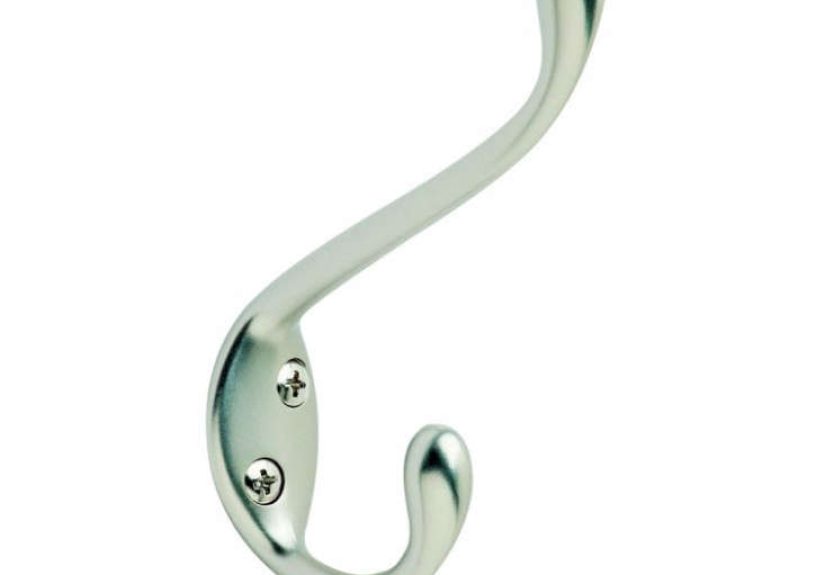
The Amerock Large Silver Coat & Hat Hook most commonly refers to model H55451G10, a wall-mounted double-prong decorative hook in a satin nickel finish (often grouped with silver-tone hardware). It’s part of Amerock’s Noble collection and is widely sold across U.S. hardware and home-improvement retailers.
In plain English: this is a decorative metal wall hook with two prongs, designed to hold everyday items while still looking polished enough to live in an entryway, mudroom, laundry room, bathroom, or bedroom.
Key Product Details (What Most Retailers Agree On)
- Brand: Amerock
- Model: H55451G10
- Collection: Noble
- Finish: Satin Nickel (silver-tone appearance)
- Material: Zinc
- Type: Double-prong coat/hat hook
- Mounting: Wall-mounted, typically with included hardware
Dimensions can vary slightly depending on how each seller measures the hook (overall length vs. width vs. base), but most listings consistently place it around 4-7/16 inches in overall length/height with about 3-9/16 inches of projection. That means it sticks out enough to be useful for bulkier items, not just a lonely baseball cap.
Why This Hook Stands Out in a Crowded Hardware Aisle
Let’s be honest: coat hooks are not usually thrilling. But this one earns attention because it balances function, footprint, and finish better than many budget hooks.
1) The Double-Prong Design Is More Useful Than It Looks
A double-prong hook gives you flexibility. You can hang a heavier coat on the top prong and a lighter item (like a scarf, keys-on-a-loop, or small bag) on the lower prong. In small spaces, this matters. It lets one hook behave like a mini storage station without taking up extra wall width.
2) Satin Nickel Is Easy to Match
Satin nickel tends to play nicely with modern, transitional, farmhouse, and even traditional interiors. It usually coordinates well with brushed nickel faucets, stainless appliances, gray paint palettes, and many cabinet pulls. If your home has a “we bought things five years apart” design story, satin nickel is one of the most forgiving finishes you can choose.
3) Decorative but Not Fussy
The Amerock Noble hook has a classic decorative profile, but it is not so ornate that it looks out of place in a contemporary home. It gives you a finished look without shouting, “Behold, my Victorian hallway!”
Load Capacity: Why You’ll See Different Numbers Online
This is one of the most important things buyers should know. Different retailers may list different load capacities for the same hook. For example, some listings present a conservative everyday-use capacity, while others note a higher load figure when properly installed.
That difference is not necessarily a contradiction. It usually reflects a mix of:
- the type of wall surface (drywall vs. wood stud vs. solid backing),
- the anchor or screw system used,
- installation quality, and
- how the load is applied (static vs. yanked-on backpack strap chaos).
Translation: a hook is only as strong as the way it’s mounted. If you install it into solid wood or a stud, it will typically perform better than the same hook installed into drywall with undersized anchors.
Best Places to Use the Amerock Large Silver Coat & Hat Hook
Entryway or Foyer
This is the obvious choiceand for good reason. A row of these hooks can create a simple drop zone for coats, hats, reusable shopping bags, and umbrellas. Pair them with a bench and a shoe tray, and your entry starts behaving like it has a personal assistant.
Mudroom
Mudrooms are where hardware gets tested by real life: wet jackets, heavy backpacks, sports bags, and things covered in mystery dirt. The double-prong design is especially useful here because it can separate bulky outerwear from smaller accessories. If you have kids, consider mounting a lower row so they can actually use the hooks instead of draping everything on the floor “for later.”
Laundry Room
These hooks work well for hanging garment bags, ironing accessories, lint brush loops, or “air dry this” items. They’re also handy near a utility sink for aprons or cleaning gloves.
Bathroom
Even though this is marketed as a coat-and-hat hook, many retailers categorize similar hooks under robe or towel hooks. It can absolutely work in a bathroom for robes, towels, or clothingespecially if you want a more decorative, substantial look than a minimalist peg.
Bedroom, Closet, or Back of a Wall Niche
Think “daily rotation hook”: tomorrow’s outfit, a favorite hoodie, a bag, or a belt. It’s a small upgrade that can reduce chair-clothes syndrome. (You know the chair.)
How to Install It the Right Way
Good hardware deserves good installation. If you rush the install, even a great hook can feel flimsy.
Step 1: Choose the Right Location
Decide what the hook will hold before you mount it. A hook for heavy winter coats should go in a sturdier location (ideally into a stud or wood backing). A hook for lightweight bags or robes gives you more flexibility.
Step 2: Check the Wall Type
Drywall alone is not the same as wood. If you are mounting on drywall, use appropriate anchors rated for the load. Drywall anchors are designed to distribute weight and improve holding strength in hollow walls. If you can mount into a stud, that is often the better choice for heavier use.
Step 3: Use the Included Hardware as a Starting Point, Not a Rule
Many decorative hooks include mounting screws, which is convenient. But depending on your wall and load needs, you may need to upgrade anchors or screws. This is a common real-world adjustment and can make a big difference in how secure the hook feels over time.
Step 4: Mark Carefully and Mount Level
Measure once, mark twice, squint dramatically, and then measure again. If you’re installing multiple hooks, spacing and alignment matter more than people expect. Even beautiful hooks look awkward when they form a “creative interpretation” of a straight line.
Step 5: Test Gradually
After installation, test with light items first. Then move up to normal use. Do not immediately hang your heaviest duffel bag and perform a pull-up. Your wall did not sign up for that.
Styling Tips for a Clean, High-End Look
Create a Coordinated Hook Wall
Use 3 to 5 matching hooks on a painted board (or directly on the wall) to create a polished entry feature. This looks especially good when paired with a bench below and baskets or cubbies underneath.
Match with Other Satin Nickel Hardware
If your home already has satin nickel or brushed nickel cabinet pulls, door hardware, or bath fixtures, this hook will usually blend in seamlessly. That kind of finish continuity makes a space feel intentional without a full remodel.
Mix Function with Decor
Hooks do not have to be purely utilitarian. Try hanging a seasonal wreath on one, a woven tote on another, and keep a single hook free for guests. That “empty” hook always gets used, and it makes your space feel prepared rather than packed.
What to Check Before You Buy
1) Finish Naming
“Silver” is often used informally by shoppers, while retailers may list the exact finish as satin nickel. If you’re searching online, use both phrases to find the right item faster.
2) Dimensions Across Retailers
Product listings may present dimensions differently (overall height, width, length, or projection). Read the full measurements instead of relying on one thumbnail image. This helps avoid buying a hook that looks perfect online and then seems tiny or oversized when it arrives.
3) Mounting Surface
Be realistic about what your wall can support. If you’re hanging heavy winter gear, sports bags, or backpacks full of what appears to be bricks, prioritize stronger mounting methods.
4) Quantity Needed
This hook is often sold individually. If you’re designing a row of hooks, count carefully before checkout. (Everyone has made the “I ordered three when I needed four” mistake. Some of us have made it twice.)
Pros and Cons
Pros
- Classic double-prong design adds storage flexibility
- Satin nickel finish coordinates with many interiors
- Decorative look works in multiple rooms
- Commonly available across U.S. retailers
- Compact wall footprint with useful projection
Cons
- Load performance depends heavily on installation method
- Dimension listings can be inconsistent across sellers
- May require upgraded anchors on drywall for heavier use
- Single-hook purchases can add up for larger entryway walls
Maintenance and Long-Term Use
The satin nickel finish is generally low-maintenance. For routine cleaning, use a soft cloth and mild soap solution, then dry it to avoid water spotting. Avoid harsh abrasives that can dull decorative finishes.
Every few months, especially in busy households, check that the screws remain snug. Hooks in high-traffic areas experience repeated pulling and twisting. A quick tighten can prevent wall damage later.
Final Verdict
The Amerock Large Silver Coat & Hat Hook (H55451G10) is a smart choice if you want a reliable-looking decorative hook that can do real work in everyday spaces. It’s attractive enough for visible areas, practical enough for mudroom duty, and versatile enough to use beyond coats and hats.
Its biggest strength is the balance of style and function: a clean satin nickel finish, a useful double-prong shape, and broad compatibility with many home aesthetics. Just remember the golden rule of wall hardware: the hook matters, but the install matters more.
Experience-Based Scenarios and Practical Use Stories (Extended)
To make this guide more useful, here are experience-based scenarios that reflect how people commonly use a hook like the Amerock Large Silver Coat & Hat Hook in real homes. These are not product adsthey’re the everyday moments that determine whether a hook becomes “nice décor” or genuinely helpful hardware.
In a small apartment entry, one homeowner installed three satin nickel hooks on a painted wood rail near the door. The original plan was simple: one hook for each adult and one “extra.” Within a week, the extra hook became the MVP. It held grocery totes on weekdays, a guest’s coat on weekends, and a dog leash every single morning. The double-prong shape made a difference because a jacket could stay on the top prong while a smaller item hung below without sliding off. That kind of layered storage is exactly what makes a larger decorative hook more useful than a tiny minimalist peg.
In a family mudroom, the hook was installed above a bench and cubbies. The first version of the setup looked great in photos but failed in practice because the hooks were mounted too high for younger kids. After remounting a lower row, the room worked much better. Backpacks, hoodies, and lunch bags finally made it onto the wall instead of onto the floor. The lesson here: a good hook can improve organization, but placement determines whether the household actually uses it.
Another common scenario is the “laundry room overflow problem.” A homeowner added two of these hooks near the washer and dryer to handle delicates, garment bags, and clothes waiting to be steamed. The projection gave enough room for hangers and soft bags without crushing them flat against the wall. It also helped keep damp items separated instead of piled on top of a machine. Not glamorous, but deeply satisfying.
In a bathroom upgrade, a satin nickel hook like this was chosen because it matched existing faucet and cabinet hardware. The result looked more cohesive than a mismatched chrome or matte black hook. This is where finish selection matters: even inexpensive hardware can look upscale when it visually connects to the rest of the room.
One of the most useful long-term experiences people report with wall hooks is discovering “secondary uses.” What starts as a coat hook becomes a bag hook, then a headphones hook, then a staging point for tomorrow’s outfit. In home organization, that adaptability is a huge win. You are not buying a single-purpose object; you are buying a small piece of infrastructure.
The cautionary stories are just as helpful. Some users install decorative hooks into drywall with whatever fastener is in the package, then hang a heavy backpack full of books and wonder why the hook loosens. In many cases, the problem is not the hook designit’s the wall anchoring. Upgrading the anchor, mounting into a stud, or reducing the load usually solves the issue. The takeaway is simple: match the installation method to the real-life weight you plan to hang.
Overall, the shared experience pattern is clear: when installed properly and placed thoughtfully, the Amerock Large Silver Coat & Hat Hook tends to punch above its size. It is one of those small hardware choices that can make a home feel calmer, tidier, and more functionalwithout requiring a weekend renovation or a second mortgage. That’s a pretty strong return for a humble hook.