Table of Contents >> Show >> Hide
- What Exactly Is Boath House?
- Why Boath House Became a Magnet for Creatives
- The Highland Setting Does a Lot of Heavy Lifting
- Design That Feels Collected, Not Manufactured
- Food, Hospitality, and the Art of Not Rushing
- A Beautiful Place With a Complicated Recent Story
- Why “Blank Canvas” Is the Perfect Phrase
- Experiences That Make Boath House Linger in Your Mind
- Final Thoughts
Some places ask you to check in, admire the wallpaper, eat a nice dinner, and move along. Boath House feels like it wants something a little more interesting from you. Not in a stressful, “please produce your masterpiece by breakfast” way. More in a “what happens if you finally get quiet enough to hear your own ideas again?” way.
Set in the Scottish Highlands near Nairn, Boath House has become known as the kind of destination that blurs categories in the best possible way. It is part country house, part design hotel, part artistic hideaway, part culinary project, and part fever dream for anyone who has ever said, “I just need a few days away to think.” In an age of over-programmed luxury travel, Boath House built its reputation on something far harder to fake: atmosphere.
That is what makes the phrase “blank canvas for creatives” so fitting. Boath House is visually beautiful, yes, but it is not beautiful in the stiff, overly manicured sense. It does not feel like a place built only to be photographed from one flattering corner and then abandoned to social media. It feels lived in, curious, and open-ended. The result is a Scottish Highlands retreat that has appealed to artists, writers, designers, chefs, and travelers who like their inspiration with a side of mist, moss, and excellent bread.
What Exactly Is Boath House?
At its core, Boath House is a historic estate with a strong visual identity and a modern creative mission. The house itself is a stately early-19th-century villa, with all the grandeur that suggests: elegant proportions, tall windows, calm symmetry, and the kind of facade that makes you instinctively stand up straighter. But that architectural formality is only half the story.
What set Boath House apart from the start of its recent reinvention was the refusal to treat heritage as something precious and untouchable. Instead, the estate leaned into a softer, more human kind of luxury. Rooms were designed to feel serene rather than showy. Art was woven into the experience rather than bolted on like an afterthought. The surrounding grounds, cottages, garden spaces, and studio atmosphere made the entire property feel less like a conventional hotel and more like a creative ecosystem.
That matters because travelers searching for a creative retreat in Scotland are not usually looking for just a bed and a breakfast. They are looking for texture. They want a place that gives them mental space, aesthetic stimulation, and enough freedom to wander into a better mood. Boath House has long traded in exactly that.
Why Boath House Became a Magnet for Creatives
1. It understands that creativity needs room, not just style
Many “creative” hotels confuse inspiration with decoration. They throw a few ceramics on a shelf, add a sculptural lamp, and call it a day. Boath House works differently. Its design language suggests that creative life is messy, exploratory, and slow. The rooms and common spaces are elegant, but they are not so polished that you are afraid to put down a notebook or leave your boots by the door.
That may sound like a small thing, but it is actually the whole game. A true artist retreat in the Scottish Highlands should not make guests feel like intruders in a showroom. It should make them feel invited to notice things: the color of the sky before rain, the sound of gravel underfoot, the way a table looks in soft morning light, the odd brilliance of a meal after a cold walk. Boath House seems to understand that the mind gets productive when the body finally unclenches.
2. The art is part of the identity, not background noise
Boath House developed a reputation for treating art and residencies as central to its personality. That distinction is important. In many luxury properties, art functions like jewelry: expensive, pretty, and mostly there to signal taste. At Boath House, the relationship between hospitality and art feels more active. The idea is not just that creative people are welcome; it is that the entire place is shaped around curiosity, making, conversation, and experimentation.
That gives the estate a stronger emotional pull than the average boutique hotel in the Scottish Highlands. Guests do not simply consume the setting. They participate in it. They sketch, write, read, walk, swim, talk too long over dinner, and start mentally rearranging their life plans somewhere between the walled garden and the sauna. It is a dangerous place for anyone who has ever fantasized about becoming the sort of person who casually “works on a manuscript” in the Highlands.
3. It turns remoteness into a feature
Boath House benefits from being near Nairn and within reach of Inverness, but it still feels deliciously apart from ordinary life. That balance is part of the appeal. It is accessible enough to get to without requiring a heroic expedition, yet remote enough to produce the psychological reset people secretly want when they book a design-led escape.
In other words, it offers distance without exile. You are not marooned. You are simply far enough away from your inbox to remember that your inbox is not your personality.
The Highland Setting Does a Lot of Heavy Lifting
You cannot talk about Boath House without talking about the Scottish Highlands themselves. This is not one of those places that could be lifted up and dropped into another landscape without losing its soul. The local setting is essential to the experience.
The Moray Firth coast has a quieter charisma than some of Scotland’s headline-grabbing destinations. It is less about blockbuster drama and more about accumulation: sea air, long light, old trees, sandy beaches, changing weather, and that unmistakable Highland sense that the land has been thinking its own thoughts for a very long time. Boath House taps into that mood beautifully.
For creatives, the appeal is obvious. The Highlands do not merely provide scenery; they alter tempo. A walk becomes longer. Lunch becomes later. A page of notes becomes three. You look up from your coffee and suddenly there is a heron by the water or a wind-bent tree that looks like it should be in a novel. Even the estate’s formal architectural lines gain softness against all that unruly landscape.
This is why Boath House Scotland occupies such a sweet spot in the imagination. It gives guests both containment and wildness. Inside, there is design, warmth, texture, food, and conversation. Outside, there is weather, space, silence, and the possibility that your brain might finally stop acting like a browser with 47 tabs open.
Design That Feels Collected, Not Manufactured
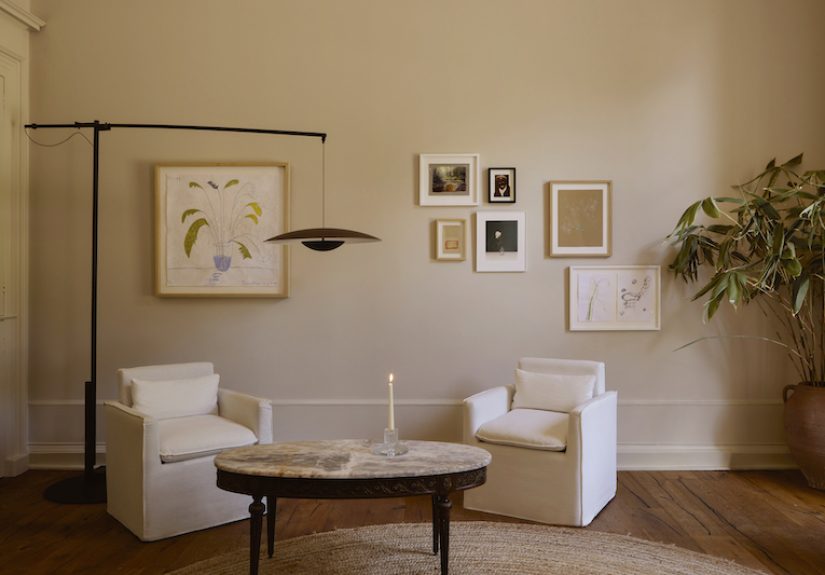
One of the smartest things about Boath House is that it avoids the sterile trap that swallows so many luxury properties. It is refined, but not slick. Stylish, but not smug. The interiors tend to feel airy, restrained, and generously scaled, letting the architecture do some of the talking. There is room for objects to matter. There is room for art to breathe. There is also room for nothing in particular, which is often where the magic starts.
That balance gives the house real SEO-friendly buzzwords like design hotel, creative hideaway, and luxury retreat, but the deeper truth is simpler: Boath House feels personal. It does not feel assembled by committee to satisfy a trend report. It feels like people with strong visual instincts cared about how guests would actually feel in the rooms.
And that is where the “blank canvas” idea becomes especially sharp. A blank canvas is not the same thing as an empty room. It is a room that leaves some space for your own imagination to arrive. Boath House appears to understand that distinction better than most.
Food, Hospitality, and the Art of Not Rushing
Hospitality at a place like this is not only about thread counts and bath products. It is about rhythm. Boath House built much of its reputation on the feeling that guests could settle into a slower, more sensory mode of living for a few days. Garden produce, long meals, shared spaces, and a strong connection between food and place all played into that atmosphere.
That culinary angle matters because the best creative retreats are never just visual. They are total-environment experiences. You notice what you eat, what you smell, what the table looks like, how the light lands at dinner, how conversation stretches out after dessert. Food becomes part of the architecture of memory.
Boath House has also benefited from the aura of a destination where hospitality and culture are supposed to overlap. That overlap is catnip for modern travelers. People are increasingly drawn to hotels that feel like they stand for something beyond comfort. They want story, identity, and maybe a touch of benevolent eccentricity. Boath House offers all three.
A Beautiful Place With a Complicated Recent Story
Of course, part of what makes Boath House fascinating right now is that its story has not been perfectly tidy. Its recent history includes reinvention, creative ambition, hospitality buzz, an abrupt closure, later signs of reopening under a new chapter, and current marketing that frames the estate as a property with significant future potential.
Strangely, that uncertainty almost reinforces the central appeal of Boath House. The estate still reads as a place of possibility. Maybe that is because the house itself is larger than any single operating model. It can function as a hotel, a retreat, an events destination, a cultural venue, or some hybrid that has not quite been invented yet. The phrase “blank canvas” applies not only to guests, but arguably to the property’s future.
That makes Boath House especially compelling in a broader conversation about what modern hospitality should be. The old model said luxury meant formality, predictability, and clear categories. The newer model, the one Boath House helped popularize, suggests that people increasingly want places that feel emotionally intelligent: beautiful but relaxed, cultured but unpretentious, sophisticated but not robotic.
Boath House may have had an uneven path, but the idea behind it remains powerful. In fact, it may be more relevant than ever.
Why “Blank Canvas” Is the Perfect Phrase
Call Boath House a hotel and you undersell it. Call it an artist residency and you flatten its hospitality. Call it a country estate and you miss the wit. But call it a blank canvas for creatives in the Scottish Highlands, and suddenly the whole thing clicks.
The phrase suggests freedom, but not emptiness. Structure, but not rigidity. Beauty, but not intimidation. It captures the way Boath House invites people to project their own needs onto the space. One guest wants rest. Another wants romance. Another wants to write 3,000 words before lunch and then stare dramatically at a pond. All are valid. All make sense here.
In that way, Boath House feels unusually modern. Its luxury is not about being impressed from a distance. It is about being changed, even slightly, by being there. You leave with a better eye, a calmer nervous system, and perhaps an irrational desire to buy a heavy linen robe and move permanently to northern Scotland.
Experiences That Make Boath House Linger in Your Mind
Imagine arriving at Boath House in the late afternoon, when the Highlands are doing that moody thing they do so well, with clouds dragging long shadows over the grass and the light changing every three minutes like an indecisive cinematographer. The drive in already feels like a gentle removal from ordinary life. Trees close in, the estate opens up, and the house appears with that stately calm that only old architecture can pull off without looking arrogant. You do not feel like you have reached a hotel so much as crossed into another tempo.
The first experience Boath House offers is visual quiet. That sounds contradictory, but it is real. The palette is soft, the rooms breathe, and the building does not scream for your attention. Instead, it lets you notice details gradually: the length of a hallway, the shape of a window, the texture of wood, the way a chair is positioned as if someone just stepped away from it with a book still half-open. If you are a writer, you start composing sentences in your head before you have even set down your bag. If you are a designer, you begin quietly stealing ideas. If you are neither, congratulations, you may become both by morning.
Then there is the outdoor life of the estate, which is where Boath House becomes more than beautiful and starts becoming memorable. A proper stay here is not about checking attractions off a list. It is about wandering. You walk through the grounds without much agenda. You drift toward the walled garden, pause by the water, cut across a path because the light looks better there, and realize twenty minutes later that you have not looked at your phone once. The air feels cleaner, your thoughts feel less crowded, and your body remembers that walking can be a pleasure rather than a logistical act between parking lots.
For many guests, the best moments are probably the smallest ones. Morning coffee with a view of the grounds. A long breakfast that becomes a second coffee and then, somehow, a conversation about books, paintings, weather, and whether city life has permanently damaged everyone’s attention span. An afternoon reading session that unexpectedly turns into a nap. A sauna visit that makes the cold outside feel thrilling rather than rude. Dinner that lasts longer than planned because the room encourages exactly that kind of indulgent slowness.
Boath House also offers a very specific kind of social pleasure. It does not seem built for forced merriment or generic luxury performance. It feels better suited to good talk, shared meals, creative daydreaming, and the kind of relaxed company that develops when everyone has finally exhaled. That makes it ideal for couples, solo travelers, artists on retreat, and friend groups who prefer long walks and great food over nightclub heroics. This is not a bottle-service destination. This is a “let’s discuss whether we should all disappear to the Highlands and start over” destination.
And that, in the end, is the experience people carry home from Boath House. Not just the architecture. Not just the rooms. Not just the food or the scenery. It is the sensation that the place briefly returned something to them: time, attention, imagination, rest, appetite, perspective. The best creative spaces do not bully you into transformation. They simply make it easier. Boath House, at its best, seems to do exactly that.
Final Thoughts
Boath House is compelling because it sits at the intersection of beauty, culture, and possibility. It is a historic house with a modern imagination. A Highlands destination that feels both grounded and dreamlike. A place where architecture, landscape, art, and hospitality all collaborate to create something more memorable than a standard luxury stay.
Whether you approach it as a Boath House hotel review, a design story, a travel inspiration piece, or a case study in what creative hospitality can look like, the conclusion is much the same: this is a place with uncommon atmosphere. Even with the twists in its recent journey, the idea at the center of Boath House remains irresistible.
For creatives, that may be the real headline. Boath House is not interesting because it is finished. It is interesting because it feels open. And sometimes the most inspiring places are not the ones that tell you exactly what they are. They are the ones that hand you the silence, the light, the landscape, and the room to figure it out for yourself.