Table of Contents >> Show >> Hide
- What Is Buttermilk Pie, Exactly?
- Why Buttermilk Works So Well in Pie
- Buttermilk Pie Ingredients (And What Each One Does)
- Classic Buttermilk Pie Recipe (Old-Fashioned and Foolproof)
- How to Tell When Buttermilk Pie Is Done (Without Guessing)
- Pro Tips for a Smooth, Creamy Custard (No Curdling, No Cracks)
- Serving Ideas (Because Pie Deserves Accessories)
- Easy Variations That Still Taste Like “Buttermilk Pie”
- Storage and Make-Ahead Tips
- Buttermilk Pie FAQ
- Final Thoughts
- of Real-World Buttermilk Pie Experience (What Home Bakers Learn)
Buttermilk pie is the dessert equivalent of a cozy sweater: soft, comforting, and quietly iconic. It’s a classic Southern custard pie with a sweet-tangy filling that tastes like vanilla custard met a lemony wink and decided to move in together. And the best part? It’s made from everyday pantry staplesno fancy pastry degree required.
In this guide, you’ll get an old-fashioned buttermilk pie recipe that bakes up creamy (not curdled), sets cleanly (not soupy),
and tastes like the kind of pie your aunt would “accidentally” cut into before dinner. We’ll also break down why the ingredients work,
how to know when custard is done, and what to do if your pie decides to act dramatic in the oven.
What Is Buttermilk Pie, Exactly?
Buttermilk pie is a traditional Southern dessert with a custard-like filling baked in a pie crust. It’s often compared to chess pie,
but the signature move here is buttermilk: it brings a gentle tang and helps balance the sweetness. The filling is usually thickened
with a little flour (sometimes other thickeners show up, but flour is the classic). This “use-what-you’ve-got” style is part of why the pie
became popular when budgets were tightsimple ingredients, big comfort.
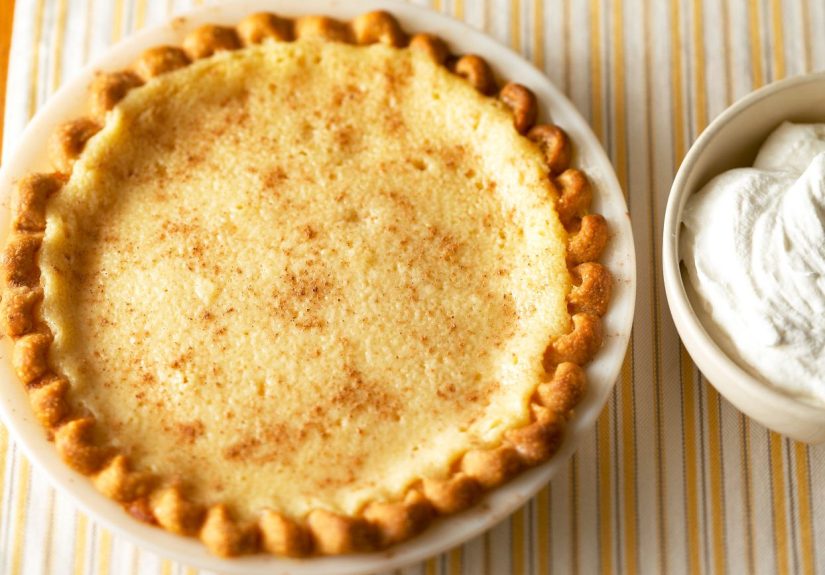
Flavor-wise, imagine a smooth vanilla custard with a faint lemon brightness and a warm whisper of nutmeg on top. The surface often develops a delicate,
lightly caramelized crust as it bakeslike the pie is wearing a crispy little hat.
Why Buttermilk Works So Well in Pie
Modern store-bought buttermilk is usually cultured (not the old-school butter-churning leftover), which means it’s thick, tangy, and mildly acidic.
That acidity gives buttermilk pie its signature “sweet-but-not-one-note” flavor and helps the custard taste richer and more balanced.
Translation: your pie tastes like it has depth, not just sugar.
Buttermilk Pie Ingredients (And What Each One Does)
Here’s the core lineup for a classic buttermilk pie recipe. No scavenger hunt ingredients. No “extract of Himalayan cloudberry.” Just real stuff.
For the crust
- 1 (9-inch) pie crust (homemade or refrigerated store-bought)
For the filling
- 4 large eggs (structure + custard magic)
- 1 1/4 cups granulated sugar (sweetness + that delicate top crust)
- 3 tablespoons all-purpose flour (helps the custard set without becoming rubbery)
- 1/4 teaspoon fine salt (keeps the sweetness in check)
- 6 tablespoons unsalted butter, melted and cooled (richness + silkiness)
- 1 cup buttermilk (the star: tang + creamy texture)
- 1 tablespoon lemon juice (brightness; optional but highly recommended)
- 1 teaspoon vanilla extract (classic custard flavor)
- Pinch of freshly grated nutmeg (warm, nostalgic finish)
- Optional: 1 teaspoon lemon zest (extra aroma and “wow, what IS that?” flavor)
Quick note: You’ll see some recipes using extra yolks or folding in whipped egg whites for a lighter texture. Those are delicious variations.
The version below is the classic, dependable “bakes beautifully even when you’re multitasking” style.
Classic Buttermilk Pie Recipe (Old-Fashioned and Foolproof)
Recipe Snapshot
- Yield: 1 (9-inch) pie (about 8 slices)
- Prep time: 15–20 minutes
- Bake time: 45–55 minutes
- Cooling time: at least 1–2 hours (custard needs a nap)
Step 1: Prep the Oven and Crust
- Preheat oven to 350°F.
-
Place your pie crust into a 9-inch pie dish. If using store-bought dough, unroll and gently fit it inno stretching (stretching = shrinking later).
Crimp the edges if you’re feeling fancy. -
Optional but recommended: If you hate soggy bottoms (who doesn’t?), par-bake the crust:
line with parchment, add pie weights or dried beans, bake 10–15 minutes, then remove weights and bake 3–5 minutes more.
Let it cool slightly while you make the filling.
Step 2: Make the Filling
- In a large bowl, whisk the eggs until smooth (no need to whip into a foam party).
- Whisk in the sugar, then whisk in the flour and salt.
- Slowly whisk in the melted butter (make sure it’s cooled a bit so it doesn’t scramble your eggs).
- Whisk in the buttermilk, lemon juice, vanilla, and nutmeg (and zest, if using).
- Let the bowl sit for 2–3 minutes, then give it one final whisk. This helps the flour hydrate and reduces surprise lumps.
Step 3: Bake
- Place the pie dish on a baking sheet (easier to move, and it catches dripsfuture you says thanks).
- Pour filling into the crust.
-
Bake at 350°F for 45–55 minutes. The edges should look set, and the center should still have a gentle jiggle
(like Jell-O that has ambitions, not soup that needs help). - If the crust edges brown too quickly, shield them with foil partway through baking.
Step 4: Cool (This Is Not Optional)
- Cool on a wire rack until room temperature.
- For the cleanest slices, chill for 1–2 hours. Custard firms as it coolscut too early and your pie may “spill tea.”
How to Tell When Buttermilk Pie Is Done (Without Guessing)
Custard pies are done when the edges are set and the center still trembles slightly. Overbake and the custard can become grainy, dry, or crack.
Underbake and the center can stay runny. If you like certainty, use an instant-read thermometer:
a custard-style filling is typically set around about 175°F measured between the edge and center.
Pro Tips for a Smooth, Creamy Custard (No Curdling, No Cracks)
Let cold ingredients warm up a bit
If your buttermilk and eggs are ice-cold, the batter can look a little curdled or uneven when combined. Let them sit out for a short while
so everything mixes smoothly and bakes evenly.
Whisk, don’t over-beat
Buttermilk pie isn’t a sponge cakeit doesn’t need tons of air. Overmixing can introduce bubbles that bake into a rough top. Whisk until smooth,
then stop.
Don’t treat “jiggle” like a failure
A slight jiggle is correct. A slosh is not. If the center waves like it’s trying to get a job as a swimming pool, keep baking a few more minutes.
Cracks happenhere’s how to avoid them
Cracks are usually a sign of overbaking (the custard expanded, then contracted). Pull the pie when it’s just set, and let it finish firming as it cools.
Also, avoid sudden temperature shocks: don’t move the pie straight from a hot oven into a cold draft like it owes you money.
Serving Ideas (Because Pie Deserves Accessories)
- Classic: a dollop of whipped cream and a dusting of nutmeg
- Berry-friendly: fresh raspberries/blueberries on top for tart contrast
- Extra cozy: serve slightly warm with coffee (or strong tea if you’re feeling refined)
Easy Variations That Still Taste Like “Buttermilk Pie”
More lemon
Add an extra teaspoon of zest or a tiny bit more lemon juice for a brighter, more citrusy custard.
Bourbon buttermilk pie
Add 1–2 tablespoons of bourbon to the filling for a warm, caramel-like depth. It’s subtle, not boozythink “holiday sweater,” not “college party.”
Coconut buttermilk pie
Stir in 3/4 cup sweetened shredded coconut for a chewy, toasty twist.
Chocolate buttermilk pie vibe
Add 2–3 tablespoons cocoa powder and reduce flour slightly (chocolate versions are their own beautiful universe).
Storage and Make-Ahead Tips
Once cooled, cover and refrigerate. Buttermilk pie is happiest chilled or at cool room temperature, and it slices cleanest after it firms up.
Most home-baking guidance lands around 3–5 days in the fridge, tightly covered.
Freezing is debated: some bakers freeze it successfully, while others dislike the texture after thawing. If you do freeze, wrap slices tightly,
thaw overnight in the fridge, and set expectations to “still tasty” rather than “identical to fresh.”
Buttermilk Pie FAQ
Can I use low-fat buttermilk?
Yes. Low-fat or full-fat buttermilk both work in most classic recipes. Full-fat can taste a little richer, but low-fat still delivers that signature tang.
What if I don’t have buttermilk?
You’ve got options. A reliable stand-in is thinning plain yogurt with water, using kefir, or “clabbering” milk with a little vinegar or lemon juice.
It won’t be identical, but it will get you close enough that nobody will call the dessert police.
Why did my filling look curdled before baking?
Usually it’s just temperature contrast (cold buttermilk + warm butter) or the natural way acidic dairy interacts with other ingredients.
As long as you whisk until mostly smooth, it typically bakes up fine.
Is buttermilk pie the same as chess pie?
They’re cousins, not twins. Chess pie often uses cornmeal and sometimes vinegar; buttermilk pie leans into buttermilk for tang and a softer custard feel.
Final Thoughts
A great buttermilk pie recipe is all about balance: sweet but not flat, creamy but not runny, rich but still light enough to justify a second slice
“for research.” Bake it until it’s just set, let it cool completely, and you’ll get that classic custard texture that made this Southern staple a legend.
of Real-World Buttermilk Pie Experience (What Home Bakers Learn)
If you’ve never made buttermilk pie before, the first experience is usually the same for a lot of people: you read the ingredient list and think,
“That’s it?” Then you mix it and think, “Why does it look slightly weird?” Then you bake it and think, “Why does it jiggle like it’s nervous?”
And finallyafter you let it cool (which feels like waiting for a kettle to boil while staring at it)you slice in and realize you’ve been worrying
about the wrong things. The pie is simple, yes, but it’s also a little lesson in custard confidence.
One of the most common “aha” moments is learning that custard doesn’t set in the oven the way cookies do. Cookies come out looking finished.
Custard pies come out looking almost finished, and that’s on purpose. The carryover heat and the cooling time are part of the recipe,
whether the recipe says so loudly or not. Home bakers who pull the pie when the center is still gently wobbly tend to get that smooth, creamy texture.
The folks who wait for the center to be totally firm in the oven often end up with a pie that cracks on topor a filling that tastes a bit “eggy”
because the proteins tightened too much. In other words: the jiggle is a friend.
Another real-life thing: ovens are liars. Some run hot. Some run cool. Some run “hot on the left, cool on the right, and chaotic in the back.”
If your first pie browns too quickly on top but stays loose in the middle, try moving the rack slightly lower for the first part of baking,
then to the center to finish. Or tent the top loosely with foil near the end. Small adjustments make a big difference, and you don’t need to be a
pastry wizardjust observant. A baking sheet under the pie is also a small win: it makes rotating easy and helps keep the bottom heat consistent.
Texture troubles are usually fixable, too. If the pie sets but feels a tiny grainy, it was likely baked a little too long or at a slightly high temp.
Next time, aim for a gentler bake and pull it sooner. If the pie is too loose after cooling, it probably needed more time in the oven (or a longer chill).
Custard is forgiving as long as you treat it like custard: slow heat, patient cooling, and no panic slicing.
And then there’s the “how does it taste?” moment. People often describe it as part vanilla custard, part subtle lemon dessert, part “Southern holiday table.”
It’s sweet, but the buttermilk tang keeps it from becoming a sugar bomb. It’s rich, but it doesn’t sit as heavy as some cream pies. And it plays well
with toppingswhipped cream, berries, a sprinkle of nutmegwithout needing them to be delicious. That’s probably why buttermilk pie keeps getting passed
around as a family recipe: it’s inexpensive, dependable, and it makes people happy in a very straightforward way. Which, honestly, is what dessert should do.