Table of Contents >> Show >> Hide
- Why Faux Garage Door Windows Work So Well
- Pick Your Faux Window Type
- Before You Buy Anything: 5 Quick Checks
- Design That Looks Expensive (Even If It Wasn’t)
- How to Install Magnetic Faux Windows (Step-by-Step)
- How to Install Faux Window Frames (More Realistic, More Permanent)
- Placement Ideas That Look Great on Real Houses
- Common Mistakes (And How to Avoid Them)
- Care & Maintenance: Keep the “Glass” Illusion Looking Fresh
- Quick FAQ
- Conclusion: Your Garage Door, But Make It Charming
- Experience Section: 10 Real-World Lessons People Learn After Adding Faux Garage Door Windows
- 1) The curb photo tells the truth (even when your eyes lie)
- 2) Clean doors are not as common as we think
- 3) “Symmetry” can be trickier than it sounds
- 4) The “right” style is the one that matches your house, not your mood
- 5) Bright sun can change the illusion
- 6) Textured doors can create tiny alignment headaches
- 7) Everyone forgets the “open door view”
- 8) Doing it twice is common (and not a failure)
- 9) Adding faux windows often inspires a second upgrade
- 10) The best compliment is when someone assumes they’re real
If your house were a movie, your garage door would be the opening credits: big, unavoidable, and totally capable of
setting the mood. The good news? You don’t need a full garage door replacement to get that “wait…did they remodel?”
reaction from neighbors. Adding faux windows to your garage door is one of the fastest curb-appeal
upgrades aroundespecially if you pick the right style, place it like you mean it, and install it so it looks
intentional (not “I eyeballed it at dusk”).
This guide walks you through the best faux window options, how to plan a layout that flatters your home, the
step-by-step installation process (including no-drill options), and the little details that make faux windows look
surprisingly real. At the end, you’ll also find an extra experience-based section with hard-earned lessons people
tend to learn the fun wayso you can learn them the easy way.
Why Faux Garage Door Windows Work So Well
Faux windows do three things a plain garage door often doesn’t:
- They break up a big blank surface with lines and “architecture,” making the front of your home feel more balanced.
- They echo your home’s existing windows so the garage looks like it belongs, not like it was added as an afterthought.
- They add detail without changing functionno new glass to clean from the inside, no privacy worries, no construction mess.
In other words: you get the charm of a windowed garage door while keeping the simple, solid practicality of what you
already have. It’s the home-improvement equivalent of wearing a blazer over sweatpants.
Pick Your Faux Window Type
Not all faux windows are created equal. The “best” option depends on your garage door material, the look you’re after,
and how permanent you want this makeover to be.
Option A: Magnetic Faux Window Panes (Fastest, No-Drill)
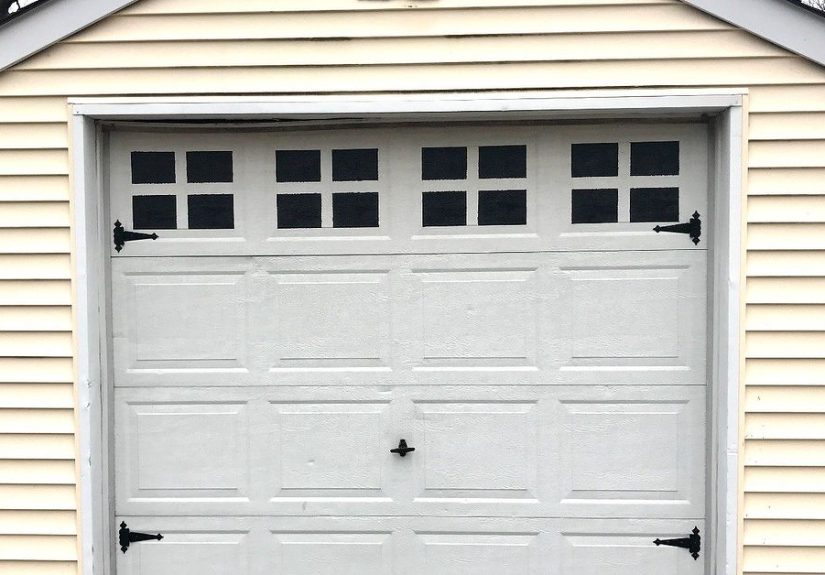
These are individual magnetic “panes” (often glossy black) that stick to steel garage doors. You arrange
them in a grid to mimic window panes. Most people place them on the top panel, where real garage door windows usually go.
- Pros: No tools, no holes, easy to reposition, great for renters and commitment-phobes.
- Cons: Won’t work on non-magnetic doors; alignment matters; textured doors can make adhesion less reliable.
- Best for: A quick curb appeal boost with minimal risk.
Option B: Faux Window Decals / Vinyl Overlays (Still Easy, Still No Glass)
These are adhesive vinyl designs that create the illusion of windows. Some mimic panes; others mimic full window frames.
They’re lightweight and can look extremely clean from the streetespecially on smooth doors.
- Pros: Clean “printed-on” look, lots of styles, works on more door materials than magnets.
- Cons: Requires careful surface prep; removal can be annoying if installed on old paint.
- Best for: Smooth doors and homeowners who want a sleek, minimal window illusion.
Option C: Simulated Window Frame Kits (Most Realistic Faux Look)
These are decorative window “frames” that mount to the outside of the door. Many kits involve measuring, marking,
drilling small pilot holes, and fastening the frames in place. When installed carefully, this is the most convincing
faux-window option because it creates real depth and shadow lines.
- Pros: Looks more like a true window section; adds dimension; usually very durable.
- Cons: More work; may involve drilling; more permanent.
- Best for: Homeowners who want “people will ask where you bought the new door” realism.
Option D: The “Not Faux” Alternative (Real Inserts) Worth Mentioning
If you actually want daylight in the garage, real window inserts are the upgrade. Real inserts can use materials like
tempered glass or impact-resistant plastics (often acrylic or polycarbonate) and may come in clear, frosted, tinted,
or insulated styles depending on the door model.
That said, if your goal is curb appeal without privacy or insulation tradeoffs, faux windows are the
sweet spotand the rest of this article focuses on them.
Before You Buy Anything: 5 Quick Checks
1) Confirm your garage door material
Magnetic faux windows generally work only on steel doors. Wood, fiberglass, and many aluminum doors won’t cooperate.
If you’re not sure, test a strong refrigerator magnet on the area where you’d place the “windows.”
2) Look for grooves, texture, and panel geometry
Raised panels and woodgrain textures can be gorgeousbut they also make alignment trickier. Faux panes look best when
they sit on a flatter section of the panel (or when the layout intentionally follows the panel lines).
3) Check clearance and moving parts
Garage doors have hinges, braces, and seams. Faux windows should sit where they won’t interfere with hardware or get
caught as the door rolls. If you’re using a frame kit that fastens with screws, this matters even more.
4) Consider your climate
Heat, humidity, dust, and salty coastal air can affect adhesion and appearance. Surface preparation and occasional
cleaning make a bigger difference than people expect.
5) Think about warranties and resale
If your garage door is new or under warranty, read the warranty language before drilling or modifying anything.
Non-invasive options (magnets/decals) are a safer bet if you want to keep things easily reversible.
Design That Looks Expensive (Even If It Wasn’t)
Match the “vibe” of your home’s windows
Faux windows look most believable when they visually rhyme with the windows already on your home. For example:
- Modern homes: simple rectangles, fewer panes, clean spacing.
- Traditional homes: grid patterns, divided-lite looks, slightly more detail.
- Arched details on the house: consider faux arched layouts or a curved top row to echo that shape.
Put them where real garage windows usually go
The top panel is popular because it reads as “window zone” from the curb. It also keeps the “glass” illusion higher
and safer from scuffs, bikes, and neighborhood basketball tryouts.
Use painter’s tape to mock it up
Here’s a simple method that prevents regret:
- Measure the area on the top section where windows could sit.
- Use painter’s tape to outline a few different window groupings.
- Step back to the curb (yes, all the way) and take a phone photo.
- Pick the layout that looks most balanced in the photonot the one that looked “fine” up close.
Photos flatten perspective like a passerby sees it. If it looks straight and symmetrical in a photo, you’re on the
right track.
How to Install Magnetic Faux Windows (Step-by-Step)
Tools & materials
- Magnetic faux window panes (kit)
- Measuring tape
- Level (or a laser level if you want to feel unstoppable)
- Mild soap + water, microfiber cloth
- Painters tape (optional, but very helpful)
Step 1: Clean the door like you mean it
Dirt and chalky residue reduce magnetic “grip” and make spacing look sloppy. Wash the area with mild soap and water,
rinse, and dry thoroughly. Avoid harsh or abrasive cleaners that can dull finishes.
Step 2: Find your baseline
Decide where the bottom edge of your faux windows will sit. Many people align them with a panel edge for a built-in
reference line. Use painter’s tape to create a straight guide line if you want maximum control.
Step 3: Plan the “pane math”
Most magnetic kits create a window illusion by grouping four panes into one “window,” with a small gap between panes
to suggest muntins (the dividers). Keep spacing consistent so your windows don’t look like they were assembled during
a moving vehicle.
Step 4: Start from the center and work outward
Center-first placement keeps the design symmetrical, even if your panels aren’t perfectly uniform. Place the middle
“window” grouping first, then mirror the spacing left and right.
Step 5: Step back and adjust
Close the garage, walk to the curb, and look. Tiny shifts that seem fussy up close are exactly what makes the final
look feel “real.” Adjust before you call it done.
How to Install Faux Window Frames (More Realistic, More Permanent)
Decorative frame kits vary, but many follow a similar pattern: dry-fit, measure, mark, drill small pilot holes, then
fasten the frame. If your kit includes protective film on the “glass” surface, leave it on until you’re ready for the
final install to avoid scratches.
Tools & materials
- Faux window frame kit
- Tape measure + pencil
- Level
- Drill + drill bit sized for pilot holes (often around 1/8″)
- Ladder (and a helper if you like your weekends injury-free)
Step 1: Layout on the closed door
Lay the frames out against the closed door to confirm spacing. A symmetrical look is your best friend here. Measure
the gaps between frames and the distance from the panel edges so everything lines up cleanly.
Step 2: Hold, level, mark
Hold the frame in place (this is where a helper shines), check it with a level, then mark the fastener points.
Double-check your marks before drillingbecause holes have an extremely stubborn personality.
Step 3: Drill pilot holes carefully
Drill pilot holes at the marked points. Go slow and steady, and follow the kit instructions closely. Many kits are
designed to use small pilot holes to reduce the risk of cracking or misalignment.
Step 4: Fasten and finish
Attach the frame according to instructions, remove protective film, wipe away fingerprints, and admire the new “window”
illusion. If your kit includes trim pieces, add them last for the cleanest look.
Placement Ideas That Look Great on Real Houses
The classic three-window look
Three groupings across the top panel works well on many double doors. It reads traditional and balanced without feeling
busy.
The modern two-wide look
Two larger “windows” with minimal panes can look crisp on contemporary homesespecially when your house windows have
simple geometry.
The faux-arched “carriage” vibe
A curved top row (often created by trimming decal shapes or arranging magnetic panes) can echo arched architectural
details. Use this sparinglylike hot sauce.
Common Mistakes (And How to Avoid Them)
Mistake: Installing too low
Faux windows placed in the middle panel can look odd, like your garage is wearing glasses on its cheeks. The top panel
is the safest design bet.
Mistake: Uneven spacing
Humans are surprisingly good at spotting crooked “windows.” Measure the gaps. Use a guide line. Take a photo. Adjust.
Repeat until your eyes stop twitching.
Mistake: Skipping surface prep
Magnets and decals both need a clean surface. A quick wash and dry can prevent slipping, peeling, and “why does this
look smudgy already?”
Mistake: Choosing a style that fights your home
If your house windows are simple rectangles, ornate faux grids can feel out of place. Aim for harmony, not a design duel.
Care & Maintenance: Keep the “Glass” Illusion Looking Fresh
Faux windows are low maintenance, but not no maintenance. The goal is to keep them glossy, aligned, and free from
grime that screams “sticker.”
- Use mild soap and warm water for cleaning and avoid abrasive products.
- Dry thoroughly to prevent water spotting and streaks.
- Inspect seasonallyespecially after storms or extreme heat.
- For magnets: remove and clean behind them occasionally so dirt doesn’t create uneven edges.
Quick FAQ
Do faux garage door windows damage the door?
Magnetic and most decal options are designed to be non-invasive when installed on a clean, compatible surface. Frame
kits that require drilling are more permanent and should be installed carefully, ideally after checking your door’s
warranty guidance.
Will magnetic windows fall off?
On clean, smooth steel doors, they’re typically stable. Problems usually come from dusty surfaces, heavy texture, or
incompatible materials.
Can I do this alone?
Magnetic panes and decals can often be a solo project. Frame kits are much easier with a helper, especially when
leveling and marking holes.
Conclusion: Your Garage Door, But Make It Charming
Adding faux windows to your garage door is a rare DIY win: low drama, high impact, and surprisingly
forgivingif you plan your layout and keep everything aligned. Pick a style that matches your home, place it where
real windows would naturally go, and treat surface prep like it’s part of the design (because it is).
Whether you choose quick magnetic panes, sleek decals, or more realistic frame kits, the end result is the same:
a garage door that looks more intentional, more architectural, and more “yes, we totally have our lives together.”
Experience Section: 10 Real-World Lessons People Learn After Adding Faux Garage Door Windows
This section is the “I wish someone told me” portion of faux windows. Not personal stories from a magical DIY fairy,
but the kind of common experiences homeowners share after doing this projectespecially the first time.
1) The curb photo tells the truth (even when your eyes lie)
Up close, you can convince yourself a slightly uneven row is “fine.” From the curb, it becomes a geometry pop quiz.
Many people end up taking a photo, zooming in, and immediately seeing what they missed. The fix is usually simple:
pick one straight reference line (panel edge or tape guide) and make every pane obey it. Once you do, the entire door
suddenly looks more expensiveeven if the “windows” cost less than dinner.
2) Clean doors are not as common as we think
A lot of garages look clean until you actually wash them. Then you discover the door has been quietly collecting
pollen, dust, car exhaust residue, and that mysterious gray film that shows up like an uninvited houseguest.
Homeowners often report that cleaning before installation is the difference between faux windows that look crisp and
faux windows that look like they’ve been through a sandstorm. Bonus: your whole house looks fresher when the garage
door isn’t dull.
3) “Symmetry” can be trickier than it sounds
Many garage door panels aren’t perfectly identical, especially on older doors. People sometimes measure from one side,
replicate the spacing on the other, and still end up a hair off because the panel bevels or trim lines aren’t equal.
A common workaround is to measure from the center outward, using the centerline of the door as the main anchor. It
feels a bit like math class, but the reward is a layout that looks intentionally designed instead of “close enough.”
4) The “right” style is the one that matches your house, not your mood
Homeowners fall in love with dramatic arched designs…then realize their home has modern rectangular windows and clean
lines. The faux windows can look like they wandered over from a different neighborhood. The best experiences usually
come from choosing a shape and pane pattern that echoes existing windowsso the garage door feels like part of the
architecture, not a separate costume.
5) Bright sun can change the illusion
Glossy faux panes look convincingly “glassy” on cloudy daysand sometimes extra shiny on bright days. That’s not always
bad; it can read as reflective glass from a distance. But some people notice glare that highlights the fact that the
surface is flat. The simplest fix is placement: faux windows on the uppermost panel often look most natural because
real windows commonly live there, and the angle reduces harsh reflections from street level.
6) Textured doors can create tiny alignment headaches
A heavily textured or deeply embossed door can make decals harder to adhere cleanly and magnets slightly less stable,
especially at edges. Many homeowners solve this by choosing a layout that sits inside the flattest part of the panel,
or by using a style with slightly thicker borders so the texture is less noticeable from the street.
7) Everyone forgets the “open door view”
Faux windows can look perfect when the door is closed, but when it opens, the panel seams shift and you can briefly
see how the illusion breaks. Most people don’t care (and most neighbors aren’t judging your door mid-opening), but
some homeowners prefer designs that align with panel seams so the look stays visually consistent even in motion.
8) Doing it twice is common (and not a failure)
It’s surprisingly normal to install, step back, tweak, then reinstall. The “best” DIY outcomes often come from treating
the first placement as a draft. People who give themselves permission to adjust typically end up with a result that
looks professionally planned. Think of it as editingyour garage door deserves a second draft too.
9) Adding faux windows often inspires a second upgrade
Once faux windows go up, many homeowners notice the rest of the garage door hardware looks plain. The common next step
is decorative hinges/handles (also often magnetic). The key experience-based tip: don’t overdo it. Faux windows are the
“main character.” Hardware is supporting cast.
10) The best compliment is when someone assumes they’re real
Homeowners love the moment a friend says, “When did you get new garage doors?” That’s the magic of faux windows done
right: they don’t scream “added-on.” They quietly elevate the whole facade, making the home look more finished and
thoughtfully designed. And honestly, that’s a lot of confidence for a project that can be done in an afternoon.