Table of Contents >> Show >> Hide
- What’s a hematoma, exactly?
- The anatomy that makes everything make sense
- Key differences at a glance
- Causes and risk factors
- Symptoms: what people notice (and what doctors worry about)
- Imaging: what CT and MRI typically show
- Treatment: why minutes matter (and what “watchful waiting” really means)
- Prognosis and recovery: what happens after the emergency
- When to seek emergency care after a head injury
- Prevention: reducing risk without living in bubble wrap
- Common questions that come up online (answered honestly)
- Experiences related to epidural vs. subdural hematomas (real-life feel, without the drama soundtrack)
If you’ve ever wondered how two conditions can sound nearly identical but behave like totally different animals, meet
epidural hematoma and subdural hematoma. Both involve bleeding inside the skull after
head trauma (and occasionally other causes), but the “where” and “how fast” matter a lotkind of like the difference
between a small kitchen leak and a pipe that bursts behind the wall.
This guide breaks down the key differences in anatomy, causes, symptoms, imaging findings, treatment, and recoveryusing
real-world examples and plain English. (No, you don’t need a medical degree. You just need curiosity and a respect for
your brain’s personal space.)
Important: This article is for education, not diagnosis. A suspected brain bleed is a medical emergencyif someone
has serious symptoms after a head injury, seek emergency care right away.
What’s a hematoma, exactly?
A hematoma is a collection of blood outside of a blood vessel. In the skull, that blood can take up space
that the brain was planning to useraising pressure and potentially injuring brain tissue. Epidural and subdural hematomas
are both considered extra-axial bleeds, meaning the blood is outside the brain tissue itself but still
inside the skull.
The anatomy that makes everything make sense
Think of your head like a layered safety system:
the skull is the hard shell, the dura mater is the tough outer lining,
and beneath that are thinner membranes (including the arachnoid) and then the brain.
Epidural hematoma: “Above the dura”
An epidural hematoma (EDH) is bleeding that collects between the inside of the skull and the dura.
It’s often tied to a skull fracture that tears an artery (classically the middle meningeal artery), which can make the bleeding
relatively fast and high-pressure.
Subdural hematoma: “Below the dura”
A subdural hematoma (SDH) collects between the dura and the brain’s surface (above the arachnoid).
It’s commonly caused by tearing of bridging veins, which can be slower than arterial bleedingthough “slower”
can still be dangerous. Subdural hematomas can be acute (hours to days), subacute, or
chronic (symptoms developing over weeks).
Key differences at a glance
| Feature | Epidural Hematoma (EDH) | Subdural Hematoma (SDH) |
|---|---|---|
| Location | Between skull and dura | Between dura and brain surface |
| Typical vessel | Often arterial (e.g., middle meningeal artery) | Often venous (bridging veins) |
| Speed | Often rapid expansion | Can be rapid (acute) or slow (chronic) |
| CT “shape” | Biconvex / lens-shaped; usually limited by sutures | Crescent-shaped; can spread more widely along the skull |
| Classic story | Head injury → possible brief loss of consciousness → “lucid interval” → deterioration (not always) | Symptoms may be immediate or delayed; chronic SDH can look like “something’s off” over time |
| Who’s at risk | Often younger patients after significant trauma | Common in older adults, people on blood thinners, and after falls; also after significant trauma |
Causes and risk factors
Both EDH and SDH are most commonly linked to head trauma, but the mechanisms differ.
Here’s how it typically plays out.
Common causes of epidural hematoma
- Skull fracture with an underlying artery tear (often after a high-impact blow).
- Sports collisions, vehicle crashes, or falls with direct head impact.
- Less commonly, bleeding related to abnormal blood vessels or clotting problems.
Common causes of subdural hematoma
-
Acceleration–deceleration forces that stretch and tear bridging veins (for example, a fall where the head
whips rather than just “bonks”). -
Older age: as the brain naturally shrinks with age, those bridging veins can be under more tension, making
them easier to tear. - Blood thinners or clotting disorders can increase risk or severity.
- Alcohol use disorder (partly due to fall risk and effects on the brain and clotting).
One important clarity point: an “epidural” in epidural anesthesia (like for childbirth) refers to the spine, not the brain.
An epidural hematoma can occur in the spine too, but in this article we’re talking about intracranial (inside-the-skull) hematomas.
Symptoms: what people notice (and what doctors worry about)
Symptoms overlap because both conditions can raise pressure in the skull and irritate brain tissue. The difference is often
the timing and the pattern.
Symptoms that can happen with either EDH or SDH
- Severe or worsening headache
- Confusion, unusual sleepiness, or trouble staying awake
- Nausea or vomiting
- Slurred speech or trouble finding words
- Weakness or numbness (often on one side)
- Vision changes
- Seizures
The “lucid interval” thing: helpful, but not a magic clue
Epidural hematomas are famous for the “lucid interval” story: a person is briefly knocked out, wakes up and seems
okay, then worsens as bleeding expands. It’s memorableand sometimes truebut it’s not guaranteed, and similar patterns can
happen with other brain injuries. So clinicians treat it as a warning sign, not a trivia question.
How subdural hematomas can be sneaky
Acute subdural hematomas can be dramatic, especially after severe trauma. But chronic subdural hematomas can act
like a slow-burn problem: headaches that won’t quit, new balance trouble, personality or memory changes, or a gradual “this person
just isn’t themselves lately.” In older adults, that can be mistaken for dehydration, infection, or even dementiauntil imaging
reveals the real culprit.
Imaging: what CT and MRI typically show
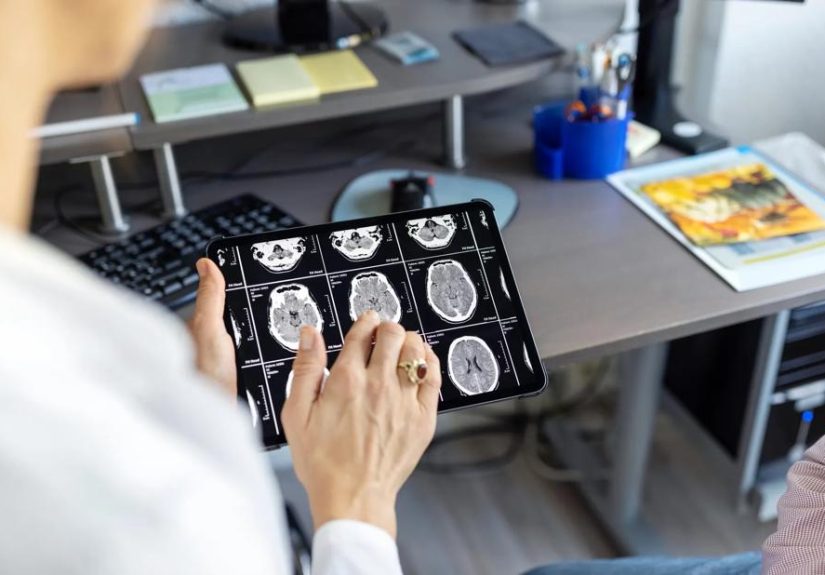
In emergency settings, a non-contrast head CT is usually the first-line test because it’s fast and very good at
spotting acute blood. MRI can be helpful in certain cases, including dating blood products or evaluating subtle/chronic bleeds.
Epidural hematoma imaging pattern
EDH often appears as a lens-shaped (biconvex) collection. Because the dura is tightly attached to the skull at
suture lines, epidural blood is typically limited by sutures, which helps explain that neat, contained shape.
Subdural hematoma imaging pattern
SDH classically looks crescent-shaped and can spread along a broader surface inside the skull. Subdural blood is
not usually stopped by sutures the same way epidural blood is, so it may “wrap” more widely. Over time, chronic subdural blood can
look different from fresh bleeding on scans, which is one reason clinicians pair imaging with the timeline and symptoms.
Treatment: why minutes matter (and what “watchful waiting” really means)
Treatment depends on the patient’s symptoms and neurological exam, the hematoma’s size and effect on the brain, and whether there
are signs of increasing pressure. Management ranges from close observation to emergency surgery.
Epidural hematoma treatment
Because EDH is often arterial and can expand quickly, it frequently requires urgent neurosurgical evaluation.
Some smaller EDHs in stable patients may be managed with careful monitoring and repeat CT scans in a neurosurgical centerbut
many cases need surgical evacuation to relieve pressure and control bleeding.
Subdural hematoma treatment
Acute SDH with significant size or brain shift often requires surgical management. Chronic SDH treatment varies: some cases are monitored,
while others are drained through less invasive approaches (such as burr holes). In certain chronic SDH situations, some centers also use
techniques like middle meningeal artery embolization as part of treatment strategy to reduce recurrence risk in selected patients.
Clinical guidelines doctors use (in plain English)
Neurosurgical teams often use evidence-based thresholds (such as hematoma thickness, amount of midline shift, and neurological status)
to decide on surgery versus observation. The point isn’t that numbers replace clinical judgmentit’s that they help standardize care
when the stakes are high.
Prognosis and recovery: what happens after the emergency
Outcomes depend on several factors: how quickly treatment happens, the size and speed of bleeding, the person’s age and overall health,
and whether there are other brain injuries (like contusions or swelling).
Typical recovery themes
- Short-term: headache, fatigue, and “brain fog” are common after head injuryeven without surgery.
- Rehab: physical therapy, occupational therapy, or speech therapy may be needed if there are deficits.
- Follow-up imaging: repeat scans may check for stability or recurrence, especially in chronic SDH.
- Medication review: clinicians may reassess blood thinners (never stop them without medical guidance).
Many people recover well, especially when diagnosis and treatment are prompt. But both EDH and SDH can be life-threatening, which is
exactly why they’re treated as emergencies rather than “let’s see if it goes away” situations.
When to seek emergency care after a head injury
If any of the following happen after a head injury, treat it like an emergency:
- Worsening headache, repeated vomiting, or increasing drowsiness
- Confusion, strange behavior, trouble speaking, or trouble walking
- Weakness, numbness, or facial droop
- Seizure, fainting, or any loss of consciousness
- Unequal pupils or new vision problems
Also take extra caution if the person is an older adult, is on anticoagulants/antiplatelet medication, or has a bleeding/clotting disorder.
When in doubt, get evaluated.
Prevention: reducing risk without living in bubble wrap
- Seat belts and appropriate car seats: boring, effective, life-saving.
- Helmets for biking, skating, and contact sports.
- Fall-proofing homes for older adults: good lighting, removing tripping hazards, and using supports as needed.
- Medication check-ins: if you’re prescribed blood thinners, keep regular follow-ups and discuss fall risk.
Common questions that come up online (answered honestly)
Is epidural hematoma always worse than subdural?
Not necessarily. EDH can deteriorate fast, which is scary and dangerous. But a large or rapidly expanding SDH can be just as life-threatening.
Severity depends on size, speed, location, and the patient’s conditionnot the label alone.
Can symptoms be delayed?
Yesespecially with chronic subdural hematoma, where symptoms can develop over days to weeks (or longer) after seemingly minor trauma.
That’s why new neurological symptoms in a high-risk person are taken seriously even if the injury wasn’t dramatic.
What’s the fastest way doctors tell the difference?
Usually a CT scan plus the clinical story. The imaging patterns (biconvex vs crescent) are helpful, but clinicians also weigh injury mechanism,
risk factors, and the neurological exam.
Experiences related to epidural vs. subdural hematomas (real-life feel, without the drama soundtrack)
Most people don’t walk around thinking, “Today feels like a great day to learn about intracranial bleeding.” And yet, the moment a head injury happens,
life can pivot into a new genre: part medical mystery, part logistics marathon, part “why is the waiting room Wi-Fi so bad?”
A common EDH-style experience (in composite stories clinicians recognize) starts with a clear “big hit” moment: a hard sports collision, a bike crash,
or a fall with a direct head impact. At first, the person might seem okaymaybe shaken, maybe with a pounding headache, maybe embarrassed that everyone
is fussing over them. Sometimes there’s that classic wake-up-and-feel-fine window people talk about. This is where families get tricked by the brain’s
short-term confidence: “They’re talking нормальноmust be fine.” But neurological emergencies don’t always send a calendar invite before they escalate.
What tends to stand out is a change over minutes to hours: increasing sleepiness, worsening headache, confusion, or vomiting. In the ER, the pace shifts
fast: vital signs, a neurological check (“Can you squeeze my fingers?” “What day is it?”), and a rapid trip to CTthe brain’s version of a “quick selfie,”
except nobody’s smiling and nobody wants a filter.
Subdural hematoma experiences can feel very different, especially chronic SDH. The “injury” might be a small fall that seemed like no big deal at the time.
Days or weeks later, someone notices subtle changes: a parent can’t keep track of conversations, a grandparent is suddenly unsteady, a normally sharp person
is unusually irritable, or headaches keep showing up like an uninvited group chat. What makes chronic SDH emotionally tricky is how non-specific the symptoms
can be. Families sometimes second-guess themselves“Are we overreacting?”until imaging provides an answer. When a scan reveals a subdural collection, there’s
often a strange mix of fear and relief: fear because it’s serious, relief because the mystery has a name and a plan.
The treatment experience also varies. For some, “treatment” means close observation: repeat scans, frequent neuro checks, and strict instructions about return
precautions. It can feel anticlimacticlike being told you’re in a high-stakes situation, but your job is to rest and let the medical team watch the numbers.
For others, surgery becomes the headline. Families often remember how direct neurosurgical conversations are: they focus on pressure, shift, and timing, and they
don’t waste words. After surgery or drainage, people commonly describe a reset in symptomsheadache easing, alertness improvingfollowed by a slower recovery that
includes fatigue, sensitivity to screens, and the humbling realization that the brain heals on its own schedule.
Across both EDH and SDH, one shared experience is the “after” period: follow-ups, sometimes rehab, and a new respect for prevention. People who never wore helmets
become helmet evangelists. Families start noticing trip hazards like they’re working in workplace safety. And many patients say the same thing in different words:
“I’m grateful we didn’t ignore the warning signs.” If there’s a takeaway that feels both practical and human, it’s thiswhen symptoms are getting worse after a head
injury, getting checked isn’t “being dramatic.” It’s being smart.