Table of Contents >> Show >> Hide
- When Pinewood Derby Meets Snack Time
- What Exactly Is the Cookin’ Derby?
- How Electric Hot Dog Racing Works (Conceptually)
- From Pinewood Derby to Cookin’ Derby: Why Makers Love It
- STEM Learning Hidden Inside the Silliness
- Hosting a Hot Dog Derby–Themed Event (Safely)
- Alternative “Cookin’ Derby” Ideas for Schools and Families
- Real-World Experiences: What It’s Like to Witness Electric Hot Dog Racing
- Conclusion: Why Cookin’ Derby Belongs in Maker Lore
When Pinewood Derby Meets Snack Time
Picture a classic pinewood derby track: long wooden lanes, cheering crowds, cars flying toward the finish line.
Now replace the wooden cars with hot dogs on wheels, add a bit of electronics magic, and turn the whole thing into
a live-action cooking show. That, in a nutshell, is the wild, slightly ridiculous, and totally brilliant idea behind
Cookin’ Derby electric hot dog racing.
Instead of just racing toy cars, makers at events like Maker Faire have taken the concept up about twelve notches.
They built a multi-lane track where each “car” is a hot dog, mounted on a custom chassis, rolling down rails that
also deliver electric current. As the hot dog races, it cooks. At the bottom of the track, you don’t just get a winner
– you get lunch.
This project sits at the intersection of DIY electronics, food hacks, pinewood derby nostalgia, and showmanship.
It’s over the top. It’s geeky. And it’s a perfect example of how the maker community turns simple ideas into unforgettable
experiences.
What Exactly Is the Cookin’ Derby?
The Cookin’ Derby is essentially an electric hot dog racing track inspired by pinewood derby traditions.
Pinewood derbies, popular in youth organizations for decades, challenge kids to design small wooden cars and race them on
a gravity-powered track. Makers have riffed on that formula with “no rules” competitions like the Nerdy Derby, where
creativity beats strict regulations and anything that rolls is fair game.
Cookin’ Derby takes that same free-spirited vibe and asks a wonderfully unnecessary question:
“What if we race hot dogs and cook them at the same time?”
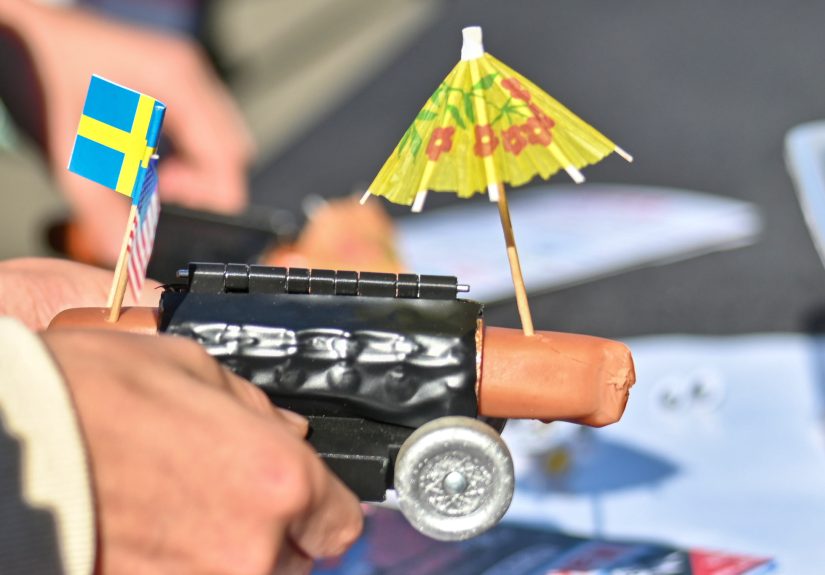
In the version popularized by the maker community, each racer is a hot dog skewered with conductive spikes, mounted on a
3D-printed or custom-built chassis with metal wheels. The wheels make contact with long strips of conductive
material on the track, supplying electric current through the wheels, into the spikes, and through the hot dog. The result:
as the dog races, it heats up from the inside out.
To manage the race, makers use a microcontroller-based system to open the starting gate, read finish-line sensors,
and display winning times on a large digital display. The entire setup feels like a mash-up between a science lab, a race track,
and a food truck.
How Electric Hot Dog Racing Works (Conceptually)
Let’s walk through the main building blocks, without diving into detailed wiring diagrams (because electricity
+ improvised food appliances demands serious expertise and safety precautions).
The Track
The Cookin’ Derby track looks similar to a pinewood derby track: multiple lanes, a steep starting section, and a long
flat run-out. The twist is that each lane has conductive rails running its entire length. Makers
typically use metal tape or rails adhered to the surface, turning each lane into a long set of “live” and “return” conductors.
When the race starts, gravity pulls the hot dog cars downwards. As they move, the wheels continuously pick up power from the rails,
feeding it through the car and into the hot dog itself.
The Hot Dog “Cars”
Each racer usually has:
- A hot dog as the main “body”
- A small chassis or frame (often 3D-printed or laser-cut)
- Metal wheels that ride directly on the powered rails
- Conductive spikes or tacks pressed into the hot dog to carry current
As current passes through the meat, the hot dog’s internal resistance causes it to warm up. It’s the same basic concept used by
classic electric hot dog cookers, where a frankfurter is connected directly between two prongs and heated by current. Modern
makers put that principle in motion, literally, by turning it into a racing platform.
The Brains and Sensors
At the heart of the track is a microcontroller that coordinates the race. A typical setup may use a popular
development board paired with:
- A servo or solenoid to release the starting gate
- Infrared or optical sensors at the finish line to detect which lane wins
- A seven-segment or matrix display to show the winning time and lane
With the right code, the system can handle countdowns, automatic starts, timing, and dramatic victory flashes. The electronics
bring structure and repeatability to what would otherwise just be chaos, hot dogs, and gravity.
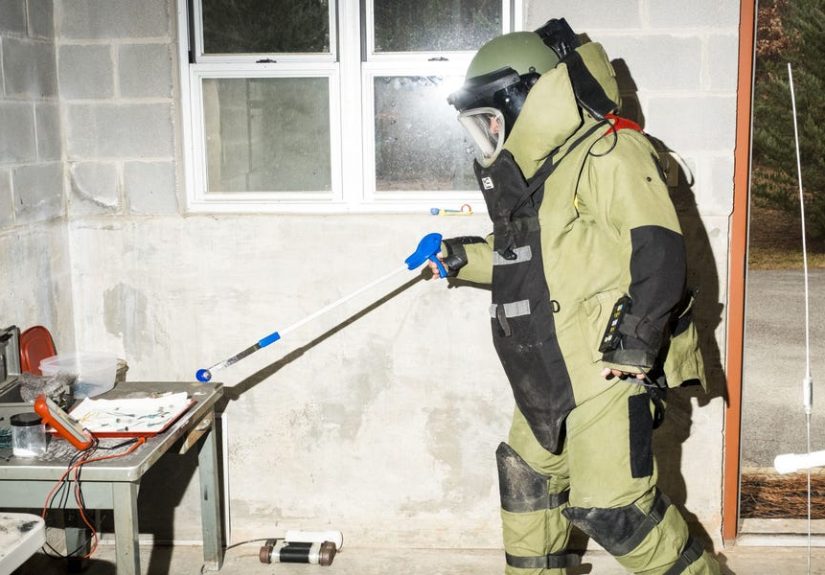
About Safety (Very Important)
Any project that passes electrical current through food, especially at voltages high enough to cook, must be treated with
extreme caution. The original Cookin’ Derby setups are built by experienced makers with careful attention to insulation,
grounding, current limiting, and physical barriers between people and live conductors.
If you’re inspired by this idea, think of it as a concept and demonstration of creativity, not a plug-and-play
“weekend build” for kids. For most hobbyists and schools, safer alternatives like solar hot dog cookers,
low-voltage experiments, or traditional pinewood derby tracks are a better fit, especially when working with children.
From Pinewood Derby to Cookin’ Derby: Why Makers Love It
Pinewood derbies have always been about more than speed. They’re a hands-on way to teach kids about design, friction, mass,
and the satisfaction of building something tangible. The maker movement grabbed that tradition and stretched it:
“What if we used 3D printers? What if we removed most of the rules? What if the cars lit up, spun, or did something bizarre?”
Cookin’ Derby is the logical next escalation. It keeps the familiar elements:
- A sloped track
- Multiple lanes
- Gravity-powered racing
- Friendly competition and cheering crowds
…then adds:
- Electronics and coding
- Food hacking and novelty
- Visual spectacle (sparks, sizzling, and smoke are attention magnets)
- Maker Faire–style theatrics
It’s not about crafting the most precise race car. It’s about building something audacious that makes people
stop, stare, and ask, “Wait, are those hot dogs racing?”
STEM Learning Hidden Inside the Silliness
Behind the jokes and the sizzling sausages, electric hot dog racing hides serious educational value. If you peel back the humor,
students and spectators can explore:
- Electric circuits – How current flows through different materials and why some conduct better than others.
- Resistance and heating – Why things warm up when current passes through them, and how resistance converts electrical energy into heat.
- Power and safety – Why voltage, current, and exposure matter for both cooking and electrical hazards.
- Materials science – Why metal wheels and copper tape work well as conductors, while the track’s structure remains insulated.
- Programming and automation – How a microcontroller can coordinate gates, sensors, and displays for precise timing.
For educators, an event like Cookin’ Derby can act as a hook. The spectacle pulls people in, and then you can peel back the curtain
and discuss safer, classroom-friendly variants. For instance, you might explore:
- Low-voltage circuit experiments using LEDs and resistors
- Solar hot dog cookers made from cardboard and foil
- Racing cars that carry sensors instead of live current
The point is not to encourage everyone to build high-powered food race tracks at home, but to show how physics, electronics,
and coding can combine into something memorable and delightfully weird.
Hosting a Hot Dog Derby–Themed Event (Safely)
Maybe you’ve seen videos or photos of electric hot dog racing and thought, “We need something like that at our next
school fair, makerspace open house, or community event.” You absolutely can capture the spirit without recreating the
full high-voltage spectacle.
1. Choose Your Core Concept
Decide what you want your guests to experience:
- Visual showpiece: A single, professionally built electric demonstration run by trained staff.
- Hands-on build area: Guests decorate hot dogs or model cars that roll down a regular, non-electrified track.
- STEM workshop: Simple circuits, coding stations, or solar cooker builds inspired by the Cookin’ Derby idea.
2. Focus on Safety and Supervision
If any live electricity is involved, it must be designed and operated by competent adults with proper safety procedures:
- Keep spectators physically separated from any energized components.
- Use clear signage and barriers.
- Have emergency shut-off options and fire safety equipment on hand.
- Do not allow children to modify or rewire any powered portion of the track.
For most community events, it’s best to make the electrified portion a demonstration only, with hands-on
building limited to non-powered racers or safe low-voltage projects.
3. Add Flair: Costumes, Themes, and Storytelling
People remember atmosphere as much as engineering. Consider:
- Racers named after condiments or sports teams
- Mini flags, tiny umbrellas, or toothpick signs stuck into the hot dogs (for non-electrified props)
- Announcers calling the race like a sports broadcast
- A “winner’s circle” table where the champion dog gets its photo taken
Combine the fun of a county fair with the curiosity of a science expo and you’ve got a memorable, sharable experience.
Alternative “Cookin’ Derby” Ideas for Schools and Families
Want the theme without the complicated hardware? Try these safer, accessible alternatives inspired by the spirit of the
Cookin’ Derby:
- Solar Hot Dog Derby: Build simple solar cookers from cardboard boxes and foil, then “race” to see whose cooker heats a hot dog fastest.
- Rolling Lunch Race: Use toy cars or LEGO vehicles to carry mini hot dog models (or empty buns) down a track, focusing on design and aerodynamics.
- LED “Heat-O-Meter” Cars: Build cars with LEDs and temperature sensors; as they race, they show colorful “heat levels” on a strip of lights instead of cooking anything.
These variations keep the playful spirit and STEM learning while staying squarely in the realm of safe, family-friendly fun.
Real-World Experiences: What It’s Like to Witness Electric Hot Dog Racing
If you’ve never seen an electric hot dog race in person, it’s hard to appreciate just how surreal it feels. The first thing
you notice is the crowd reaction. People walk by a typical pinewood derby track and think, “Oh, neat.” People
walk by a sign that says “Electric Hot Dog Derby” and immediately slow down, squint, and laugh.
At a maker event, the Cookin’ Derby area tends to draw a steady ring of spectators. Kids press up against the barriers. Adults
pull out phones. You hear the same comments on repeat:
- “Wait, they’re cooking the hot dogs on the way down?”
- “Is that even safe?”
- “I need to send this to my group chat.”
When the countdown starts, the vibe flips from confusion to excitement. The announcer calls out lane names maybe “Team Mustard,”
“Team Relish,” and “Team Ketchup” while the microcontroller arms the starting gate. The gate drops, the hot dogs roll, and the
crowd erupts like it’s a miniature Indy 500 with extra sodium.
As the dogs race, you might see faint wisps of steam, or hear tiny crackles when the track’s hardware gives the hot dogs a final
sear near the finish. That last burst becomes part of the show: a mix of visuals, sound, and the unmistakable smell of hot dogs
in the air. It’s science, but it’s also theater.
After each race, there’s a decision to make: Do you actually eat the winning hot dog? Some builders treat the
cooked racers as novelty items rather than snack time, especially when food safety and electrical exposure are concerns. Others
design their systems carefully with food-safe materials and treat the end result more like an unusual cooking method. Either way,
the conversation around that choice is part of the experience it forces everyone to think about how we cook, what “safe”
means, and where we draw the line between performance art and lunch.
For makers who’ve helped build the track, the memories go even deeper. They talk about weeks of:
- Debugging code that misreads a sensor and declares the wrong winner
- Fine-tuning track angles so the hot dogs don’t derail halfway down
- Replacing wheels that arc or wear out faster than expected
- Running test hot dogs until everyone is sick of the smell
One of the most rewarding pieces of feedback builders often share is that people remember the project next year.
Attendees come back and say, “Are you doing the hot dog race again?” or “That was the weirdest thing I saw all weekend.” In a world
where we scroll past endless content, being the project that sticks in someone’s mind is a huge win.
And it’s not just about laughs. Many attendees walk away inspired to try their own projects not necessarily electric hot dog
tracks, but other whimsical builds: a solar-powered s’mores roaster, a potato-powered scoreboard, or a derby car with
programmable lights. Electric hot dog racing becomes a gateway experience, opening up the idea that engineering can be
playful, deliciously strange, and deeply human.
If you ever get the chance to see a Cookin’ Derby–style setup live, it’s worth seeking out. Go for the novelty; stay for the
conversations it sparks about creativity, safety, and how far we’ll go to make physics entertaining.
Conclusion: Why Cookin’ Derby Belongs in Maker Lore
Cookin’ Derby electric hot dog racing isn’t just a gimmick. It’s a perfect symbol of what the maker movement does best:
take everyday objects, mix them with technology and humor, and turn them into something unforgettable. It’s part race, part
food hack, part physics demo, and part performance art.
Will every workshop or school want a full-blown electric hot dog track? Probably not. But the idea plants a powerful seed:
learning is more engaging when it’s a little weird, a little risky-looking (but actually well-managed), and a lot of fun.
Whether you build solar cookers, LED derby cars, or just cheer from the sidelines, Cookin’ Derby reminds us that science and
engineering can absolutely serve up a side of laughter with the lesson.