Table of Contents >> Show >> Hide
- When “Separate Finances” Suddenly Gets Very Literal
- The Real Issue Wasn’t the Dinner Bill
- Why More Couples Are Choosing Separate Finances
- Separate Accounts Still Need Shared Rules
- Why Money Arguments Feel So Personal
- Was the Wife Wrong to Leave?
- The Red Flag: Rules That Only Work One Way
- How Couples Can Make Separate Finances Work
- What This Story Teaches About Financial Boundaries
- Experience-Based Reflections: What Couples Can Learn From This Dinner Disaster
- Conclusion
- SEO Tags
Note: This article is written for web publication and synthesizes the viral Reddit-style relationship scenario with reputable U.S.-focused guidance on separate finances, joint accounts, money communication, budgeting, and relationship conflict.
When “Separate Finances” Suddenly Gets Very Literal
Money can make a marriage feel like a cozy partnership, a strategic business merger, or, on a particularly dramatic Tuesday night, a courtroom drama with breadsticks. In one viral relationship story, a married couple agreed to keep their finances separate. The arrangement sounded simple enough: each person handled their own money, their own spending, and their own financial responsibilities.
Then dinner happened.
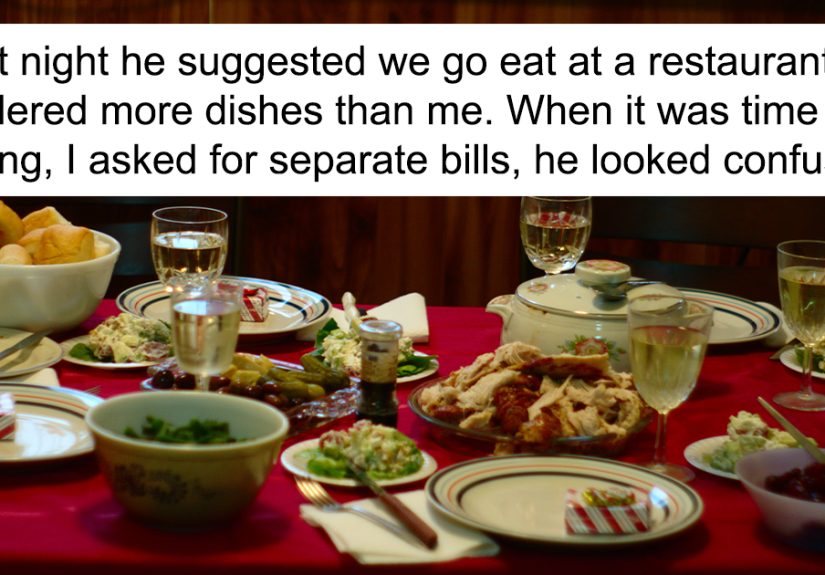
According to the story, the husband suggested they go out to eat. The wife assumed the usual rules applied: separate finances meant separate bills. At the restaurant, he ordered more food than she did, including extra dishes and dessert. When the check arrived, she asked the server for separate bills. That was when the husband reportedly became shocked that she was not planning to cover his meal.
His explanation? He had spent the money he had before arriving and assumed she would pay. Her response? Their agreement was that each person paid individually. She paid for her own meal and left, while he accused her of being selfish and mean.
Online readers reacted quickly because the situation was not really about a plate of food. It was about expectations, fairness, boundaries, and the strange way some people want “separate finances” right up until the bill lands next to the water glasses.
The Real Issue Wasn’t the Dinner Bill
At first glance, this looks like a simple restaurant argument. One spouse had money. The other did not. One spouse expected help. The other stuck to the agreement. But underneath the awkward check-splitting moment was a much larger relationship question: what does financial independence mean inside a marriage?
Separate finances can work beautifully for some couples. They can protect independence, reduce daily arguments about small purchases, and help each partner feel respected as an adult. However, separate finances require a level of clarity that many couples skip because talking about money is about as romantic as reading a toaster warranty.
The problem in this case was not that the couple had separate accounts. The problem was that one partner seemed to treat the rule as flexible when it benefited him. If he expected reimbursement when he paid for her expenses but expected generosity when he could not cover his own, the system was not equal. It was convenient.
That is why the story triggered such a strong reaction. The wife did not invent the rule in the middle of dinner. She followed the arrangement they had already made. If the husband wanted a different setup for date nights, emergencies, or shared meals, that conversation needed to happen before ordering dessert number two.
Why More Couples Are Choosing Separate Finances
Separate finances are no longer unusual. Many modern couples prefer a mix of independence and teamwork. Some keep individual checking accounts and contribute to a shared household account. Others split bills proportionally based on income. Some keep almost everything separate, especially if they married later in life, have children from previous relationships, own businesses, carry debt, or simply value financial privacy.
Recent U.S. financial data shows that fewer couples completely combine every dollar. Bankrate reported that fewer than two in five American couples completely combine finances, while about one in four keep accounts fully separate and many others use a combination of joint and separate accounts. The U.S. Census Bureau has also reported that couples may begin marriage with separate finances and gradually open joint accounts over time, especially after having children or staying married longer.
This shift makes sense. Marriage today often includes two incomes, student loans, blended families, side hustles, subscriptions no one remembers signing up for, and at least one mysterious streaming charge labeled “premium.” Separate finances can help couples avoid fighting over every latte, hobby purchase, or impulse buy from the clearance aisle.
But separate does not mean secret. And it definitely does not mean “I spend freely, then you rescue me when the check arrives.”
Separate Accounts Still Need Shared Rules
A healthy separate-finances arrangement usually includes clear agreements. Who pays rent or the mortgage? Who covers groceries? Are date nights split evenly, alternated, or paid by whoever invites? What happens if one partner loses income? What counts as a shared expense? What counts as personal spending?
Financial institutions and consumer guidance sources often recommend that couples discuss whether they will use individual accounts, joint accounts, or a combination of both. A hybrid model is common because it gives couples independence while still creating a shared structure for household needs. For example, each spouse may keep a personal account but contribute monthly to a joint account for rent, utilities, groceries, insurance, savings goals, and emergency expenses.
That kind of system prevents the “surprise bill” problem. If the couple in the viral story had a clear date-night rule, dinner would not have turned into a financial battlefield with appetizers.
A Better Date-Night Rule
Couples who keep money separate can avoid conflict by creating a simple restaurant policy. If both people agree to go out, they split the bill or pay for their own orders. If one person invites the other as a treat, the inviter pays. If one person cannot afford the restaurant, they say so before leaving the house. Revolutionary? Not really. Useful? Extremely.
Money etiquette does not need to be cold. A spouse can say, “I’m tight this week, can we cook at home?” or “I’d love to go, but I can only spend $25.” That is not embarrassing. That is responsible. What is embarrassing is ordering like a royal food critic and then discovering your wallet is on a spiritual retreat.
Why Money Arguments Feel So Personal
Money fights rarely stay about math. They quickly become emotional because money represents safety, control, respect, freedom, and sometimes old family wounds. One person may see separate accounts as independence. Another may experience them as rejection. One partner may think strict splitting is fair. The other may feel it is unloving.
Relationship experts often note that financial conflict is one of the most common sources of stress for couples. Fidelity’s Couples and Money research has found that many partners argue about money at least occasionally. The American Psychological Association has also highlighted money as a major relationship stressor, and the Gottman Institute emphasizes that money arguments often reflect deeper fears, values, and insecurities.
That is why the restaurant story became so explosive. The wife likely saw the situation as a matter of fairness: he created the rule, so he should live by it. The husband may have experienced the moment as humiliation or lack of support. Both reactions can exist, but only one person appeared to have planned ahead.
In a marriage, “I need help” is a valid sentence. “I assumed you would ignore our agreement because I spent all my money first” is less persuasive.
Was the Wife Wrong to Leave?
Readers were divided, as the internet tends to be whenever marriage, money, and restaurant checks collide. Some argued that spouses should help each other in embarrassing public situations. Others believed the husband was experiencing the natural consequence of his own financial rule.
The strongest argument in the wife’s favor is consistency. If he insisted on separate finances and expected her to repay him when he covered something, he could not reasonably expect a one-way exception. Fairness requires the rule to apply in both directions.
The strongest argument against her is compassion. Marriage is not supposed to operate like a vending machine: insert exact amount or receive no emotional support. If your spouse is genuinely stuck, helping them in the moment and discussing it later can sometimes protect the dignity of the relationship.
However, compassion should not become a loophole for manipulation. If one partner repeatedly creates situations where the other must pay, apologize, or rescue them, then “helping” becomes enabling. The key question is whether this was a rare mistake or part of a pattern.
The Red Flag: Rules That Only Work One Way
The most concerning part of the story is not that the husband was short on cash. Everyone has had a rough financial moment. The red flag is that he apparently expected separate finances to protect his money but shared finances to protect his comfort.
A fair financial system should not be a trap. If a couple agrees to split expenses, both people should understand how that applies in real life. If one spouse earns much more, a 50/50 split may not always be fair. In that case, proportional contributions may work better. For example, if one person earns 70 percent of the household income and the other earns 30 percent, shared bills could be divided in a similar ratio.
But whatever the arrangement is, it must be honest. A spouse should not use “separate finances” to avoid responsibility while expecting their partner to provide backup funding on demand. That is not independence. That is financial hide-and-seek, and nobody enjoys playing it with a dinner bill.
How Couples Can Make Separate Finances Work
Separate finances can be healthy when both partners communicate clearly. The arrangement should be written down or at least discussed in detail. Couples do not need a 47-page contract with footnotes and dramatic signatures, but they do need shared expectations.
1. Define Personal and Shared Expenses
Personal expenses may include clothing, hobbies, salon visits, gaming, gifts for friends, lunches, and individual subscriptions. Shared expenses may include housing, utilities, groceries, childcare, insurance, pet care, vacations, and household repairs. Without clear categories, every purchase can turn into a debate.
2. Create a Joint Emergency Fund
Even couples with separate accounts should consider shared emergency savings. Cars break. Pets swallow mysterious objects. Medical bills appear. A household emergency fund prevents one partner from becoming the default rescue bank.
3. Talk About Income Differences
A strict 50/50 split can feel fair on paper but unfair in practice if one spouse earns much less. Proportional contributions can reduce resentment and allow both partners to maintain dignity and spending flexibility.
4. Schedule Money Check-Ins
Money conversations should not happen only when someone is angry, broke, or staring at a restaurant receipt. Monthly check-ins can cover upcoming expenses, savings goals, debt, and any concerns before they become full-blown arguments.
5. Set Rules for Dining Out
Restaurants are small stages where financial assumptions love to perform. Decide ahead of time whether date nights are split, alternated, shared from a joint account, or paid by the person who invites. Clear rules make dinner taste better.
What This Story Teaches About Financial Boundaries
The viral dinner incident is entertaining because it is dramatic, but it is also relatable. Many couples have had a version of this fight. Maybe not with two desserts and a public exit, but with rent, vacations, holiday gifts, car repairs, or groceries.
The lesson is not that every married couple must combine finances. The lesson is that every married couple needs financial transparency. Separate accounts can protect autonomy, but they cannot replace communication. Joint accounts can simplify bills, but they cannot fix mistrust. The best system is the one both people understand, respect, and follow even when it is inconvenient.
In this case, the husband could have avoided the entire conflict with one sentence: “I’m low on cash tonight. Can we choose somewhere cheaper, or would you be willing to cover me this time?” That would have given his wife a choice instead of turning her into an unwilling sponsor of his dinner adventure.
Likewise, the wife could have chosen to pay and discuss the issue later, but she was not obligated to rescue him from a rule he helped create. Boundaries are not cruel simply because they become uncomfortable.
Experience-Based Reflections: What Couples Can Learn From This Dinner Disaster
Many couples discover the true meaning of their financial arrangement only when everyday life tests it. It is easy to say, “We keep our money separate,” while sitting calmly at home. It is harder when the server drops off the bill, one person reaches for a card, and the other suddenly looks like they just remembered they left their budget in another dimension.
From experience, couples who handle separate finances well usually do not rely on assumptions. They talk before the awkward moment. If they are going out, they know whether they are splitting the bill, using a joint card, or treating each other. If one partner is having a tight month, they say it early. This prevents resentment because no one feels tricked into paying.
A useful habit is the “money temperature check.” Before making plans, one partner can ask, “What budget are we comfortable with?” This simple question works for restaurants, weekend trips, birthday gifts, and family events. It sounds basic, but it saves people from pretending they can afford things they cannot. Pride is expensive. Communication is usually free.
Another lesson is that separate finances should not become separate lives. A marriage still needs shared goals. Even if each person has individual accounts, they should know the broad financial picture: debts, savings goals, income changes, emergency plans, and major obligations. Privacy is healthy. Secrecy is not. There is a big difference between “I have my own fun money” and “You have no idea I am financially sinking until I ask you to cover dinner.”
Couples should also consider emotional fairness, not just mathematical fairness. A 50/50 split may work when both partners earn similar incomes, but it can create stress when one person earns far less. In those cases, splitting by income percentage may feel more respectful. For example, the higher earner might contribute more to shared expenses while both partners keep personal spending money. That approach can preserve independence without making the lower earner feel constantly behind.
The restaurant story also shows why public embarrassment should never be used as a financial strategy. If someone cannot afford dinner, the answer is not to hope their spouse will cave under social pressure. That is not partnership; that is a surprise invoice wearing cologne. A healthier spouse says, “I need help,” not “I assumed you would pay because now it would be awkward not to.”
Finally, this situation reminds couples that rules need review. What worked when two people were dating may not work after marriage. What worked before kids may not work after childcare costs arrive. What worked during two steady incomes may not work after a layoff. Money systems should evolve as life changes.
The best financial arrangement is not necessarily joint, separate, or hybrid. It is the one that is transparent, fair, flexible, and mutually respected. If a couple can talk about money without turning every discussion into a courtroom scene, they are already ahead. And if they can decide who pays before the waiter brings the check, they may even get to enjoy dessert in peace.
Conclusion
The story of a wife leaving her husband at a restaurant after he could not afford his part of dinner is more than viral relationship drama. It is a sharp example of what happens when financial rules are unclear, uneven, or used only when convenient. Separate finances can absolutely work in marriage, but only when both partners communicate honestly, plan ahead, and respect the same boundaries.
Marriage does not require one shared bank account, but it does require shared understanding. Whether couples combine everything, split everything, or build a hybrid system, the goal should be teamwork. Otherwise, separate finances can quickly become separate expectationsand eventually, separate dinner checks with a side order of resentment.