Table of Contents >> Show >> Hide
- The Comment That Lit Up the Internet
- Why “Just Eat Cheap Pasta” Falls Apart in Real Life
- Why Jack Monroe’s Answer Still Hits
- The Nutrition Problem Everyone Pretends Not to See
- What Families Actually Need Instead of Smug Advice
- The Bigger Lesson Behind the Pasta Debate
- Experiences That Show Why This Topic Hits So Hard
- Conclusion
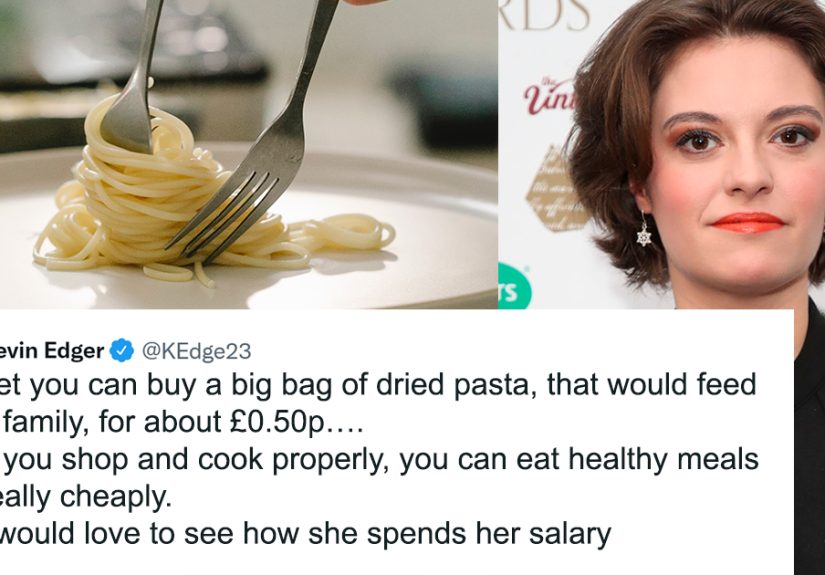
Every now and then, the internet produces a take so aggressively out of touch that it briefly unites people across class, age, and political tribe. A few years ago, one of those takes came gift-wrapped in dried carbs: a conservative commenter suggested that struggling families could solve food hardship by buying a cheap bag of pasta and cooking more intelligently. Poverty activist and budget-cooking expert Jack Monroe answered with the kind of precision that only comes from lived experience: calm, cutting, and absolutely devastating.
The reason Monroe’s reply landed so hard is simple. The “just eat plain pasta” argument sounds practical only if you have never had to make impossible choices in a real kitchen with a real budget, real children, real exhaustion, and a real electric bill waiting in the corner like a debt-collecting gargoyle. Pasta is fine. Pasta is beloved. Pasta as a complete social policy? That is where the wheels come off the shopping cart.
This story still resonates because it captures a larger truth about poverty, food insecurity, and the smug mythology of “better choices.” People love to imagine that hunger in wealthy societies is caused by ignorance, laziness, or bad menu planning. That story is emotionally convenient because it lets everybody else sleep at night. If poverty is just a shopping mistake, then nobody has to deal with low wages, rising grocery prices, child care costs, transit barriers, medical bills, housing pressure, or the exhausting math of trying to stretch too little money across too many needs.
The Comment That Lit Up the Internet
The original exchange blew up after coverage of a working mother who was struggling to feed her children. Into that deeply human story strolled a commentator with a familiar internet theory: surely a cheap staple food could feed a whole family, and surely smarter shopping would solve the problem. Later clarification argued that pasta was just an example rather than the entire meal plan. Fair enough. But that clarification changes the headline more than it changes the logic.
The central message was still the same: if poor families would just budget better, shop better, and cook better, they would be fine. Monroe’s reply cut through that fantasy because she understood what many keyboard economists do not: poverty is not an abstract spreadsheet. It is logistical warfare. It is not one cheap ingredient. It is the total system around that ingredient.
And that is why this debate keeps coming back. It is never really about pasta. It is about who gets blamed when the cost of living rises faster than a family’s breathing room.
Why “Just Eat Cheap Pasta” Falls Apart in Real Life
1. Cheap calories are not the same thing as a workable meal
On paper, the argument sounds seductively tidy. Dried pasta is inexpensive. So are rice, oats, beans, or bread. Therefore, the problem is solved. Except it is not. A family does not live on a spreadsheet, and dinner is not judged solely by the price of one ingredient on the shelf.
A workable meal requires more than starch. It needs enough total food, enough nutrition, enough variety, and enough staying power to get adults through work and children through school. Protein, produce, fats, seasonings, and other ingredients matter. So does whether kids will actually eat it, whether a parent can cook it after a double shift, and whether the household can repeat the process several times a day without burning through money, time, and emotional energy.
In other words, “cheap” is not the same as “sustainable.” A low sticker price on one bag of food does not erase the broader cost of feeding a household well and repeatedly.
2. Poverty is a full-budget problem, not a dinner-only problem
This is where simplistic advice really embarrasses itself. Families do not buy food in a magical universe where rent politely waits its turn. Grocery spending competes with housing, utilities, transportation, medicine, phone service, diapers, school costs, debt payments, and emergency expenses that arrive with the timing of a horror-movie villain. The question is never, “Can a person technically buy pasta?” The question is, “Can a household consistently cover all essentials and still build meals that are nutritious, practical, and emotionally tolerable?”
That difference matters. A family can be employed, responsible, organized, and still be one bill away from food insecurity. It happens when wages lag, when prices creep upward, when a child outgrows shoes, when a car repair eats the week, when school is closed, when shifts get cut, or when the landlord raises the rent with the cheerful energy of someone who will never be told to live on noodles.
So yes, a cheap staple can stretch a pantry. But “stretch” is not the same thing as “solve.”
3. Time poverty is real, and nobody can saute it away
One of the most irritating features of elite budget advice is that it assumes limitless time. Shop around. Compare unit prices. Batch cook from scratch. Travel to the cheaper store. Prep vegetables. Soak beans. Portion leftovers. Repeat forever. That sounds excellent if you have free evenings, a car, reliable child care, stable work hours, and the energy of a lifestyle influencer with a sponsored Dutch oven.
But many low-income households are not short on discipline. They are short on hours. Single parents, caregivers, shift workers, and families juggling multiple jobs often have less flexibility, not more. Even the federal idea of the lowest-cost healthy eating plan assumes that meals and snacks are prepared at home. That assumption may be nutritionally neat, but it is a heavy lift in real life.
When somebody says, “Just cook better,” what families often hear is, “Please produce extra labor from thin air.” That is not advice. That is fantasy writing.
4. Access matters as much as arithmetic
Another flaw in the plain-pasta worldview is the assumption that everybody shops in the same place under the same conditions. They do not. Many families live far from full grocery stores, rely on buses, lack reliable vehicles, or must shop at smaller neighborhood stores with fewer options and higher prices. Bulk deals are less helpful when you cannot carry them home, do not have storage space, or are paying convenience-store prices in a low-access neighborhood.
A bargain on paper is not a bargain if reaching it costs an hour and a half, two bus transfers, and enough hassle to turn grocery shopping into an Olympic event. The cheap option is only cheap when it is actually available.
This is why food insecurity cannot be reduced to one ingredient and a lecture. Geography has opinions. Transportation has opinions. Local store inventory has opinions. And all of them tend to ruin simplistic theories by Tuesday afternoon.
Why Jack Monroe’s Answer Still Hits
Monroe’s rebuttal did not resonate because it was snarky, although it certainly had bite. It resonated because it replaced fantasy with context. That is what poverty activism does at its best: it translates abstract judgment into real-life constraints. It reminds people that food insecurity is not just about being unable to buy calories. It is about instability, dignity, nutrition, stress, and the emotional cost of always being one bad week from crisis.
There is also something profoundly insulting about treating poor families as though they have simply never encountered the concept of “budgeting.” People living on the edge are often the most budget-conscious people in society. They know the sale cycles, the markdown shelves, the coupon limits, the pantry substitutions, the stretching tricks, and the specific heartbreak of standing in an aisle recalculating dinner with a phone calculator and rising panic.
What they usually do not have is margin. That is the missing word in so many smug conversations. Middle-class households often survive because they have margin: margin in time, margin in cash flow, margin in transportation, margin in kitchen equipment, margin in storage, margin in recovery after a bad month. Poverty strips that away. It leaves families performing constant optimization under pressure, and then outsiders call them irresponsible because the math still does not work.
The Nutrition Problem Everyone Pretends Not to See
There is another reason the “just eat plain pasta” line angered so many people: it quietly reduces nutrition to an optional luxury. It suggests that so long as a stomach is technically filled, the job is done. But families do not need mere fullness. They need enough nourishment to function.
Food insecurity is linked with poorer diet quality and greater risk of diet-related health problems. That should not surprise anyone. When money is tight, households often shift toward foods that are cheaper, more filling, and easier to store, even when those foods are not ideal for long-term health. The result is not a moral failure. It is a structural response to financial pressure.
Children feel these compromises especially hard. When school meals disappear during breaks, when pantry shelves thin out at the end of the month, or when parents quietly skip meals so kids can eat first, the effects extend beyond hunger. Concentration drops. Stress rises. The whole household runs hotter, shakier, and sadder. In that context, chirping about noodles is not just unhelpful. It is indecently shallow.
What Families Actually Need Instead of Smug Advice
If the goal is to reduce hunger rather than win arguments online, the solutions are not mysterious. Families need affordable groceries, stable wages, housing that does not consume every spare dollar, reliable transportation, strong nutrition assistance, accessible school meals, and local food systems that do not punish people for where they live.
They also need public conversation to grow up a little. Not every hardship can be solved by a recipe blog and a lecture about dried goods. Some problems are income problems. Some are child care problems. Some are access problems. Some are health problems. Some are policy problems. Most are all of the above in a trench coat.
That is the deeper lesson of this now-famous debate. The cruelest thing about simplistic poverty commentary is not just that it is wrong. It is that it asks people already carrying too much to carry the blame as well.
The Bigger Lesson Behind the Pasta Debate
The phrase “just eat plain pasta” survives because it captures a whole worldview in six ridiculous words. It is the worldview that mistakes survival hacks for justice. It is the worldview that sees resilience and decides that support is unnecessary. It is the worldview that watches families improvise through hardship and concludes that hardship must not be so bad after all.
But being able to survive on less is not proof that less is enough. It is proof that people are resourceful under pressure. Those are not the same thing.
Monroe’s answer mattered because it restored the missing human dimension. It said, in effect, that poor families are not failed versions of comfortable families. They are people navigating a harsher terrain with fewer tools, less time, and almost no room for error. Any argument that forgets that is not realism. It is performance.
And that is why the rebuttal keeps circulating. Not because everyone suddenly became a pasta scholar, but because the exchange exposed something bigger: hunger is not caused by a lack of cleverness. More often, it is caused by a lack of money, access, and mercy.
Experiences That Show Why This Topic Hits So Hard
Talk to people who have lived close to the financial edge, and you hear the same patterns over and over. A parent stands in a grocery aisle doing fast math and slower breathing. The cart contains basics, not luxuries. Bread. Milk. Pasta. Eggs when they are affordable. Maybe fruit, if the numbers are kind that week. Then a text comes in about a prescription copay, a school fee, or a utility reminder, and suddenly dinner changes shape in real time.
One common experience is the quiet downgrade. Families do not leap from a balanced dinner to absolute hunger in one dramatic moment. They slide. First the better produce disappears. Then the snacks for school are replaced with cheaper fillers. Then fresh protein becomes occasional rather than routine. Then the adults start saying they are “not that hungry tonight,” which is often parent code for “the kids eat first.” No violin music plays. No camera zooms in. It is just Tuesday.
Another familiar experience is time compression. A working parent leaves early, gets home late, and is greeted by homework, laundry, dishes, and the thousand tiny tasks of keeping a household from becoming a monument to chaos. In theory, they could cook a thoughtful, budget-optimized meal from scratch every night. In reality, they have twenty-five exhausted minutes and one pan that has seen things. So they choose what is fast, filling, and least likely to spark a dinner-table rebellion. That is not failure. That is triage.
Then there is the transportation issue, which people with cars tend to underestimate by a factor of about one million. A family without reliable transportation cannot casually “go where prices are lower.” They shop where they can reach. They buy what they can carry. They pay what the neighborhood charges. Bulk bargains lose their magic when you are hauling groceries onto a bus with a tired child and a backpack full of school papers.
School meals shape these experiences too. During the school year, breakfast and lunch programs can be the stabilizing rhythm that keeps the whole household afloat. When weekends, holidays, or summer arrive, the grocery budget suddenly has to do more heavy lifting. Parents feel that change immediately. The pantry empties faster. The milk disappears sooner. The margin vanishes.
And perhaps the most universal experience of all is shame. People feel embarrassed using a food pantry, embarrassed saying no to a child’s request, embarrassed declining social invitations, embarrassed buying the cheapest option, embarrassed not buying enough, embarrassed needing help, embarrassed even though the system would struggle to feed a family gracefully on the same budget. Shame is the extra tax poverty charges, and it is cruelly efficient.
That is why Monroe’s answer still feels so satisfying. It did not merely clap back at a bad opinion. It defended the intelligence and dignity of people who are already doing Olympic-level problem solving just to get through the week. It reminded the world that poor families do not need sarcasm disguised as advice. They need enough room to breathe, enough money to buy food that works, and enough public decency for the rest of us to stop confusing hardship with incompetence.
Conclusion
The plain-pasta debate endures because it exposes a habit that is far too common in public conversation: reducing poverty to personal failure and reducing hunger to a shopping tip. Jack Monroe’s reply worked because it rejected both shortcuts at once. She showed that food insecurity is not solved by smug minimalism, and that families in crisis do not need to be talked down to by people whose biggest grocery hardship is choosing between two brands of olive oil.
If there is a takeaway here, it is not that pasta is bad. Pasta is excellent. The takeaway is that poverty is bigger than a pantry hack. Real families need income, access, time, support, and respect. Until that becomes the center of the conversation, somebody somewhere will keep offering plain noodles as a grand theory of justice, and somebody with actual experience will have to step in and explain, yet again, why that idea belongs in the trash next to the expired coupon flyers.