Table of Contents >> Show >> Hide
- Quick Snapshot: What the 034455 Is (and Why People Like It)
- Dimensions & Fit: The Numbers That Actually Matter
- Overflow 101: What It Does (and What It Doesn’t)
- Installation & Planning: Wall-Mounted Sinks Are Not “Just Hang It Up”
- Design & Usability: Why This Shape Works in Real Bathrooms
- Maintenance: Keeping the Overflow From Becoming a Science Project
- Shopping Reality Check: Discontinued Doesn’t Mean “Impossible,” It Means “Verify Everything”
- Accessories & Optional Add-Ons: Making the Plumbing Look Intentional
- Pros and Cons: A Balanced Take
- Conclusion: Is the Duraplus 034455 Worth Chasing?
- Experiences: What It’s Like Living With a 55 cm Overflow Washbasin
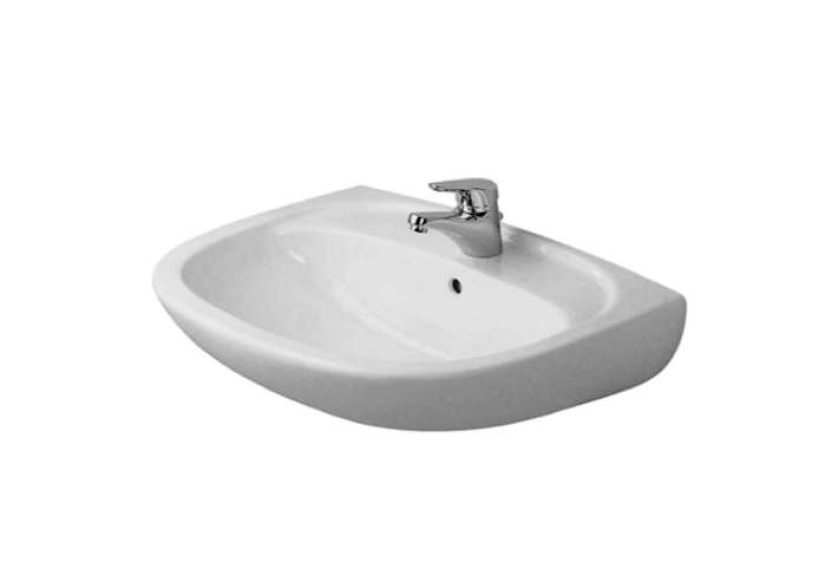
The Duraplus Series 034455 Wash Basin with Overflow is one of those bathroom fixtures that looks simple,
behaves predictably, and quietly makes the rest of your layout decisions easier. It’s a compact, wall-mounted lavatory
in a classic white finish, with a built-in overflow and a faucet deck (“tap platform”)meaning it’s designed for a
standard single-hole faucet setup rather than a wall-mounted faucet that needs extra clearances.
If you’ve been hunting this exact model number, you’ve probably learned the plot twist already:
many listings describe the 034455 as discontinued, which changes the shopping strategy from “add to cart”
to “verify specs, check stock, consider substitutes.” Still, it remains a useful reference point because its size,
proportions, and feature set (overflow + tap platform) represent a very common, very practical sink style.
Quick Snapshot: What the 034455 Is (and Why People Like It)
In plain English: it’s a 55 cm (about 21-5/8″) wall-mounted washbasin with an overflow and a faucet deck.
That combination hits a sweet spot for everyday bathrooms: big enough to wash up without splashing your elbows, small
enough to fit powder rooms and tighter vanity zones, and compatible with widely available U.S. drain and faucet parts.
Core identifiers you’ll see in listings
- Model/series: Duraplus Series, model 034455
- Type: wall-mounted washbasin (lavatory) with overflow and tap platform
- Color: typically listed as white
- Size class: 55 cm width category (often written as 21-5/8″)
Dimensions & Fit: The Numbers That Actually Matter
When you’re planning a sink, the “pretty” part is the last thing to lock down. The real first step is confirming the
footprint, rough-in compatibility, and how the bowl sits relative to the wall and user. For the Duraplus 034455,
published references commonly show approximately 550 mm wide by 440 mm deep (about 21-5/8″ x 17-3/8″).
Some documentation also lists a height around 195 mm (about 7-3/4″) for the overall basin form.
- Width: ~550 mm (≈ 21-5/8″)
- Depth (projection from wall): ~440 mm (≈ 17-3/8″)
- Overall height (varies by drawing): around 195 mm (≈ 7-3/4″)
- Typical listed weight: about 11.9 kg (≈ 26 lb)
Translation: this basin projects far enough to feel comfortable, but not so far that it eats a walkway. That 17-ish inch
depth is friendly for smaller baths where you don’t want a sink turning the room into an obstacle course.
Faucet hole details (the “measure twice” moment)
Listings describe this washbasin as having a tap platform and generally being configured for a
single-hole faucet. Some variants in the broader Duraplus family are described as having additional
“marked” or “pre-punched” positions (meaning the ceramic may be prepared for alternate hole configurations depending on
the exact sub-variant). If you’re sourcing old stock, confirm the specific version before you order a widespread faucet
set or a specialty escutcheon plate.
Overflow 101: What It Does (and What It Doesn’t)
A sink overflow is basically your bathroom’s tiny, silent safety net. The opening near the top of the bowl connects to
a hidden channel that routes water down toward the drain. Its job is to reduce the chance of a spill if
the drain is partially blocked or the stopper is closed while the faucet is running. It can also help the sink
drain more smoothly by introducing air into the drainage path. (Your plumbing likes air almost as much as
it likes gravity.)
The practical implication: you need the right drain
If your sink has an overflow, you generally want a drain assembly designed for sinks with overflow.
Many pop-up drains come in “with overflow” and “without overflow” versions, and the correct choice affects how overflow
water is routed. Retailers commonly describe overflow-compatible pop-up drains as the right match for “traditional sinks”
that include overflow openings.
In other words: pairing a “no overflow” drain with an overflow sink is like installing a mailbox and then refusing to
buy letters. It might look fine, but you’re missing the point.
Installation & Planning: Wall-Mounted Sinks Are Not “Just Hang It Up”
A wall-mounted basin is clean, modern, and makes the room feel largerbut it also asks you to treat your wall like a
structural teammate, not a decorative backdrop. Most wall-hung sink instructions (across brands) emphasize solid support,
correct mounting hardware (often hanger bolts), careful leveling, and proper tightening order so the sink sits securely.
Support requirements
- Backing matters: Plan for a blocking/backer board or appropriate carrier system, especially if the wall is not solid masonry.
- Use the correct hardware: Many wall-mounted sink instructions specify hanger bolts and washers/nuts tightened in sequence.
- Leveling is not optional: A sink that’s slightly off-level will advertise it every time you set a toothbrush down.
Rough-in basics (why “standard” still needs verification)
Rough-in dimensions vary by sink shape and faucet/drain selection. Manufacturer rough-in guides commonly note
standard drain hole sizes (often around 1-3/4″) and ADA-related installation considerations when applicable.
If you’re aligning this basin with existing plumbing, confirm:
- Drain location: does it align with your trap arm without awkward offsets?
- Supply lines: do shutoffs land where a trap and pop-up linkage won’t fight them?
- Mounting height: do you want a standard rim height, or are you planning for accessibility/ADA constraints?
Pro tip that saves embarrassment: if you ever plunge a bathroom sink, you typically want to
block the overflow opening (often with a wet rag) so pressure doesn’t escape and spray water back at you.
This is not a “learn by doing” moment unless you enjoy surprise shower features.
Design & Usability: Why This Shape Works in Real Bathrooms
The Duraplus 034455 sits in a “classic practical” category. The semi-rounded, space-efficient form (commonly described as
compact and easy to place) is friendly for powder rooms, guest baths, and secondary bathrooms where you want
straightforward function. The tap platform keeps faucet selection easystandard single-hole faucets are everywhere, and
you don’t need to coordinate wall-mounted faucet heights and spout reach unless you choose to.
Where it tends to fit well
- Powder rooms: keeps the footprint reasonable while still offering a comfortable bowl.
- Guest baths: simple to maintain, simple for guests to use (no “how does this faucet work?” tutorial).
- Renovations with existing plumbing: the overflow + standard drain pairing is familiar territory for most plumbers.
Style pairing ideas (without turning your bathroom into a costume party)
- Modern minimal: pair with a simple chrome or brushed nickel single-handle faucet, clean lines, and a slim mirror.
- Warm contemporary: add wood tones, a soft matte wall color, and a slightly arched mirror to complement the basin’s curves.
- Classic: white basin + polished chrome + crisp trim = timeless, not “trendy until Tuesday.”
Maintenance: Keeping the Overflow From Becoming a Science Project
Overflows are helpful, but they can collect soap residue, toothpaste foam, and whatever else your sink witnesses during
its long career. Cleaning the overflow opening periodically helps prevent odors and slow drainage.
The good news: you don’t need a chemistry degree. A small brush, warm water, and occasional deep cleaning are usually
enough to keep it fresh.
Simple upkeep routine
- Weekly: wipe the basin and faucet deck with a gentle cleaner.
- Monthly: give the overflow opening a quick scrub with a small brush (or a flexible straw brush).
- As needed: if you notice slow draining, check hair/soap buildup at the stopper and consider cleaning the trap (or calling a pro if you’re not comfortable).
Also: when buying a drain assembly, choose one specifically labeled for sinks with overflow. Many retailers make this
distinction clear because the internal routing differs between the two styles.
Shopping Reality Check: Discontinued Doesn’t Mean “Impossible,” It Means “Verify Everything”
Several curated listings and older retailer references describe the Duraplus 034455 as discontinued, with historical
pricing commonly shown in a mid-hundreds range. If you locate remaining stock, treat it like you would a rare book:
confirm condition, confirm return policy, confirm that all mounting hardware is included or readily sourced, and confirm
the exact faucet-hole configuration.
Questions to ask before you buy old stock
- Is the sink new-in-box and free from hairline cracks or glaze chips?
- Does it include mounting hardware (or can the seller specify what’s missing)?
- Is the faucet hole single-hole only, or are there marked/prepared alternatives?
- What’s the return policy if the ceramic arrives damaged?
- Are compatible accessories still available (semi-pedestal, siphon cover, etc.) if you need them?
Accessories & Optional Add-Ons: Making the Plumbing Look Intentional
Wall-mounted sinks can show plumbing, which is either “industrial chic” or “unfinished homework,” depending on how tidy
the installation is. In Duraplus documentation, accessories like a semi-pedestal, pedestal,
or siphon cover are commonly referenced for related washbasin sizesincluding the 034455so you can conceal
the trap and supply lines for a cleaner look.
If you’re aiming for a more open, modern vibe, you can also lean into exposed plumbingjust keep it symmetrical and
choose finishes that match your faucet. A shiny chrome trap under a brushed nickel faucet is the bathroom equivalent of
wearing two different sneakers on purpose. Some people can pull it off. Most people should not.
Pros and Cons: A Balanced Take
Pros
- Practical sizing: 55 cm class works well in many bathrooms without feeling tiny.
- Overflow included: extra protection against accidental overfilling and can improve drain behavior.
- Tap platform: easy compatibility with common single-hole faucets.
- Wall-mounted form: airy look, easier floor cleaning under the sink.
Cons
- Discontinued in many listings: availability may be limited; returns/replacements can be tricky.
- Wall support is critical: installation requires solid backing and careful planning.
- Overflow maintenance: it’s helpful, but it adds a channel that can collect residue over time.
Conclusion: Is the Duraplus 034455 Worth Chasing?
If you want a dependable, compact, wall-mounted sink with an overflow and a standard faucet deck, the
Duraplus Series 034455 Wash Basin with Overflow checks a lot of boxes. Its dimensions sit in that
practical middle ground: comfortable to use, easy to place, and compatible with widely available faucet and drain
hardwareespecially when you match it with an overflow-rated pop-up drain.
The main caution is availability. If you find it new and in good condition, it can be a solid choice for a minimalist
or classic bathroom. If you can’t find it, use its spec profile (55 cm width, overflow, tap platform, wall-mount style)
as your blueprintand you’ll still end up with the same “why didn’t we do this sooner?” bathroom upgrade.
Experiences: What It’s Like Living With a 55 cm Overflow Washbasin
Homeowners and installers often describe the 55 cm wall-mounted basin category as the “Goldilocks sink”: not too big,
not too small, and rarely the thing anyone complains about after the remodel is done. In day-to-day use, that size
usually feels roomy enough for handwashing, face washing, and the occasional “I should probably rinse this paintbrush
before it becomes part of my personality” momentwithout the bowl feeling like a serving platter bolted to the wall.
One of the most common real-world wins is how the overflow changes the stress level. People don’t plan to
leave the faucet running with the stopper down, but life is chaotic. Someone knocks, a kid yells, a phone rings, and
suddenly your sink is auditioning for a waterfall exhibit. With an overflow, you often get that extra bufferless panic,
less chance of water tracking across the floor, and less “why is my bath mat suspiciously heavy?” later on.
Another frequently mentioned experience is how the tap platform simplifies decisions. Wall-mounted
faucets can look amazing, but they add complexity: spout reach, wall depth, valve placement, and precise height
alignment so the stream lands where you want it (not on the rim, not on the backsplash, not on your socks). With a deck
faucet, the basin and faucet behave like old friends: they already know how to stand next to each other without drama.
If you’re renovating a guest bath or a rental, that predictability is priceless.
Installation stories tend to fall into two camps. Camp A: “We planned the wall support properly and it went smoothly.”
Camp B: “We assumed drywall was basically concrete.” In the happy scenario, the installer locates studs or adds blocking,
uses the correct mounting hardware, carefully levels the basin, and double-checks the rough-in so the trap lines up
neatly. The result looks crisp, the sink feels solid, and you get that satisfying open space underneath that makes the
room feel bigger. In the unhappy scenario, the sink can flex, shift, or sit slightly off-level. That’s why people who
have done this once tend to repeat the same advice: wall-mounted sinks reward planning and punish improvisation.
Cleaning experiences are mostly positiveceramic basins in white finishes are typically wipe-friendly and forgiving.
The one “gotcha” that pops up is the overflow channel. It’s out of sight, so it’s easy to forget, until one day the sink
drains a little slower or you catch an odd odor after hot water runs for a while. The fix is usually simple: a quick
scrub of the overflow opening with a small brush and a periodic deep clean. People who build that into their routine
rarely think about it again. People who don’t… eventually think about it a lot.
Finally, there’s a style-related experience that surprises many first-timers: exposed plumbing can either look
intentional or look unfinished. When it’s intentional, it’s symmetrical, color-matched, and tidy; it turns the space
under the basin into a design feature. When it’s not, it looks like the sink is wearing mismatched accessories.
Homeowners who are happiest long-term tend to either add a concealment option (like a semi-pedestal/siphon cover) or
commit to a coordinated, clean exposed-plumbing look.
Bottom line from real bathrooms: this sink style is popular because it behaves well. It’s not trying to be the star of
the show. It’s trying to be the part of your morning that doesn’t cause problemsand that’s honestly the highest
compliment a bathroom fixture can get.