Table of Contents >> Show >> Hide
- Why an Entryway Bench with Storage Works So Well
- Start with the Real Problem: What Lands in Your Entryway?
- DIY Entryway Bench Ideas for Every Type of Space
- Best Storage Types for an Entryway Bench
- Materials for a DIY Entryway Storage Bench
- Design Details That Make a DIY Bench Look Custom
- Small Entryway Ideas with Bench Storage
- Family-Friendly Entryway Bench Ideas
- Budget-Friendly DIY Entryway Bench Ideas
- How to Style an Entryway Bench Without Creating Clutter
- Entryway Bench DIY Storage Plan: A Simple Example
- Safety and Durability Tips
- of Real-Life Experience: What Actually Makes an Entryway Bench Work
- Conclusion
The entryway is the tiny lobby of real life. It welcomes guests, catches shoes, swallows backpacks, collects mystery receipts, and somehow becomes the official resting place for one lonely glove every winter. That is why smart entryway ideas with bench DIY storage are more than pretty home projects. They are survival strategies with throw pillows.
A bench gives people a place to sit while taking shoes on and off. Storage gives everything else a place to live. Put the two together, and suddenly your front door area stops looking like a yard sale had a stressful morning. Whether you have a grand foyer, a narrow hallway, a small apartment entrance, or a garage-side mudroom, a DIY entryway bench can create order, personality, and a smoother daily routine.
This guide covers practical, stylish, and realistic DIY entryway storage bench ideas you can adapt to your space. We will look at cubbies, drawers, baskets, hooks, floating benches, hall trees, shoe storage, small entryway solutions, and a few design tricks that make your entry look intentional instead of “we just dropped everything here and hoped for the best.”
Why an Entryway Bench with Storage Works So Well
The best entryway furniture does two jobs at once. A bench with storage provides seating, hides clutter, and visually defines the entrance as a landing zone. Instead of letting shoes wander freely across the floor like tiny leather animals, you can tuck them into cubbies, drawers, or baskets.
A storage bench also encourages better habits. When keys, bags, coats, umbrellas, dog leashes, and shoes have assigned homes, family members are more likely to use them. Not always, of course. Children and spouses may still drop a hoodie on the floor three inches from a hook. But at least the hook is there, silently judging them.
For small homes, a bench can replace several separate pieces of furniture. Instead of using a chair, shoe rack, console table, and storage bins, one compact bench can combine seating, shoe organization, and hidden storage. In larger homes, a built-in bench can anchor a mudroom wall and create a polished custom look.
Start with the Real Problem: What Lands in Your Entryway?
Before buying lumber or falling into a late-night inspiration spiral, take inventory. The right entryway bench storage idea depends on what your household actually drops at the door.
Common Entryway Clutter to Plan For
- Shoes, boots, sandals, and slippers
- Coats, jackets, hats, and scarves
- Backpacks, purses, laptop bags, and gym bags
- Keys, sunglasses, wallets, and mail
- Dog leashes, waste bags, towels, and pet supplies
- Sports gear, umbrellas, reusable shopping bags, and seasonal items
Once you know what needs storage, you can choose the best bench design. A family with three kids may need labeled cubbies and strong wall hooks. A single apartment dweller may need a narrow bench, a small tray, and a mirror. A home with muddy boots may need open shelves, washable baskets, and a tough rug that can handle real life.
DIY Entryway Bench Ideas for Every Type of Space
There is no single perfect bench. The best version is the one that fits your doorway, your storage needs, your budget, and your patience level. Some people love building custom cabinetry. Others consider assembling a flat-pack shelf a full-body workout. Both groups deserve a clean entryway.
1. Built-In Entryway Bench with Cubbies
A built-in bench with cubbies is the classic mudroom look. It usually includes a sturdy bench seat, open storage below, hooks above, and sometimes overhead shelves or cabinets. This idea works especially well near a garage entrance, laundry room, or back door.
For a DIY version, build a simple plywood or MDF base with open square compartments. Add a wood top, finish it with paint or stain, and install hooks on a board or paneled wall above it. You can make the cubbies equal size or design larger sections for boots and sports bags.
The beauty of cubbies is visibility. Everyone can see where things go. The danger of cubbies is also visibility. If your family likes to shove items into spaces with the emotional energy of a raccoon packing for vacation, use baskets to hide the chaos.
2. Storage Bench with Baskets Underneath
If you want an easy, flexible, and beginner-friendly solution, build or buy a simple open-bottom bench and slide baskets underneath. This is one of the most practical small entryway bench ideas because it does not require complex drawers or custom cabinet doors.
Choose baskets that fit the height and depth of the bench. Woven baskets add warmth, wire baskets feel airy and modern, and fabric bins work well for kids because they are lightweight. Label each basket by person or category: shoes, hats, dog supplies, school gear, or returns.
This idea is also renter-friendly. You can create the look with a freestanding bench, removable hooks, and baskets that move with you. No demolition. No drywall dust. No explaining to your landlord why there is now “character” in the wall.
3. Narrow Bench for a Small Entryway
A narrow entryway can still handle a bench if you choose the right proportions. Look for a depth of around 12 to 16 inches so the bench provides seating without blocking traffic. In a very tight hallway, a floating bench or slim shoe bench can make the space more functional without feeling heavy.
Pair a narrow bench with vertical storage. Install hooks, a wall-mounted shelf, or a peg rail above it. Add a mirror to reflect light and make the entry feel larger. Use a small tray for keys and a wall pocket for mail if there is no room for a console table.
When space is limited, avoid oversized cushions, bulky baskets, and deep furniture. The goal is a smooth landing zone, not an obstacle course where guests must turn sideways and apologize to the wall.
4. Floating Entryway Bench
A floating bench is mounted to the wall, leaving the floor open underneath. This is a clean, modern option for small entryways and mudroom corners. It creates seating while allowing baskets, shoes, or boots to slide underneath.
For a safe DIY floating bench, use strong wall brackets or a cleat system anchored into studs. Do not rely on drywall anchors alone. A bench is not a picture frame; people will sit on it, wiggle on it, tie shoes on it, and occasionally use it as an emotional support platform while searching for keys.
Finish the floating bench with a thick wood slab, painted plywood, or butcher-block-style top. Add hooks above and a washable runner below. The result is simple, stylish, and surprisingly efficient.
5. Hall Tree Bench with Hooks
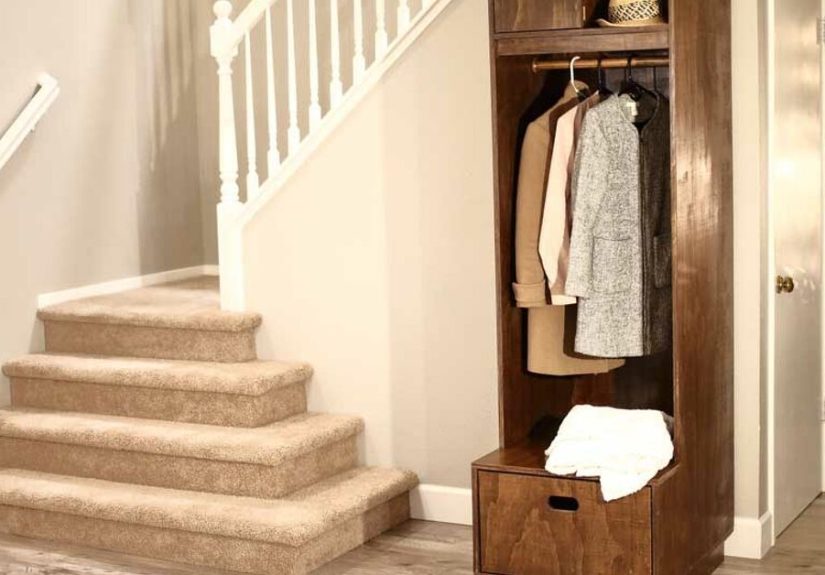
A hall tree combines a bench, hooks, and upper storage into one vertical unit. It is ideal for homes without a coat closet or for families that need visible, grab-and-go organization.
You can build a DIY hall tree by starting with a storage bench base, then adding a back panel with trim, beadboard, shiplap, or painted plywood. Install hooks at comfortable heights. For kids, add a lower row of hooks so they can hang their own jackets. This small adjustment can reduce the number of coats living on the floor like fabric pancakes.
Include an upper shelf for baskets or seasonal items. Use the top area for hats, gloves, sunscreen, or items you need occasionally but not every day. Keep the bench seat mostly clear so it remains usable.
Best Storage Types for an Entryway Bench
The storage style you choose will affect how easy the bench is to use. Some options hide clutter beautifully, while others make daily items more accessible. A smart entryway often uses a mix of both.
Open Cubbies
Open cubbies are great for everyday shoes, baskets, and school items. They are easy to build, easy to clean, and easy to customize. They work best when each cubby has a clear purpose.
Drawers
Drawers create a cleaner look and hide clutter completely. They are excellent for gloves, hats, scarves, pet supplies, and small accessories. They require more DIY skill than open cubbies, but the polished result can be worth it.
Lift-Top Hidden Storage
A lift-top bench has a seat that opens like a chest. It is perfect for bulky or seasonal items, such as winter gear, extra bags, blankets, or reusable shopping totes. Use soft-close hinges or lid supports for safety, especially in homes with children.
Shoe Shelves
Open shoe shelves are practical because footwear can air out. They work best when limited to everyday pairs. If every shoe you own lives by the front door, the entryway may begin to resemble a footwear conference.
Labeled Bins
Labeled bins are a lifesaver for busy families. Assign one bin per person or activity. Labels help children participate in organization and reduce the classic household question: “Where is my other shoe?” The other shoe is in the bin. Theoretically.
Materials for a DIY Entryway Storage Bench
A durable bench does not need expensive materials, but it does need the right materials. Entryways take abuse from shoes, bags, moisture, dirt, and daily traffic.
Plywood
Plywood is strong, stable, and widely used for DIY storage benches. Cabinet-grade plywood is a good choice if you want a smooth finish. Paint-grade plywood works well for built-ins that will be painted.
MDF
MDF is smooth and affordable, making it useful for painted projects. It is not as moisture-resistant as plywood, so it may not be the best choice for wet boots unless properly sealed and elevated from damp floors.
Solid Wood
Solid wood adds warmth and strength. Pine is budget-friendly and easy to work with. Oak, maple, and fir offer durability but cost more. A solid wood top over a painted base creates a classic custom look.
Reclaimed Wood
Reclaimed wood gives an entryway character and texture. It is ideal for farmhouse, rustic, cottage, or vintage-inspired spaces. Sand it carefully and seal it well so no one gets a splinter while trying to put on sneakers.
Design Details That Make a DIY Bench Look Custom
The difference between “I built this” and “a designer casually approved this while holding fancy coffee” often comes down to finishing details.
Add Trim and Paneling
Trim hides rough edges and makes basic plywood look intentional. Add baseboard trim, face frames, beadboard, board-and-batten, or shiplap behind the bench for architectural interest.
Use a Durable Paint Finish
Entryway furniture gets bumped and scuffed. Choose a washable paint finish, such as satin or semi-gloss. Dark colors hide marks, while light colors brighten small spaces. Moody green, navy, charcoal, warm white, and soft greige all work beautifully.
Choose Hardware with Personality
Hooks, knobs, and pulls are the jewelry of entryway storage. Matte black feels modern, brass adds warmth, brushed nickel is classic, and wood pegs create a Scandinavian or minimalist look.
Add a Cushion
A bench cushion makes the space more comfortable and inviting. Use performance fabric, washable covers, outdoor fabric, or vinyl if the area sees heavy use. Add pillows sparingly. One pillow says “welcome.” Six pillows say “please remove this entire decorative obstacle before sitting.”
Small Entryway Ideas with Bench Storage
Small entryways need smart choices. The secret is to go vertical, keep furniture slim, and avoid overloading the area with too many decorative items.
Use the Wall Above the Bench
Install hooks, shelves, wall baskets, or a peg rail. This keeps items off the floor and uses space that would otherwise sit empty. A narrow shelf above hooks can hold baskets, small decor, or seasonal accessories.
Add a Mirror
A mirror makes a small entrance feel brighter and larger. It also gives everyone one final chance to check for hat hair, spinach teeth, or the mysterious collar flip that appears only after leaving the house.
Choose Closed Storage for Visual Calm
If your entryway opens directly into a living room, consider drawers, cabinet doors, or lidded baskets. Hidden storage keeps the first impression clean and calm.
Limit the Shoe Count
Small entryways cannot store every shoe in the household. Keep only daily pairs near the door and move the rest to closets. This one rule can instantly make the space feel more organized.
Family-Friendly Entryway Bench Ideas
For families, the entryway is a command center. A good bench setup can make mornings less chaotic and evenings less cluttered.
Create Personal Zones
Assign each person a hook, cubby, basket, or drawer. This prevents gear from merging into one mysterious pile called “everybody’s stuff.” For younger kids, use picture labels or color-coded bins.
Install Hooks at Different Heights
Adults can use upper hooks for coats and bags. Kids can use lower hooks for backpacks and jackets. When storage is reachable, children are more likely to use it without being reminded seventeen times.
Add a Message Center
A small chalkboard, whiteboard, corkboard, or wall calendar near the bench can hold reminders, permission slips, keys, and notes. Keep it simple so it does not become another clutter zone.
Budget-Friendly DIY Entryway Bench Ideas
You do not need a luxury renovation to create a useful entryway. Some of the best DIY storage bench ideas are inexpensive and adaptable.
Repurpose a Bookcase
Turn a sturdy low bookcase on its side, add a seat cushion, and use the compartments as shoe cubbies. Secure it properly and make sure it is strong enough for seating.
Use Kitchen Cabinets as a Bench Base
Stock wall cabinets or base cabinets can become a bench foundation. Add a plywood top, trim, and paint. This gives you closed storage with less custom building.
Build a Simple 2×4 Frame
A basic bench frame made from 2×4 lumber can be topped with plywood or solid wood. Add a lower shelf for shoes or baskets. This is a sturdy, affordable option for mudrooms and garage entries.
Upgrade an Existing Bench
If you already own a bench, add storage around it. Install hooks above, slide baskets underneath, place a boot tray below, or add a wall shelf. Sometimes the most effective DIY project is not building from scratch but making what you have behave better.
How to Style an Entryway Bench Without Creating Clutter
Style matters because the entryway sets the tone for the whole home. But function must come first. A bench covered in decorative objects is not a bench. It is a tiny museum exhibit titled “Places You Cannot Sit.”
Keep the seat mostly open. Add one cushion or one small pillow if desired. Use a tray for keys, a basket for shoes, and hooks for everyday bags. Add a rug that can handle dirt and moisture. Choose lighting that makes the entrance feel warm, especially if the area has no natural light.
For decor, pick one or two focal points: a mirror, framed art, a plant, or a seasonal wreath. Avoid filling every surface. Negative space is not wasted space; it is breathing room.
Entryway Bench DIY Storage Plan: A Simple Example
Here is a practical starter plan for a medium-size entryway or mudroom wall.
Project Goal
Create a 48-inch-wide bench with three lower cubbies, a wood seat, a hook rail, and an upper shelf.
Basic Materials
- Cabinet-grade plywood or MDF for the bench base
- Solid wood or plywood for the bench top
- Wood screws and wood glue
- Trim boards for a finished face frame
- Hooks, baskets, and optional labels
- Primer, paint, stain, or sealer
- Wall anchors or screws for securing into studs
Design Layout
Build the bench base about 18 inches high and 15 to 18 inches deep. Divide the lower section into three cubbies. Add a wood top that overhangs slightly in front. Behind the bench, install a painted back panel or board-and-batten treatment. Mount hooks above the seat and an upper shelf above the hooks.
This design gives you seating, shoe storage, coat storage, and overhead storage in one compact footprint. It can be painted to match your trim for a built-in look or finished in contrasting colors for a design statement.
Safety and Durability Tips
Because an entryway bench is used daily, safety matters. Secure tall hall trees or built-in units to wall studs. Use proper supports for floating benches. Sand edges smooth. Choose hardware rated for the weight it will hold. Seal wood surfaces against moisture, especially if wet shoes or umbrellas are common.
If you add a lift-top lid, use soft-close hinges or lid supports to prevent pinched fingers. If children will climb on the bench, make the structure extra sturdy and avoid lightweight furniture that can tip.
of Real-Life Experience: What Actually Makes an Entryway Bench Work
The most useful lesson about entryway bench storage is that the design has to match real behavior, not fantasy behavior. Fantasy behavior says everyone will open a drawer, place shoes neatly side by side, hang coats by category, and smile like a catalog family. Real behavior says someone will kick off sneakers while holding groceries, a phone, and emotional damage from traffic.
That is why open, easy storage usually works better for daily items. If a basket is directly under the bench, shoes are more likely to land inside it. If a hook is right above the bench, a jacket has a fighting chance. If keys need to be placed inside a drawer, behind a door, under a lid, and beside a decorative ceramic bird, they may simply return to their natural habitat: missing.
Another experience-based tip is to design for the messiest season, not the prettiest one. In summer, an entryway may only need sandals and sunglasses. In winter, it suddenly needs room for boots, scarves, gloves, wet coats, umbrellas, and bags. If your bench can survive winter, it can survive anything except maybe a toddler with a juice box.
Materials matter more than people think. A white cushion may look dreamy for four minutes, but a washable cover is better for a hardworking entry. A dark painted base can hide scuffs. A wood top with a durable sealer can handle bags, keys, and the occasional dropped water bottle. A boot tray under the bench can save flooring from muddy shoes.
Hooks should be strong and spaced generously. Tiny decorative hooks may look cute, but bulky coats need room. For families, double hooks are excellent because they can hold a coat and a backpack in the same zone. Lower hooks for children are especially helpful because they encourage independence. A child who can reach the hook may actually use it. No guarantees, but hope is part of home design.
Baskets are another game changer, but size matters. Too-small baskets overflow immediately. Too-deep baskets become caves where gloves go to start new lives. Medium baskets with labels are usually best. If each person has one basket, cleanup becomes simple: toss personal items into the right bin and move on.
Finally, leave some empty space. A bench packed with pillows, decor, and storage containers may look styled but fail in daily life. The best entryway bench has room to sit, room to drop a bag for a moment, and room to breathe. When the entryway works well, you feel it every time you leave and come home. The house greets you calmly instead of shouting, “Congratulations, your shoes have formed a committee.”
Conclusion
An entryway bench with DIY storage is one of the most practical upgrades you can make to your home. It creates a place to sit, organizes daily clutter, improves first impressions, and makes routines easier. Whether you build a full mudroom wall, add a narrow bench in a small hallway, install a floating seat, or slide baskets under a simple wooden bench, the goal is the same: give every item a home before it takes over yours.
The best design is not necessarily the biggest or most expensive. It is the one that fits your space, supports your habits, and looks good enough to make you smile when you walk in the door. Add hooks, baskets, cubbies, drawers, durable finishes, and a little personality. Your entryway will become more welcoming, more organized, and far less likely to hide your keys in plain sight.