Table of Contents >> Show >> Hide
- Why a 1946 Armchair Still Matters
- Meet Ernest Race: The Designer Who Refused to Worship Timber
- DA1 in Plain English: A Wingback on a Diet
- Design Details Worth Geeking Out Over
- How to Identify an Original Ernest Race DA1 Armchair
- DA1 vs. Other Mid-Century Lounge Chairs
- Styling the DA1 in a Modern American Home
- Buying Guide: What Collectors Pay For (and Why)
- Care, Restoration, and “Please Don’t DIY This With a Staple Gun”
- Legacy: Why the DA1 Keeps Coming Back
- Conclusion
- Bonus: of DA1-Adjacent Experience (So You Can Picture Life With One)
Some chairs politely sit in the corner and try not to make eye contact. The Ernest Race DA1 Armchair (designed in
1946) is not that chair. The DA1 looks like a classic wingback that got into modernism, cleaned up its posture, and stopped
hoarding unnecessary wood. It’s airy, sculptural, and oddly athletic for something whose main job is encouraging you to do absolutely nothing.
If you’ve ever wondered why collectors keep hunting this mid-century oddballor why a chair from the immediate postwar period can still feel
weirdly “now”you’re in the right place. Let’s talk about how Ernest Race turned scarcity into style, why the DA1 is a masterclass in
lightweight comfort, and what to look for if you’re considering buying (or rescuing) one.
Why a 1946 Armchair Still Matters
Postwar design: when “make do” became “make brilliant”
The DA1 was born in the awkward, inventive years right after World War II. Britain was rebuilding, materials were limited, and furniture had to
be practicaloften under government “utility” thinking that prioritized resourcefulness and mass production. Ernest Race didn’t treat those
constraints like a creative prison. He treated them like a dare.
While many upholstered chairs of the late 1940s still leaned into bulky silhouettes (think: “I am made of wood and I will outlive your mortgage”),
the DA1 went in the opposite direction. It took the familiar comfort cues of a wingbackthose protective “ears” and supportive backand gave the
whole concept a slimmer, more modern skeleton.
The DA1’s quiet revolution: visual lightness without comfort sacrifice
The DA series is often described as a radical departure from traditional heavy armchairs: it’s upholstered, yes, but it doesn’t look like it’s
hiding a small tree inside. The DA1’s core idea is simple: build a chair that feels comfortable and looks lightlike it could scoot across the
room if you offered it a better view of the window.
Meet Ernest Race: The Designer Who Refused to Worship Timber
From textiles to furniture, via sheer stubborn ingenuity
Ernest Race (1913–1964) is one of those designers who should be mentioned in the same breath as the era’s biggest namesyet often isn’t.
Part of the reason is geography (mid-century British design can get overshadowed in American conversations), and part is that Race was less about
flashy theory and more about making things work in the real world.
He became known for pushing manufacturing methods and materials at a time when “normal” materials were scarce. In the wider Race Furniture story,
you’ll see recurring themes: aluminum, steel, clever engineering, and a refusal to accept that comfort must equal heaviness.
Race’s material mindset: war leftovers, peacetime elegance
Race Furniture gained attention for experimenting with materials shaped by wartime availabilityrecast aluminum from decommissioned aircraft and
slim steel components that could be fabricated efficiently. That spirit of reinvention carries directly into the DA1: it’s a chair that looks
refined, but it’s powered by practical engineering choices.
DA1 in Plain English: A Wingback on a Diet
The silhouette: familiar, but faster
Start with what your eyes recognize: the DA1 borrows the wingback “idea” (high back, side wings, cozy enclosure). But instead of looking like a
Victorian throne, it reads as streamlined and organicalmost drawn with a single confident line. It’s the difference between a heavy winter coat
and a tailored blazer that still keeps you warm.
The structure: a steel-rod “skeleton” plus traditional upholstery
One of the DA1’s defining moves is its welded steel-rod internal frame. This kind of structure allowed for a sinuous, visually
lightweight form that was difficult to achieve with traditional wood framing. Then Race layered in upholstery methods that still delivered real,
sit-down-and-stay-a-while comfort. The result: modern lines without modern misery.
Legs and seat: the engineering details collectors love
Early DA seating is frequently associated with metal legs (often described as aluminum in period descriptions) and a supportive,
spring-forward sitsometimes noted as a coil-sprung base in vintage listings. Translation: you get that gentle, resilient “ahhh” when you sit, not
the flat thud of a tired cushion pretending to be fine.
A fun detail from the brand’s own historical framing: a 1951 catalog line often repeated in modern descriptions boils down to this:
bulk and weight are not the same thing as comfort. The DA1 is basically that sentence with armrests.
Design Details Worth Geeking Out Over
The wings: not just for drama
In classic wingbacks, wings help block drafts. In the DA1, they do something more modern: they shape the chair’s personality. The wings give it a
graphic outline, frame your shoulders, and make the chair feel “private” without being massive. It’s a reading chair that doesn’t demand a whole
library aesthetic to justify itself.
The proportions: tall enough to feel supportive, slim enough to float
The DA family’s high back and controlled footprint were meant for more space-conscious interiors. The chair can look almost suspended thanks to
its leg treatment and the way the volume lifts from the floor. In a room full of chunky lounge seating, the DA1 is the one piece that lets the
air circulatevisually and literally.
The comfort profile: “supportive lounge,” not “sinkhole sofa”
The DA1 is not a beanbag. It’s not trying to swallow you and assume your responsibilities. It’s the kind of armchair that supports your back,
keeps you upright enough to hold a book or a conversation, and still lets you lounge. Think: refined comfort, not nap-trap chaos.
How to Identify an Original Ernest Race DA1 Armchair
Buying vintage is thrilling right up until you realize your “rare design icon” is actually “a chair inspired by a chair that once saw a picture of
a chair.” Here’s how to stay on the happy side of that equation.
1) Look for construction logic, not just looks
The DA1’s identity is tied to its internal structure: the lightweight metal framing concept and the way the upholstery conforms to that more
anatomical shape. If a piece looks like a generic wingback that someone tightened at the waist, be skeptical. The original design has a specific
kind of drawn, modern outlineclean but not rigid.
2) Upholstery is often replaceddon’t panic, just evaluate
Many surviving DA1 chairs have been reupholstered (sometimes multiple times). That’s not automatically bad. The question is whether the
reupholstery respected the chair’s proportions and comfort systems. Overstuffing can ruin the crisp outline. Understuffing can turn it into a sad
sculpture. Ideally, the chair should still read as taut, tailored, and intentionally light.
3) Check legs, feet, and under-seat evidence
Listings and catalog descriptions often emphasize metal legs (frequently aluminum) and a spring-supported seat in early examples. In the wild,
you’ll also encounter later variations and restorationssometimes with different leg materials. What matters most is consistency: do the legs look
like they belong to the chair’s geometry, and do attachment points look original rather than improvised?
4) Provenance and labels: the boring stuff that saves you
In a perfect world, you’ll find a Race Furniture label, a credible dealer description, or auction documentation. In the real world, you might get
“found in a loft, no further info, vibes immaculate.” When documentation is thin, condition and construction become your proof. Ask for underside
photos, joinery/fastener details, and close-ups of wear patterns.
DA1 vs. Other Mid-Century Lounge Chairs
Compared to American icons: upholstered modernism in a different key
American mid-century seating often celebrates exposed structuremolded plywood, wire, fiberglass shells, visible bases. The DA1 is different: it
modernizes an upholstered tradition. Instead of shouting “I am industrial,” it whispers “I am civilized… and also engineered.”
That’s why the DA1 pairs so well with American modern interiors: it adds softness without becoming frilly. If an Eames lounge chair is a
confident cocktail (smooth, expensive, iconic), the DA1 is a smart pint with a surprising finishless flashy, more charming over time.
Compared to Danish modern: similar lightness, different comfort language
Danish modern lounge chairs often achieve lightness through wood frames and floating cushions. The DA1 arrives at lightness through a different
route: metal structure plus upholstery shaping. It’s a useful reminder that “mid-century modern” wasn’t one uniform styleit was a global argument
about how to live better, with different accents in different countries.
Styling the DA1 in a Modern American Home
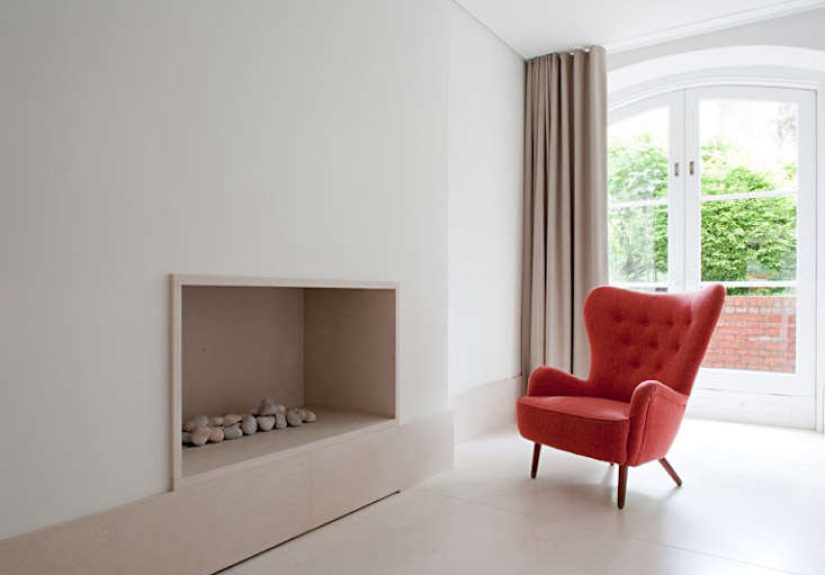
Make it the “soft hero” in a clean room
In minimal interiors, the DA1 brings warmth without clutter. Pair it with a slim floor lamp, a side table with honest materials (wood, metal,
stone), and a textured throw. Let the chair’s outline do the talking. It’s already conversational.
Let it play against bold color and pattern
The DA1 takes upholstery beautifullywool, bouclé, tweed, even rich velvet if you want drama. Because the silhouette is controlled and classic-adjacent,
it can handle a braver fabric without looking like it’s wearing a costume. If you love pattern, keep it refined (herringbone, subtle checks,
modern botanicals) so the chair stays “design” instead of “theme.”
Use it where comfort matters: reading corners, bedrooms, offices
This isn’t a chair you buy just to stare at. The DA1’s high back and wings make it genuinely good for reading, working, and decompression.
Place it where you actually spend time, not where you feel obligated to keep guests from sitting on it.
Buying Guide: What Collectors Pay For (and Why)
Value drivers: authenticity, condition, and respectful restoration
DA1 pricing fluctuates widely depending on condition and documentation. Collectors generally value:
- Originality: surviving components, credible labels, period-consistent construction
- Condition: stable frame, solid joints, no major corrosion or structural repairs
- Upholstery quality: tasteful fabric choices and correct shaping that preserves the silhouette
- Provenance: reputable dealer, auction history, or clear ownership story
Where DA1 chairs show up
In the U.S., you’re most likely to encounter the DA1 through vintage specialists, curated marketplaces, and auction platforms that list mid-century
design. Some sellers describe it as the “DA1 chair,” others as a “DA wingback” or simply “Ernest Race wingback armchair.” If you’re searching,
cast a wide netbut refine by structure details, not just the name.
A practical buying checklist
- Request detailed photos: front, side, back, underside, legs, and any labels
- Ask about frame condition: wobble, weld repairs, rust, leg stability
- Confirm upholstery work: who did it, when, and whether the springs/seat support were rebuilt
- Measure your space: wingbacks read bigger than they are if your room is tight
- Budget for shipping: the DA1 is not a chair you want tossed around like a gym bag
Care, Restoration, and “Please Don’t DIY This With a Staple Gun”
Metal frame care: keep it dry, keep it clean
The DA1’s structural appeal depends on that underlying metal logic. Avoid moisture exposure, wipe down dust regularly, and treat any corrosion early
with professional advice. If you’re dealing with a vintage piece, don’t assume the finish is indestructiblegentle cleaning beats aggressive
scrubbing every time.
Upholstery: respect the silhouette
Reupholstery is common, but not all reupholstery is kind. The DA1 should look tailored, not puffed up like a marshmallow auditioning for a parade.
Skilled upholsterers who understand mid-century forms can preserve (or restore) the chair’s crisp outline and comfort balance.
Comfort systems: springs, padding, and the “sit test”
If the chair feels saggy, you may be looking at tired springs, degraded padding, or an earlier repair that prioritized appearance over comfort.
Ideally, the DA1 should offer resilient support. When buying remotely, ask the seller to describe the sit honestlyand if they say “I haven’t sat
in it,” that’s your cue to request more specifics.
Legacy: Why the DA1 Keeps Coming Back
The DA1’s staying power is tied to a rare combination: it’s historically significant, visually distinctive, and actually usable in daily life.
It represents a moment when design had to be clevernot just stylishand that intelligence is still visible in the chair’s bones.
It also helps that Ernest Race’s wider body of work continues to attract attention. Museums and design publications highlight his aluminum and
steel experimentation, and modern reissues and retrospectives keep reintroducing the story to new audiences. The DA1 benefits from that renewed
spotlight, but it earns its own admiration every time someone sits down and goes, “Oh. This is nice.”
Conclusion
The Ernest Race DA1 Armchair (1946) is what happens when an old idea (the wingback) meets new realities (postwar scarcity) and a
designer stubborn enough to refuse the usual compromises. It’s comfortable without being bulky, modern without being cold, and rare enough to feel
specialyet practical enough to justify its place in an actual living room.
If you’re hunting one, focus on construction integrity and silhouette fidelity. If you already own one, protect the frame, respect the upholstery,
and enjoy the fact that your chair has more design history than most people’s entire coffee table book collection.
Bonus: of DA1-Adjacent Experience (So You Can Picture Life With One)
The first time you encounter a DA1 in personwhether at a dealer, a design fair, or a friend’s suspiciously stylish living roomyou notice something
odd: it reads “classic,” but it doesn’t behave like classic. A typical wingback plants itself like a solemn promise. The DA1, by contrast, looks
like it’s hovering a half-inch above the floor, as if it’s about to glide away the moment you stop paying attention. It’s the kind of chair that
makes you step sideways to check its profile, like you’re admiring a car.
Sitting in one is less “sink into a cloud” and more “settle into support.” The wings do what wings should do: they frame your upper body and give
you that subtle sense of enclosuregreat for reading, surprisingly good for doomscrolling, and excellent for pretending you’re writing a novel when
you’re actually drafting an email you should have sent yesterday. The high back feels intentional rather than towering, and the chair’s overall
balance encourages a posture that’s relaxed but not slumped. (Your spine will feel politely acknowledged.)
Living with a DA1 also teaches you a few realities about vintage upholstered furniture. You’ll become the kind of person who notices fabric texture
from across the room. You’ll learn that sunlight is both a mood booster and a fabric’s natural enemy. You’ll start using phrases like “hand feel”
and “nap direction” with a straight face. And you may experience the uniquely modern dilemma of loving a chair so much you briefly consider making a
“no snacks within three feet” policybefore remembering you are an adult and this is your home and joy is allowed.
If you’re shopping, the DA1 has a way of rewarding patience. You might see one that’s structurally perfect but upholstered in a fabric that feels
like it was chosen during a moment of personal chaos. Another might have gorgeous upholstery but legs that look a bit… philosophically questionable.
The best examples tend to feel coherent: the proportions stay crisp, the seat feels springy instead of exhausted, and the chair looks tailored even
when the fabric is bold. When you find that combination, you understand why people chase these pieces.
And then there’s the best part: the DA1 doesn’t just “match” a roomit upgrades the room’s energy. It signals that comfort and cleverness can share
a ZIP code. It’s a design object you can use daily without feeling like you’re handling museum glass. In practice, it becomes a favorite seatnot
because it’s loud, but because it’s quietly right. The DA1 is proof that a chair can be historically important and still be the place you steal for
“five minutes” that mysteriously turns into forty-five.