Table of Contents >> Show >> Hide
- What “Health Coach” Actually Means in the New Fitbit App
- Key Features That Make Fitbit Feel More Like Coaching
- How the App Uses Your Data (Without Drowning You in It)
- Who Benefits Most From Fitbit’s “Coach” Direction?
- The Fine Print: What an AI Health Coach Can’t (and Shouldn’t) Do
- Privacy and Trust: The Question Everyone Asks (Right After “Is It Judging Me?”)
- How to Get the Most Out of Fitbit’s Coaching (Practical Tips)
- So… Is the New Fitbit App a Real Coach or Just a Fancy Dashboard?
- Experiences: Living With Fitbit’s Health Coach in the Real World (About )
- Conclusion
Your step count used to be a number. A mildly judgmental number, sure, but still just a number. Now Fitbit’s new app experience is trying something bolder:
it wants to be your health coachone that talks back, learns your habits, and (politely) nudges you toward better choices.
The big shift isn’t just a fresh coat of paint on the interface. Fitbit rebuilt the app so coaching sits at the center, powered by Google’s Gemini AI.
Instead of you staring at charts and thinking, “Cool… but what do I do with this?” the app aims to translate your data into a plan you can actually follow.
Not a doctor. Not a miracle. More like a smart, always-available assistant that tries to connect the dots between your sleep, stress, workouts, and real life.
What “Health Coach” Actually Means in the New Fitbit App
When Fitbit says the app becomes a health coach, they’re describing a new workflow: a conversational experience that helps you set goals, build routines,
and understand your trendswithout requiring you to have a degree in “Chart Interpretation and Guilt Management.”
It starts with a conversation, not a menu
The coaching experience begins with onboarding that feels more like texting a trainer than setting up a device. You describe your goals
(fat loss, endurance, better sleep, stress reduction, general “I’d like to not wheeze on stairs”) and your constraints (time, equipment, injuries, schedule).
That context matters because great coaching isn’t just what you should doit’s what you can realistically do.
It’s designed to turn metrics into next steps
Fitbit has tracked your activity and sleep for years. The problem has always been the gap between insight and action.
The new coaching approach tries to close that gap with a simple loop:
- Assess: What your body is showing (sleep, readiness, activity load, trends).
- Plan: A weekly routine tailored to your goals and life constraints.
- Nudge: Proactive check-ins and small adjustments when conditions change.
- Reflect: Weekly summaries that connect your behavior to outcomes.
Done well, this is the difference between “Your sleep score is 78” and “You slept 45 minutes less than your weekly average. Keep today’s workout moderate
and prioritize an earlier bedtime to protect recovery.”
Key Features That Make Fitbit Feel More Like Coaching
1) Ask Coach: natural-language guidance
Instead of hunting through tabs, you can ask questions like:
“Why am I so tired today?” or “Can you adjust my plan? I’m traveling this week.”
The coach can respond using your recent patterns and help translate metrics into decisionsespecially helpful when you’re not sure what to prioritize.
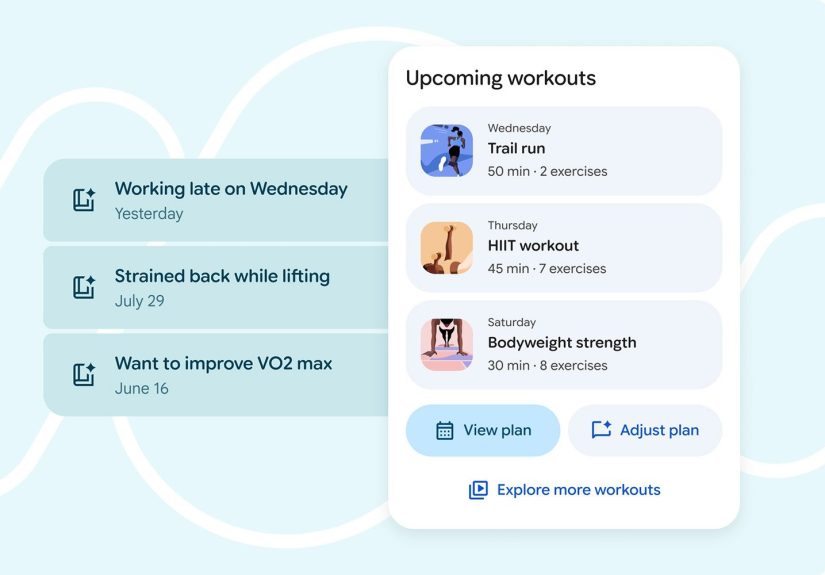
2) Weekly planning (the part most people actually need)
Many fitness apps obsess over daily goals. Real progress tends to happen weekly: consistency, progressive overload, recovery, and adherence.
Fitbit’s coach leans into that by generating weekly workout plans and helping you adapt them.
For example, if your goal is to run a 5K, it may build a gradual progression with easy runs, one quality session, and recovery daysthen adjust based on how you’re responding.
3) “Coach’s notes” and feedback loops
Coaching improves when the coach learns what works for you. The app is designed to track conversations and let you give feedback like:
“That workout was too intense” or “I loved that planmore like that.”
Over time, good systems get better at matching your preferences and your capacity.
4) Better context around recovery and readiness
A standout coaching concept in Fitbit’s ecosystem is readiness: a daily snapshot meant to help you decide whether to push or recover.
Readiness is generally informed by trends like sleep, resting heart rate, and heart rate variability (HRV).
In coaching terms: it’s less “Do more!” and more “Do the right amount today.”
That’s a big deal because most people don’t fail from lack of motivation. They fail from poor pacing: going too hard, too often, then disappearing for three weeks.
A coach that protects recovery can keep you in the game long enough to see results.
How the App Uses Your Data (Without Drowning You in It)
Fitbit’s value has always been its “quiet tracking”collecting signals while you live your life.
The coaching experience tries to organize those signals into a narrative: what’s improving, what’s slipping, and what to do next.
Sleep: from a score to a strategy
Plenty of people already know they should sleep more. The useful part is identifying what’s most likely to move the needle.
A good coach doesn’t just say “Go to bed earlier.” It helps you spot patterns:
late caffeine, inconsistent schedules, workout timing, stress spikes, or weekend “sleep whiplash.”
Stress and recovery: coaching beyond workouts
Modern health coaching isn’t just “do cardio, lift weights.” It’s also stress management, recovery habits, and behavior change.
If your metrics suggest your body is under strainpoor sleep, lower HRV, elevated resting heart ratesmart coaching is often:
light movement, breathing or mindfulness, hydration, and earlier bedtime.
Fitness load and progress: guidance that adapts
A classic coaching problem: you get fitter, so the same workout becomes easier, so you plateau.
A coach helps you scale graduallyadding minutes, intensity, or strength volume while respecting recovery.
Fitbit’s coaching pitch is that it can adapt plans as your data changes, not just spit out the same generic routine forever.
Who Benefits Most From Fitbit’s “Coach” Direction?
Beginners who want clarity, not complexity
If you’re new to structured fitness, the hardest part is deciding what to doand whether it’s working.
A coach that turns your week into a simple plan (and adjusts when life happens) can reduce decision fatigue.
Busy people who need realistic plans
The best workout plan is the one you can follow. If you have 25 minutes three times a week, a coach should build around that.
Short strength circuits, brisk walks, and a weekend longer session may beat an “optimal” plan you never start.
Data-lovers who want interpretation
If you already track everything, the missing piece is often meaning. Trends matter more than daily noise.
Fitbit’s coaching approach is built to summarize patterns, explain why metrics changed, and recommend adjustments.
The Fine Print: What an AI Health Coach Can’t (and Shouldn’t) Do
A responsible health coach app has boundaries. Wearables can support wellness decisions, but they are not medical devices for diagnosing everything,
and AI should not replace professional care.
It’s not a doctor
If you have chest pain, fainting, severe shortness of breath, symptoms of infection that worsen, or any urgent medical concern, you don’t need better promptsyou need medical care.
Even for non-urgent issues (sleep disorders, persistent fatigue, suspected overtraining, mental health concerns), the best outcome often comes from combining
self-tracking with a clinician’s expertise.
Wearable data has limits
Heart rate tracking and related metrics can be affected by fit, movement, skin characteristics, and device placement.
Good coaching should treat the numbers as signals, not absolute truth.
If the coach says you’re “ready,” but your body says “no,” listen to your body.
AI can be wrong (sometimes confidently)
AI systems can misunderstand context or overgeneralize. That’s why the safest design includes guardrails:
encouraging users to seek professional guidance when appropriate, avoiding medical claims, and focusing on lifestyle-level recommendations.
Privacy and Trust: The Question Everyone Asks (Right After “Is It Judging Me?”)
Health data is personal. For an AI coach to feel helpful, it needs contextgoals, habits, and trends.
That raises fair questions: What data is used? Can you opt out? Are settings easy to control?
Fitbit’s public preview approach and consent prompts are meant to give users controlespecially for advanced AI features.
If you’re considering the coaching experience, it’s smart to review privacy settings, understand what’s optional, and decide what you’re comfortable sharing.
How to Get the Most Out of Fitbit’s Coaching (Practical Tips)
1) Be honest in onboarding
Coaching is personalization. Personalization requires truth. If you say you love running but actually hate running, the coach will faithfully build you a plan you will faithfully ignore.
Tell it your real preferences, real schedule, and real limitations.
2) Use feedback like you’re training the coach, too
A good coach learns. If the app supports feedback (“too hard,” “too easy,” “more strength,” “less running”), use it.
You’re not complainingyou’re calibrating.
3) Think in weeks, not days
One rough night doesn’t ruin your health. One perfect day doesn’t transform it. Look for trends:
better sleep consistency, steady activity volume, and recovery patterns you can repeat.
4) Treat recommendations as suggestions, not commands
The coach can propose. You decide. If you’re sore, stressed, or under-slept, swapping intensity for a lighter session might be the best “win” you can take.
Sustainable progress is built from smart compromises.
So… Is the New Fitbit App a Real Coach or Just a Fancy Dashboard?
The honest answer: it depends on execution and expectations.
If you want a human coach’s judgment, empathy, and real-time nuance, an app won’t fully replace that.
But if what you need is structure, reminders, and clearer interpretation of your own dataFitbit’s coaching-first design could be a meaningful upgrade.
The most promising part is the shift from “Here are your numbers” to “Here’s what to do next.”
For many people, that translation is the missing bridge between tracking and transformation.
Experiences: Living With Fitbit’s Health Coach in the Real World (About )
Here’s what it feels like when a health app stops being a silent scoreboard and starts acting like a coachespecially if you’re a normal human with meetings,
errands, and an impressive ability to forget water exists.
On day one, the coach onboarding is weirdly clarifying. Not because it reveals some secret fitness hack, but because it forces you to answer basic questions you’ve been dodging:
“How many days can you realistically work out?” “What do you actually enjoy?” “Are you trying to sleep better or just trying to survive your week?”
You realize half your “fitness plan” has been vibes.
By midweek, the coach becomes most useful in two moments: when you’re tempted to do too much, and when you’re tempted to do nothing.
Let’s say you slept poorly and your body feels like it’s running on one bar of battery. Old-school motivation culture screams, “No excuses!”
The coach approach is more like, “Let’s not turn today into a regret festival. Do something easier, protect recovery, and come back stronger.”
It’s the difference between punishment and pacing.
Then there’s the opposite situation: the “I don’t have time” day. The coach can’t magically create hours, but it can reduce friction.
If your plan calls for 45 minutes and you only have 20, it can suggest an alternative that still matches your goallike a brisk walk plus short strength work.
That matters because consistency is usually lost in the gap between “perfect plan” and “messy day.”
The sleep coaching vibe is surprisingly grounding. Instead of vague advice (“sleep more”), it pushes you to notice patterns:
the late caffeine, the scrolling, the “one more episode” lie, the weekend schedule chaos.
You start treating sleep like training: something you can practice, not something you either have or don’t.
And when sleep improves even a little, you feel it everywhereworkouts, mood, cravings, patience, and the general desire to be kind to strangers.
The funniest part is how quickly you develop a relationship with the coach’s tone. When it’s supportive, you’re like, “Aw, thanks.”
When it’s honest“You’ve been inconsistent this week; let’s simplify”you might roll your eyes… but it’s hard to argue with your own data.
The best moments feel like having a calm trainer in your pocket. The worst moments feel like being gently roasted by a spreadsheet.
Overall, the experience shines when you treat it like a guide rather than a boss. You still have to make choices.
But having the app translate your metrics into a realistic weekly planand adjust when life inevitably happensmakes it easier to stay on track
without turning health into a second full-time job.
Conclusion
Fitbit’s redesigned app is betting that the future of wearables isn’t just trackingit’s coaching. By pairing your day-to-day metrics with Gemini-powered guidance,
Fitbit aims to help you decide what to do next: when to push, when to recover, how to build habits, and how to stay consistent in a world that loves chaos.
Used thoughtfully, it can feel like a practical, supportive assistant. Used blindly, it’s just another voice competing for your attention.
The sweet spot is collaboration: you bring the real life; it brings the structure.