Table of Contents >> Show >> Hide
- What Is a Fourth of July Wreath?
- Why a Patriotic Wreath Works So Well for Summer Decor
- Popular Fourth of July Wreath Styles
- Best Materials for a DIY Fourth of July Wreath
- How to Make a Simple Fourth of July Wreath
- Design Tips for a Better-Looking Patriotic Wreath
- Indoor vs. Outdoor Fourth of July Wreaths
- Fourth of July Wreath Ideas by Style
- Common Mistakes to Avoid
- How to Store a Fourth of July Wreath
- Budget-Friendly Fourth of July Wreath Tips
- Safety Tips for Crafting and Displaying
- Personal Experiences With Fourth of July Wreaths
- Conclusion
A Fourth of July wreath is the front-door version of showing up to a cookout with the good potato salad: simple, festive, and instantly appreciated. Before the fireworks crackle, before the grill smoke starts drifting over the fence, and before someone insists they “definitely know how to light sparklers safely,” your patriotic wreath is already doing its job. It welcomes guests, adds curb appeal, and gives your home that red, white, and blue sparkle without requiring a full porch renovation or a second mortgage at the craft store.
The best part? A Fourth of July wreath can be rustic, elegant, playful, farmhouse-inspired, coastal, budget-friendly, kid-friendly, or gloriously over-the-top. You can make one with bandanas, burlap, ribbon, mesh, faux flowers, pinwheels, wooden stars, mini flags, grapevine, or even upcycled fabric scraps. Whether you want a quick DIY patriotic wreath for your front door or a showstopper that says “yes, I own a hot glue gun and I am not afraid to use it,” this guide walks you through the styles, materials, steps, decorating tips, and practical lessons that make the project fun instead of frustrating.
What Is a Fourth of July Wreath?
A Fourth of July wreath is a decorative circular arrangement designed to celebrate Independence Day and other patriotic holidays. It usually features classic American colors: red, white, and blue. Many designs also include stars, stripes, ribbons, bunting, florals, flags, fireworks-inspired accents, or Americana textures like burlap and weathered wood.
Although the name points to July 4th, this type of wreath is wonderfully reusable. A well-made patriotic wreath can stay up from Memorial Day through Labor Day, and it also works for Flag Day, Veterans Day, military homecomings, summer parties, neighborhood parades, and backyard barbecues. In other words, it is not a one-day decoration. It is a seasonal multitasker, which is exactly what we want from anything that involves cutting ribbon.
Why a Patriotic Wreath Works So Well for Summer Decor
Summer decorating should feel cheerful, relaxed, and easy to maintain. A Fourth of July wreath checks all three boxes. It adds instant color to a front door, porch wall, mantel, gate, fence, or indoor entryway. Unlike large outdoor decorations, a wreath does not need much space. Even a small apartment door can carry a little patriotic flair.
It also gives you a strong focal point. Red, white, and blue are bold colors, so they naturally catch the eye. If your front door is white, black, navy, natural wood, gray, or classic red, a patriotic wreath can look polished with very little effort. Add a few potted flowers or lanterns nearby, and suddenly your porch looks like it planned ahead.
Popular Fourth of July Wreath Styles
1. Bandana Wreath
The bandana wreath is one of the easiest DIY Fourth of July wreath ideas. You cut red, white, and blue bandanas into strips or halves, then tie them around a wire wreath frame. The result is fluffy, casual, colorful, and nearly impossible to mess up. If a knot looks strange, call it “texture” and keep going.
This style is great for beginners because it does not require sewing, complicated measuring, or advanced crafting skills. It is also lightweight, affordable, and easy to store. Add a wooden star, a small “USA” sign, or a patriotic bow to finish the look.
2. Burlap Patriotic Wreath
Burlap is perfect for farmhouse Fourth of July decor. It brings a warm, rustic texture that balances the brightness of red, white, and blue. You can wrap burlap ribbon around a wreath form, weave it through a wire frame, or use burlap as a base for flowers, stars, and ribbon.
A burlap wreath looks especially good on painted doors, brick walls, or covered porches. For a softer look, pair natural burlap with navy gingham ribbon and cream-colored faux flowers. For a bolder Independence Day wreath, use red burlap, blue mesh, and white star accents.
3. Grapevine Wreath
A grapevine wreath is the elegant cousin who arrives at the picnic with homemade lemonade in a glass dispenser. The twisted branches create an organic base that works beautifully with faux greenery, small flags, berries, ribbon, wooden stars, and summer florals.
This is a smart choice if you prefer understated patriotic decor. Instead of covering the entire wreath, decorate one side with red, white, and blue accents and leave part of the grapevine visible. The open design feels fresh, airy, and not too busy.
4. Deco Mesh Wreath
Deco mesh wreaths are big, bright, and unapologetically festive. They use rolls of mesh ribbon gathered or looped onto a wire frame. The finished wreath has volume, movement, and plenty of “look at me” energy. This style is ideal for large front doors, party entrances, parade floats, and anyone who believes holiday decor should be visible from across the street.
Use red, white, and blue mesh as the base, then layer wired ribbon, glitter stars, faux firecrackers, or a wooden sign in the center. Because mesh can fray, sharp scissors and neat trimming make a big difference.
5. Pinwheel Wreath
A pinwheel wreath is playful and family-friendly. It often uses paper or plastic pinwheels attached to an embroidery hoop, foam wreath form, or wire frame. The result feels cheerful, modern, and perfect for a Fourth of July party with kids.
If the wreath will hang outdoors, choose weather-resistant materials or display it on a covered porch. Paper pinwheels are adorable, but they do not enjoy rain. Nobody wants a patriotic wreath that looks like it survived a sprinkler battle.
Best Materials for a DIY Fourth of July Wreath
Choosing the right materials depends on your style, budget, and where the wreath will hang. A covered porch gives you more freedom. A door exposed to sun, wind, or rain needs stronger materials and better attachment methods.
Wreath Bases
The base determines the structure. Wire wreath frames work well for bandana, ribbon, rag, and mesh wreaths. Foam forms are easy to wrap with fabric, yarn, or ribbon. Grapevine wreaths are sturdy and naturally decorative. Embroidery hoops are lightweight and modern, especially for pinwheel or minimalist wreaths.
Decorative Accents
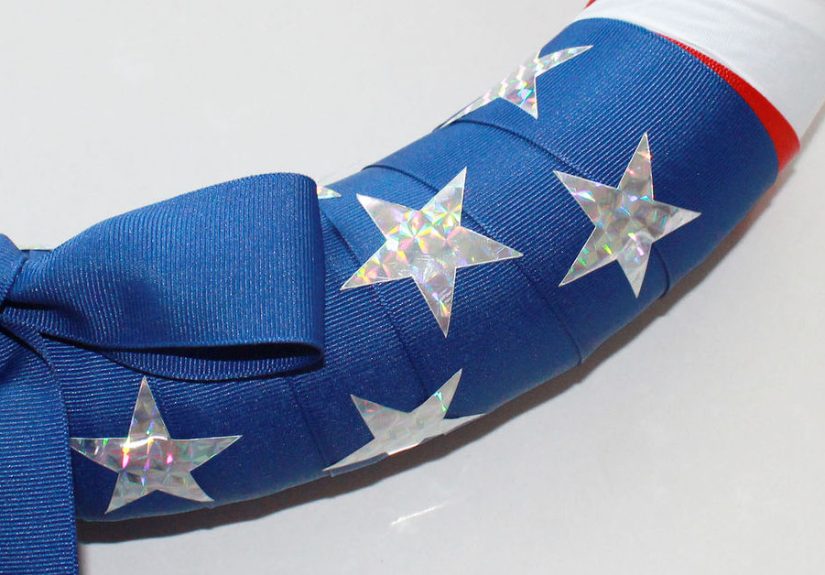
Common patriotic wreath accents include wired ribbon, faux flowers, wooden stars, mini flags, fabric strips, burlap, mesh, berry stems, pinwheels, small signs, jute twine, and star garlands. For a classic stars-and-stripes effect, keep the design balanced: use blue as an anchor color and add red and white in repeating patterns.
Tools and Adhesives
A hot glue gun is helpful, but it should not be the only thing holding an outdoor wreath together. Floral wire, zip ties, pipe cleaners, straight pins, and craft wire add security. Use glue for light accents and wire for heavier items. Your wreath should survive a breezy afternoon, not launch itself dramatically into the hydrangeas.
How to Make a Simple Fourth of July Wreath
This beginner-friendly version uses a wire wreath frame, fabric or bandana strips, ribbon, and a few patriotic accents. It is affordable, quick, and customizable.
Supplies
- One 14-inch or 18-inch wire wreath frame
- Red, white, and blue bandanas or cotton fabric strips
- Wired ribbon for a bow
- Wooden stars, mini flags, or a small patriotic sign
- Floral wire or zip ties
- Scissors
- Hot glue gun, optional
- Wreath hanger or ribbon loop
Step 1: Choose a Color Pattern
Before tying anything, decide how you want the colors to appear. You can alternate red, white, and blue around the entire frame, create a flag-inspired section with blue on one side and red-and-white stripes on the rest, or mix the colors randomly for a casual look.
Step 2: Cut the Fabric
Cut bandanas or fabric into strips. A good starting size is about 2 to 3 inches wide and 8 to 10 inches long. The exact size does not need to be perfect. In fact, slight variation gives the wreath a fuller, more handmade look.
Step 3: Tie the Strips
Tie each strip around the wire frame with a simple knot. Push the knots close together so the frame does not show. Continue until the wreath looks full from every angle. Fluff the fabric as you go, because crafting is 40 percent technique and 60 percent convincing fabric to behave.
Step 4: Add a Bow or Accent
Make a bow with wired ribbon and attach it with floral wire. Add wooden stars, a small “Welcome” sign, faux berries, or a mini flag. If you use an actual American flag, display it respectfully and avoid cutting, gluing, or altering it. Decorative flag-patterned fabric, bunting-style ribbon, or star-and-stripe motifs are better choices for craft projects.
Step 5: Hang and Adjust
Hang the wreath on your door and step back. This is the most important part because wreaths look different once they are vertical. Adjust the bow, fluff the fabric, trim long pieces, and make sure nothing blocks the door from closing.
Design Tips for a Better-Looking Patriotic Wreath
Use Odd Numbers
Odd-numbered groupings often look more natural. Try three wooden stars, five faux flower stems, or seven small ribbon loops. This gives the eye movement and keeps the design from feeling stiff.
Mix Textures
A wreath looks richer when it includes different textures. Combine smooth ribbon with rough burlap, shiny stars with soft cotton, or greenery with painted wood. Texture keeps red, white, and blue from looking flat.
Match Your Door
If your front door is dark, use bright whites and bold reds so the wreath pops. If your door is red, use more navy, cream, and natural textures to avoid a color overload. If your door is blue, add white flowers and red ribbon for contrast.
Think Beyond the Front Door
A Fourth of July wreath can hang on a kitchen hood, interior door, mantel mirror, porch window, garden gate, or fence. Smaller wreaths can decorate chair backs, buffet tables, or party stations. A mini patriotic wreath tied to a cooler handle? Surprisingly charming. Also, it helps guests find the drinks, which is public service.
Indoor vs. Outdoor Fourth of July Wreaths
Indoor wreaths can use delicate materials such as paper, lightweight ribbon, untreated fabric, or fragile embellishments. Outdoor wreaths need sturdier supplies. Sun can fade fabric. Rain can warp paper. Wind can loosen glued accents. If your wreath will face the elements, choose weather-resistant ribbon, plastic or silk flowers, sealed wooden pieces, and secure wire attachments.
A covered porch gives you the best of both worlds. It protects the wreath while still letting it greet guests. If your door gets full afternoon sun, consider rotating the wreath indoors after the holiday weekend or using fade-resistant materials.
Fourth of July Wreath Ideas by Style
Classic Americana
Use navy ribbon, red-and-white stripes, wooden stars, and a grapevine base. Keep the palette traditional and slightly aged for a timeless look.
Farmhouse Patriotic
Choose burlap, ticking stripe ribbon, cream flowers, jute twine, and weathered wood. This style works beautifully with white siding, black doors, galvanized planters, and rocking chairs.
Coastal Fourth of July
Blend patriotic colors with nautical details. Think rope, driftwood, navy stripes, white shells, and small painted buoys. This version feels summery without leaning too heavily into flag imagery.
Kid-Friendly Party Wreath
Use pinwheels, foam stars, bright ribbon, and lightweight plastic accents. Keep it colorful, playful, and easy to repair. Children may want to help, which is lovely, as long as an adult supervises scissors and hot glue.
Elegant Red, White, and Blue Floral Wreath
Use faux hydrangeas, peonies, roses, or geraniums in patriotic colors. Add a satin or wired ribbon bow and keep the layout asymmetrical. This wreath works well for homes that prefer polished seasonal decor over novelty decorations.
Common Mistakes to Avoid
The first mistake is using too many focal points. A wreath with stars, flags, rockets, signs, flowers, mesh, bows, bells, lights, and three kinds of ribbon may be enthusiastic, but it can also look chaotic. Choose one main idea and let the rest support it.
The second mistake is relying only on hot glue outdoors. Heat and humidity can weaken glue, especially on metal or plastic. Use wire or zip ties for structure. Glue should be the assistant, not the manager.
The third mistake is forgetting scale. A tiny wreath can disappear on a large front door, while an oversized wreath can overwhelm a narrow entry. For most standard doors, a wreath between 18 and 24 inches wide looks balanced.
The fourth mistake is ignoring flag etiquette. Patriotic decor should feel celebratory and respectful. Use flag-inspired patterns, bunting, stars, stripes, and themed ribbon for crafting. If you include a real flag, do not cut, glue, fold into craft shapes, or use it in a way that could damage it.
How to Store a Fourth of July Wreath
Good storage helps your wreath survive until next summer. First, remove dust with a soft cloth or a cool hair dryer setting. Then place the wreath in a wreath storage box, large plastic bin, or garment bag. Avoid crushing bows or mesh. If the wreath has delicate accents, wrap them loosely with tissue paper.
Store the wreath in a dry area away from extreme heat. Attics can get very hot, and hot glue may soften. A closet, shelf, or climate-controlled storage area is better. Label the container so you do not find your patriotic wreath in November while looking for Thanksgiving napkins.
Budget-Friendly Fourth of July Wreath Tips
You do not need expensive supplies to make a beautiful wreath. Shop your craft bin first. Old denim, fabric scraps, leftover ribbon, buttons, yarn, gift wrap, and wooden letters can all become part of the design. Dollar sections and seasonal sales are also helpful, especially for mini signs, foam stars, floral picks, and ribbon.
Another money-saving trick is to make a neutral base and swap out the accents. A plain grapevine or burlap wreath can be updated for different holidays. Add red, white, and blue ribbon for July, sunflowers for late summer, leaves for fall, and pinecones for winter. One wreath form, many personalities. Honestly, it is more adaptable than most group chats.
Safety Tips for Crafting and Displaying
If you are crafting with children, use school glue, pre-cut shapes, or low-temperature glue guns with supervision. Keep sharp floral wire ends tucked safely into the wreath. Do not place wreaths near open flames, grills, fire pits, or fireworks. A patriotic wreath should celebrate sparks, not become one.
For outdoor hanging, make sure the wreath does not block peepholes, door locks, handles, or house numbers. If you live in a windy area, use a secure wreath hanger or ribbon tied over the top of the door. For glass storm doors, check that the wreath is not too thick to fit comfortably between the doors.
Personal Experiences With Fourth of July Wreaths
The first time I made a Fourth of July wreath, I was convinced it would take twenty minutes. This was optimistic in the same way people say they are “just stopping by Target for one thing.” I had a wire frame, a stack of red, white, and blue fabric, a roll of ribbon, and the confidence of someone who had watched exactly one tutorial. Two hours later, my table looked like a craft store sneezed, but the wreath was surprisingly charming.
What I learned immediately is that patriotic wreaths are forgiving. Red, white, and blue already create a strong theme, so the design does not have to be perfect. A slightly crooked bow can look cheerful. Uneven fabric strips can create texture. A star placed a little off-center can make the wreath feel handmade instead of mass-produced. That is the magic of DIY decor: the tiny imperfections are not failures; they are proof that a real person made it while probably drinking iced tea and wondering where the scissors went.
Another experience that stands out is how much a wreath changes the feeling of a front porch. One summer, I hung a simple burlap and ribbon wreath on a plain white door. Before that, the entry looked clean but a little sleepy. Afterward, the whole porch felt ready for company. I added two planters with red geraniums and a small blue outdoor pillow on a bench, and suddenly it looked like I had a decorating plan. I did not. The wreath did most of the work and politely let the flowers take some credit.
I have also learned that durability matters more than you think. A paper pinwheel wreath is adorable for an indoor party wall, but on a humid porch it can droop faster than a popsicle in July. For outdoor use, fabric, wired ribbon, faux florals, grapevine, burlap, and sealed wood accents hold up better. If the wreath faces direct sun, deeper blues and bright reds may fade over time, so it helps to store the wreath indoors after the holiday weekend or hang it in a shaded spot.
My favorite Fourth of July wreath experience, though, is how it becomes a conversation starter. Guests notice it before they knock. Neighbors mention it while walking dogs. Kids point out the stars. Someone always asks, “Did you make that?” and suddenly a simple craft turns into a story. Maybe you talk about the bandanas you found on sale, the bow that took five tries, or the mini wooden stars you painted at midnight because creativity has terrible timing.
The wreath also creates a sense of tradition. Pulling it out each year feels like the unofficial start of summer celebration season. It reminds you of cookouts, porch lights, watermelon slices, sparklers, music, parades, and long evenings when the air smells like charcoal and sunscreen. A Fourth of July wreath is not just decoration. It is a small ritual, a handmade welcome, and a bright little signal that says, “Come on in, grab a plate, and yes, someone brought extra napkins.”
Conclusion
A Fourth of July wreath is one of the easiest ways to dress up your home for Independence Day and the whole patriotic summer season. Whether you prefer a rustic burlap wreath, a bright bandana wreath, an elegant floral wreath, a playful pinwheel wreath, or a bold deco mesh design, the key is to choose materials that fit your space, weather conditions, and personal style.
Keep the colors balanced, mix textures, secure outdoor accents well, and decorate respectfully with patriotic patterns rather than altering real flags. Most of all, enjoy the process. A handmade patriotic wreath does not need to be flawless to be beautiful. It just needs to feel welcoming, festive, and ready for summer memories.
Note: This article is original, plagiarism-free, and synthesized from commonly accepted U.S. DIY craft, home-decor, wreath-making, and flag-etiquette guidance. Source links are intentionally not displayed in the article body.