Table of Contents >> Show >> Hide
- Meet Peanut: A Turtle With A Shell That Tells The Whole Story
- How A Six-Pack Ring Turned Into A Life Sentence
- From Rescue To Role Model: Peanut’s Second Life
- How Peanut Made It To 41: The Longevity Lesson
- Why Peanut’s Story Still Matters In 2025
- What You Can Do Today: Practical Steps That Actually Help
- Peanut’s “Global Icon” Moment: Why A Turtle Goes Viral
- A Quick “Teach This To Kids” Script (Because Peanut Would Approve)
- Experiences Inspired By Peanut’s Story
- Conclusion: Peanut’s Shell Is A WarningAnd An Invitation
- SEO Tags
Peanut didn’t become famous because she learned karate, mastered pizza economics, or developed a cool nickname like “Shell Shock.” Peanut became famous because
a tiny loop of plastic did what predators couldn’t: it permanently changed her body. And instead of quietly disappearing into the background of “sad wildlife
stories,” Peanut turned that damage into a decades-long public service announcement with a heartbeat.
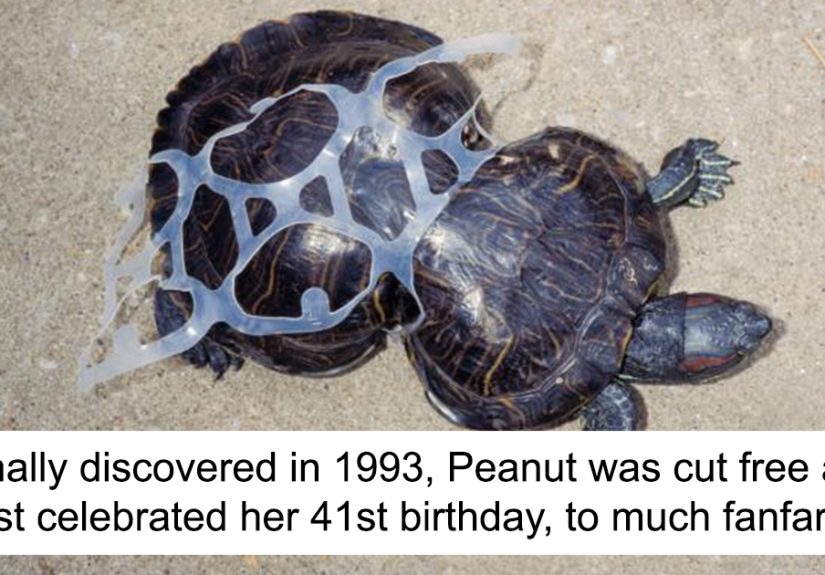
If you’ve seen the photos, you know the moment: a turtle with a figure-eight, peanut-shaped shellan animal that looks like nature tried to draw an infinity
symbol and then got interrupted by… litter. It’s shocking, it’s oddly adorable, and it’s the kind of visual your brain refuses to unsee. That’s exactly why
Peanut’s story works so well. It’s not just about a rescued turtle. It’s about the everyday trash we barely noticeand the very real lives it can reshape.
Meet Peanut: A Turtle With A Shell That Tells The Whole Story
Peanut is a red-eared slider, a tough, adaptable freshwater turtle species found across much of the U.S. In Peanut’s case, toughness wasn’t optionalit was
survival. As a young turtle in Missouri, Peanut crawled into a plastic six-pack ring. The ring didn’t break. Peanut kept growing. The plastic stayed tight.
Over time, that plastic cinched her body and warped her shell into a distinctive “figure-eight” shape. The deformation became her trademark, but it also came
with serious risks: reduced mobility, vulnerability to predators, and stress on internal organs. When people talk about wildlife “entanglement,” it can sound
abstractuntil you see Peanut and realize the phrase can mean “a lifetime of living inside the consequences of someone else’s convenience.”
How A Six-Pack Ring Turned Into A Life Sentence
The trash was small. The impact was not.
A six-pack ring is lightweight, cheap, and designed to hold cans togethernot to survive a decade in the environment. But plastic has a habit of outliving its
intended purpose. Once it becomes litter, it doesn’t magically retire. It wanders. It floats. It snags. It keeps doing plastic things for a very long time.
For turtles, birds, fish, and other wildlife, loops and bands are especially dangerous. They can tighten over time, cut into tissue, restrict movement, and
cause infections or slow starvation. Entanglement also makes animals easier targets for predators and can prevent them from feeding normally or escaping danger.
It’s not dramatic in a movie wayit’s dramatic in a slow, preventable, heartbreaking way.
Rescue doesn’t always mean “back to the wild.”
Peanut was eventually found and freed from the plastic ring. But her shell couldn’t “bounce back.” A turtle’s shell is living structure, connected to bones
and nerves. Once it grows deformed, you’re not talking about a simple cosmetic issue. You’re talking about anatomy. So Peanut became what conservation groups
call an “ambassador animal”: a living example that helps humans learn from a mistake without repeating it.
From Rescue To Role Model: Peanut’s Second Life
Peanut’s survival story didn’t stop at “someone cut off the ring.” After being freed, she came under the care of the Missouri Department of Conservation and
became the mascot for the state’s anti-litter “No MOre Trash!” campaignan initiative coordinated with the Missouri Department of Transportation. Peanut’s job
description is basically: exist, be unforgettable, and make littering feel extremely uncool.
And it works. Because Peanut turns a lecture into a face. Or, technically, a shell.
Over the years, Peanut has appeared at public events and been featured in news coverage and viral posts. People might scroll past “plastic pollution harms
wildlife,” but they stop for a turtle whose body literally carries the shape of the problem.
How Peanut Made It To 41: The Longevity Lesson
Red-eared sliders can live a long timeif conditions cooperate.
Red-eared sliders are known for relatively long lifespans, especially in captivity with consistent food, clean water, and veterinary care. Many sources cite
that they can reach several decades under good care, and in some cases around 40 years. Peanut hitting 41 isn’t impossiblebut it is a milestone that reminds
us what steady care can do for an animal that never should’ve been harmed in the first place.
A big moment in 2020: surgery and a comeback.
Peanut’s unique shell shape wasn’t just a “quirk.” It created long-term health challenges. In 2020, caretakers noticed changes in her appetite and behavior.
Peanut underwent surgery at the Saint Louis Zoo to treat a serious condition (follicular stasis) that affected her ability to eat and put stress on other
organs. The procedure removed her ovaries, and Peanut recoveredreturning to her role as a living reminder to keep trash out of habitats.
That detail matters because it shows what “thriving” really means here. Peanut isn’t thriving because the world is suddenly kinder. She’s thriving because
humans chose to intervene, monitor her health, and give her care that wild turtles don’t have access to. It’s the rescue story after the rescue story.
Why Peanut’s Story Still Matters In 2025
If Peanut were the only animal ever harmed by plastic loops, her story would be tragic-but-contained. But entanglement is a widespread problem. Marine and
freshwater environments act like conveyor belts for debrisespecially items that snag easily (rings, packing bands, fishing line, net fragments). Agencies and
conservation organizations document how entanglement can injure and kill wildlife and how difficult it can be to respond once animals are caught.
Peanut is proof that “one piece of trash” isn’t a motivational poster slogan. One piece of trash can become a permanent injury. Multiply that by millions of
pieces, and you don’t just have a litter problemyou have a wildlife emergency that looks like a thousand tiny, avoidable traps.
What You Can Do Today: Practical Steps That Actually Help
1) Cut the loops (yes, still).
The classic advice remains classic because it works: cut six-pack rings and other plastic loops before you toss them. Many environmental education materials
and agencies have recommended cutting through loops to reduce the chance of entanglement if the plastic escapes into the environment.
2) Choose better packaging when you can.
Companies have been experimenting with alternatives: paperboard carriers, molded fiber solutions, and even “edible” or compostable ring-style carriers made
from brewing byproducts. Big brands have also announced shifts away from plastic rings toward recyclable cardboard carriers. None of these solutions are
perfect, but fewer plastic loops in the world is a straightforward win for wildlife.
3) Treat fishing line like the hazard it is.
Fishing line and abandoned gear are notorious for tangling animals. If you fish, dispose of line properly, use recycling bins where available, and don’t leave
scraps behind. If you don’t fish, you can still help by picking up line carefully during cleanups (gloves are your friend).
4) Do the “two-minute cleanup” wherever you go.
You don’t need a neon vest and a clipboard to help. If everyone picked up two minutes’ worth of litter at parks, trails, beaches, and boat ramps, we’d remove a
staggering amount of wildlife hazards. It’s the simplest habit with the biggest collective payoff.
5) Support local conservation centers and rescue networks.
Wildlife rehabbers and conservation agencies do the hard workmedical care, rescue response, education, and habitat protection. Supporting them (donations,
volunteering, attending events, sharing accurate info) helps scale the impact beyond what any one person can pick up in a single afternoon.
Peanut’s “Global Icon” Moment: Why A Turtle Goes Viral
There’s a reason Peanut’s photos spread fast: the story compresses a complex problem into one unforgettable image. Plastic pollution can feel overwhelming
because it’s everywhere and nowhere at oncetiny fragments, distant gyres, invisible microplastics, messy supply chains. Peanut is the opposite of invisible.
Peanut’s shell is a visual timeline:
- The beginning: a piece of litter on the ground.
- The middle: a young turtle grows around it.
- The aftermath: a lifetime of deformity and extra care.
- The message: prevention is easier than rescue.
And yes, there’s humor in calling her a “litter-fighting superhero,” but it’s the kind of humor that helps the lesson land. Peanut doesn’t shame people; she
simply exists as evidence. That’s powerful education.
A Quick “Teach This To Kids” Script (Because Peanut Would Approve)
What to say in one minute
“This turtle got stuck in a plastic ring when she was little. She grew, but the ring didn’t, so her shell grew around it and changed shape forever. She was
rescued and now she teaches people not to litter. We can help by putting trash in the bin, cutting plastic loops before throwing them away, and picking up
litter when we see it.”
What to do in five minutes
- Cut up any plastic rings at home (with an adult).
- Pack a small “litter kit” for outings: gloves + a bag.
- Do a mini cleanup in the driveway, park, or schoolyard.
- Talk about where trash goes (and how it can end up in water).
That’s it. You’ve just turned one turtle into a household habit.
Experiences Inspired By Peanut’s Story
You don’t need to live in Missourior work in wildlife conservationto feel the ripple effects of Peanut’s story. People who attend nature center events, join
cleanups, or even just take a slow walk around a neighborhood pond often describe the same realization: trash isn’t “out there.” It’s right here, in the same
spaces where animals feed, nest, and breathe.
One of the most common experiences at community cleanups is the “loop moment.” Someone picks up a plastic ring carrier, turns it over in their hands, and you
can almost see the mental math happening: This could fit around a duck’s neck. This could snag a turtle’s shell. This could trap a fish. It’s not
guilt-trip theaterit’s the practical recognition that certain shapes are hazards by design once they become litter. That moment tends to stick, because it’s
visual and immediate, the way Peanut’s shell is visual and immediate.
At nature centers, the experience is often the opposite: it’s slow and personal. Visitors watch an animal move, eat, and respond to its environment. With
Peanut, caretakers have even used her story to make the abstract concept of “environmental impact” feel like a relationship. You’re not learning about
pollution in general; you’re meeting an individual who lives with the consequences. People leave talking about small behavior changeskeeping a trash bag in the
car, packing out snack wrappers, not leaving fishing line behindbecause those changes suddenly feel meaningful, not performative.
Another experience that comes up a lot is how kids react. Adults often assume children need big, dramatic messaging to care. In reality, kids tend to respond
to concrete actions. Give them a pair of gloves, show them a safe way to pick up litter, and they become proud “mini rangers” in minutes. Peanut’s story
supports that kind of learning because it offers a clear cause-and-effect lesson. A child can understand: “Trash hurt a turtle. We can prevent that.” It’s
empowering rather than paralyzing.
People who’ve volunteered around aquatic habitats also talk about the “hidden trash” experience: the stuff you don’t notice until you stop rushing. Fishing
line tangled in reeds. Bottle rings half-buried in mud. Plastic strips caught in roots. It’s not always dramatic, but it’s common. And once you start seeing
it, you can’t unsee it. That’s why many volunteers develop small routinestwo minutes of pickup at the end of a walk, a quick scan of the shoreline before
leaving a park. Those routines don’t feel like saving the world in one day. They feel like maintaining a place you care about.
Finally, there’s the experience of hopeyes, hope, the thing we all pretend is cheesy until it’s the only thing that gets us moving. Peanut’s survival into
her 40s shows that interventions matter. A rescue mattered. Ongoing care mattered. A surgery mattered. Education mattered. People often leave a Peanut-related
post or event with the sense that this isn’t an impossible problem; it’s a preventable one. Not because every piece of plastic will disappear tomorrow, but
because the next piece doesn’t have to become the next Peanut. And that’s a goal you can actually act on before lunch.
Conclusion: Peanut’s Shell Is A WarningAnd An Invitation
Peanut didn’t choose to become an icon. She was drafted by litter. But the fact that she’s still thriving at 41after a rough start, decades of care, and
serious health hurdlesturns her story into something bigger than shock value. It becomes a blueprint for prevention.
The takeaway isn’t “feel bad about plastic.” The takeaway is “do the simple things that keep plastic from turning into traps.” Cut the loops. Pack out what you
pack in. Dispose of fishing line properly. Choose better packaging when you can. Pick up what you see. Teach a kid. Repeat.
Peanut is living proof that small actions matter. Unfortunately, so is the six-pack ring.