Table of Contents >> Show >> Hide
- Why a Frying Skillet Is the Kitchen’s Swiss Army Knife (But Hotter)
- Skillet Anatomy: What Actually Matters When You Buy One
- Choose Your Fighter: The Main Types of Frying Skillet
- The One-Skillet Strategy: What Most Home Cooks Actually Need
- Heat + Sticking: The Skillet Physics That Saves Dinner
- Care and Feeding: How to Keep Your Frying Skillet Happy
- Common Skillet Mistakes (A Comedy of Errors)
- Three Skillet Wins You Can Repeat Any Night
- Kitchen Field Notes: of Real-Life Frying Skillet Experiences
- Conclusion
If your kitchen had a “Most Valuable Player” trophy, the frying skillet would win it,
then use it to smash a clove of garlic for a pan sauce. It sears steaks, crisps potatoes, flips pancakes,
browns butter, and makes eggs that don’t look like they lost a fight with a spatula.
It’s also the only piece of cookware that can be both a culinary tool and a personality trait.
This guide pulls together the most consistent, practical advice from well-known U.S. cooking publications,
test kitchens, and consumer organizationsthen rewrites it into a friendly, no-fluff playbook.
Expect real-world tradeoffs, a few gentle jokes, and enough skillet strategy to make your smoke alarm feel less needed.
Why a Frying Skillet Is the Kitchen’s Swiss Army Knife (But Hotter)
A frying skillet (also called a frying pan) is built for direct contact with heat and fast evaporation.
Those sloped sides? They help you toss, stir, and slide food around. That wide, flat base? It’s your browning stage,
where moisture evaporates and flavor compounds develop. In plain English: it’s where “meh” turns into “why is this so good?”
What a Skillet Does Better Than a Pot
- Browning: More surface area means better crusts and deeper flavor.
- Evaporation: Water can escape, so food roasts and fries instead of steaming sadly.
- Speed: A good skillet reacts quicklyespecially stainless and carbon steel.
- Versatility: Stovetop-to-oven cooking is a skillet’s love language.
Skillet Anatomy: What Actually Matters When You Buy One
Skillets aren’t just “pan-shaped.” Small design choices change how they cook and how you feel about cooking.
(And yes, your feelings matternobody sautés well in a state of annoyance.)
1) Material (The Big Decision)
Material determines heat retention, responsiveness, maintenance, and whether you’ll become the type of person
who says “patina” with a straight face.
2) Thickness and Weight (The Hidden Decision)
Thicker pans often heat more evenly and hold heat longer, but they’re heavier and slower to change temperature.
Thin pans heat fast but can develop hot spots and punish your mistakes in real time.
3) Handle Comfort (The Regrettable Decision if You Ignore It)
A skillet handle should feel secure, balanced, and not like it’s trying to rotate your wrist into early retirement.
If you cook often, comfort is not a luxuryit’s injury prevention with better dinner.
Choose Your Fighter: The Main Types of Frying Skillet
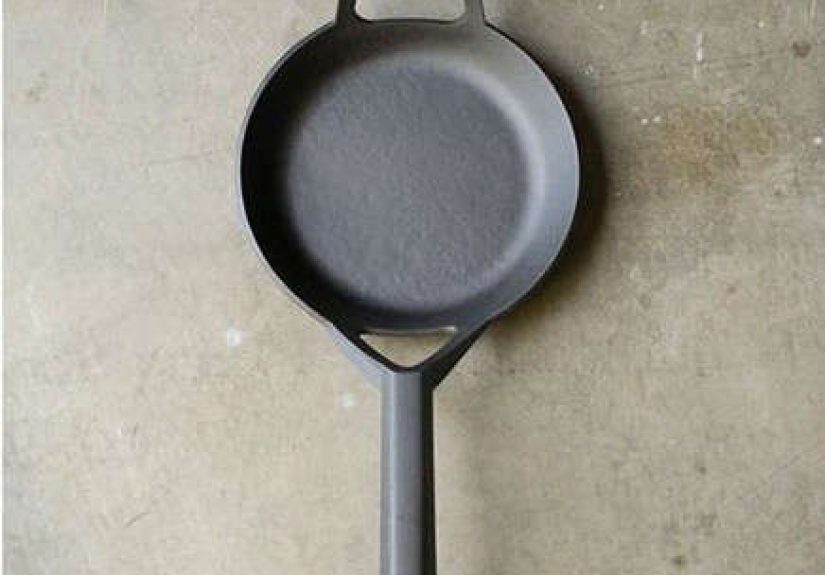
Cast Iron Skillet: The Crust Boss
Best for: searing steaks, frying chicken, cornbread, skillet pizza, deep browning, oven finishing.
Why people love it: it holds heat like it’s hoarding it for winter, and it can last generations.
Cast iron’s superpower is heat retention. Once it’s hot, it stays hotexcellent for achieving a hard sear.
Its weakness is responsiveness: it won’t cool down quickly if you overshoot the heat. Also, it can heat unevenly
if rushed. The trick is patience: preheat steadily and give the whole pan time to come up to temperature.
Carbon Steel Pan: Cast Iron’s Lighter, Faster Cousin
Best for: eggs (once seasoned), stir-fries, fish, crepes, fast sautéing, high-heat cooking.
Why it’s underrated: it seasons like cast iron but moves faster on the stove and weighs less.
Carbon steel is common in restaurant kitchens because it can get ripping hot quickly and develops a natural nonstick surface over time.
It does require seasoning and a little care, but it rewards you with speed and versatility.
Stainless Steel Skillet: The Flavor Scientist
Best for: pan sauces, browning chicken, sautéed vegetables, anything where you want browned bits (“fond”).
Why it wins: it’s durable, non-reactive, and fantastic when you want flavor built from browning.
Stainless steel’s reputation for sticking is… deserved, but manageable. When you nail preheat and fat timing,
food releases naturally. And the payoff is huge: you get fond, then deglaze it into a sauce that tastes like
you did something fancy on purpose.
Nonstick Skillet: The Egg Whisperer
Best for: eggs, delicate fish, pancakes, anything you want to slide out effortlessly.
Reality check: it’s a “performance coating,” not an heirloom. Treat it kindly and replace it when it’s worn.
Nonstick pans make certain foods easier and cleanup faster, but they dislike high heat, metal tools, and being left empty on a screaming burner.
Think of nonstick as a specialist: brilliant in its lane, cranky outside it.
Ceramic “Nonstick” Skillet: The Short-Term Relationship
Best for: lower-heat everyday cooking, people avoiding traditional nonstick coatings.
Heads-up: many ceramic coatings lose their slickness over time, even with good care.
Ceramic-coated pans can be appealing for shoppers looking to avoid certain chemicals. Performance varies a lot by brand and care,
and many users report that “amazing nonstick” can fade faster than they hoped. If you go this route, treat it gently and don’t expect forever.
The One-Skillet Strategy: What Most Home Cooks Actually Need
If you want one frying skillet that can handle 80% of your cooking, your safest “only pan” bet is a
10- or 12-inch skillet in stainless steel or cast iron.
If you’re open to two pans, the dream team is:
- 12-inch stainless steel skillet for browning + pan sauces + weeknight versatility
- 10-inch nonstick skillet for eggs + delicate foods + easy mornings
10-inch vs. 12-inch: The “Overcrowding” Problem
Overcrowding is the #1 reason dinner goes pale and watery. When too much food hits the pan, moisture can’t escape,
and you steam instead of brown. A 12-inch skillet gives you breathing room for chicken thighs, stir-fries, and batch cooking.
A 10-inch pan is perfect for smaller households and quick tasks.
Heat + Sticking: The Skillet Physics That Saves Dinner
Most “my pan hates me” moments are heat management moments. The good news: the fixes are simple and repeatable.
Rule 1: Preheat Like You Mean It
A properly preheated pan helps proteins release, improves browning, and reduces sticking. Cast iron especially benefits from
a steady preheat because it can warm unevenly if rushed. For many stoves, “medium” plus patience beats “high” plus regret.
Rule 2: Add Fat at the Right Time
In stainless steel, a common approach is: warm the pan, add oil, then add food when the oil shimmers.
In cast iron and carbon steel, a thin layer of fat helps protect seasoning and improves release.
In nonstick, you usually don’t need much fatbut a little butter can make eggs taste like joy.
Rule 3: Let Food Release Naturally
If a chicken cutlet or steak is glued to stainless steel, don’t panic-flip it like you’re defusing a bomb.
Give it time. As browning happens, food often releases on its own. If it’s burning, lower the heat.
If it’s pale and stuck, you probably didn’t preheat enough.
Care and Feeding: How to Keep Your Frying Skillet Happy
Cast Iron Care (Yes, You Can Use a Little Soap)
Modern cast iron care is less mystical than the internet makes it sound. The basic routine:
scrape, rinse, lightly scrub, dry thoroughly, then wipe with a whisper-thin coat of oil if needed.
The real villain isn’t a tiny bit of soapit’s soaking the pan, leaving it wet, or running it through the dishwasher.
- Clean promptly: warm water + brush or sponge is usually enough.
- Dry completely: towel dry, then warm it briefly on the burner to drive off moisture.
- Oil lightly (optional): a few drops, wiped until the surface looks almost dry.
- Re-season if needed: if it looks dull, sticky, or rusty, a full seasoning cycle helps.
Carbon Steel Care (Similar to Cast Iron, Slightly More Dramatic)
Carbon steel likes the same basics: avoid long soaks, dry immediately, and maintain seasoning.
It can be easier to strip seasoning accidentally early on, but it also re-seasons quickly with use.
Build the surface by cooking fatty foods and using appropriate heatnot by overthinking it.
Stainless Steel Care (Easy Mode)
Stainless steel is forgiving. You can scrub it, soak it, and use dish soap without worry.
For stubborn brown spots, a gentle abrasive cleaner and a non-scratch scrubber bring it back.
If you cooked something sticky, deglazing while the pan is still warm can make cleanup faster.
Nonstick Care (Protect the Coating, Protect the Vibes)
- Use low to medium heat most of the time.
- Avoid preheating an empty nonstick pan for long periods.
- Use silicone, wood, or nylon tools (metal is for your stainless pan’s character development).
- Hand-wash when possible; dishwashers can shorten coating life for many pans.
- Replace if the coating is peeling, heavily scratched, or performance has clearly failed.
Common Skillet Mistakes (A Comedy of Errors)
- Overcrowding: turning your skillet into a steamer basket with confidence.
- High heat on nonstick: the fastest way to turn “easy eggs” into “why does it smell like that?”
- Skipping preheat: then blaming the pan for sticking like it made a personal choice.
- Too much oil when seasoning: sticky, gummy surfaces are usually an “I got generous” problem.
- Wrong tool for the job: nonstick for searing steak, cast iron for delicate fish… it’s not illegal, just tragic.
Three Skillet Wins You Can Repeat Any Night
1) Crispy-Edge Fried Eggs (Without Sacrificing a Spatula)
Heat a skillet (cast iron or nonstick both work) on medium. Add a little oil or butter. Crack the egg in.
For crispier edges, let the fat get hot before adding the egg and don’t be afraid of gentle sizzling.
If you like the top set without flipping, cover briefly to trap steam.
2) One-Pan Chicken Thighs with Pan Sauce Energy
Use stainless steel or cast iron. Pat thighs dry, season well, sear skin-side down until deeply golden.
Flip, finish in the oven if needed. Pour off excess fat (leave a little), then deglaze with a splash of broth,
wine, or even water. Scrape up the browned bits, add a knob of butter, and suddenly it’s “restaurant.”
3) Ten-Minute Vegetable Stir-Fry That Actually Browns
Use carbon steel, cast iron, or stainless. Get the skillet hot, add oil, then add veggies in batches.
The goal is contact with the pan, not a pile-up. Finish with soy sauce, garlic, and something bright like lime.
Serve and accept compliments as if you planned it.
Kitchen Field Notes: of Real-Life Frying Skillet Experiences
Ask a group of home cooks about their first week with a new frying skillet and you’ll hear the same mini-saga
play out in different kitchens. It usually starts with optimism: someone buys a cast iron skillet because it’s “indestructible”
and “naturally nonstick.” Then comes Day Two, also known as “The Egg Incident.” The egg sticks. The egg tears. The egg becomes
scrambled against its will. A dramatic conclusion is reached: the skillet is broken, cursed, or emotionally unavailable.
But then, somewhere between a patient preheat and a little fat at the right moment, the cook realizes the pan isn’t mad
it just wants a routine.
Another classic story: the stainless steel skillet that “always sticks,” right up until the day someone accidentally does it correctly.
They heat it on medium, wait longer than feels necessary, add oil, and thenthis is the keythey leave the chicken alone.
Five minutes later, it releases like it’s proud of itself. That moment is powerful. People don’t just learn a technique;
they gain a new personality. Suddenly they’re saying things like, “You just have to let it develop a crust,” as if they were born
in a test kitchen.
Nonstick pans inspire their own brand of kitchen emotion: devotion followed by heartbreak. Plenty of cooks describe a favorite nonstick
skillet that made perfect omelets for yearsuntil one day it didn’t. The first sign is subtle: a pancake that needs a nudge.
Then eggs start requesting help. Eventually, the pan has that patch where nothing behaves. Responsible cooks retire it (thank you).
The less responsible keep using it while muttering, “It’s still fine,” like a sitcom character ignoring obvious plot foreshadowing.
The common lesson is simple: nonstick is amazing when treated gently, but it’s not meant to be a forever relationship.
And then there are the cast iron “myth journeys.” Many people inherit rules like family heirlooms: never use soap, never let water touch it,
never look at it wrong. Over time, they realize modern care can be calmer. A quick wash, a thorough dry, a tiny bit of oildone.
The skillet becomes less of a sacred object and more of a trusty tool. That shift is freeing. Cooking improves, cleanup gets faster,
and the pan stays in rotation instead of living in the oven like a shy roommate.
The most universal experience, though, is the moment a frying skillet makes you feel competent. It might be a steak with a real crust,
potatoes that crisp instead of sweat, or a pan sauce that tastes like you did a semester abroad in Flavor Town.
The skillet doesn’t just cook foodit teaches timing, heat control, and restraint. And yes, sometimes it teaches humility.
But it also delivers the kind of small, repeatable wins that make weeknight cooking feel less like a chore and more like a skill you own.
Conclusion
A great frying skillet isn’t about owning the “best pan on the internet.” It’s about matching the right material and size to how you cook,
then mastering a few fundamentals: preheat properly, don’t overcrowd, use fat intelligently, and let food release when it’s ready.
If you build a simple two-pan lineupone versatile workhorse and one nonstick specialistyou’ll cover almost everything with less stress
and better results. Your smoke alarm will miss you, but your dinner guests won’t.