Table of Contents >> Show >> Hide
- What Generative AI Means in Music
- Why the Music Industry Is Suddenly on High Alert
- Voice Cloning and the Rise of Digital Impersonation
- Streaming Platforms Are Getting Flooded
- Major Labels Are Moving From Lawsuits to Licensing
- Independent Artists Face Both Opportunity and Risk
- AI Artists Are No Longer Just a Gimmick
- What Makes Human Music Hard to Replace
- How the Law May Shape the Next Era of Music
- What Music Creators Should Do Now
- Experience Notes: Living With Generative AI in the Music World
- Conclusion
For years, musicians worried about bad managers, tiny streaming payouts, disappearing tour margins, and that one guy in the comments who insists every snare drum should sound “warmer.” Now there is a new guest at the studio door: generative AI. It does not need coffee, it does not miss rehearsals, and it can spit out a full song from a few words typed into a prompt box. Convenient? Absolutely. Weird? Also absolutely. Disruptive? That part is no longer up for debate.
Generative AI is now encroaching on music at nearly every level: songwriting, vocal cloning, production, distribution, playlist flooding, licensing, fan engagement, and copyright law. What began as a novelty“make me a country ballad about a lonely toaster”has become a serious industry issue involving major record labels, streaming platforms, publishers, artists, lawmakers, and music fans who just want to know whether the singer they are hearing has a pulse, a tour schedule, or a graphics card.
The story is not simply “AI bad, humans good.” That would be too easy, and frankly, too boring. AI can help independent artists sketch demos, clean audio, generate stems, experiment with arrangement ideas, and produce faster. But it can also imitate voices, train on copyrighted recordings, crowd streaming platforms with low-effort uploads, and blur the line between inspiration and extraction. The music industry is not facing one AI problem. It is facing several at once, all wearing headphones.
What Generative AI Means in Music
Generative AI music tools use machine learning models to create new audio, melodies, lyrics, arrangements, vocals, or full tracks based on user input. Some tools produce background music. Others generate complete songs with vocals and instrumentals. More advanced systems can imitate a genre, mood, production style, or even a voice-like performance that sounds close enough to raise eyebrows in a room full of copyright lawyers.
In practical terms, a user might type: “Create a dreamy synth-pop song about leaving a city at midnight.” Seconds or minutes later, the tool may produce a polished track with drums, chords, melody, lyrics, and vocals. For creators, this feels like magic. For working musicians, it can feel like magic that just stole their parking space.
AI as Assistant vs. AI as Replacement
The most important distinction is whether AI is assisting human creativity or replacing it. Many musicians already use digital tools: drum machines, Auto-Tune, MIDI instruments, sample libraries, mastering plugins, and digital audio workstations. Nobody panics when a producer uses a compressor, unless they use it badly. The concern grows when an AI system generates the expressive core of a song with minimal human input, especially if that system was trained on copyrighted work without permission.
AI-assisted music may still involve meaningful human authorship: a songwriter writes the melody, shapes the lyrics, edits the arrangement, performs vocals, and uses AI for texture or production support. Fully AI-generated music is different. If the machine makes the creative decisions and the human simply clicks “generate,” the legal and artistic questions become much sharper.
Why the Music Industry Is Suddenly on High Alert
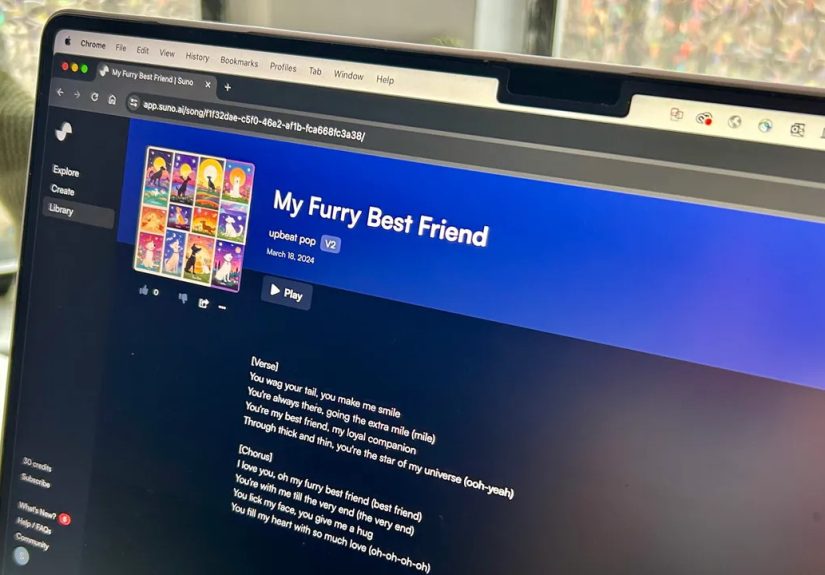
The alarm bells grew louder when easy-to-use AI music generators began producing tracks that sounded surprisingly complete. Platforms like Suno and Udio became widely discussed because they allowed everyday users to create full songs from prompts. That changed the conversation from “AI might affect music someday” to “AI is already uploading songs before lunch.”
Major record companies responded with lawsuits, arguing that some AI music companies trained their models on copyrighted sound recordings without permission. The Recording Industry Association of America announced cases in 2024 involving Suno and Udio, framing the dispute as a major test of whether AI companies can build commercial music products by copying protected recordings at scale. The labels say permission and compensation are necessary. AI companies have argued that training may be protected by fair use. In plain English: the industry is now asking whether an AI model can legally learn from music the way people do, or whether that comparison is much too convenient for companies with venture-capital invoices.
The Copyright Problem: Who Owns the Song?
Copyright law is central to the generative AI music debate. In the United States, copyright generally protects human creative expression. The U.S. Copyright Office has made clear that works created with AI can receive copyright protection when there is enough human authorship, but purely machine-generated material without meaningful human control is not treated the same way.
For musicians, that means the details matter. Did a human write the melody? Did they select, arrange, and transform AI-generated material? Did they control the expressive choices, or did they simply ask for “sad indie folk song, make it viral”? Copyright may depend on the answer. The law is not anti-tool; it is pro-human-authorship. A guitar is a tool. A DAW is a tool. AI can be a tool. But when the tool starts behaving like the songwriter, the paperwork gets sweaty.
Voice Cloning and the Rise of Digital Impersonation
One of the most sensitive areas is AI voice cloning. A voice is more than sound; it is identity, reputation, career capital, and emotional connection. Fans recognize an artist’s voice instantly. That recognition has value. If AI can create a convincing imitation of a famous singeror a lesser-known session vocalistit can create confusion, false endorsements, unauthorized songs, and reputational damage.
The infamous viral “fake artist” moments showed how quickly audiences can be fooled. A track that sounds like a superstar may spread before anyone verifies whether the artist approved it. By the time a takedown arrives, the clip has already traveled across social platforms, reaction videos, short-form edits, and fan forums. Online, misinformation moves like a tour bus with no brakes.
Streaming platforms are now trying to respond. Spotify has strengthened policies around unauthorized vocal impersonation, saying AI voice clones are allowed only when the impersonated artist has authorized the use. The company has also moved toward verification features intended to help listeners separate real artist profiles from impersonators, spam accounts, and AI personas. That is not a full solution, but it is a sign that platforms understand the trust problem.
Streaming Platforms Are Getting Flooded
Generative AI has made music creation faster, but “faster” does not always mean “better.” Streaming services already receive enormous amounts of music. AI tools can multiply that volume dramatically, creating a flood of tracks designed for background listening, playlist placement, or royalty farming. Some songs may be creative experiments. Others are musical packing peanuts.
The fear is not only that AI songs exist. The fear is that low-cost, mass-produced tracks could crowd discovery systems, dilute royalties, and make it harder for human artists to be found. If a platform pays from a shared royalty pool, every stream going to synthetic filler can feel like money leaking away from people who wrote, rehearsed, recorded, mixed, promoted, and probably cried over a bridge section at 2 a.m.
AI Music and the Problem of Scale
A human artist might spend weeks or months writing and recording an album. An AI user can generate dozens of songs in an afternoon. That scale changes the economics. Even if most AI-generated songs attract little attention, sheer volume can affect search results, playlists, recommendation systems, and royalty accounting. The challenge for platforms is to identify spam and impersonation without punishing legitimate artists who use AI responsibly as part of their workflow.
Spotify, YouTube, Apple Music, SoundCloud, Deezer, and other services are all under pressure to develop clearer rules. Some focus on labeling. Some focus on fraud detection. Some focus on unauthorized impersonation. The industry is moving toward transparency, but the standards are still uneven. For listeners, the ideal future is simple: tell us what we are hearing. Is it human-performed? AI-assisted? Fully generated? Licensed? Authorized? The music should not arrive wearing a fake mustache.
Major Labels Are Moving From Lawsuits to Licensing
At first, the relationship between AI music companies and major labels looked mostly like a courtroom drama. But the next phase may be licensing. Some settlements and partnerships suggest that major rights holders may be willing to work with AI companies when training data, artist consent, compensation, and usage rules are properly negotiated.
This is important because the music business has seen this movie before. Sampling was once treated as chaos; then licensing systems developed. Streaming was once viewed as a threat; then it became the industry’s main revenue engine. AI music may follow a similar path: lawsuits first, licensing later, and everyone arguing about royalty splits forever, because some traditions are sacred.
The Possible New Business Model
A licensed AI music model could allow fans or creators to remix, customize, or generate music using approved catalogs under controlled terms. Artists and songwriters could be compensated when their work is used to train models or create outputs. Labels could open new revenue streams. AI companies could reduce legal risk. Fans could get playful tools without wandering into piracy-adjacent chaos.
That sounds tidy, but execution will be difficult. How should revenue be split between the original artist, songwriter, label, publisher, AI platform, and user? Should artists be allowed to opt out? How should a model track influence from millions of recordings? What happens when an AI output resembles an existing song too closely? These are not small questions. They are the kind of questions that make contract lawyers reach for a second espresso.
Independent Artists Face Both Opportunity and Risk
For independent musicians, generative AI is not automatically the villain. In fact, it can be a useful creative assistant. A bedroom producer can use AI to test chord progressions, generate rough demos, clean noisy audio, create visualizers, separate stems, or brainstorm lyrical directions. Small artists who cannot afford a full production team may benefit from tools that reduce cost and speed up experimentation.
However, independent artists are also vulnerable. They may lack legal teams, brand protection, and the leverage to remove impersonations quickly. A fake upload using their name or voice could confuse listeners. AI-generated soundalike tracks could compete in their niche. Their work could be scraped for training without consent. The technology that helps them create can also make them easier to copy.
Practical Concerns for Working Musicians
Musicians now need to think about rights management more seriously than ever. They should register works, document creative processes, read platform terms, understand distributor policies, and monitor major platforms for impersonation. That may sound boring compared with writing a killer chorus, but boring paperwork can become beautiful when it saves your catalog from a digital raccoon.
Artists should also decide their own AI boundaries. Some will reject AI completely. Others will use it for brainstorming but not final recordings. Some will license their voices or catalogs under strict terms. Others will build entire AI-powered creative identities. The key is consent. When artists choose how AI interacts with their work, the conversation becomes innovation. When they do not, it becomes exploitation.
AI Artists Are No Longer Just a Gimmick
The rise of AI-powered artists has pushed the debate into the mainstream. AI music projects have appeared on charts, signed deals, and attracted large audiences. This does not mean human artists are doomed. It does mean the market is willing to test synthetic performers when the songs, branding, and online storytelling are strong enough.
For some fans, an AI artist is no stranger than a virtual idol, animated band, or fictional character with real producers behind the scenes. Music has always included performance, persona, myth, and theater. The difference is that generative AI can automate parts of the creative pipeline that used to require teams of people. The persona may be fictional, but the commercial impact is real.
Do Listeners Care If Music Is AI-Generated?
Listener reactions are mixed. Some people care deeply about human performance and emotional authenticity. They want to know that a song came from lived experience, not a prompt window. Others simply ask whether the track sounds good. A gym playlist, study mix, or background instrumental may not trigger the same authenticity concerns as a confessional ballad.
The future may depend on context. Fans may reject AI pretending to be a human artist while accepting AI-made utility music for games, videos, ads, or ambient playlists. They may support AI-assisted songs when artists are transparent. They may dislike AI content when it feels deceptive, spammy, or built on unlicensed work. The issue is not only sound quality. It is trust.
What Makes Human Music Hard to Replace
AI can imitate structure, genre, and production polish. It can generate melodies that sound plausible and vocals that feel radio-ready. But human music is not only pattern. It is biography, risk, imperfection, timing, community, and cultural context. A breakup song hits differently when listeners believe someone lived through the emotional wreckage and did not merely autocomplete it.
Great music often carries friction. A singer’s cracked note, a strange lyric choice, a drummer rushing slightly in a live take, a producer breaking a rulethese details can become the soul of a recording. AI tends to smooth rough edges because it predicts what is likely. Art often becomes memorable because someone chooses what is unlikely.
The Human Advantage: Taste
The most valuable skill in an AI-heavy music world may be taste. Anyone can generate options. Not everyone can choose the right one, reshape it, reject the boring version, and understand why a song needs silence instead of another synth pad. The more content AI produces, the more valuable human judgment becomes.
Musicians, producers, editors, curators, and A&R teams may increasingly act as filters. The question will not be “Can we make music?” The question will be “Which music deserves attention?” In a world of infinite songs, scarcity shifts from production to meaning.
How the Law May Shape the Next Era of Music
The courts, lawmakers, and regulators will play a major role in deciding how generative AI fits into music. Key questions include whether training on copyrighted recordings requires a license, how to treat AI-generated outputs that resemble existing works, whether digital voice replicas need federal protection, and how much human authorship is required for copyright registration.
Music publishers, record labels, songwriters, performers, technology companies, and digital platforms all have different incentives. Rights holders want permission and payment. AI companies want access to large datasets and legal clarity. Artists want control and opportunity. Fans want good music without being tricked. The legal system must somehow balance all of that without accidentally outlawing creativity or legalizing a free-for-all.
Likely Industry Direction
The most realistic future is not a total ban on AI music. The tools are already here, and many are useful. Instead, the industry is likely to move toward licensing, labeling, artist consent, fraud detection, voice protections, and clearer copyright standards. AI will become part of the music ecosystem, but the fight will be over rules, money, and transparency.
In other words, AI is not just “encroaching” on music. It is moving in, rearranging the furniture, and asking whether it can plug in a server rack next to the guitar amps. The industry’s job now is to decide where the boundaries go.
What Music Creators Should Do Now
Creators do not need to panic, but they do need to pay attention. First, musicians should document their creative process. Save demos, project files, lyric drafts, voice memos, and session notes. If authorship is ever questioned, evidence helps. Second, artists should read the terms of any AI platform before uploading original music, vocals, stems, or lyrics. A tool that seems fun today may come with permissions that matter tomorrow.
Third, artists should define their AI policy. Are they comfortable using AI for brainstorming? For background textures? For synthetic vocals? For fan remixes? Clear boundaries help avoid confusion with collaborators and fans. Fourth, creators should monitor their names and songs across streaming platforms and social media. Unauthorized impersonation can spread quickly, and early detection matters.
Finally, musicians should remember that technology does not erase the need for identity. The strongest defense against generic AI music is not simply being “human.” It is being specific. Specific stories, specific sounds, specific communities, and specific artistic choices are harder to replace than generic polish.
Experience Notes: Living With Generative AI in the Music World
Anyone who has experimented with AI music tools knows the first reaction is usually amazement. You type a short prompt, wait a moment, and suddenly there is a song. It may have a verse, chorus, drums, bass, and a voice that sounds like it has been practicing in a tiny apartment for three years. The speed is shocking. For a creator used to opening a blank project file and wondering whether the universe has personally blocked all good chord progressions, AI feels like a creative vending machine.
But after the first wave of excitement, a second feeling appears: sameness. Many AI-generated tracks sound impressive for thirty seconds and forgettable after three minutes. The production may be clean, the vocal may be smooth, and the structure may be correct, but something can feel strangely airless. It is like looking at a beautifully staged living room where nobody has ever spilled coffee, laughed too loudly, or lost the remote. Technically fine, emotionally suspicious.
That experience reveals both the power and weakness of generative AI. It is excellent at making a draft. It can help a songwriter escape a creative rut, test a genre, build a reference track, or imagine how a lyric might feel with different instrumentation. For small creators, this is genuinely useful. A singer-songwriter can mock up a fuller arrangement before hiring musicians. A video creator can explore soundtrack ideas without blowing the budget. A producer can generate sparks when the session energy drops and everyone starts pretending to check “important emails.”
However, AI output usually needs human direction to become meaningful. The best results come when the person using the tool has taste, intention, and editing discipline. A weak prompt often produces a weak song. A stronger creative vision can push the tool toward something more useful, but even then, the human must decide what to keep, what to cut, and what sounds emotionally honest. AI can generate a chorus. It cannot tell you whether that chorus belongs to your story.
For listeners, the experience is equally complicated. Some AI music works perfectly as background audio. If someone needs a lo-fi study track, a corporate explainer bed, or a fantasy tavern loop for a game night, they may not care whether a human performed every note. But when music asks for emotional investment, origin matters. A song about grief, love, faith, identity, or survival feels different when there is a real person behind it. The human story is part of the product, even when nobody says that out loud.
The healthiest approach is neither blind rejection nor breathless hype. Generative AI should be treated as a powerful tool that requires consent, transparency, and fair compensation. It can support musicians, but it should not quietly feed on their catalogs. It can expand creativity, but it should not impersonate artists without permission. It can help people make more music, but platforms must prevent it from burying human creators under mountains of disposable audio confetti.
The future of music will probably include AI, but the best version of that future still needs people: people with taste, memories, flaws, jokes, heartbreaks, cultural roots, and the strange courage to sing something true. Machines can generate sound. Humans make it matter.
Conclusion
Generative AI is changing music faster than many artists, labels, platforms, and lawmakers expected. It can help creators work faster, lower production barriers, and open new forms of fan interaction. It can also imitate voices, challenge copyright rules, flood streaming services, and create new risks for human musicians. The central question is not whether AI belongs in music. It already does. The real question is whether the industry can build rules that protect human creativity while allowing responsible innovation.
The path forward should be built around consent, licensing, transparency, attribution, and fair payment. AI music tools are not going away, but neither is the human need for songs that feel lived-in, imperfect, and real. The future may have more algorithms in the studio, but the heart of music still belongs to the people brave enough to make noise with meaning.