Table of Contents >> Show >> Hide
- What Makes a Hit “Accidentally” Revolutionary?
- 1. “Rock Around the Clock” Made Rock and Roll Impossible to Ignore
- 2. “I Want to Hold Your Hand” Turned a Foreign Craze into an American Earthquake
- 3. “Good Vibrations” Turned the Recording Studio into an Instrument
- 4. “Video Killed the Radio Star” Changed How Music Was Seen, Not Just Heard
- 5. “Rapper’s Delight” Pulled Hip-Hop from the Block Party to the Billboard World
- 6. “Smells Like Teen Spirit” Kicked the Gloss off Mainstream Rock
- 7. “Believe” Made Auto-Tune a Creative Choice Instead of a Secret Fix
- 8. “Old Town Road” Broke Genre Borders in the Streaming Era
- Why These Hits Mattered More Than Their Creators Probably Intended
- The Experience of Hearing a Song Before You Know It Is History
- Conclusion
- SEO Tags
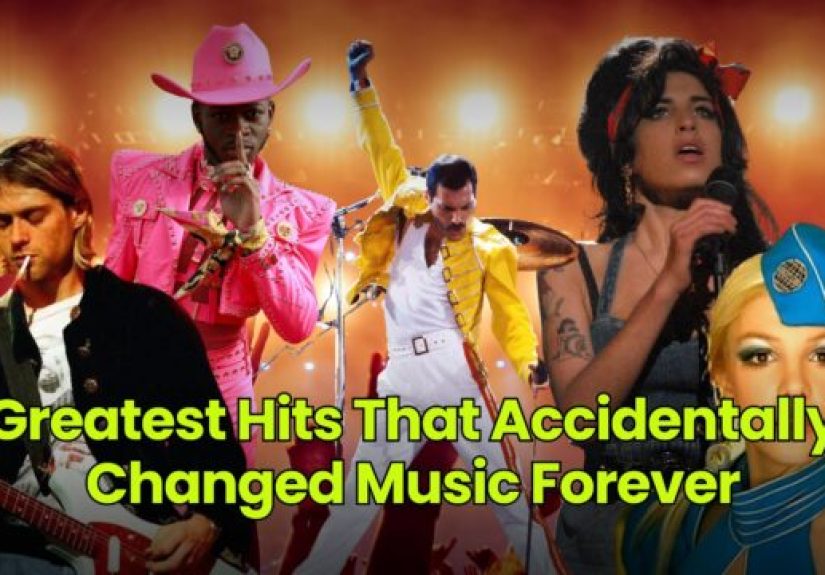
Some songs are born wearing a crown. They arrive with a trumpet blast, a press campaign, and enough hype to make a movie trailer feel shy. But the songs in this story did something stranger. They showed up as hits, sure, yet they also quietly kicked down a wall no one realized was load-bearing. One turned rock and roll from a rumor into a riot. Another made America fall headfirst for a British band with bowl cuts and impossible charm. One taught pop stars to treat the studio like a laboratory, another turned music videos into the main event, and one particularly sticky rap single told the mainstream, in no uncertain terms, that hip-hop had entered the building and would not be leaving.
That is why the greatest hits that accidentally changed music forever are so fascinating. Most of them were not released as manifestos. They were not marketed as “the dawn of a new era.” They were just songs people loved. Yet once those songs hit radio, charts, clubs, TV screens, and eventually streaming platforms, the business of music, the sound of music, and even the way people discovered music changed with them.
This is not a list of the best songs ever written. That argument can ruin Thanksgiving dinner. This is a list of hits that altered the musical weather. Some transformed production. Some blew open genre gates. Some changed how labels chased trends. And some made older rules look as dated as a cassette pencil trick.
What Makes a Hit “Accidentally” Revolutionary?
Usually, a revolutionary song is only obvious in hindsight. In the moment, listeners are thinking, “This slaps,” not “This will permanently shift chart methodology, vocal processing, and youth culture.” A song becomes accidentally revolutionary when its success creates a copycat wave, a new business model, or a fresh creative standard. Suddenly, labels want more of that sound. Producers borrow that trick. Radio changes its playlists. Artists who once seemed niche become commercially viable. What looked like one hit becomes a blueprint.
In other words, music history is often written by the side effects.
1. “Rock Around the Clock” Made Rock and Roll Impossible to Ignore
Before rock and roll became the giant, leather-jacketed force of American culture, it needed a breakout moment that felt too big to dismiss. Bill Haley & His Comets’ “Rock Around the Clock” became that moment. The song’s impact was not just musical. It was social. It sounded energetic, rebellious, and young at a time when mainstream pop still wore a pressed shirt and combed its hair nicely.
Its use in Blackboard Jungle helped launch it from record-bin curiosity to cultural detonation. That mattered because it connected the song to teenage identity, not just to radio entertainment. Once that happened, rock and roll stopped being treated like a novelty and started looking like the future. Labels chased the youth market harder. Performers leaned into louder rhythms and sharper backbeats. The industry recognized that the kids were not merely listening politely; they were taking over the room.
In hindsight, “Rock Around the Clock” feels less like a hit single and more like the starter pistol for the rock era. It did not invent every idea that came after it, but it proved those ideas could dominate the mainstream. That changed everything.
2. “I Want to Hold Your Hand” Turned a Foreign Craze into an American Earthquake
The Beatles were already huge in Britain, but “I Want to Hold Your Hand” changed the stakes in America. This was the hit that made the British Invasion feel less like an import and more like a takeover. The song’s genius was its balance. It felt wholesome and electric at once, catchy enough for pop audiences yet urgent enough to sound exciting on repeat.
Its success did more than make the Beatles stars. It widened America’s ears. Suddenly, U.S. audiences and executives took British acts far more seriously. Within months, the charts filled with bands from across the Atlantic. The song also helped push albums, not just singles, into a more dominant place in pop culture. The Beatles were not selling one tune; they were selling a worldview, a look, a style, and eventually an artistic ambition that American pop had to answer.
That is why “I Want to Hold Your Hand” matters beyond Beatlemania. It accelerated a shift in what a hit could do. A smash single was no longer just a song on the radio. It could be the front door to a full-scale cultural movement. America did not simply like the Beatles. After this song, it reorganized part of its music industry around them.
3. “Good Vibrations” Turned the Recording Studio into an Instrument
If “Rock Around the Clock” blew open the front gate, the Beach Boys’ “Good Vibrations” redesigned the house. Brian Wilson famously described it as a “pocket symphony,” and the label fits because the song behaves less like a normal pop single and more like a miniature musical world. It shifts moods, textures, and structures with a confidence that still feels daring.
The real revolution was in the process. “Good Vibrations” was pieced together through extensive studio experimentation at a time when pop singles were usually cut far more quickly and conventionally. Wilson treated recording not as documentation of a performance, but as composition itself. Sections could be built separately, layered, trimmed, rearranged, and transformed into something bigger than a band simply playing in a room.
That approach changed popular music’s creative ceiling. You can draw a line from “Good Vibrations” to ambitious studio pop, psychedelic layering, art rock, and later digital production culture. It told future artists that the studio was not just where songs were captured. It was where they could be invented. Once that idea took hold, popular music became more cinematic, more obsessive, and sometimes gloriously weirder.
4. “Video Killed the Radio Star” Changed How Music Was Seen, Not Just Heard
Sometimes a song changes music because of what it represents. The Buggles’ “Video Killed the Radio Star” became the first video aired on MTV, and that tiny piece of programming trivia turned into a giant cultural symbol. It was almost too perfect. A song about technological change became the banner for a network that would transform the visual economy of pop.
After MTV, musicians increasingly had to think with cameras in mind. Image, fashion, choreography, and concept became central to how hits were marketed and remembered. The music video was no longer a bonus item. It became part of the song’s identity. For some artists, this was rocket fuel. For others, it was a brutal new audition process. Suddenly, the question was not only “Can you make a great record?” but also “Can you own the screen?”
That shift rippled across the industry. Labels spent more on visuals. Directors became tastemakers. Songs with unforgettable videos gained extra cultural lift. Pop became more theatrical, more style-conscious, and more global in its reach. “Video Killed the Radio Star” did not destroy radio, obviously, but it announced that music’s next battlefield would be visual. It was not just a hit. It was a thesis statement with a synthesizer.
5. “Rapper’s Delight” Pulled Hip-Hop from the Block Party to the Billboard World
Hip-hop was alive before “Rapper’s Delight,” but this Sugarhill Gang hit helped bring it into recorded, charting, commercial reality. That distinction matters. Entire scenes can thrive locally for years without convincing the larger industry that they are market-defining. “Rapper’s Delight” changed that equation by becoming the first rap song to crack the Billboard Top 40 and by proving that rap could travel beyond its birthplace without losing its pulse.
The song’s groove, built from the DNA of Chic’s “Good Times,” made it accessible. Its verses made it feel thrillingly new. For mainstream listeners, it was an entry point. For the business side of music, it was evidence. Hip-hop was not a fad happening somewhere else. It was a format, a commercial force, and eventually a cultural superpower in the making.
Its accidental revolution was enormous. Once rap became recordable in the popular imagination, labels looked for more rap acts, producers refined the sound, and artists realized a live form could become a recorded empire. Hip-hop would go on to reshape language, fashion, politics, advertising, and pop structure itself. “Rapper’s Delight” did not finish that story, but it opened the door and left no room for misunderstanding.
6. “Smells Like Teen Spirit” Kicked the Gloss off Mainstream Rock
Every era has that one song that makes the previous era suddenly look overstyled. In the early 1990s, Nirvana’s “Smells Like Teen Spirit” did exactly that. It was loud, messy, melodic, sarcastic, and emotionally volatile in a way that made polished arena rock and hair-metal excess seem instantly less essential.
The song’s success helped push Nevermind into chart domination, and that commercial victory sent a shockwave through labels and radio programmers. Alternative rock was no longer “alternative” in the old sense. Grunge moved from subculture to center stage. The quiet-loud dynamic, distorted guitars, and anti-glam attitude became not just artistically valid, but commercially irresistible.
What makes “Teen Spirit” so historically powerful is that it did not sound like a committee-built pop single. It sounded like a crack in the wall. Yet once it hit, the industry sprinted toward that crack. A whole generation of bands received more attention because Nirvana made rawness profitable. Suddenly, scruffiness was marketable, authenticity was a sales pitch, and rock music found a new emotional vocabulary. One song did not kill an entire previous scene, but it absolutely shoved it off the throne.
7. “Believe” Made Auto-Tune a Creative Choice Instead of a Secret Fix
Technology had been nudging music forward for decades, but Cher’s “Believe” made one particular tool impossible to ignore. The hit’s famous vocal effect brought Auto-Tune out of the shadows and into the spotlight. Instead of using pitch correction discreetly, the producers leaned into its artificial shimmer. The result was futuristic, catchy, and immediately identifiable.
That mattered because it changed how producers and audiences thought about vocal processing. Auto-Tune stopped being just a behind-the-curtain corrective tool and became a sound, an aesthetic, even a statement. In the years that followed, pop, R&B, hip-hop, and electronic music all absorbed that lesson. Artists did not merely fix vocals. They stylized them.
The funny part is that “Believe” is still an excellent pop song even without the history lesson. That may be why it was so influential. It did not feel like a tech demo. It felt like a giant hit. Once the public embraced that robotic glide instead of rejecting it, the floodgates opened. The road from “Believe” leads to countless modern vocal textures, from polished pop sheen to emotionally warped trap melodies. Cher did not just score a comeback. She helped normalize the sound of the 21st century.
8. “Old Town Road” Broke Genre Borders in the Streaming Era
By the time Lil Nas X released “Old Town Road,” the music industry was already changing fast. Streaming, memes, short-form video, fan remix culture, and algorithmic discovery were all reshaping how hits were born. But this song turned those trends into a headline-grabbing case study. It blended cowboy imagery, trap energy, internet humor, and earworm simplicity into something the old genre boxes struggled to contain.
When the track was removed from Billboard’s country chart, the controversy only magnified its power. The debate exposed how slippery genre had become in the digital age and how messy those boundaries could look when audiences moved faster than institutions. Then the song went on to dominate the Hot 100 for a record-setting run, proving that a meme-adjacent, genre-fluid track could become one of the defining hits of its era.
Its accidental revolution was not only musical. It was structural. “Old Town Road” showed that virality, remix strategy, identity, and platform-native behavior could be just as important as traditional gatekeepers. It also forced uncomfortable conversations about who gets to belong in certain genres and why. In that sense, the song was bigger than its banjo loop. It was a stress test for the modern music industry, and the old system looked very nervous.
Why These Hits Mattered More Than Their Creators Probably Intended
Most artists are trying to make something memorable, not accidentally rewrite the rules of commerce and culture before lunch. That is why these songs remain so compelling. They were hits first and historical turning points second. Their creators were solving immediate creative problems: how to hook listeners, how to stand out, how to sound fresh, how to capture a moment. But once those songs connected at scale, the consequences multiplied.
Music history often works this way. One hit changes radio. Another changes A&R strategy. Another changes what teenagers ask for, what producers experiment with, what record labels fund, and what future artists feel allowed to try. By the time critics name the revolution, the industry is already living inside it.
The Experience of Hearing a Song Before You Know It Is History
One of the best things about culture-changing hits is that nobody hands you a memo first. You do not hear a new song and receive a formal notice that says, “Warning: you are about to witness a permanent shift in popular music.” You are usually doing something extremely glamorous, like sitting in traffic, folding laundry, staring at a school locker, or pretending to work while replaying the chorus for the fifth time.
That is what makes the experience so electric in hindsight. Think about the teenager who first heard “Smells Like Teen Spirit” and only knew that it sounded like a bomb had gone off inside polished radio. Think about the listener who heard “Believe” and realized a human voice could suddenly sound both emotional and machine-made without losing its pop appeal. Think about the first wave of viewers who saw “Video Killed the Radio Star” on MTV and sensed, even if vaguely, that music had become something you watched as much as something you heard.
There is also a deeply personal side to these songs. They become memory markers. “I Want to Hold Your Hand” is not only about the British Invasion; it is about the thrill of hearing joy move at top speed. “Rapper’s Delight” is not only a milestone in hip-hop history; it is also a reminder that fun can be revolutionary. “Old Town Road” is not just a chart story; it is the sound of the internet turning a joke, a vibe, and a challenge into a serious industry event.
For listeners, that experience can feel almost sneaky. A song enters your life because it is catchy, weird, emotional, danceable, or impossible to ignore. Only later do you realize it also changed what other artists were allowed to make. That is the magic trick. Great hits operate on two levels at once. On the surface, they entertain. Underneath, they rearrange expectations.
And if we are being honest, that is part of why people get so attached to them. Nobody brags about being present for a spreadsheet update. But hearing a song before it becomes a monument feels like discovering fire while everyone else is still admiring the cave. You get to say, “I knew this was huge,” even if at the time your actual thought was closer to, “Wow, this is going to live in my head rent-free for months.”
These songs also remind us that music history is not only built by experts, executives, or critics. It is built by ordinary listeners hitting repeat, requesting tracks, buying tickets, quoting lyrics, copying hairstyles, making playlists, filming dances, and generally behaving like obsessed little cultural accelerators. The crowd does not always know what it is doing, but it often knows what feels new.
So the next time a song seems too strange, too catchy, too disruptive, or too impossible to categorize, pay attention. That odd little hit may not just be the soundtrack of your week. It may be the song future generations point to when they explain why music stopped sounding one way and started sounding another.
Conclusion
The greatest hits that accidentally changed music forever were not merely popular songs. They were pivot points. “Rock Around the Clock” turned youth energy into a market force. “I Want to Hold Your Hand” made transatlantic pop domination look easy. “Good Vibrations” stretched the idea of what studio-made pop could be. “Video Killed the Radio Star” helped usher in music’s visual age. “Rapper’s Delight” put hip-hop on the mainstream map. “Smells Like Teen Spirit” made raw alternative rock the center of gravity. “Believe” made digital vocal manipulation a defining sound rather than a hidden fix. “Old Town Road” proved that streaming-era hits can blow up genre fences while rewriting chart logic in real time.
Taken together, these songs reveal a simple truth: music changes forever not only when geniuses plan revolutions, but also when audiences fall in love with something new before the rest of the industry understands what just happened. That is how history sneaks onto the playlist.