Table of Contents >> Show >> Hide
- What Made The Prison Camp Lathe So Extraordinary?
- The Artificial Limb Factory: Engineering As Mercy
- DIY Prosthetics Before The Maker Movement Had A Logo
- Why The Lathe Still Matters To Modern Makers
- From Scrap Metal To Sensors: The Long Arc Of Prosthetic Innovation
- The Ethics Of DIY Prosthetics
- Lessons From The Prison Camp Lathe
- Experiences And Reflections: When Hacking Becomes Care
- Conclusion
Note: This article is original, publication-ready, and synthesized from real historical, medical, maker-community, and prosthetics research sources without raw source-link clutter.
Some hacks are weekend fun: a blinking LED, a stubborn router, a coffee grinder that now thinks it is a smart appliance. Then there are hacks that arrive when life has taken off the gloves, hidden the manual, and locked the toolbox in another room. Hacking When It Counts: DIY Prosthetics And The Prison Camp Lathe belongs to that second categorythe place where engineering is not a hobby, but a lifeline.
The story begins in the brutal reality of World War II captivity, where Allied prisoners in Changi, Singapore, faced hunger, illness, forced labor, and the constant uncertainty of survival. In that world, a prosthetic limb was not a polished clinic product. It was a promise: you may walk again. A lathe was not merely a machine tool. It was a quiet rebellion against helplessness.
At the center of the story is a small lathe built secretly by Captain R. Bradley, a Royal Artillery officer and civil engineer who was held as a prisoner of war after the fall of Singapore in 1942. Bradley’s 1949 technical account described a tool only 17 inches long, yet capable of precision work, screw cutting, and producing parts that a prison-camp workshop desperately needed. It weighed about 30 pounds with accessories, could be hidden quickly, and took roughly 600 hours to build under miserable conditions. That is not “DIY” in the cute garage-blog sense. That is DIY with consequences.
What Made The Prison Camp Lathe So Extraordinary?
A lathe is often called the mother of machine tools because it can help make other tools, shafts, bushings, screws, dies, pulleys, and fixtures. Give a skilled person a lathe and the right scrap, and suddenly the word “impossible” starts negotiating. In Changi, that mattered.
Bradley and other prisoners were already involved in engineering work, including the creation of artificial limbs and surgical instruments. Materials were nearly nonexistent, so the workshop lived on scavenging. Aircraft aluminum, scrap steel, salvaged copper, old typewriter parts, projector gears, truck axles, and bits of electrical cable became raw material. If modern makers call this “upcycling,” the Changi prisoners might have called it Tuesday.
The lathe’s bed began as a heavy steel bar that was drilled, chipped, filed, scraped, and machined into shape. The headstock was cast from scrap aluminum using a handmade mold. Power came through improvised electrical arrangements using car dynamos, batteries, belts, and pulleys. Its drive system eventually offered multiple speeds, reportedly ranging from slow, heavy cutting speeds to high-speed finishing. For a machine made under surveillance in a prison camp, this was not merely clever. It was audacious.
The lathe had another critical feature: it could disappear. It sat on a wooden base, could be removed from the bench in seconds, and was stored in a wooden box when not in use. The Japanese guards searched the camp for hidden radios and suspicious objects. A secret precision lathe was not the kind of item one wanted to explain during inspection. “Oh, this? Just my portable industrial revolution” was unlikely to be a winning defense.
The Artificial Limb Factory: Engineering As Mercy
The prison-camp workshop eventually became known as the “Artificial Limb Factory.” That name sounds almost official, but its raw material list tells the real story: aluminum from wrecked aircraft, leather, canvas, steel, cotton webbing, wood, and whatever could be rescued from dumps or damaged equipment. These were not luxury prosthetics. They were survival prosthetics, built by prisoners for prisoners.
One preserved example associated with Changi is a below-knee artificial leg made for Private Stephen John Gleeson. It used riveted aluminum shaped into a calf, a carved wooden foot, steel supports, leather padding, and a webbing harness. The design addressed comfort where possible, including rolled metal edges and protective padding to reduce chafing. That detail matters. In primitive conditions, comfort was not decoration. Skin breakdown could become infection, and infection could become catastrophe.
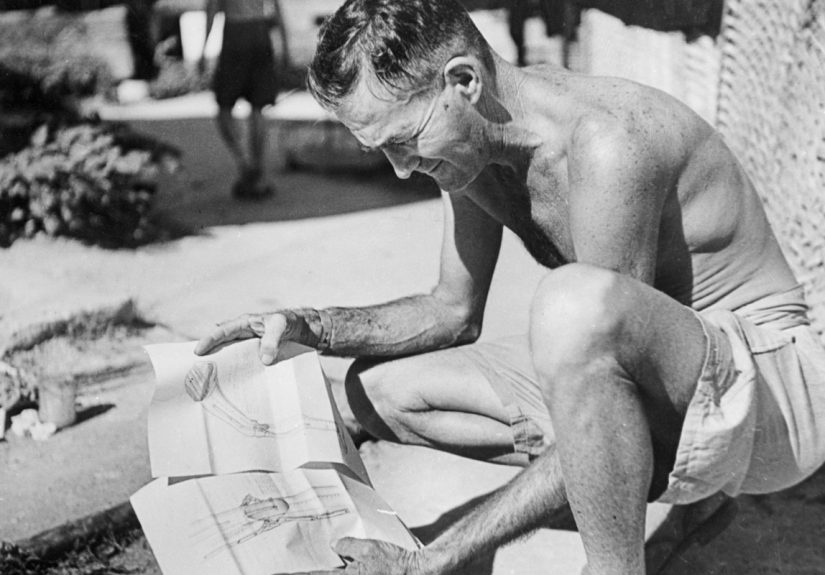
Warrant Officer Arthur Henry Mason Purdon is also closely associated with the Changi limb work. Records describe him with diagrams of artificial limbs made from aluminum and other waste metal, and his designs included a movable joint that became known as the Purdon joint. The point is not to crown one lone genius. The point is that a network of imprisoned engineers, tradesmen, medical staff, and patients formed a living design lab under conditions no ethical lab would ever reproduce.
Modern prosthetics often involve clinical teams, socket fitting, gait training, occupational therapy, microprocessors, sensors, carbon fiber, and careful follow-up. The Changi prosthetics had none of that infrastructure, yet they shared the same core mission: restore function, protect the body, and help a person return to daily life. A prison camp leg and a modern bionic limb may look like artifacts from different planets, but both answer the same human question: “How do I move through the world again?”
DIY Prosthetics Before The Maker Movement Had A Logo
Today, “DIY prosthetics” often brings to mind 3D printers, open-source files, colorful superhero hands for kids, and online maker communities. One of the most influential examples is e-NABLE, a global volunteer movement that uses open-source designs and 3D printing to create free or low-cost upper-limb assistive devices. Its origin story includes Ivan Owen, Richard Van As, and a practical problem: how to make functional hand devices more accessible when conventional prosthetics can be too expensive or too slow for many families.
That movement feels modern, but the philosophy is old: share designs, adapt to the user, use available tools, and do not wait for perfect conditions. The prison camp lathe and the 3D-printed hand live on the same family tree. One was built with cold chisels, salvaged gears, and courage. The other may be printed from PLA, nylon, or resin using a CAD file downloaded from the internet. Both depend on a maker’s willingness to look at a problem and say, “We can try.”
There is one important warning: a prosthetic device is not just a gadget. It touches skin, changes movement, affects posture, and can create pressure injuries if poorly fitted. The best DIY prosthetics projects work with clinicians, therapists, prosthetists, and users. The user is not a test subject. The user is the design authority. If a device looks cool but hurts after ten minutes, it is not a success. It is a costume with homework.
Why The Lathe Still Matters To Modern Makers
The prison camp lathe matters because it shows what tools really are. A tool is not only metal, plastic, firmware, or a sharpened edge. A tool is stored possibility. In Changi, the lathe produced copper rivets when aluminum rivets ran out. It helped make replacement taps and dies. It supported repairs, medical equipment, and reportedly parts for hidden radios. Each small part expanded the prisoners’ ability to solve the next problem.
This is a useful lesson for today’s hardware hackers. Many projects fail not because the main idea is wrong, but because the support ecosystem is missing. You do not only need the prosthetic hand; you need straps, pins, bushings, fasteners, adjustment methods, repair plans, and training. You do not only need a 3D printer; you need measurement, fit checks, material knowledge, and feedback loops. Bradley’s lathe was powerful because it multiplied capability.
The best DIY assistive technology follows the same principle. It does not merely produce one heroic prototype for a social media photo. It creates a repeatable process. It asks: Can this be repaired locally? Can the user adjust it? Can replacement parts be made cheaply? Can the design survive sweat, dust, school backpacks, rough roads, or a toddler who believes every object is a percussion instrument?
From Scrap Metal To Sensors: The Long Arc Of Prosthetic Innovation
Prosthetics have always moved forward during periods of need. In the United States, the Civil War created a surge in amputees and helped expand the artificial limb industry. Historical medical records show a burst of artificial-limb patents after the war, along with government support for veterans purchasing prosthetic arms and legs. War is a grim engine of medical innovation, and prosthetics history is full of that uneasy bargain.
Modern devices can be astonishing. Bionic limbs may use sensors, microprocessors, powered joints, myoelectric control, neural interfaces, and advanced materials. Some lower-limb prostheses adjust to walking speed or terrain. Some upper-limb systems use muscle signals to open and close hands. Research continues into sensory feedback so users can feel pressure or touch through artificial hands.
Yet the hard problems remain surprisingly human. Does the socket fit? Is the device too heavy? Can the user afford it? Can it be repaired? Does it help with the tasks the person actually wants to do? A high-tech arm that cannot survive daily life may be less useful than a simple hook, task-specific tool, or printed grip that works every time. Function wins. Dignity wins. Reliability wins. Flashy specs can wait in line.
The Ethics Of DIY Prosthetics
The prison camp story is inspiring, but it should not be romanticized into a careless slogan like “anyone can build a limb.” The Changi prisoners built under emergency conditions because no proper system existed for them. Modern makers should not use that story as an excuse to bypass safety, consent, or professional care.
A responsible DIY prosthetics project begins with listening. What does the user want to do? Hold a bicycle handlebar? Play catch? Carry groceries? Type? Cook? Tie a fishing lure? Use a camera? The answer shapes the design. A prosthesis is not an abstract replacement for “a hand” or “a leg.” It is a tool for a life.
Next comes fit. The interface between body and device is everything. A beautiful mechanism attached to a painful socket is a failure wearing a tuxedo. Materials matter too. Plastics can crack, metal edges can irritate skin, straps can slip, and sweat can turn a good idea into a blister factory. Testing must be careful, gradual, and honest.
Finally, there is accountability. Open-source designs are powerful because they invite improvement, but medical-adjacent devices need documentation, warnings, maintenance instructions, and clear limits. The smartest maker is not the one who says “trust me.” The smartest maker is the one who says, “Here is what this can do, here is what it cannot do, and here is when you should stop using it.”
Lessons From The Prison Camp Lathe
1. Constraints Can Sharpen Design
Bradley’s lathe was small because it had to be hidden. It used available materials because there were no catalogs. It was modular because it might need to be moved quickly. These constraints did not weaken the design; they defined it.
2. Repairability Is A Survival Feature
The lathe helped make the parts needed to keep other tools and prosthetics working. In any assistive device, repairability is not boring. It is freedom. A device that can be fixed locally is more empowering than one that must be shipped across the country for a tiny broken pin.
3. The User Is The Real Specification
The Changi limbs were made for specific injured prisoners in specific conditions. That is also the future of good prosthetics: personal, practical, and honest about daily use.
4. Community Beats Lone Genius
The lathe story includes engineers, tradesmen, medical workers, patients, and people who quietly found materials. Modern DIY prosthetics also thrive through networks: designers, clinicians, teachers, students, families, and users working together.
Experiences And Reflections: When Hacking Becomes Care
The most powerful experience related to this topic is not the thrill of a clever mechanism; it is the moment a device stops being “a project” and becomes part of someone’s day. Anyone who has spent time around assistive technology learns this quickly. The prototype that impresses engineers may not impress the person who has to wear it while making breakfast, riding a bus, or answering the same curious question for the fifteenth time before lunch.
That is why the prison camp lathe story stays with people. It is not just a machine-tool flex. It is a story about care delivered through engineering. Imagine the emotional weight of making an artificial leg for a fellow prisoner who had endured illness, injury, hunger, and captivity. Every filed edge and riveted plate carried more than mechanical purpose. It carried the message: you are still here, and your movement still matters.
Modern DIY prosthetics communities offer similar moments, though thankfully in safer settings. A child choosing the color of a 3D-printed hand is not a trivial detail. It can transform a device from something medical and embarrassing into something expressive. A superhero-themed hand may not grip better than a plain one, but confidence is also a kind of function. If a child stops hiding their limb difference because classmates think the new hand is awesome, that is not decoration. That is social engineering in the best possible sense.
There are also humbling experiences. A maker may spend weeks designing a clever finger linkage only to learn that the user mainly needs a stable tool for holding a fork. A student team may celebrate a beautiful CAD model, then discover that the strap rubs, the palm is too wide, or the device cannot survive a week of real use. These failures are not embarrassing if they lead to listening. They are the tuition paid to reality.
The best experiences come when builders slow down. They ask users what success looks like. They observe ordinary tasks. They make the device easier to repair. They write instructions that a tired parent, rural clinic worker, or school volunteer can understand. They avoid promising miracles. They treat the person, not the machine, as the center of the story.
That is the bridge between Changi and the modern maker lab. One side had scrap aircraft aluminum, copper wire, and a lathe hidden in a box. The other has CAD files, 3D printers, sensors, and online forums. The tools changed. The ethic did not. Hacking counts most when it reduces suffering, restores choice, and gives someone back a piece of ordinary life. And ordinary life, when you have lost access to it, is not ordinary at all. It is the grand prize.
Conclusion
Hacking When It Counts: DIY Prosthetics And The Prison Camp Lathe is more than a strange footnote in engineering history. It is a reminder that technology earns its highest value when it serves human need under pressure. Captain Bradley’s hidden lathe, the Changi artificial limbs, and today’s open-source prosthetics all point to the same truth: innovation is not always born in clean labs with perfect funding. Sometimes it starts with scrap, stubbornness, and the refusal to let circumstances have the final word.
The prison camp lathe did not end the war. It did not erase suffering. But it made rivets, tools, repairs, radio parts, and possibilities. It supported prosthetic work that helped injured men walk again. That is the kind of hack worth rememberingnot because it was flashy, but because it mattered.
Research note: Historical and technical details were synthesized from public records and reputable references covering Bradley’s 1949 prison-camp lathe account, modern historical analysis, Australian War Memorial Changi artifacts, U.S. prosthetics history, e-NABLE’s open-source prosthetics timeline, VA prosthetics research, NIH/NIBIB bionics information, and FDA 3D-printing medical-device guidance.