Table of Contents >> Show >> Hide
- The Babysitting Bill That Set Off the Family Fireworks
- Why So Many Readers Took Her Side
- Family Help Is Real, but So Is Unpaid Labor
- Why Boundaries Feel So “Mean” in Families
- The Real Problem Was Never the Invoice
- How Parents Can Ask for Babysitting Without Starting World War Group Chat
- How Relatives Can Set Boundaries Before They Snap
- Why This Story Resonates So Deeply
- Experiences Related to the Topic That Feel All Too Familiar
- Conclusion
- SEO Tags
Every family has that one sentence that sounds sweet on the surface but arrives carrying a suspicious amount of chaos. In this story, that sentence was basically: “Can you just watch the kids for a little while?” And like many “little while” favors, it grew legs, grabbed a juice box, smeared yogurt on the furniture, and turned into a full-blown argument about boundaries, money, and whether “family helps family” is a loving principle or just a coupon code for free labor.
A viral story about a woman billing her sister for babysitting she never truly agreed to do has lit up online discussions for one simple reason: it hits a nerve. Hard. The details are dramatic enough to keep a family group chat buzzing for a week, but the deeper issue is painfully familiar. When does helping become being used? When does childcare support become unpaid emotional and logistical overtime? And why do people suddenly start acting like your calendar is public property the moment you’re related to them?
The online backlash was split, but plenty of readers sided with the woman who finally put a price on the chaos. Not because every family favor needs an invoice attached, but because free babysitting is only “free” for the parent receiving it. Someone else is still paying with time, energy, groceries, work interruptions, stress, and whatever mysterious substance is now stuck to the couch cushion.
The Babysitting Bill That Set Off the Family Fireworks
According to the viral account, the woman had been dealing with repeated, informal childcare drop-offs from her sister. This was not the cute, organized, “Could you help me Saturday from 6 to 9?” kind of babysitting. This was more like surprise childcare creeping into her mornings, her work hours, and her sanity. Eventually, after missed work and mounting frustration, she sent her sister an itemized babysitting bill. The response? She was labeled “heartless and transactional,” and the family chat erupted like someone had tossed a lit match into a box of receipts.
That reaction says a lot. Notice that the outrage wasn’t centered on whether her sister had been inconsiderate. It focused on the audacity of assigning value to labor that families often expect women, sisters, daughters, grandmothers, and aunts to perform automatically. The minute money enters the picture, people stop calling it “just helping” and start recognizing it for what it really is: work.
That is exactly why the story struck such a chord. The invoice wasn’t really about cash. It was about forcing everyone to confront the cost that had been conveniently ignored.
Why So Many Readers Took Her Side
Online commenters often turn stories like this into a moral food fight, but this one tapped into a broader truth: childcare is expensive, exhausting, and never as casual as people pretend. Care.com has reported that the national posted babysitter rate averages around $19.81 per hour, and that number can rise depending on location, the number of children, and the complexity of the job. In other words, even “simple” babysitting is not some tiny invisible favor floating through the air like glitter. It has a real market value.
And parents know this better than anyone. Childcare costs in the United States are so high that the Economic Policy Institute reported in 2025 that infant care costs more than public college tuition in 38 states and Washington, D.C. Once you remember that reality, the idea that a sibling should cheerfully absorb random childcare duties for free starts to look less like family bonding and more like budget outsourcing.
That does not make parents villains. Far from it. The U.S. Surgeon General has warned that parents and caregivers are under significant strain, and that families need more support, not less. But support only works when it is mutual, respectful, and clearly communicated. Dumping responsibility onto one family member and calling it love is not support. It is delegation with a guilt trip attached.
Family Help Is Real, but So Is Unpaid Labor
Here is where the conversation gets interesting. Most people do believe family members should help one another. That instinct is normal, healthy, and often beautiful. Plenty of relatives babysit occasionally without charging a dime, and many are genuinely happy to do it. The problem begins when help stops being a request and becomes an expectation.
Parents.com has noted that family-based childcare arrangements can save money, but they can also become emotionally complicated fast, especially if the caregiver’s time, finances, or well-being are not respected. Translation: paying your mom, sister, aunt, or cousin less than market rate may be workable. Acting like their time has no value is not.
And this is not just about babysitting. AARP’s latest reporting on unpaid caregiving found that millions of Americans provide enormous amounts of unpaid care for relatives, labor that would be worth roughly $1 trillion if priced out. That figure focuses on adult caregiving, not babysitting specifically, but the lesson still applies: family care may be unpaid on paper, yet it is never costless in real life.
Someone is sacrificing sleep, focus, flexibility, personal time, or paid work. Someone is rearranging meetings, skipping errands, canceling plans, buying extra snacks, or cleaning up miniature disasters caused by children who are adorable in theory and suspiciously sticky in practice.
Why Boundaries Feel So “Mean” in Families
One reason stories like this explode is that boundary-setting in families often gets misread as rejection. Say no to a coworker and you are “protecting your bandwidth.” Say no to a sibling and suddenly you are the villain in a soap opera titled How Dare You Have Limits.
Experts on boundaries have been trying to rescue people from this exact mess for years. Verywell Mind explains that healthy boundaries help relationships function by protecting trust, personal needs, and mutual respect. Cleveland Clinic makes the point even more plainly: time boundaries protect your availability and keep you from overextending yourself to the point of resentment or burnout. Mayo Clinic Health System similarly emphasizes that healthy relationships depend on clear rules of engagement, whether those rules are spoken aloud or quietly assumed.
That last part matters. Quietly assumed rules are where family drama goes to breed. One sister thinks, “She works from home, so she’s flexible.” The other thinks, “Working from home is still working, please stop treating my house like a drive-through daycare.” Nobody clarifies. Everybody gets offended. Then grandma sends a passive-aggressive thumbs-up emoji and civilization collapses.
The Real Problem Was Never the Invoice
Let’s be honest: the invoice was spicy. It was not subtle. It was not exactly wrapped in lavender-scented diplomacy. But the bill was a symptom, not the disease.
The actual issue was the sister’s repeated assumption that childcare could be imposed rather than requested. The woman had apparently been saying, in one form or another, that the arrangement was affecting her life. Her sister either ignored that or translated it into background noise. The invoice turned ignored discomfort into something concrete. Numbers have a way of doing that. They force people to stop calling a burden “nothing.”
There is also a quiet cultural script underneath all of this: if you are child-free, unmarried, work from home, freelance, or simply seem “less busy,” some relatives may treat your time as flexible by default. That assumption is wildly unfair. A person does not need to have children of their own before their time starts counting as valuable. Life is not a competition where only the most visibly exhausted person gets rights.
How Parents Can Ask for Babysitting Without Starting World War Group Chat
If this story has a lesson for parents, it is not “never ask family for help.” It is “ask like their answer matters.” There is a huge difference between saying, “Could you help me next Thursday from 4 to 7?” and saying, “I’m outside, can you grab them for a bit?” One is a request. The other is an ambush with car seats.
Parents who rely on relatives for childcare can avoid a lot of resentment by following a few basic rules. Ask in advance. Be specific. Accept no gracefully. Offer compensation when the help is frequent, disruptive, or lengthy. Do not treat someone’s work-from-home schedule as a neon sign that says available for toddlers. And perhaps most importantly, do not frame every refusal as betrayal.
People are usually much more generous when they feel respected. They become much less generous when they feel cornered, guilted, or treated like unpaid staff members who happen to share your last name.
How Relatives Can Set Boundaries Before They Snap
If you are the unofficial auntie, uncle, grandparent, or sibling babysitter in your family, this story may feel less like entertainment and more like a documentary. The hardest part is that resentment often builds slowly. At first, you help because it feels kind. Then it happens again. Then again. Then one day you realize you know every cartoon theme song by heart and haven’t had a peaceful Saturday in six months.
The healthiest move is usually to set boundaries before you reach your boiling point. That can sound like: “I can help if you ask me at least two days in advance.” Or: “I’m not available during work hours.” Or: “I can do occasional babysitting, but not weekly.” Or even: “If this becomes regular, I need to be paid.”
Those statements are not cruel. They are clear. And clarity is kinder than pretending you are fine until one day you send an invoice that reads like a tax audit with Goldfish crackers.
Why This Story Resonates So Deeply
This babysitting drama is not really about one family. It resonates because it touches several raw nerves at once: the crushing cost of childcare, the mental load parents carry, the invisible labor relatives absorb, and the guilt that shows up whenever someone tries to protect their time.
It also exposes a tension many families prefer not to name. Love and labor are not the same thing. Love may inspire labor, yes. Love may make people more willing to help. But love does not erase effort. It does not refill a workday you lost. It does not clean a wall covered in marker. It does not magically transform your interrupted schedule into a “small favor.”
In healthy families, support flows both ways. Gratitude is expressed. Boundaries are respected. Help is requested rather than extracted. And when one person says, “I can’t do this anymore,” the conversation shifts toward solutions instead of shame.
That is why so many readers defended the woman. Not because everyone loves an invoice. Nobody dreams of turning Venmo into a family values seminar. But plenty of people recognized the deeper point: if someone keeps treating your time like it is free, eventually the most loving thing you can do for yourself is send a message they can no longer misunderstand.
Experiences Related to the Topic That Feel All Too Familiar
Stories like this spread quickly because they feel uncannily familiar, even to people who have never sent a babysitting invoice in their lives. Across families, there are countless versions of the same experience. Sometimes it is the older sister who becomes the default helper because she is “so good with kids.” Sometimes it is the aunt who works remotely and suddenly gets treated like she is permanently on standby. Sometimes it is a grandmother who happily helps at first, only to realize that “occasionally” has somehow turned into four days a week and a trunk full of spare diapers.
One common experience is the slow creep. Nobody sits you down and says, “Congratulations, you are now unpaid childcare.” It starts small. Could you do one pickup? Could you watch them just this once? Could you keep them for an hour while I run errands? Then the requests become assumptions. The assumption becomes routine. And the routine becomes so normalized that the moment you object, everyone acts like you changed the rules.
Another familiar pattern is the “you’re better at this than I am” compliment trap. It sounds flattering, but it often functions like emotional duct tape. People use praise to make extra labor feel noble rather than burdensome. You are patient. You are organized. The kids adore you. You are a lifesaver. All of that may be true, but none of it changes the fact that your time is still your time. Compliments are lovely. Compensation, planning, and respect are lovelier.
Then there is the guilt spiral. Many relatives genuinely love the children involved, which makes it harder to say no. They are not rejecting the kids. They are trying to avoid being consumed by a role they never formally accepted. But in family conflicts, that distinction often gets blurred. A refusal to babysit becomes “You don’t care about us.” A request for notice becomes “You’re making everything harder.” A discussion about payment becomes “Wow, I didn’t know family was a business transaction now.” Suddenly the person asking for basic boundaries is cast as cold, even though they may have been the most giving person in the room for months.
There is also the group-chat effect, which deserves its own honorary award for chaos. Problems that should be handled in a calm one-on-one conversation somehow end up in front of cousins, parents, in-laws, and at least one uncle who responds exclusively with thumbs-up emojis. Family group chats have a magical ability to turn private frustration into public theater. Once that happens, the original issue gets buried under loyalty tests, old resentments, and selective memory. The question stops being “Was this fair?” and becomes “Whose side are you on?”
What makes these experiences especially relatable is that nobody is always wrong and nobody is always right. Parents are often overwhelmed. Relatives are often overused. Kids are innocent bystanders with sticky fingers and excellent timing for emotional meltdowns. The real failure usually is not that someone needed help. It is that the help was never discussed honestly enough to stay healthy.
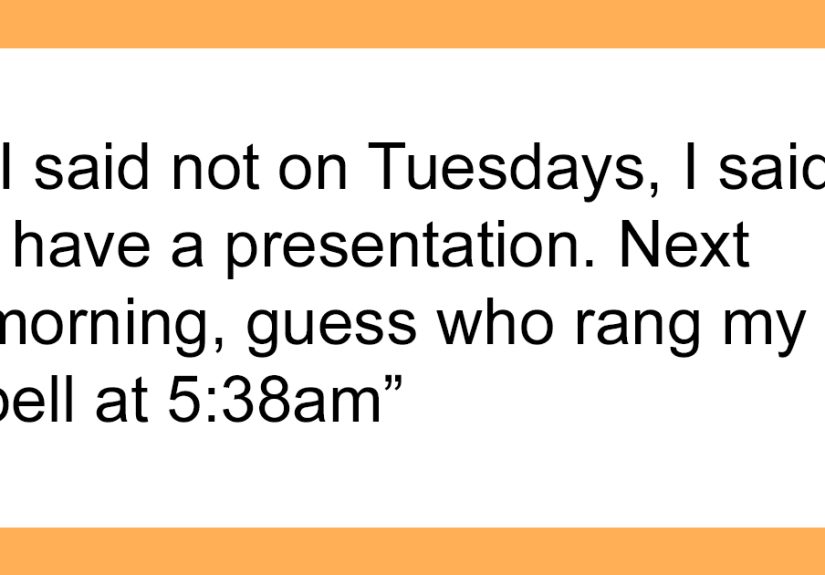
That is why this story lingers. It is not just internet drama. It reflects a modern family struggle many people quietly live every week: how to love one another generously without confusing generosity for unlimited access. And that is a lesson worth learning before the next “quick favor” rings the doorbell at 5:38 in the morning.
Conclusion
In the end, the woman who charged her sister for babysitting was not simply putting a dollar amount on family. She was putting a stop sign on entitlement. The viral family-chat drama may have sounded messy, but the underlying issue was surprisingly clear: help given freely should still be asked for respectfully. The moment childcare becomes assumed, repeated, and disruptive, it stops feeling like love and starts feeling like labor with a guilt surcharge.
That is why the story resonated so widely. It is funny, awkward, dramatic, and painfully real. More importantly, it reminds families that boundaries are not a betrayal. They are how relationships survive repeated pressure without turning every favor into a future argument.