Table of Contents >> Show >> Hide
- Fusion Starts With a Very Rude Environment
- Step One: The Fuel Becomes Plasma
- Step Two: Magnets Trap the Plasma in a Donut-Shaped Chamber
- Step Three: The Reactor Heats the Plasma Even More
- Step Four: Fusion Reactions Begin in the Plasma Core
- Step Five: The Blanket Catches Neutrons, Heat, and a Job Description
- Step Six: Exhaust Systems Remove Helium Ash and Impurities
- Step Seven: Heat Is Turned Into Electricity
- What About Laser Fusion?
- Why Fusion Is So Hard, Even Though the Science Is Real
- So What Actually Happens in a Nuclear Fusion Reactor?
- Experiences Related to Nuclear Fusion Reactors: What the Field Actually Feels Like
- Conclusion
If the phrase nuclear fusion reactor makes you picture a tiny sun stuffed inside a steel donut, congratulations: you are only slightly overdramatic. In reality, a fusion reactor is less like a miniature star in a jar and more like the most high-maintenance physics experiment ever asked to pay the electric bill. Scientists are trying to recreate the process that powers stars, but in a machine on Earth that can survive the heat, handle the fuel, manage the neutrons, and eventually send electricity to the grid without having a meltdown, a panic attack, or both.
So what actually happens inside a fusion reactor? A lot, and almost none of it is simple. Fuel is heated until it becomes plasma, magnetic fields try to keep that plasma from touching the walls, heating systems push it to extraordinary temperatures, atomic nuclei collide and fuse, high-energy neutrons fly outward, surrounding systems absorb that energy, and future power plants would turn that heat into electricity. That is the short version. The long version is where the fun begins.
Fusion Starts With a Very Rude Environment
Fusion happens when light atomic nuclei combine into heavier ones and release energy. For practical energy systems, the star of the show is usually a deuterium-tritium reaction. Deuterium is a hydrogen isotope found in water. Tritium is another hydrogen isotope, rarer and radioactive, and one of fusion’s biggest supply headaches. When deuterium and tritium fuse, they produce helium and a very energetic neutron. That neutron is not there for decoration. It carries much of the fusion energy out of the plasma and into the reactor systems around it.
The problem is that atomic nuclei are positively charged, which means they naturally repel each other. To get them close enough to fuse, a reactor has to create brutal conditions: extremely high temperatures, enough particle density, and enough confinement time. In plain English, the fuel has to be hot enough, packed enough, and trapped long enough for useful numbers of fusion reactions to happen before the plasma cools off and ruins everyone’s day.
Step One: The Fuel Becomes Plasma
Inside most magnetic fusion designs, the fuel starts as a thin gas. Then the reactor heats it so intensely that electrons are stripped away from the atoms. At that point, the fuel is no longer an ordinary gas. It becomes plasma, a charged, electrically responsive state of matter. Plasma is the only state that will cooperate with the magnetic fields used in reactors like tokamaks and stellarators.
This is the first big twist in fusion engineering: the fuel gets so hot that no ordinary material can hold it directly. A fusion plasma is not politely warm. It is far beyond the temperature range that even high-performance metals would tolerate if they were asked to touch it directly. That is why a fusion reactor does not put the fuel in a pot, pan, pipe, or any other object you would trust in your kitchen. It suspends the plasma away from material walls using magnetic fields.
Step Two: Magnets Trap the Plasma in a Donut-Shaped Chamber
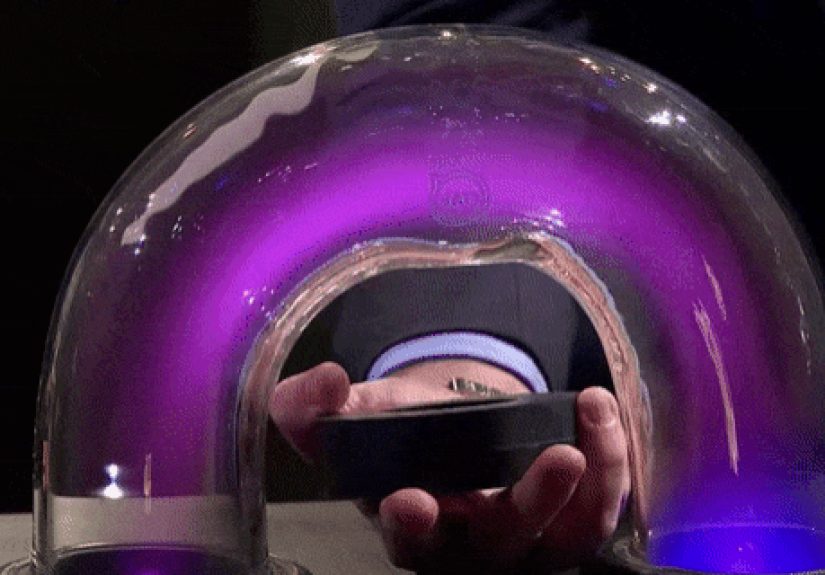
The most famous fusion reactor design is the tokamak. It uses strong magnetic fields to confine plasma in a torus, which is a donut shape if geometry class has faded from memory. The toroidal shape helps keep the plasma moving in loops instead of smashing into the walls and ending the experiment in a cloud of disappointment.
Different magnet systems do different jobs. Some create a magnetic field around the torus. Others shape and stabilize the plasma. In many tokamaks, an electric current is also driven through the plasma itself, helping heat it and contributing to the magnetic configuration. The result is a carefully choreographed magnetic cage. It is not perfect, because plasma is unruly stuff, but it is good enough to keep the fuel suspended for precious fractions of a second, seconds, or eventually much longer in advanced machines.
This is also where fusion stops sounding like science fiction and starts sounding like a difficult personality. Plasma wiggles. It twists. It develops instabilities. It leaks heat. It throws particles where engineers would rather they not go. Entire research programs exist just to understand edge behavior, turbulence, and how to keep the plasma calm enough to stay productive.
Step Three: The Reactor Heats the Plasma Even More
Getting plasma started is not enough. A fusion reactor must push it to extraordinary temperatures so the nuclei collide hard enough to overcome their electrostatic repulsion. Tokamaks use several heating methods. One is the plasma current itself, which produces resistive heating early on. Another is neutral beam injection, where fast particles are fired into the plasma to dump energy into it. Another uses radio-frequency waves or microwaves, tuned to interact with particles in the plasma and heat them efficiently.
Think of it like trying to keep a tornado hot, floating, and cooperative while also making it perform useful labor. That is fusion in a nutshell. Or in a very expensive vacuum vessel.
Step Four: Fusion Reactions Begin in the Plasma Core
When conditions are finally good enough, some deuterium and tritium nuclei collide and fuse. This is the moment people usually imagine when they hear the word “fusion,” but it is only one part of the reactor story. The fusion event produces helium nuclei, often called alpha particles, and energetic neutrons.
The helium nuclei remain charged, so magnetic fields keep them in the plasma for a while. That matters because their energy helps heat the plasma from within. In other words, once a plasma starts fusing efficiently, part of the reaction helps sustain the temperature needed for more reactions. That self-heating effect is a huge milestone for fusion performance.
The neutron is the opposite kind of troublemaker. Because it has no electric charge, magnetic fields do not trap it. It escapes the plasma and slams into the surrounding reactor structure. Fortunately, that is not just a problem. It is also how a future fusion plant would collect useful energy.
Step Five: The Blanket Catches Neutrons, Heat, and a Job Description
Surrounding the plasma chamber is a region often called the blanket. In a real power-producing fusion plant, the blanket would do several crucial jobs at once. First, it would absorb the energy of the fast neutrons coming out of the fusion plasma. That energy becomes heat. Second, many proposed blankets would contain lithium so that neutron interactions can create new tritium fuel. That process is called tritium breeding, and it is one of the least glamorous but most essential parts of practical fusion.
Why breed tritium? Because you cannot run a deuterium-tritium fusion economy by wishing for tritium harder. The fuel supply has to be managed, produced, recovered, processed, and recycled inside or alongside the plant. That means a commercial fusion reactor is not just a plasma machine. It is also a nuclear materials system, a heat management system, a tritium handling system, and a reliability test with a superiority complex.
Blanket designs vary. Some use solid lithium-containing materials. Others use molten salts or liquid metal mixtures. Engineers care about breeding efficiency, corrosion, tritium extraction, structural strength, safety, and thermal performance. In short, the blanket is where fusion physics starts dating nuclear engineering, and the relationship gets complicated fast.
Step Six: Exhaust Systems Remove Helium Ash and Impurities
A fusion plasma cannot just keep everything forever. Helium “ash” from the reaction, leftover fuel, and impurities from plasma-facing materials must be removed. This is one major role of the divertor, a specialized exhaust region designed to handle intense heat and particle flows. If the core is where the glamorous reactions happen, the divertor is the industrial cleanup crew working the night shift.
This is one of the hardest engineering areas in fusion. The reactor has to guide unwanted particles away from the plasma core and into components that can tolerate severe conditions. Those components also need cooling, durability, maintainability, and realistic lifetimes. Fusion may be famous for its plasma physics, but some of its toughest battles are fought at the walls and exhaust systems.
Step Seven: Heat Is Turned Into Electricity
Here is the part that sounds suspiciously familiar: after all that advanced physics, a fusion power plant would still make electricity in a very recognizable way. The blanket and other heat-capturing systems would transfer thermal energy to a coolant. That heat would then be used to make steam or drive another thermal conversion cycle. The steam would spin a turbine, the turbine would turn a generator, and electricity would head toward the grid.
So yes, the front half of fusion sounds like science fiction, but the back half often looks like a power plant your grandparents would recognize. The magic is not in skipping thermodynamics. The magic is in surviving it.
What About Laser Fusion?
Not every fusion system is magnetic confinement. Inertial confinement fusion uses a different strategy. At facilities like the National Ignition Facility, powerful laser beams compress and heat a tiny fuel capsule so rapidly that fusion occurs before the fuel can fly apart. It is less “hot plasma in a donut” and more “precision ambush on a peppercorn-sized target.”
This approach has produced historic scientific results, including ignition-level achievements. But an inertial confinement experiment is not the same as a commercial power reactor running continuously on the grid. A practical inertial fusion plant would need rapid target production, precise injection, efficient driver systems, chamber protection, and reliable heat capture at industrial scale. So while the physics is thrilling, the power-plant version still has a mountain to climb.
Why Fusion Is So Hard, Even Though the Science Is Real
Fusion is not stuck because the basic reaction is imaginary. It is hard because every part of the machine has to work at once. The plasma must stay hot and stable. The magnets must be powerful and reliable. The walls must survive neutron damage. The blanket must capture heat and breed enough tritium. The exhaust system must handle punishing loads. Maintenance must be possible, often by remote systems. And the entire plant must operate economically enough that utilities do not laugh politely and leave the room.
That is why modern fusion progress often comes in pieces. One project improves confinement. Another improves materials testing. Another advances superconducting magnets. Another develops blanket technology. Another refines tritium processing. Another learns how to predict disruptive plasma behavior before it becomes a very expensive surprise.
So What Actually Happens in a Nuclear Fusion Reactor?
In the simplest accurate terms, a nuclear fusion reactor turns hydrogen isotopes into an ultra-hot plasma, traps that plasma with magnetic or inertial techniques, heats it until fusion reactions occur, lets helium help keep the plasma hot, uses escaping neutrons to deposit energy into surrounding structures, captures that energy as heat, breeds new fuel in lithium-containing systems, removes exhaust and impurities, and finally converts the heat into electricity.
That is the real process. Not a magic box. Not a limitless-energy fairy tale. Just a brutally demanding system where plasma physics, materials science, nuclear engineering, cryogenics, high-field magnets, fuel-cycle chemistry, and power-plant design all try to cooperate long enough to make clean electricity. It is one of the hardest engineering goals humans have ever attempted, which is probably why it remains so fascinating.
Experiences Related to Nuclear Fusion Reactors: What the Field Actually Feels Like
To understand fusion, it helps to imagine not just the physics, but the experience around it. A fusion reactor is often described in equations, diagrams, and performance charts, but the human side is just as revealing. In real labs and test facilities, the fusion world feels like a blend of spacecraft engineering, industrial operations, and academic obsession. It is a place where a tiny fluctuation in plasma behavior can inspire hours of debate, and where a room full of adults can become visibly emotional over a cleaner-than-expected diagnostic signal.
For engineers, the experience is usually one of controlled tension. Every system matters. Magnets, vacuum hardware, cooling loops, sensors, shielding, fueling equipment, control software, and safety systems all have to perform in sync. A successful plasma shot may last only a short time, but it can represent months of planning. Teams prepare settings, review conditions, run simulations, check diagnostics, and discuss failure modes in exhausting detail. When the shot happens, people watch live traces of temperature, confinement, density, radiation, and stability as if they are following the final seconds of a championship game for nerds. Which, to be fair, they absolutely are.
For scientists, fusion is an experience of chasing order inside chaos. Plasma rarely behaves like a polite lab sample. It swirls, fluctuates, and develops edge effects that would make a simpler system file for early retirement. Researchers live with uncertainty, but not the lazy kind. The work is full of disciplined curiosity: Why did confinement improve? Why did heat escape there? Why did the edge change after that pulse? Why did the wall conditions matter more than expected? Fusion research often feels less like flipping a switch and more like trying to negotiate with a thunderstorm using mathematics.
Even visitors to fusion facilities often come away with the same impression: the machines are enormous, but the tolerances are unforgiving. A tokamak hall or laser fusion facility does not feel like a science-fiction movie set. It feels real, noisy in the industrial sense, and strangely serious. There are cables, shielding, cryogenic systems, maintenance gear, remote handling tools, and control rooms full of people staring at data rather than glowing blue windows. The glamour of fusion is not flashy. It is intellectual. It comes from watching people build systems designed to manage temperatures hotter than stars while still behaving like responsible adults around budgets and hardware limits.
That experience is part of why fusion has held public attention for decades. It is not just about future electricity. It is about watching human beings push the limits of what can be measured, controlled, and engineered. Every experiment, whether magnetic or laser-based, offers a small piece of a larger story: how to turn one of nature’s most extreme processes into something useful, stable, and repeatable. That challenge gives the field a strange mix of humility and ambition. Fusion researchers know the obstacles are serious. They also know progress is real. And that combination may be the most honest experience of all.
Conclusion
A fusion reactor is not a fantasy device that skips the laws of physics. It is a machine that obeys them so intensely that every subsystem gets dragged into the drama. Fuel becomes plasma, magnets or compression systems force the conditions for fusion, neutrons carry energy into surrounding structures, blankets capture heat and breed tritium, divertors manage exhaust, and conventional power systems turn the heat into electricity. The science is real, the engineering is brutal, and the promise is big enough to keep the field moving forward.