Table of Contents >> Show >> Hide
- The Big Reason: Fire Doesn’t Play Fair Anymore
- What a Closed Door Actually Does in a Fire
- “Okay, But What If I’m a Light Sleeper / Heavy Sleeper / Human Burrito?”
- How to Make “Close the Door” a Real Habit (Not a 3-Day Phase)
- Nighttime Fire Safety: The “Do This Too” Checklist
- Bonus Reasons People Love a Closed Bedroom Door (Even When There’s No Fire)
- Common Concerns (and Practical Workarounds)
- Conclusion: One Small Habit, a Huge Safety Upgrade
- Real-World Experiences: What It Feels Like When You Start Sleeping with the Door Closed
You know that tiny nightly decision you make on autopilotdoor open or door closed?
It feels about as dramatic as choosing crunchy vs. smooth peanut butter. But in one very specific scenario
(a home fire), that choice can separate “everyone walks out” from “we wish we’d known.”
Closing your bedroom door at night is one of the rare safety habits that’s:
free, fast, and doesn’t require reading a 47-page manual.
It can also make your room darker, quieter, and more sleep-friendlylike a budget version of a luxury hotel,
minus the tiny soap bars you’re morally obligated to take home.
The Big Reason: Fire Doesn’t Play Fair Anymore
Modern homes tend to burn differently than older homes. Open layouts let heat and smoke move quickly,
and many common furnishings contain synthetic materials that can speed up fire growth and create more toxic smoke.
Translation: you may have less time to react than you think.
This is exactly why fire safety researchers and firefighters push a simple message:
“Close Before You Doze.” A closed door can act like a shield, slowing the spread of heat,
smoke, and toxic gases into the room where you’re sleeping.
What a Closed Door Actually Does in a Fire
A bedroom door isn’t a magical force field, but it is a surprisingly effective barrier. When a fire starts elsewhere
in the home, an open doorway behaves like an invitation: smoke pours in, heat follows, oxygen flows toward the fire,
and conditions can turn dangerous fast.
1) It buys time by blocking smoke and heat
Fire testing has shown dramatic differences between bedrooms with doors left open versus closed. With the door closed,
temperatures can stay far lower and the air can remain more survivable for longermeaning you may have extra minutes
to wake up, think clearly, and escape.
2) It reduces exposure to toxic gases
Smoke is often the bigger threat than flames. In controlled experiments, carbon monoxide levels in an open-door bedroom
climbed into extremely dangerous territory, while the closed-door bedroom stayed far lower. That difference matters because
toxic gases can incapacitate peopleespecially when they’re asleep and already breathing slowly.
3) It limits oxygen flow that can feed the fire
Fires grow by consuming oxygen. When doors are open, air movement in a home can help the fire intensify and spread.
Closing interior doors can help compartmentalize the fire, slowing its progress and reducing how quickly conditions deteriorate.
4) It creates a safer “shelter” if you can’t get out immediately
Not every escape is instant. If a fire blocks the hallway, a closed bedroom door can help keep your space more tenable
while you move to a window, call 911, signal for help, or wait for firefighters. It’s not a substitute for escapingbut it can
be a crucial buffer when Plan A falls apart.
“Okay, But What If I’m a Light Sleeper / Heavy Sleeper / Human Burrito?”
Totally valid. Closing the door doesn’t replace smoke alarmsit works with them.
The best combo is:
working smoke alarms + a practiced escape plan + closed doors at night.
Make sure you can hear the alarm
If you sleep with the door closed, it’s smart to have smoke alarms placed correctlyideally including an alarm in the bedroom
or just outside it, depending on your home and local guidance. Interconnected alarms (where one alarm triggers all of them)
are especially helpful because they alert you no matter where the fire starts.
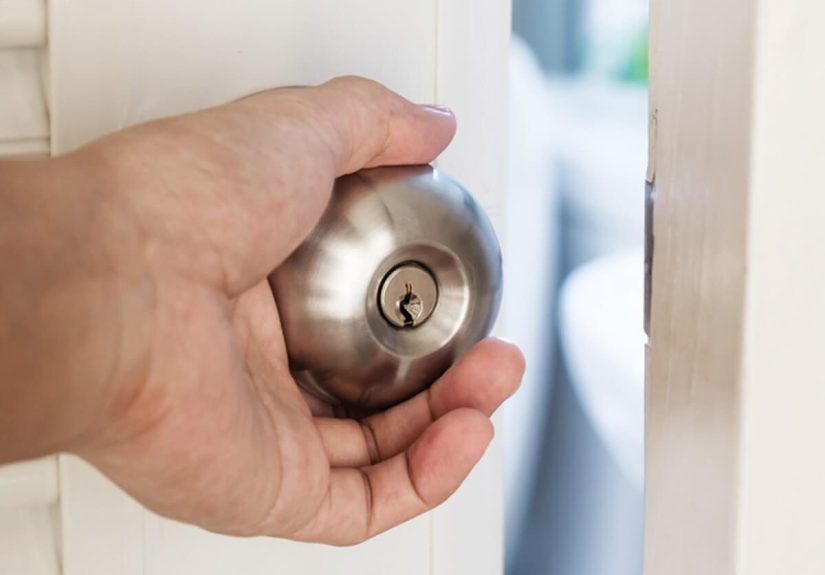
Do not “upgrade” safety by locking the door
Closing the door is good. Locking it can create problems during an emergency if someone needs to get in or you need to get out fast.
If privacy is a concern, consider non-keyed privacy locks you can open quickly from inside, and ensure everyone in the home knows how they work.
How to Make “Close the Door” a Real Habit (Not a 3-Day Phase)
Most people aren’t ignoring safetythey’re just tired, distracted, and thinking about tomorrow’s to-do list.
Here are easy ways to make it stick:
- Pair it with something you already do: brush teeth → close door. Set phone on charger → close door.
- Use a visual cue: a small sticky note by the light switch for two weeks, then remove it.
- Make it part of a kid routine: “Two stories, one hug, one closed door.” (Catchy, right?)
- If pets protest: give them a cozy bed outside your door and a consistent bedtime routine.
Nighttime Fire Safety: The “Do This Too” Checklist
Closing the door is a powerful start, but it’s even better when it’s part of a simple safety system.
1) Test smoke alarms and replace batteries as needed
Smoke alarms should be working on every level of the home and near sleeping areas. Test them regularly.
If you can’t remember the last time you tested yours, congratulationsyou’re normal. Now please go press the button.
2) Have two ways out
Know your primary exit (door) and backup exit (often a window). If you’re in a room above the first floor,
consider an escape ladder and practice how you would use it (practice when it’s calm, not when it’s smoky).
3) Keep your path clear at night
Shoes, phone, glasses, flashlightput them where you can grab them quickly. And keep hallways and exits free of
“temporary” clutter (which, as we all know, is the longest-lasting category of clutter).
4) If you need to check a door during a fire, do it cautiously
If you suspect a fire and your bedroom door is closed, check conditions carefully before opening it.
If smoke is heavy outside or the door feels unusually hot, use your backup plan (window, signal for help, call 911).
The closed door is buying timedon’t throw that away casually.
Bonus Reasons People Love a Closed Bedroom Door (Even When There’s No Fire)
Fire safety is the headline, but a closed door can also improve sleep quality and comfortespecially if you live with
roommates, kids, pets, street noise, or that one neighbor whose hobby is “late-night percussion.”
A darker, quieter sleep environment
Health organizations commonly recommend a bedroom that’s dark, quiet, and cool
for better sleep. A closed door can reduce hallway light and dampen soundsmall changes that can matter if you wake easily.
A more consistent temperature (sometimes)
If your bedroom has strong heating or air conditioning, closing the door can make the room feel more stable.
But here’s the nuance: in many homes with central HVAC returns, closing interior doors can reduce return airflow and cause
pressure imbalancespotentially affecting comfort and efficiency.
The good news: you don’t have to choose between fire safety and airflow. If you notice stuffiness, whistling under the door,
or a dramatic “whoosh” when you open it, talk to an HVAC pro about simple fixes like transfer grilles, jump ducts, or improved
return pathways. Your sleep can be cozy and your system can breathe.
Privacy and boundaries
Sometimes the best reason is the simplest: a closed door tells your brain, “This is my off-duty zone.” That can make it easier
to unwind, especially if your home life is busy.
Common Concerns (and Practical Workarounds)
“I need to hear my kids.”
Use a baby monitor (audio/video) and keep the door closed. If you’re worried about emergencies, ensure smoke alarms are installed
correctly and consider interconnected alarms so you’re alerted immediately anywhere in the home.
“My cat will file a formal complaint.”
Cats believe closed doors violate international law. Try a consistent bedtime routine, a comfy spot outside your door,
and extra playtime earlier in the evening. (Also, don’t negotiate at 2 a.m. That’s how they win.)
“I’m worried about indoor air.”
If the room feels stale, focus on ventilation and HVAC return pathwaysnot sleeping with the door wide open.
A closed door for fire safety is a strong baseline; airflow issues can often be solved with smart home fixes.
Conclusion: One Small Habit, a Huge Safety Upgrade
Closing your bedroom door at night is one of the simplest home safety habits you can adoptno shopping, no installation,
no complicated technique. In a fire, it can slow smoke and heat, reduce toxic exposure, and buy precious time.
On normal nights, it can also help make your sleep space darker, quieter, and more relaxing.
If you do just one thing tonight: close your bedroom door before you fall asleep.
Then take five extra minutes this week to test smoke alarms and talk through an escape plan with your household.
Future-you will be very grateful. (Even if your cat isn’t.)
Real-World Experiences: What It Feels Like When You Start Sleeping with the Door Closed
The funny thing about safety habits is that they don’t feel heroic in real time. Closing your bedroom door isn’t dramatic.
It’s not a big announcement. It’s a quiet, almost boring motionhand on knob, gentle click, lights out. But when people
stick with it for a couple of weeks, they often notice a handful of “oh, that’s nice” moments that make the habit easier to keep.
For some households, the first change is sound. Hallway noise fades. The TV in the living room becomes a distant hum
instead of a front-row concert. If you have roommates, that small barrier can feel like you’ve installed invisible “quiet hours.”
Parents sometimes notice they’re less likely to wake up to every creak in the houseyet they still hear what matters
(like a child calling out), especially with a monitor.
Then there’s light. Even small LEDsrouter lights, kitchen appliance clocks, the glow from a hallway nightlightcan make a room
feel less restful. With the door closed, the bedroom becomes more like a true cave (in the best way), and some people find it easier
to fall asleep without that faint “is it already morning?” glow.
Temperature experiences vary, but they’re common. In winter, some people feel their bedroom stays cozier once the door is shut,
especially if the room is smaller. In summer, others notice the opposite and realize their HVAC system needs better airflow balance.
That’s where the experience becomes practical: rather than abandoning the closed door, they adjust the roommaybe changing vent direction,
checking filters, adding a small fan to mix air gently, or asking an HVAC tech about return pathways. The takeaway from these stories is
that comfort problems are usually fixable, but the fire-safety benefit of a closed door is too valuable to ignore.
Families with pets have their own learning curve. The first few nights can involve dramatic paw taps, theatrical sighing,
and the unmistakable vibe of “I will be speaking to management.” Many owners end up creating a new routine: a final water break,
a cozy pet bed outside the door, and a consistent “bedtime means bedtime” rule. After a week or two, most pets adaptespecially if they’re
rewarded earlier in the evening with attention and play. (No, your cat will not admit you were right. Please stop expecting that.)
The most meaningful “experience” people describe is psychological: a subtle sense of control. You can’t predict emergencies, but you can
stack the odds in your favor. Closing the door becomes a small nightly signal that says, “I’m taking care of future-me.”
It’s the same feeling as buckling a seatbelt or checking that the stove is offtiny actions that don’t matter… until they do.