Table of Contents >> Show >> Hide
- What This Challenge Is Really About
- Why Drawing Without Looking Actually Works
- How To Do the Challenge at Home
- Best Things To Draw in Your Home for This Challenge
- How To Turn This Into a Real “Hey Pandas” Style Community Post
- Common Mistakes That Are Actually the Point
- The Surprising Benefits of This At-Home Drawing Challenge
- of Real-Life Style Experiences With This Challenge
- Conclusion
There are two kinds of people in this world: people who can draw a lamp that actually looks like a lamp, and people who draw a lamp that somehow looks like a startled potato wearing a hat. This article is for both.
If you have ever wanted a drawing challenge that is equal parts creative exercise, comedy show, and accidental therapy, this is it. The idea is simple: pick something in your home, put your pencil on paper, and draw it without looking at the page. No peeking. No “just one tiny glance.” No dramatic artist sighing allowed. What you are doing is a version of blind contour drawing, a classic observational drawing exercise that helps you focus on what you actually see instead of what your brain assumes is there.
That is exactly why this challenge works so well online. It is visual, easy to join, wildly shareable, and refreshingly low-pressure. You do not need expensive supplies, art school experience, or a mysterious studio filled with tasteful sunlight. You need paper, something to draw, and the willingness to let your coffee mug come out looking like it has emotional baggage.
What This Challenge Is Really About
At first glance, “draw something in your home without looking at the paper” sounds like a recipe for glorious disaster. And yes, it often is. But that is the charm. The point is not to produce a perfect sketch. The point is to slow down and really observe.
When people do normal sketches, they tend to bounce their eyes back and forth between the subject and the page. With blind contour drawing, your eyes stay on the object. Your hand follows the edges, curves, bumps, corners, and shapes as carefully as it can. The result may look quirky, warped, or hilariously off-balance, but the process trains attention in a surprisingly effective way.
That makes this challenge more than a goofy internet prompt. It becomes a mini lesson in observational drawing, creative confidence, and letting go of perfectionism. In other words, it is art with a sense of humor.
Why Drawing Without Looking Actually Works
1. It teaches you to see, not just assume
Most people think they know what a chair, sneaker, toaster, or houseplant looks like until they actually try to draw one. Then suddenly there are weird angles, unexpected shadows, and a handle that seems to exist in three dimensions just to ruin your afternoon. Blind drawing forces you to notice shape relationships more carefully, which is one reason art teachers love it as a warm-up.
2. It quiets the inner critic
Perfectionism thrives on control. This challenge kicks control out the front door and locks it outside. Since the drawing will almost certainly be imperfect, you are free to experiment. That is a gift, especially for beginners who freeze the moment they think a sketch must look “good.”
3. It makes ordinary objects interesting
A spoon is just a spoon until you try to draw it blind and discover that it has the personality of a roller coaster. A TV remote becomes a maze of buttons and tiny shapes. A potted plant turns into a jungle of lines. Everyday objects suddenly feel new because you are paying real attention to them.
4. It is fun in a social, shareable way
This is one of the rare art challenges where the reveal is part of the entertainment. Friends compare results. Families laugh. Comment sections wake up. One person posts a blind drawing of a cat, and ten more people decide they also need to embarrass themselves publicly with a sketch of a blender. That is community magic right there.
How To Do the Challenge at Home
- Pick one object in your home. Good choices include a mug, plant, lamp, sneaker, stuffed animal, teapot, game controller, or your very judgmental cat.
- Place your paper where your drawing hand can move comfortably. Keep it steady. Chaos is welcome in the lines, not in your workspace.
- Put your pencil on the paper and keep your eyes on the object. Start at one edge and slowly trace it with your eyes.
- Move your hand as your eyes move. Go slowly. This is not a speed challenge unless you enjoy abstract panic.
- Do not look down. Yes, really. That is the whole game.
- Keep the line going. Continuous lines often make the drawing feel more expressive, even when it looks delightfully unhinged.
- Reveal and laugh. Then try again with a second object. Round two is often better, and round three is where the fun really starts.
Best Things To Draw in Your Home for This Challenge
Some household items are better than others because they have clear outlines, recognizable shapes, and enough detail to make the process interesting.
Easy picks for beginners
- Mug or coffee cup
- Desk lamp
- Houseplant
- Sneaker
- Kitchen whisk
- Pillow or stuffed animal
Great choices for more advanced chaos
- Bicycle helmet
- TV remote
- Headphones
- Stack of books
- A basket of fruit
- Your own hand in a mirror
If you want maximum entertainment, draw something with a lot of curves or small details. Plants, shoes, pets, and oddly shaped kitchen tools tend to produce the funniest results. If you want a cleaner-looking sketch, choose an object with a strong silhouette, like a vase or lamp.
How To Turn This Into a Real “Hey Pandas” Style Community Post
The magic of a prompt like this is participation. People do not join because they expect museum-quality drawings. They join because the challenge is approachable, funny, and strangely addictive.
To make the post work on the web, frame it like an invitation instead of a lecture. Use friendly language. Encourage honesty. Make it clear that messy results are welcome. You want readers to think, “Oh, I can do that in five minutes,” not, “I need a portfolio and a beret.”
A few smart ways to increase engagement include asking readers to:
- Post both their first and second attempts
- Share what object they chose and why
- Vote on the funniest drawing category
- Challenge a friend or sibling to do the same object
- Try a “pet edition,” “kitchen edition,” or “messy desk edition” follow-up
This format works because it combines a simple action with instant visual payoff. That is catnip for interactive content. Also, people love proving they are bad at something in a charming way. It is basically the internet’s favorite genre.
Common Mistakes That Are Actually the Point
“My proportions were way off.”
Excellent. That means you were paying attention to the process instead of polishing the result.
“I lost my place halfway through.”
Welcome to the club. Just keep going. The weird overlaps often make the drawing better.
“It looks nothing like the object.”
Sometimes that is true. Sometimes it only looks wrong because you expected realism. Blind contour drawings are often more expressive than accurate, and that is part of their appeal.
“I wanted to peek.”
Of course you did. Human curiosity is undefeated. Resist it anyway.
The Surprising Benefits of This At-Home Drawing Challenge
Even though the challenge is playful, it has real value. It encourages close looking, patience, and hand-eye coordination. It can also make drawing feel more accessible because the pressure to create something polished disappears right away.
For families, it is an easy screen break. For students, it is a smart creative warm-up. For adults, it is a reminder that not every hobby has to become a side hustle, productivity system, or personal brand. Sometimes you can just draw a toaster badly and call that a successful evening.
There is also something surprisingly mindful about the exercise. When your eyes stay fixed on the object and your hand follows slowly, you are less likely to rush. You begin noticing details you usually ignore: the curve of a mug handle, the uneven leaves on a plant, the way a sneaker sole bends. That kind of focused attention can feel calming, even when the final drawing looks like it lost a fight.
of Real-Life Style Experiences With This Challenge
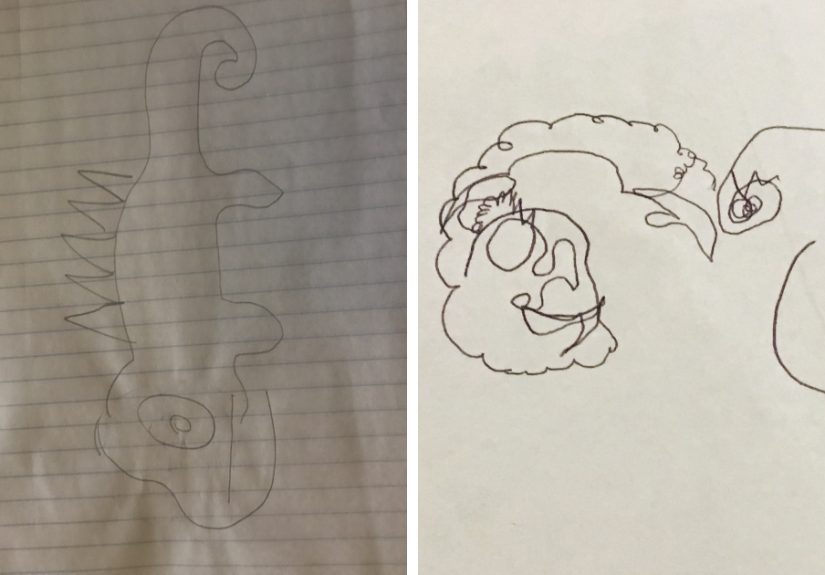
Anyone who has tried this challenge knows the first few seconds are pure confidence. You sit down, pick an innocent object like a coffee mug, and think, “How hard can this be?” Then the pencil starts moving, your eyes stay glued to the mug, and suddenly you realize your hand may be operating under completely different management. The handle becomes enormous, the rim drifts into another zip code, and by the time you finish, your mug looks less like drinkware and more like a nervous cartoon duck. That moment of reveal is exactly why people love the experience. It is funny, unexpected, and strangely satisfying.
A lot of people also notice how quickly the challenge changes their attention. At the beginning, they are mostly focused on not cheating. A minute later, they are studying tiny details they normally ignore. They start noticing the way a lamp curves at the neck, the sharp little corners on a remote, the awkward dignity of a houseplant leaning toward the window like it pays rent. The object becomes more interesting simply because they are finally looking at it with care.
There is also a shared experience that happens when several people try the challenge together. One person draws a sneaker that somehow turns into a loaf of bread. Someone else attempts a cat and creates what looks like a haunted ottoman. Everybody laughs, but nobody feels judged because the whole setup is built around imperfection. That makes the challenge unusually welcoming. Even people who usually say, “I can’t draw,” end up joining in because failure is not just accepted, it is part of the entertainment.
Another common experience is that the second or third drawing feels different from the first. Not necessarily better in a polished way, but calmer. Your hand starts trusting your eyes a little more. You slow down. You stop trying to force the drawing to behave. Instead, you follow the object more carefully, and the lines gain a certain rhythm. Many people end up surprised by this. They come for the joke and stay for the oddly peaceful concentration.
Then there is the emotional side. A challenge like this can make people feel playful again. Adults who spend all day answering emails get to make something weird on purpose. Kids get proof that art is not only about neat results. Families compare drawings at the table. Friends post them online and dare each other to do worse. In a very small but very real way, the exercise creates connection. It gives people a reason to share something imperfect, laugh at themselves, and appreciate the beauty of trying anyway.
That is why this prompt sticks. It is not only about drawing without looking. It is about noticing more, judging less, and letting a simple object in your home become the star of a tiny creative adventure. Even when the final sketch looks like your blender has entered its abstract era, the experience still feels like a win.
Conclusion
“Hey Pandas, Draw Something In Your Home, Without Looking At The Paper While Drawing” is the kind of prompt that works because it is simple, funny, and secretly useful. It invites people to create without pressure, pay closer attention to everyday objects, and share results that are more human than polished. That combination is gold for interactive content.
So grab a pencil, choose the nearest object that will not run away, and give blind contour drawing a shot. Your sketch may not be accurate. It may not be elegant. It may look like your chair has seen things. But it will be memorable, engaging, and a lot more fun than staring at a blank page waiting to become talented.