Table of Contents >> Show >> Hide
- First: What a D-U-N-S Number Is (and Isn’t)
- Before You Start: A 10-Minute Prep Checklist
- Step 1: Confirm You Actually Need a D-U-N-S Number
- Step 2: Check Whether Your Business Already Has One
- Step 3: Standardize Your Business Identity (So Verification Doesn’t Stall)
- Step 4: Use the Correct D&B Path to Request a New D-U-N-S Number
- Step 5: Fill Out the Application Like a Detectiveand Like a Customer
- Step 6: Complete Verification Quickly (This Is Where Speed Lives)
- Step 7: Confirm the Number, Then Maintain Your D&B Profile
- Timeline: How Long Does It Take to Get a D-U-N-S Number?
- Common Mistakes That Slow the Process (Avoid These)
- Quick FAQs
- Real-World Experiences (500+ Words): What Businesses Learn While Getting a D-U-N-S Number
- Experience #1: “We needed it for a platform enrollment, and the address mismatch cost us a week.”
- Experience #2: “We discovered we already had a D-U-N-S Numbernews to us.”
- Experience #3: “Our business has multiple locationsturns out that matters.”
- Experience #4: “We thought we had to pay. We didn’tbut we almost did.”
- Experience #5: “The quickest win was having one person ‘own’ the process.”
If your business has ever tried to sign up for a major platform, onboard with a big corporate customer, or prove it’s a real, legally formed entity (without waving a stack of paperwork like a Broadway playbill), you’ve probably met the D-U-N-S Number.
The good news: getting one is usually straightforward. The slightly less fun news: delays almost always come from tiny inconsistencieslike an address formatted one way on your state registration and another way on your bank account. (Yes, “Suite” vs. “Ste.” can be the villain of your story.)
This guide walks you through how to acquire a D-U-N-S Number in 7 practical steps, with real-world tips so you can get it right the first timewithout falling into the classic “I only needed a number, why am I being sold a deluxe platinum mega-credit package?” moment.
First: What a D-U-N-S Number Is (and Isn’t)
A D-U-N-S Number (Data Universal Numbering System) is a unique nine-digit identifier assigned by Dun & Bradstreet (D&B) to a business location. Think of it as a widely recognized “business identity number” used for verification in the private sector.
What it isn’t: it’s not your EIN, not your state filing number, and not a magic “approved” stamp. It’s more like the ID badge that helps systems and partners confidently match your business to the correct record.
One important modern note: the U.S. federal government no longer relies on D-U-N-S for SAM.gov identification (it uses a different identifier now). But D-U-N-S is still commonly requested in the private sectorespecially for vendor onboarding, corporate procurement, and certain platform enrollment processes.
Before You Start: A 10-Minute Prep Checklist
The fastest applications come from businesses that already have consistent “identity” information. Before you begin, collect:
- Legal business name (exactly as registered with your state)
- DBA / trade name (if applicable)
- Physical address (and mailing address if different)
- Main business phone (preferably a number that matches your public listings)
- Business website and professional email domain (helpful for verification)
- Entity type (LLC, corporation, partnership, etc.)
- Year started and basic operations info
- Primary contact (name, title) who can confirm details if D&B follows up
- Number of employees (even if it’s just “1” right now)
- Industry/NAICS-style description (plain English is okay)
Pro tip: choose one “official” version of your business name and address formatting and stick to it everywherestate registration, bank account, invoices, website footer, and business directories. Consistency is your speed boost.
Step 1: Confirm You Actually Need a D-U-N-S Number
Not every business needs a D-U-N-S Number on day one. You’ll typically need it when:
- You’re enrolling as an organization with certain platforms (for example, developer or enterprise programs that verify legal entity status).
- You’re onboarding as a vendor/supplier with a large company that uses D&B identifiers for procurement.
- A partner, lender, or distributor asks for it as part of due diligence.
If you’re only chasing federal contracts or grants, double-check which identifier is currently required for that specific process. You don’t want to sprint for a number you won’t even be asked to enter.
Step 2: Check Whether Your Business Already Has One
Many businesses already have a D-U-N-S Number without realizing itespecially if they’ve ever:
- worked with corporate vendors, distributors, or big retail supply chains,
- registered in certain industry databases, or
- had business credit activity that created a file.
Start with a D-U-N-S lookup using your legal business name, city/state, and address. If you find a match, carefully verify that it’s truly your business (and not a similarly named company across town).
Example: “Bright Leaf Solutions LLC” in Austin might already exist as “Brightleaf Solutions, LLC” in the database. Same business, tiny spelling difference, huge impact. If the listing is yours but outdated, you’ll want to update it rather than create a new record.
Step 3: Standardize Your Business Identity (So Verification Doesn’t Stall)
This is the step people skipand then wonder why the process drags.
Verification is easier when the business identity details you submit line up with what exists in public and semi-public records. Before you apply, make sure your:
- Legal name matches state registration
- Address format matches what you use on official documents
- Phone number is active and connected to the business
- Website (if you have one) shows the same name/address in the footer or contact page
Specific example: If your LLC is registered at “123 W. Main Street, Suite 200” but your application says “123 West Main St Ste #200,” some systems treat that like two different places. Pick one format and use it consistently.
Step 4: Use the Correct D&B Path to Request a New D-U-N-S Number
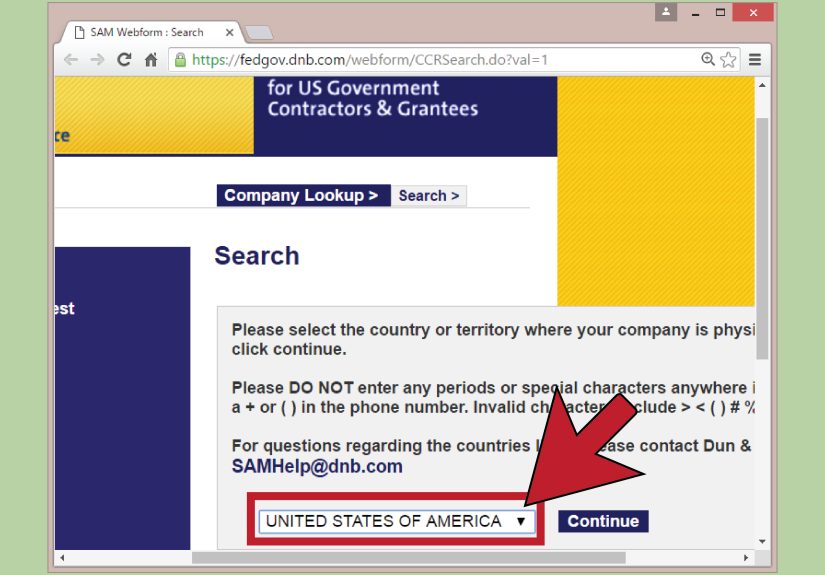
If lookup shows you don’t have a number (or no accurate match exists), request a new D-U-N-S Number through D&B’s official request flow.
You’ll usually be asked to provide the core business identity information you prepped earlier. In many cases, you can request and manage updates via D&B tools designed for business owners (often described as a “manager” or profile management experience).
A friendly warning: during the process, you may see optional add-ons. Optional means optional. If your immediate goal is simply “get the D-U-N-S Number,” stay focused on the application and verification steps.
Step 5: Fill Out the Application Like a Detectiveand Like a Customer
The application is not hard. The challenge is that it’s precise.
Use these best practices:
- Use your legal name, not just your brand name (include DBA separately if asked).
- Use a physical location when possible (if you’re home-based, that’s okayjust be consistent).
- Choose a reachable phone number (don’t use a line you never answer).
- Be honest about employee count and operations (it’s fine to be small).
- Describe your business clearly (e.g., “IT consulting for small medical offices” beats “technology”).
Tiny errors can cause big slowdowns. Triple-check spelling, suite numbers, ZIP codes, and the legal entity suffix (LLC, Inc., Ltd.).
Step 6: Complete Verification Quickly (This Is Where Speed Lives)
After submission, D&B may verify details through automated checks and/or direct outreach. If they call or email:
- Respond promptly (same day if possible).
- Make sure the person listed as the contact can confirm basic business facts.
- Be prepared to clarify similar-name confusion or address formatting.
If your application is time-sensitive (for example, you’re trying to enroll in a program with a deadline), submit early and monitor for verification requests so you can respond quickly.
Step 7: Confirm the Number, Then Maintain Your D&B Profile
Once issued, your D-U-N-S Number becomes a long-term identifier you’ll use again and again. Your work isn’t totally done, though: you should review your business information and keep it updated if anything changes.
Updates matter because partners may use your D&B profile to confirm your:
- legal entity status,
- address and phone,
- company structure, and
- general business identity information.
Good maintenance habit: set a recurring reminder every 6–12 months to confirm your name, address, and phone are still accurateespecially after moving offices, changing suite numbers, or switching phone providers.
Timeline: How Long Does It Take to Get a D-U-N-S Number?
The honest answer: it depends.
If your business information is clear and consistent, it can be relatively quick. If your information is hard to verify (new entity, home-based business with limited listings, inconsistent formatting, or multiple similar-name matches), it may take longer.
The biggest factor you control is how fast you respond to verification requests and how clean your submitted information is.
Common Mistakes That Slow the Process (Avoid These)
1) Creating a duplicate record
If you already have a D-U-N-S Number but submit a fresh request, you may accidentally create a second record that later needs cleanup. Always start with lookup.
2) Using inconsistent names
“Sunrise Media” and “Sunrise Media Group LLC” might be the same business to you, but a database may treat them like two separate entities. Use the legal name first; add DBA where appropriate.
3) Address formatting chaos
Pick one canonical version of your address and stick to it. Consistency across your website, invoices, filings, and application helps verification.
4) Missing or unresponsive contact info
If the phone number routes to a dead line or a voicemail box nobody checks, verification can stall. Use a reachable number and monitor messages.
5) Getting distracted by upsells
Some services are valuable for certain businesses, but they’re not required just to obtain the identifier. Keep your goal in mind: request, verify, confirm, maintain.
Quick FAQs
Is a D-U-N-S Number free?
In many common scenarios, yesyou can request a D-U-N-S Number without paying a fee. Be aware that optional paid products may be offered along the way.
Do sole proprietors need one?
Sometimes. If a platform or partner specifically requires a D-U-N-S Number for verification, you may need it even as a one-person business. If nobody asks for it, you can usually wait.
Is one D-U-N-S Number enough for a multi-location business?
D-U-N-S numbers are commonly assigned on a location-specific basis. A headquarters and a branch location may each have their own identifier, depending on how the business is structured and recorded.
Will a D-U-N-S Number build my business credit automatically?
Not by itself. It’s an identifier tied to your business file. Building business credit typically involves trade lines, payment history, and verified activity.
Real-World Experiences (500+ Words): What Businesses Learn While Getting a D-U-N-S Number
If you ask ten business owners about getting a D-U-N-S Number, you’ll hear ten versions of the same theme:
“It was easy… once the details matched.”
Here are a few common experiences businesses run intoand what they do to fix them fast.
Experience #1: “We needed it for a platform enrollment, and the address mismatch cost us a week.”
A small software studio formed an LLC and immediately tried to enroll in an organization-level program that required legal entity verification. They entered their business address as it appeared on their lease:
“500 Market Street, Suite 12.”
But their state registration listed:
“500 Market St Ste 012.”
Same place, different formatting. The result was a verification delay and a back-and-forth that felt like arguing with a very polite robot.
The fix was simple: they chose one standardized format (matching the state record) and updated their website footer and key documents to align.
Once their “public face” matched their legal record, verification moved forward smoothly.
Lesson: Don’t guess your “official” address. Use what’s on your state registration and be consistent everywhere.
Experience #2: “We discovered we already had a D-U-N-S Numbernews to us.”
A home-services company had worked with a large supplier years earlier. When a new corporate partner asked for a D-U-N-S Number, the owner assumed it would be a brand-new application.
Lookup revealed the company already had one, but the phone number was old and the company name was missing the “LLC” suffix.
They didn’t need a new number at allthey needed a cleanup. By updating the business information, they avoided creating duplicate records and kept their identity consistent for future procurement checks.
Lesson: Always start with lookup. “Already exists” is often the fastest outcome.
Experience #3: “Our business has multiple locationsturns out that matters.”
A retail brand with a warehouse and two storefronts assumed one identifier would cover everything. Then a distributor asked for a D-U-N-S Number specifically for the shipping location.
They learned an important nuance: business identifiers can be tied to specific locations, and partners may want the number that matches the operational site involved in the relationship (billing vs. shipping vs. HQ).
Once they clarified which location was being onboarded and ensured the right address was attached to the right record, the onboarding progressed without confusion.
Lesson: If you operate multiple locations, confirm which address/location the requester needs the D-U-N-S Number for.
Experience #4: “We thought we had to pay. We didn’tbut we almost did.”
A first-time founder saw optional offers during the process and assumed they were required to receive the number quickly.
After rereading the screens carefully (and comparing notes with other owners), they realized the add-ons were for monitoring, enhanced reporting, or additional productsnot the core identifier itself.
They completed the request using the standard route, responded quickly to verification outreach, and got what they needed without buying extras they didn’t yet have a use for.
Lesson: Slow down and read each step. “Optional” is your favorite word when your only goal is the D-U-N-S Number.
Experience #5: “The quickest win was having one person ‘own’ the process.”
A small team assigned one person to handle the application, monitor email/voicemail, and respond to any questions.
That single-threaded ownership prevented delays like “Oh, I thought you replied,” or “I didn’t recognize the number, so I let it go to voicemail.”
Lesson: Treat it like a mini-project: one owner, consistent data, fast responses.
In practice, acquiring a D-U-N-S Number is less about complexity and more about clarity. When your business identity is clean, consistent, and easy to verify, the process is usually smooth.
And when it isn’t? The fix is almost always the same: align the details, reply quickly, and keep your profile up to date so future requests take minutes, not days.