Table of Contents >> Show >> Hide
- First, Know What “IATA Certified” Actually Means
- How to Become IATA Certified: 15 Steps
- Step 1: Choose your end goal before you choose a course
- Step 2: Learn the difference between IATA, IATAN, and ARC
- Step 3: Decide whether you need training, accreditation, or both
- Step 4: Pick your specialization early
- Step 5: Review the entry requirements and delivery format
- Step 6: Build a realistic study plan
- Step 7: Strengthen your core travel-business skills
- Step 8: Get comfortable with tools and systems
- Step 9: Enroll in the right IATA course or diploma track
- Step 10: Complete the coursework and pass the assessment
- Step 11: Add real-world experience as quickly as possible
- Step 12: Decide whether to join a host agency or go fully independent
- Step 13: Handle legal and compliance requirements like a pro
- Step 14: Apply for IATAN or ARC when your business is ready
- Step 15: Maintain your status and keep leveling up
- Common Mistakes to Avoid
- Final Thoughts
- Real-World Experience: What the Journey Actually Feels Like
- SEO Tags
If you have been Googling “how to become IATA certified,” you have probably already discovered the travel industry’s favorite hobby: turning simple questions into alphabet soup. IATA. IATAN. ARC. CLIA. ASTA. CTA. At some point, it starts to feel less like career planning and more like you accidentally enrolled in an acronym boot camp.
Here is the good news: becoming “IATA certified” is absolutely doable. The even better news is that you do not need to guess your way through it. The smart approach is to understand what people really mean by “IATA certified,” choose the right path for your goals, build the right skills, and then move into the credential or accreditation that fits your career stage.
In practical terms, there are two main paths people usually mean:
- An individual IATA training certificate or diploma, which proves you completed industry training in areas like travel and tourism, fares and ticketing, cargo, ground operations, or airline-related services.
- An agency-level accreditation or professional ID route, usually through IATAN in the United States, which helps a travel business prove legitimacy, work with suppliers, and qualify eligible professionals for an IATA/IATAN ID card.
If you mix those two up, you can waste time, money, and at least one weekend muttering at your laptop. So let’s do this the sensible way.
First, Know What “IATA Certified” Actually Means
Before you buy a course, print business cards, or tell your cousins you are “basically in aviation now,” pause and define the destination.
If you want a career in travel advising, tourism, or airline support, you are probably looking for IATA training and certification as an individual. That means taking recognized coursework, passing assessments, and earning a certificate or diploma that strengthens your résumé and credibility.
If you want to run or grow a U.S. travel business, what you may really need is IATAN accreditation, ARC participation, or a host-agency relationship that gives you access to an established accreditation framework. That is a business move, not just a training move.
That distinction matters because plenty of new advisors assume one shiny certificate instantly unlocks airline ticketing, supplier relationships, discounted travel, and world domination. It does not. It opens doors, yes, but different doors open for different credentials.
How to Become IATA Certified: 15 Steps
Step 1: Choose your end goal before you choose a course
Ask yourself a brutally honest question: What do I actually want this credential to do for me? If you want to land a job, gain industry knowledge, or build credibility, an individual IATA training course makes sense. If you want to sell travel independently, work with suppliers, or build an agency brand, you may need a business credential path in addition to training.
Do not shop by buzzword alone. Shop by outcome.
Step 2: Learn the difference between IATA, IATAN, and ARC
This is where many beginners get tangled up. IATA is the global industry body associated with training, standards, and international travel agency accreditation frameworks. In the U.S. market, IATAN is the accreditation network travel businesses commonly deal with for recognition and ID-card eligibility. ARC, meanwhile, is the big player if your agency wants to issue airline tickets directly in the United States.
Translation: if your dream involves direct air ticketing, do not assume an IATA course alone gets you there. That is like taking a great cooking class and assuming a restaurant license will arrive by mail.
Step 3: Decide whether you need training, accreditation, or both
For many people, the smartest route is a layered one. Start with training. Add experience. Then move toward accreditation once your business activity justifies it.
This is especially true for new travel advisors. A lot of beginners start under a host agency instead of applying for their own accreditation on day one. That lets them learn the business, use established systems, and avoid trying to sprint before they can walk in supplier heels.
Step 4: Pick your specialization early
IATA training is not one giant generic class called “Travel Stuff 101.” It spans several areas, including travel and tourism, fares and ticketing, cargo and logistics, and ground operations. Your ideal course depends on whether you want to be a leisure advisor, a corporate travel professional, an airline support specialist, or someone focused on operational or logistics work.
Choosing a specialization early helps you avoid collecting random credentials that look impressive but do not move your career forward. A certificate should sharpen your direction, not decorate your inbox.
Step 5: Review the entry requirements and delivery format
Some IATA learning paths are flexible and self-paced, while others are more structured. That makes them appealing for working adults, career changers, and side-hustlers who are trying to become travel professionals without setting their regular income on fire.
Before enrolling, check how the course is delivered, how long access lasts, whether the assessment is supervised, and what kind of certificate or award you receive at the end. Read the boring details. The boring details are where expensive surprises like to hide.
Step 6: Build a realistic study plan
The fastest way to turn professional development into a half-finished regret is to “study whenever.” Whenever is a magical time that never appears on the calendar.
Treat your IATA preparation like a real project. Set weekly study blocks. Break lessons into manageable chunks. Decide when you will review, practice, and sit for the assessment. If you are balancing work and family obligations, a steady rhythm beats a dramatic last-minute cram session every single time.
Step 7: Strengthen your core travel-business skills
IATA training matters, but employers and clients also care whether you can actually do the work. That means learning the practical side of travel advising: itinerary design, customer service, documentation basics, supplier communication, sales conversations, problem-solving, and professional ethics.
This is why many professionals also look at complementary training from U.S. organizations such as ASTA or The Travel Institute. Those programs can help round out the business and client-service side of the job while your IATA coursework strengthens your industry credibility.
Step 8: Get comfortable with tools and systems
If your path leads toward booking air, corporate travel, or agency operations, you will eventually need to understand booking workflows, GDS-related concepts, fare structures, and supplier processes. You do not have to become a keyboard wizard overnight, but you do need enough fluency to avoid looking like you are defusing a bomb every time a reservation screen appears.
Think of this step as converting theory into professional muscle memory.
Step 9: Enroll in the right IATA course or diploma track
Now comes the official move. Once you know your goal and specialization, enroll in the course or diploma track that actually matches it. If you are brand-new, beginner-friendly training is usually the better choice than jumping straight into an advanced or highly technical program just because the title sounds impressive.
In other words, do not buy a black-belt course when you are still learning where the mat is.
Step 10: Complete the coursework and pass the assessment
This is the part where the credential is earned instead of merely admired on a product page. Work through the full curriculum, take notes like a professional, and do not skip foundational modules just because you “already kind of know that part.” Industry credentials reward consistency, not overconfidence.
When you pass, keep your documentation organized. Save certificates, exam confirmations, enrollment records, and any validation details. Future employers, host agencies, or accreditation applications may ask for them.
Step 11: Add real-world experience as quickly as possible
A certificate is strongest when it sits next to actual work. That work might come from an entry-level travel role, a host-agency setup, internships, supplier-facing projects, event planning, or hands-on experience building and managing itineraries.
This is also where confidence grows. It is one thing to understand travel theory. It is another thing entirely to rebook a honeymoon after a schedule change, calm a nervous client, and still sound like a competent adult before your second coffee.
Step 12: Decide whether to join a host agency or go fully independent
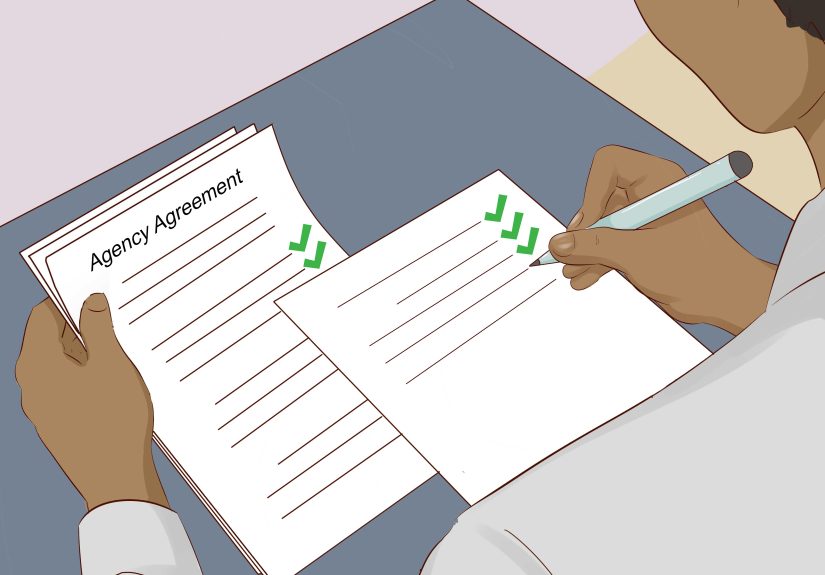
This is one of the biggest strategic choices in the process. A host agency can give new advisors access to systems, support, and an established accreditation number. That means you may be able to start selling sooner without immediately applying for your own full accreditation.
Going independent can offer more control, but it usually comes with more responsibility, more compliance work, and more pressure to prove your business legitimacy to suppliers and partners. Freedom is wonderful. So is not drowning in admin during your first year.
Step 13: Handle legal and compliance requirements like a pro
If you are building a travel business, this step is non-negotiable. Depending on where and how you operate, you may need business registration, licenses, good-standing documents, banking records, insurance, and seller-of-travel compliance. For example, California requires sellers of travel to register and display the registration number in advertising, and Florida also requires annual seller-of-travel registration for covered businesses.
Ignore compliance and your fancy certification starts looking a lot less fancy. Professional credibility is built as much on paperwork as on passion.
Step 14: Apply for IATAN or ARC when your business is ready
If you are at the point where you need agency recognition, this is where the serious business path begins. IATAN accreditation is designed for U.S. travel businesses that can meet its standards and document legitimate operations. ARC accreditation is the path for agencies seeking direct air ticketing capability, and it comes with its own staffing, documentation, and financial requirements.
This is also the moment to stop treating accreditation like a vanity badge. It is an operational credential. Apply when it supports the way your business actually works, not just because the acronym looks cool in your bio.
Step 15: Maintain your status and keep leveling up
Becoming IATA certified is not a one-and-done event. Strong professionals keep learning, renew what needs renewing, maintain compliant records, and add related credentials as their career matures.
If you qualify through an accredited location, you may eventually pursue an IATA/IATAN ID card, which has specific eligibility rules tied to age, work activity, registration status, and prior earnings. Beyond that, continuing education through ASTA, The Travel Institute, supplier programs, and specialized niche training can make you more marketable and more profitable over time.
In short: do not stop at “certified.” Aim for “trusted.” That is the credential clients actually remember.
Common Mistakes to Avoid
The biggest mistake is assuming there is one universal U.S. travel-agent certification that automatically covers every career path. There is not. Another mistake is paying for a credential before deciding whether you want to work under a host agency, inside an existing travel business, or as an independent seller of travel.
A third mistake is focusing only on perks. Yes, travel credentials can bring recognition and access to professional benefits. No, they are not a shortcut to a glamorous life of airport lounges and suspiciously discounted beach resorts if you have not built the actual skills behind them.
And finally, do not underestimate ethics and professionalism. The advisors who last are not just the ones with the most letters after their names. They are the ones who communicate clearly, follow the rules, solve problems well, and make clients feel taken care of.
Final Thoughts
If you want the simplest version of the truth, here it is: becoming IATA certified is less about chasing one magical badge and more about building a professional ladder. First, learn the industry. Then earn the right training. Then gain experience. Then choose the accreditation or ID path that matches your business model.
That is how professionals do it.
So if you are serious about travel, tourism, or aviation, do not ask only, “How do I get IATA certified?” Ask the better question: What kind of travel professional do I want to become? Once you answer that, the steps become much clearer, the acronyms become much less annoying, and the whole path starts to look a lot more like a career and a lot less like a scavenger hunt.
Real-World Experience: What the Journey Actually Feels Like
On paper, the road to becoming IATA certified looks wonderfully neat. Choose a path. Enroll in training. Study. Pass. Build experience. Apply for the next level. In real life, it is a little messier, and that is not a bad thing. In fact, that messy middle is usually where future travel professionals become good at their jobs.
Most people do not begin as polished experts with perfect supplier relationships and a color-coded booking system. They begin with curiosity. They like travel. They like planning. They like helping people. Then they realize the industry is part customer service, part operations, part sales, part compliance, and part “please stay calm while I fix this airline mess before lunch.” That is when the career starts becoming real.
One common early experience is discovering that training gives you confidence, but not instant mastery. You may finish a course feeling energized, only to have your first real client ask a question that sends you straight back to your notes. That does not mean the training failed. It means you are learning the way professionals learn: first in theory, then under pressure, then through repetition.
Another common experience is realizing how valuable structure is. New advisors who create routines tend to progress faster. They track supplier contacts, save templates, organize client details carefully, and keep records of courses, credentials, and compliance documents. The glamorous side of travel gets plenty of attention on social media, but the people who build durable businesses are often the ones with clean files, strong follow-up habits, and a calendar that actually works.
There is also a mindset shift that happens once you stop seeing certification as the finish line. The strongest professionals treat it as a signal: proof that they are serious enough to invest in their craft. That attitude changes how they show up. They ask better questions. They listen more carefully. They handle mistakes faster. They stop chasing shortcuts and start building trust.
And yes, there can be exciting moments too. The first time a client thanks you for saving a trip. The first time a supplier treats you like a real industry professional. The first time you look at a complicated itinerary and think, “A few months ago this would have terrified me, and now it just looks like work.” Those moments matter because they prove the transformation is happening.
So if the process feels big at first, that is normal. Every experienced advisor was once the beginner trying to decode industry terminology and figure out which credential meant what. The people who succeed are usually not the ones who know everything right away. They are the ones who stay teachable, stay organized, and keep moving. Step by step, course by course, client by client, they stop trying to look like travel professionals and start becoming them.