Table of Contents >> Show >> Hide
- Why a Halloween Coffin Works So Well
- Choose the Right Type of Coffin Before You Build
- Recommended Size for a Halloween Coffin Prop
- Materials for a Safe, Sturdy Build
- Safety First, Because a Halloween Prop Should Not Become a Horror Story
- How To Build a Halloween Coffin Step by Step
- How To Paint and Distress the Coffin for Maximum Drama
- Best Ways To Display a Halloween Coffin
- Common Mistakes To Avoid
- Budget Tips for a Cheap but Impressive DIY Halloween Coffin
- Real Build Experience: What Actually Happens When You Make One
- Final Thoughts
- SEO Tags
Some Halloween decorations whisper spooky. A coffin, on the other hand, kicks in the front door, throws on a black cape, and announces that your porch has entered its dramatic era. The good news is that building a Halloween coffin prop does not have to feel like advanced carpentry mixed with a thunderstorm soundtrack. With the right shape, a sturdy frame, a smart finish, and a few common-sense safety steps, you can create a coffin that looks eerie, stylish, and impressively expensive without turning your garage into a haunted lumberyard.
This guide walks through a practical, beginner-friendly approach to making a DIY Halloween coffin for a porch, yard display, party backdrop, or haunted house scene. To keep the project safer and more manageable, the easiest version starts with panels cut for you at the store or by an experienced adult, then moves into assembly, sanding, painting, distressing, and staging. The end result is a prop that looks custom-built, photographs beautifully, and says, “Yes, I absolutely commit to seasonal decor.”
Why a Halloween Coffin Works So Well
A Halloween coffin prop is one of those rare decorations that does several jobs at once. It gives instant visual height and shape to a display, works with gothic, vintage, funny, or full-haunt themes, and can be decorated in wildly different ways. Paint it matte black and it feels classic. Distress it with gray and brown and it looks like it rose from a foggy graveyard. Add velvet lining, fake chains, old hardware, or battery candles nearby, and suddenly your yard looks like it has a production budget.
It is also surprisingly flexible. Stand it upright against a wall for a dramatic entry piece. Lay it flat and use it as a focal point in a cemetery scene. Prop the lid open and fill it with a skeleton, faux flowers, ravens, or string lights. In other words, the coffin is not just decor. It is a stage.
Choose the Right Type of Coffin Before You Build
1. Flat decorative coffin
This is the easiest option. It is basically a coffin-shaped panel that hangs on a wall or leans against a porch. It looks great, stores easily, and uses less material.
2. Shallow 3D coffin prop
This version has depth, usually around 6 to 10 inches, which gives it that real prop presence without making it absurdly heavy. For most people, this is the sweet spot.
3. Full display coffin with lid
This is the crowd-pleaser. It has a bottom, side walls, and a removable or hinged lid. It is ideal for yard scenes, photo backdrops, and theatrical displays.
For a first project, a shallow or medium-depth coffin is the best choice. It is easier to move, easier to paint, and much easier to store when Halloween is over and your garage resumes pretending to be normal.
Recommended Size for a Halloween Coffin Prop
You do not need museum-perfect dimensions. You need proportions that look right from the sidewalk. A dependable display size is about 72 inches long, around 22 to 24 inches wide at the shoulders, 16 to 18 inches wide at the head, and 12 to 14 inches wide at the foot. Depth can range from 6 to 10 inches depending on how chunky and dramatic you want it to feel.
If that sounds large, good. Halloween props should be slightly extra. That is half the fun. Still, if you are building for an apartment, party table, or indoor scene, scale it down. A coffin that fits your space always looks better than one that looks like it is trying to file a change-of-address form.
Materials for a Safe, Sturdy Build
Here is a practical materials list for a plywood or MDF coffin prop:
- 1 or 2 sheets of 1/2-inch plywood or MDF, depending on size
- 1×2 or 1×3 boards for internal cleats and supports
- 1 1/4-inch wood screws
- Wood glue
- Wood filler or spackle for seams and screw holes
- 120-grit and 180-grit sandpaper
- Primer
- Matte black, charcoal, brown, or deep burgundy paint
- Optional dry-brush paint colors like gray, tan, or antique bronze
- Optional hinges, chain, decorative handles, or faux hardware
- Tack cloth or microfiber cloth for dust removal
- Battery-powered candles or LED lights for display
If you want the easiest route, ask the home improvement store to cut the large sheet goods into rough rectangles, then have an experienced adult handle the angled coffin cuts if needed. That gives you cleaner pieces, less stress, and far fewer opportunities to invent new curse words in the driveway.
Safety First, Because a Halloween Prop Should Not Become a Horror Story
Before you start, wear eye protection and use a stable work surface. Keep the workpiece supported, keep hands away from moving parts, and avoid working around wet cords or outdoor power without proper protection. If any power tool is involved, make sure guards are in place, the material is clamped, and the person doing the cutting actually knows what they are doing. For younger builders, the best plan is simple: let an adult handle cutting and drilling, then jump in for measuring, sanding, painting, decorating, and final styling.
Also, skip real candles inside or near the coffin. Use battery-powered tea lights, LED candles, or hidden string lights instead. They deliver the spooky glow without inviting the fire department to join your haunted display.
How To Build a Halloween Coffin Step by Step
Step 1: Make a simple template
Start by sketching your coffin shape on paper or cardboard. Mark the head width, shoulder width, foot width, and total length. The classic coffin shape is basically a long hexagon: wider through the shoulders, narrower at the top and bottom. Making a template first helps you spot weird proportions before wood enters the chat.
Step 2: Cut or order the main panels
You need a front panel and a back panel in the coffin shape. If you are making a full 3D coffin, you also need side pieces for the long edges, head, shoulders, lower taper, and foot. Keep the depth manageable. For most displays, 6 to 8 inches is plenty.
For a safer build, use pre-cut panels whenever possible. If cutting is required, have an experienced adult do it. Straight, accurate cuts matter more than speed here. A wobbly coffin can still be spooky, but mostly in the “who built this in a wind tunnel?” sense.
Step 3: Build the support frame
Cut 1×2 boards to create internal cleats around the inside edge of the back panel. These support strips give the side walls something solid to attach to. Think of them as the skeleton of your skeleton box. Keep them slightly inset from the edge so the side walls and lid sit flush.
Step 4: Dry-fit everything first
Before using glue or screws, place all the pieces together and check the fit. This is where you catch crooked angles, awkward gaps, and that one panel that somehow ended up upside down despite your excellent confidence earlier.
Step 5: Predrill and assemble
Predrill pilot holes before driving screws, especially near panel edges and when using plywood or MDF. This helps prevent splitting, keeps screws from wandering, and makes the whole project feel much more cooperative. Add wood glue at the joints, then fasten the side pieces to the internal cleats and to one another. Work slowly and keep checking for square.
Once the sides are secure, attach the top panel if you want a permanently closed coffin, or build a separate lid if you want it to open. A removable lid is easiest. Hinges look great, but only add them after the structure feels solid.
Step 6: Reinforce the lid if needed
If your lid feels flimsy, add a couple of support strips on the underside. This helps prevent warping and gives the lid a more substantial feel. For upright display coffins, add a cross brace at the back or a simple stand so it does not tip over when a strong breeze decides to audition for the role of “ominous wind.”
Step 7: Fill, sand, and smooth
Use wood filler or spackle on screw heads, gaps, and rough seams. Let it dry completely, then sand the whole piece smooth. Start around 120 grit and move to 180 grit where needed. Wipe away every last bit of dust with a tack cloth or microfiber cloth. This is one of those boring steps that magically separates “homemade in a good way” from “homemade in a suspicious way.”
How To Paint and Distress the Coffin for Maximum Drama
Prime first
Primer helps paint stick better and keeps porous wood or MDF from drinking your finish like it just crossed the desert. Apply an even coat and let it dry fully. If the surface feels fuzzy afterward, sand it lightly and wipe away the dust.
Use layered paint for an aged look
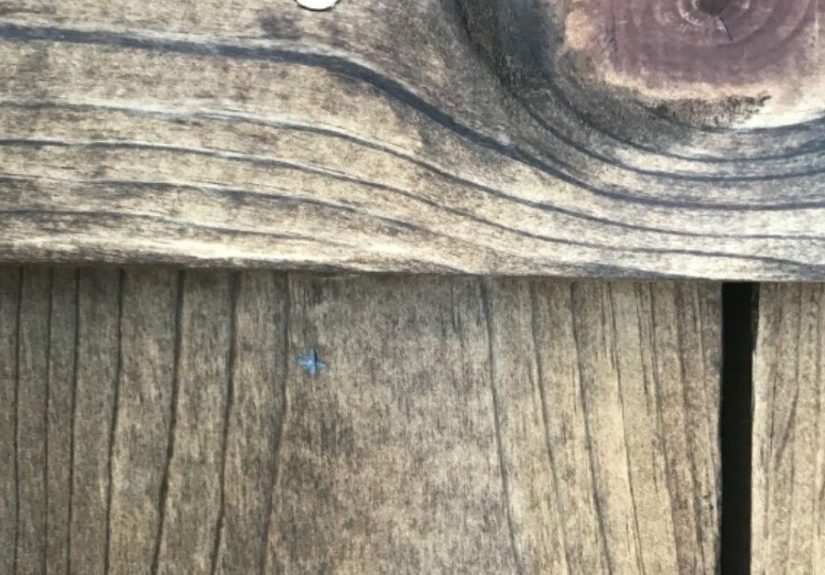
A single coat of black can work, but layered paint looks richer. Start with a dark base coat such as matte black, espresso brown, or charcoal. After it dries, lightly dry-brush gray, taupe, or muted brown across edges, corners, and raised areas. This creates the look of age, wear, and weathering.
Distress strategically
Do not sand random patches like you are in a race against dignity. Focus on corners, edges, handles, and lid details where natural wear would happen. Medium-grit sandpaper or even fine steel wool can soften the finish and reveal some of the underlayer. The goal is “old and haunted,” not “accidentally dragged behind a truck.”
Add details that sell the illusion
Decorative hardware makes a huge difference. Fake iron straps, chain, corner brackets, rope handles, black hinges, or even painted-on trim lines add depth. You can also stencil on a family name, a ridiculous epitaph, or a made-up date if you want the prop to lean funny instead of frightening.
Best Ways To Display a Halloween Coffin
Porch display
Stand the coffin upright beside the front door, surround it with pumpkins, lanterns, black fabric, and faux ravens, and let the whole setup look gloriously overcommitted.
Graveyard scene
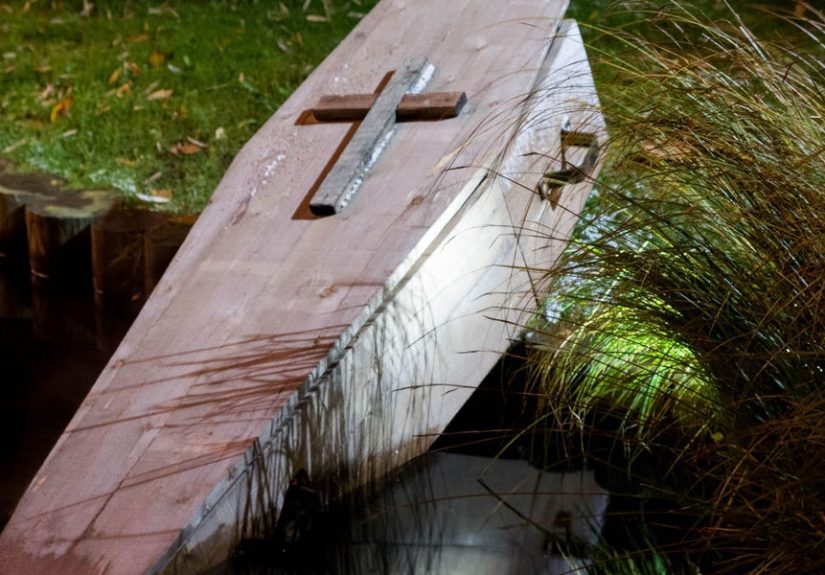
Lay the coffin slightly open in a bed of mulch, leaves, or fake moss. Add a skeleton arm reaching out and suddenly you are the interesting house on the block.
Party photo backdrop
Use the coffin as a central prop with candles, frames, cobwebs, and a gothic sign. Guests will line up for photos faster than you can say “Please do not actually climb in there.”
Indoor haunted corner
For indoor decorating, pair the coffin with velvet drapes, antique-look frames, stacked books, and low, warm LED lighting. It adds instant theatrical mood without swallowing the entire room.
Common Mistakes To Avoid
- Making it too deep: Bigger is not always better. A coffin that is too bulky becomes hard to move and store.
- Skipping pilot holes: This often leads to split edges, crooked screws, or cracked MDF.
- Ignoring surface prep: Paint looks dramatically better on filled, sanded, dust-free wood.
- Overdoing the distressing: A little wear looks believable. Too much makes it look like the coffin survived a bar fight.
- Using real flames: Flameless candles are the better choice for safety and sanity.
- Forgetting storage: Build with the off-season in mind. Removable lids and manageable depth save space later.
Budget Tips for a Cheap but Impressive DIY Halloween Coffin
If you are trying to keep costs low, use thinner material for decorative builds, reclaimed boards for trim, and leftover paint for undercoats. Scrap wood works beautifully for internal supports because nobody sees it. You can also fake expensive hardware with painted wood shapes or lightweight decorative pieces. The trick is to spend money where eyes land first: the silhouette, the finish, and the staging.
And remember, no one at a Halloween party is crouching down with a clipboard to inspect your joinery. They are too busy saying, “Whoa, did you make that?” That is the sweet spot.
Real Build Experience: What Actually Happens When You Make One
The first time I helped put together a Halloween coffin decoration, I expected the hard part to be the shape. It was not. The shape was the fun part. Draw the lines, admire the silhouette, nod like a cinematic genius, and suddenly you feel like you are one dramatic thunderclap away from your own horror set. The real challenge was everything that came after: making the coffin look intentional instead of like six boards that had a difficult week.
We started with a solid plan and, naturally, immediately learned that wood loves surprises. One panel was a hair off. One angle looked perfect until it met the next angle and both pieces decided to become strangers. The lid fit, then did not fit, then fit again after what can only be described as persuasive sanding. That was the moment the project stopped being a fantasy and became a real DIY experience. Not bad. Just honest.
What helped most was slowing down. Dry-fitting the pieces before assembly saved the whole build. So did predrilling. It sounds minor until you skip it and hear that heartbreaking crack near an edge. That noise has a way of making you suddenly respectful. Once the frame was together, everything got easier. The coffin finally stopped looking like parts and started looking like a prop.
Painting was where the magic showed up. The first coat looked flat and a little disappointing, like a serious object trying not to yawn. Then came the second pass, the brushed-on gray highlights, the brown in the corners, and a little sanding on the edges. Suddenly the piece had age. It had mood. It had the kind of theatrical nonsense Halloween decor absolutely deserves. A simple black box became something that looked like it had family history and maybe a curse attached.
The funniest part was staging it. Indoors, it looked cool. On the porch, with pumpkins, lanterns, and a fake crow, it looked ten times better. That is when I learned a coffin prop is never really finished on the workbench. It comes alive in the display. Lighting, fabric, leaves, fog, old books, signs, and nearby decor do a lot of the storytelling. The prop does not need to do everything by itself. It just needs to give the scene a strong backbone.
I also learned that perfection is wildly overrated on Halloween. Tiny dents, uneven distressing, slightly worn edges, and old-looking hardware actually improve the illusion. This is one of the few projects where a little roughness can be charming. You are not building fine dining furniture. You are building a coffin. It should have some attitude.
By the end, the project felt less like basic assembly and more like set design. That is why people love making them. A Halloween coffin is not just wood and paint. It is atmosphere you can carry. It is proof that a few sheets of material, some patient prep, and a bold finish can turn a corner of your house into a full spooky moment. Also, it gives you a deeply satisfying excuse to say things like, “I need more ravens,” which is not a sentence everyday life offers nearly enough.
Final Thoughts
If you want a Halloween project with big visual payoff, a DIY coffin is hard to beat. It is dramatic without being impossible, customizable without being fussy, and useful in almost any spooky setup. Keep the proportions clean, build the structure solidly, take your time on the finish, and let the display styling do the final heavy lifting. The result can look elegant, creepy, funny, vintage, or full haunted-mansion theatrical, depending on how far you want to lean into the season.
Most of all, keep it safe, especially if younger builders are helping. Let an adult handle cutting and drilling, use proper protective gear, skip open flames, and treat the project like what it is supposed to be: a fun seasonal prop with serious personality. Build it well, paint it like you mean it, and give your neighbors something delightfully eerie to gossip about until Thanksgiving.