Table of Contents >> Show >> Hide
- Plan First: What Kind of Outdoor Sink Are You Actually Building?
- Pick the Location Like You’re Installing Convenience (Because You Are)
- Choose a Sink and Stand That Can Handle Real Life
- Tools and Materials Checklist
- Water Supply Options: Simple vs. “Feels Like a Real Kitchen”
- Drainage Options: Where the Water Goes Matters
- Build Path 1: A One-Afternoon Hose-Fed Outdoor Sink
- Build Path 2: A More Permanent Outdoor Sink With Real Plumbing
- Step 1: Plan the supply route (and add a shutoff you can access)
- Step 2: Run supply lines through the wall safely
- Step 3: Connect the faucet with proper fittings
- Step 4: Build the drain like a real sink drain
- Step 5: If using a dry well, build it thoughtfully
- Step 6: Backflow and contamination prevention (don’t skip the “boring” safety)
- If You Add Electricity: Keep It Safe and Weatherproof
- Make It Last: Weatherproofing, Winterizing, and Maintenance
- Cost: What You’ll Likely Spend
- Conclusion: The Best Outdoor Sink Is the One You’ll Actually Use
- Field Notes: of Real-World Outdoor Sink Experience
An outdoor sink is one of those “why didn’t I do this sooner?” upgrades. You rinse muddy hands after gardening, wash
grill tools without baptizing your indoor kitchen, and clean backyard science projects (a.k.a. kids) before they
redecorate your couch. The best part: you can build a simple outdoor sink in a single afternoonor go more permanent
with real supply lines and proper drainage if you want something that feels like part of an outdoor kitchen.
This guide walks you through both approaches (portable and plumbed), plus drainage options, cold-weather
considerations, and real-world tips so you don’t end up with a wobbly sink that looks confident but acts suspicious.
Plan First: What Kind of Outdoor Sink Are You Actually Building?
Before you buy anything, decide what “outdoor sink” means for your yard. There are two common builds:
-
Garden/utility sink (simple): Cold water only, often fed from a garden hose or a nearby spigot.
Drainage is usually a bucket, gravel pit, or a dry well (where allowed). -
Outdoor kitchen sink (more permanent): Plumbed supply lines (cold and maybe hot), a real trap,
and a drain that ties into an approved system (often sewer/septic or a code-compliant solution).
The difference matters because water supply and drainage rules can vary by state and municipality. If you’re doing
permanent plumbing (especially tying into sewer/septic), treat it like a real plumbing project: plan the route,
consider permitting, and follow local code.
Quick reality check: water in + water out
An outdoor sink is basically two problems that want to be solved in the correct order:
How will I supply water safely? and Where does the wastewater go?
If you can answer those two questions cleanly, the rest is just carpentry and confidence.
Pick the Location Like You’re Installing Convenience (Because You Are)
Choose a spot that makes daily use easy and long-term maintenance painless:
- Near a water source: close to an exterior spigot (hose-fed) or near an interior plumbing wall (plumbed).
- With a sensible drain path: avoid spots where water will pool, undermine a patio, or run toward your foundation.
- On stable ground: concrete pad, pavers, compacted gravel, or a properly built base.
- Protected (a little): partial shade helps in summer; some wind protection helps if you’re adding a backsplash or shelving.
- Cold-climate friendly: if your area freezes, pick a location where winterizing is simple (easy access to shutoff/drain).
Choose a Sink and Stand That Can Handle Real Life
Sink options
- Plastic utility sink: budget-friendly, light, and forgiving. Great for garden cleanup and messy projects.
- Stainless steel sink: durable, easy to sanitize, and looks “outdoor kitchen” instantly.
- Repurposed sink (salvage): old bar sink or small kitchen sink works well if it’s not cracked and you can mount it securely.
Stand options
- Treated-lumber frame: classic DIY; easy to customize height and add shelves.
- Outdoor cabinet or cart: hides plumbing and supplies; choose materials rated for exterior use.
- Metal table/stand: quick and sturdy; good for utilitarian builds.
Pro tip: set the sink height based on your most common task. Washing hands? Standard counter height feels right.
Cleaning big pots or rinsing harvest baskets? Slightly lower can reduce wrist strain.
Tools and Materials Checklist
Your exact shopping list depends on which build path you choose. Here’s a practical “most common” checklist you can
adapt.
Basic build (hose-fed) materials
- Utility sink or stainless bar sink
- Outdoor-rated stand (or lumber to build one)
- Faucet (garden-hose-friendly adapter helps)
- Garden hose + quick-connect fitting (optional, but you’ll love it)
- Drain assembly for the sink (strainer + tailpiece)
- Flexible drain hose or PVC stub to a bucket/gravel area
- Exterior screws, construction adhesive (optional), silicone sealant
Plumbed build (more permanent) materials
- PEX or copper supply lines + fittings (PEX is DIY-friendly)
- Shutoff valve(s) and (in cold climates) a drain-down/bleeder setup
- Pipe insulation where needed
- Trap kit (P-trap) and drain piping (PVC/ABS as allowed)
- Primer/cement for PVC (if applicable)
- Wall sleeve/escutcheon + exterior-grade sealant for any wall penetration
- Drain solution: approved tie-in, dry well components, or another code-compliant method
Optional upgrades
- Backsplash panel (stainless, PVC sheet, or tile on cement board)
- Hose reel or sprayer faucet
- Soap dispenser + towel bar
- Weatherproof GFCI outlet and light (if you need electricity nearby)
Water Supply Options: Simple vs. “Feels Like a Real Kitchen”
Option A: Hose-fed (fast, inexpensive, low-commitment)
This is the most popular DIY outdoor sink plumbing approach for gardens and patios. You supply water from an outdoor
spigot using a garden hose. It’s perfect if you don’t need hot water and don’t want to open walls.
Best for: rinsing vegetables, washing hands, cleaning garden tools, and quick backyard cleanup.
Option B: Plumbed supply lines (more work, more comfort)
If you want hot water, a cleaner look, or year-round reliability, you can run a dedicated cold line (and possibly
hot) to the sink. This often means tapping into a nearby supply line inside the house and routing pipes through an
exterior wall.
Best for: outdoor kitchens, frequent entertaining, washing cookware, or any setup where you want
“turn the handle, get water” without dragging hoses around like you’re watering a cactus that owes you money.
Drainage Options: Where the Water Goes Matters
Drainage is the part most people underestimateand it’s also the part that can cause the biggest headaches if done
wrong. Your options generally fall into these buckets:
1) Bucket drain (simplest)
The sink drains into a removable bucket or container. You empty it into an appropriate place.
This is often the easiest “no code drama” solution for a hose-fed garden sink.
2) Dry well or gravel pit (common, but check local rules)
Some DIY builds route sink wastewater to a simple dry well: a gravel-filled area where water disperses into soil.
This can work well for occasional rinsing, especially if you use minimal soap and you’re not dumping grease or food
sludge.
Important: rules around graywater and onsite disposal vary. Some places are strict about what can
be discharged and where. Treat this as a “verify first” item.
3) French drain style dispersion
Similar idea to a dry well, but the water disperses along a gravel trench. Works best in soils that drain well.
4) Tie into sewer/septic (most permanent, often best for outdoor kitchens)
If your outdoor sink is truly part of an outdoor kitchenespecially if you’ll be washing greasy cookwarethis is
usually the cleanest long-term approach. It’s also the most likely to require permits or professional help.
5) Graywater reuse for landscape (only if allowed and appropriate)
Some jurisdictions allow certain graywater reuse for irrigation, but definitions vary widely. In many places,
wastewater from kitchen sinks is treated differently than laundry/shower water, and soaps/detergents may be restricted.
If you’re thinking of reusing water, research your state/local guidance first.
Build Path 1: A One-Afternoon Hose-Fed Outdoor Sink
This is the “high reward, low commitment” version. You can build it with basic tools, and it’s easy to modify later.
Step 1: Build a sturdy stand (don’t trust gravity to do your job)
Use treated lumber (for ground contact if needed) or an outdoor-rated stand. Add cross-bracing so the sink doesn’t
wobble when you scrub a pot like it insulted your cooking. If you’re building from lumber:
- Frame a top opening sized to your sink’s rim or mounting flange.
- Add a lower shelf for buckets, soap, and hose fittings.
- Use exterior screws and consider metal corner brackets for stiffness.
Step 2: Install the sink
Drop-in sinks typically clamp to the countertop/stand. Utility sinks often mount with brackets. Seal edges with
silicone if needed to prevent water intrusion into wood.
Step 3: Mount the faucet and connect the hose
Choose a faucet that can accept garden-hose supply (either directly or with an adapter). Many DIY builds use a
standard faucet with a hose-thread adapter or a purpose-built utility faucet.
Add a quick-connect at the spigot and a matching fitting on your sink supply hose. This turns setup into a
two-second click instead of a five-minute wrestling match with a hose that has the grip strength of an anaconda.
Step 4: Add a simple drain
Install a standard sink drain strainer and tailpiece. Then choose your drain destination:
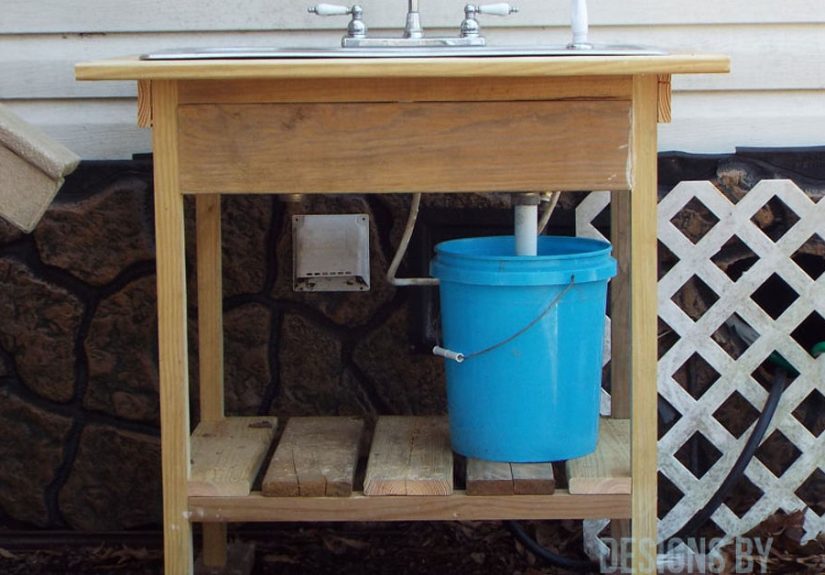
- Bucket: simplest and most controllable.
- Gravel area: workable for occasional rinsing (verify local rules and keep soaps minimal).
If you skip a trap (common on bucket-drain setups), understand what you’re trading:
no trap means no water seal, which can mean odors if you connect to anything that can stink. If it’s a true “bucket
drain,” you’re usually fine.
Step 5: Test and tune
- Turn on water slowly and check faucet connections for leaks.
- Fill the basin and release the drain to confirm fast drainage and no drips.
- Wiggle the standthen brace it until it stops wiggling.
Build Path 2: A More Permanent Outdoor Sink With Real Plumbing
If you want a backyard sink that behaves like an indoor sink, this is the path. It’s also the path where “do it
right” matters more than “do it fast.”
Step 1: Plan the supply route (and add a shutoff you can access)
The smart move is placing a shutoff valve indoors where you can reach it easily. In freezing climates, you want a
way to drain the line after shutting off water so pipes don’t freeze.
If you’re adding hot water, you’ll need a hot supply route (or a small point-of-use water heater rated for
installation in your environment). For many homeowners, cold-only outdoors is the sweet spot.
Step 2: Run supply lines through the wall safely
Drill through an exterior wall at a planned location. Use a sleeve or protective pass-through where appropriate,
then seal the penetration with exterior-grade sealant to keep water and pests out.
Step 3: Connect the faucet with proper fittings
Use shutoffs at the sink (angle stops) if the design allows, and connect with braided lines or appropriate PEX
connections. Secure piping so it’s not flopping around every time you turn the handle.
Step 4: Build the drain like a real sink drain
Install a P-trap under the sink. This water seal helps prevent odors and keeps the system behaving properly.
Then route the drain to your chosen destination.
If you’re routing to an approved exterior disposal method like a dry well (where allowed), slope the pipe away from
the house so it drains consistently. A common DIY target is a gentle continuous slope rather than “flat with hope.”
Step 5: If using a dry well, build it thoughtfully
A typical simple dry well concept uses a dug-out area with gravel and a basin to disperse water. Even if your build
is small, keep these principles in mind:
- Keep discharge away from the foundation.
- Use gravel for drainage and a catch basin to reduce erosion.
- Use minimal soap; never dump grease or harsh chemicals.
Step 6: Backflow and contamination prevention (don’t skip the “boring” safety)
Any time hoses and outdoor faucets get involved, think about how contamination could travel backward. A basic rule
of thumb: avoid creating situations where the hose end can sit in dirty water or where contaminated water could be
pulled back toward potable supply during unusual pressure conditions.
Practical habits help: don’t leave hose ends submerged, keep sprayers above the rim, and consider backflow/air-gap
best practices depending on your setup. When in doubt for a permanent install, consult a licensed plumber familiar
with local requirements.
If You Add Electricity: Keep It Safe and Weatherproof
Many outdoor sinks become mini “wash stations” with a task light, mini fridge, or power tools nearby. Outdoors +
water means you need to treat electrical safety as non-negotiable.
- Use GFCI protection for outdoor receptacles and for outlets serving areas near sinks, as required by modern electrical standards.
- Use weather-resistant covers (in-use/bubble covers) for outlets exposed to moisture.
- Keep cords and power strips off the splash zonemount outlets at sensible heights and locations.
If you’re not comfortable wiring outdoors, hire an electrician. This is one area where “I watched a video once” is
not a credential.
Make It Last: Weatherproofing, Winterizing, and Maintenance
Weatherproofing
- Use exterior-rated materials: treated lumber, stainless fasteners, exterior paint/sealer.
- Seal cut edges: especially on treated wood and any countertop materials.
- Protect plumbing: keep piping tucked away, add insulation where helpful, and shield from direct sun if possible.
Winterizing (for freezing climates)
If your region drops below freezing, winterizing is essential. A simple, reliable routine looks like this:
- Shut off the water supply (preferably at an interior valve if you have one).
- Disconnect hoses and drain them.
- Open the faucet to let remaining water escape.
- Drain low points (or remove the trap, if your setup requires it) so no water sits and freezes.
- Cover exposed exterior faucets or components for extra protection.
Maintenance
- Clean the basin regularly if you wash produce (a mild soap and rinse is usually enough).
- Check for small leaks a few times a seasontiny drips become big stains.
- Flush and rinse drain components if you notice slow drainage or odors.
Cost: What You’ll Likely Spend
Costs vary wildly based on materials and how permanent you go, but here are realistic ranges:
- Hose-fed DIY outdoor sink: typically $100–$300 (sink, stand materials, faucet, fittings).
- Plumbed outdoor sink (cold only): often $300–$900+ (piping, shutoffs, trap, drain routing, weatherproofing).
- Outdoor kitchen sink with hot water + approved drain tie-in: $800–$2,500+ depending on distance, finishes, and labor.
If you’re building an outdoor kitchen sink as a long-term feature, think of the “invisible” costs as part of the
investment: safe supply, proper drainage, and winter protection can save you from repairs later.
Conclusion: The Best Outdoor Sink Is the One You’ll Actually Use
A great DIY outdoor sink doesn’t need to be fancyit needs to be stable, easy to use, and thoughtfully planned for
water supply and drainage. Start with a hose-fed garden sink if you want fast results and minimal commitment. Go
plumbed if you want a true outdoor kitchen sink experience and you’re ready to follow the rules that come with it.
Build it once, build it sturdy, and give yourself the gift of washing up outdoors without trekking indoors like a
muddy pilgrim. Your floors (and your future self) will thank you.
Field Notes: of Real-World Outdoor Sink Experience
The first outdoor sink I ever helped someone build was a masterpiece of optimism. We had a plastic utility tub,
a “temporary” wooden stand, and a garden hose that was absolutely going to behave. The sink workedtechnically. But
the stand wobbled like it had stage fright. That’s lesson one: the scrubbing motion is sneakily violent. You don’t
notice it indoors because cabinets and walls are doing the heavy lifting. Outdoors, your frame is the cabinet, so
overbuild it. Add cross braces. Add corner brackets. If you think it’s enough, give it one more brace anyway.
Lesson two: drainage is where outdoor sinks go from “cute” to “complicated.” We initially ran the drain hose into a
bucket. Perfect. Until the bucket filled up mid-rinse and we discovered that people will keep washing things even
when the water has nowhere to golike a cartoon. After that, we switched to a larger container and made “empty the
bucket” part of the routine. If you’re hosting people, you either need a bigger plan or you’ll spend the evening
quietly dumping buckets while everyone else eats chips.
Lesson three: if you connect anything to a real drain system, you want a real trap. Once, someone skipped the P-trap
because “it’s outside, it can’t smell.” Reader, it can smell. If the drain line connects to anything that can carry
odorsor even just sits with gunkair movement outdoors doesn’t magically delete stink. A trap helps, and regular
rinsing helps more.
Lesson four: hose connections love to leak at the worst moment, usually right when you’re proud of your work and
showing it off. The fix is simple: good washers, good fittings, and not overtightening like you’re trying to win an
arm-wrestling contest against brass. Quick-connect fittings are also worth it. They reduce wear on threads and make
setup/teardown so easy you’ll actually do it.
Lesson five (the winter episode): if it freezes where you live, water left in lines will eventually expand and
create expensive surprises. The easiest outdoor sink to winterize is the one designed for winterizingmeaning an
interior shutoff, a way to drain down, and a habit of disconnecting hoses. Once you’ve seen a split fitting in
spring, you become emotionally invested in shutting valves in fall.
Finally, the “soap and plants” lesson: if you’re tempted to let sink water run into a garden bed, remember that
soaps, food particles, and whatever you just rinsed off can affect soil and plants. Even “natural” soap can be too
much in the wrong place. The outdoor sink is a tooltreat the wastewater thoughtfully, and you’ll keep both your
yard and your conscience clean.