Table of Contents >> Show >> Hide
- What Is Spinning Tackle?
- How to Cast Spinning Tackle: 13 Steps
- Step 1: Start with the right setup
- Step 2: Practice with a casting plug or hookless weight
- Step 3: Check your surroundings
- Step 4: Reel the lure to the correct starting position
- Step 5: Grip the rod properly
- Step 6: Trap the line with your index finger
- Step 7: Open the bail
- Step 8: Turn your body toward the target
- Step 9: Bring the rod back smoothly
- Step 10: Accelerate forward
- Step 11: Release the line at the right moment
- Step 12: Follow through and close the bail
- Step 13: Begin the retrieve and evaluate the cast
- Common Spinning Tackle Casting Mistakes
- Tips to Improve Accuracy and Distance
- When to Use Spinning Tackle
- Final Thoughts
- Extra Experience and Practical Lessons from the Water
If you have ever watched an experienced angler fire a lure toward a shady bank like they were mailing a letter with perfect postage, you already know this truth: casting spinning tackle looks easy right up until you try it yourself. Then suddenly the line has opinions, the lure lands six feet from your shoes, and the tree behind you becomes an unwanted fishing partner.
The good news is that learning how to cast spinning tackle is not black magic. It is mostly timing, a little body mechanics, and just enough patience to avoid throwing your dignity into the lake. Spinning gear is popular for a reason. It is beginner-friendly, versatile, and excellent for light lures, live bait, and all kinds of freshwater fishing. Once you understand the basics, your casts get smoother, longer, and much more accurate.
This guide breaks the process into 13 simple steps so you can learn how to cast a spinning reel with confidence. We will also cover common mistakes, quick fixes, and real-world experience tips that make the difference between “technically fishing” and actually putting your lure where the fish are.
What Is Spinning Tackle?
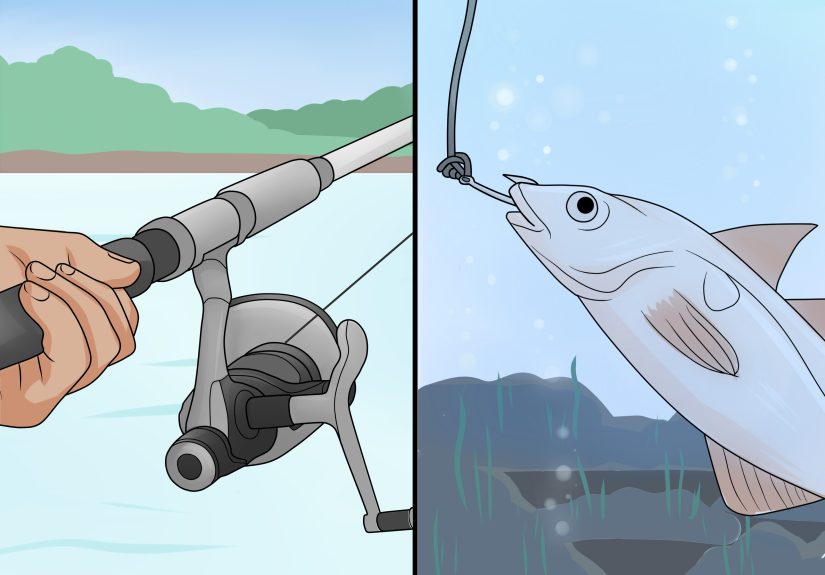
Before we start slinging lures, let’s clear up one common confusion. Spinning tackle usually means a spinning rod paired with an open-face spinning reel. The reel hangs under the rod, the spool stays fixed, and you cast by trapping the line with your index finger, opening the bail, and releasing the line at the right moment.
That is different from a spincast reel, which has a closed face and a push button. Both are useful, but this article focuses on classic spinning tackle.
How to Cast Spinning Tackle: 13 Steps
Step 1: Start with the right setup
Use a rod and reel that match each other. For most beginners, a medium-light or medium spinning combo is a sweet spot. Pair it with line that fits the reel’s recommended range and a lure or practice weight that matches the rod’s casting range. If your lure is too light, the rod will not load properly. If it is too heavy, the cast becomes awkward fast.
A balanced setup makes learning much easier. Think of it like learning to ride a bike with properly inflated tires instead of square wheels.
Step 2: Practice with a casting plug or hookless weight
If you are new, do not begin with a lure full of treble hooks unless you enjoy suspense. Practice with a casting plug, rubber weight, or a lure with the hooks removed. You can practice in a yard, open field, or empty shoreline area. This helps you focus on mechanics without turning the lesson into an emergency room origin story.
Step 3: Check your surroundings
Before every cast, look behind you and to both sides. This is not optional. Trees, fences, backpack straps, dock posts, and nearby people all have a mysterious attraction to fishing hooks. A safe casting lane is part of good technique, not a bonus feature.
Step 4: Reel the lure to the correct starting position
Bring the lure or practice weight in so it hangs about 6 to 12 inches below the rod tip. Too much line hanging down makes the cast sloppy. Too little can make the rod feel stiff and rob you of distance. That short drop gives the rod enough weight to load during the motion.
Step 5: Grip the rod properly
Hold the rod with your dominant hand. On most spinning rods, the reel hangs below the handle, and the reel stem sits comfortably between your middle fingers or between your index and middle finger, depending on what feels secure. Keep your grip firm but relaxed. You are casting a lure, not arm-wrestling a tractor.
Step 6: Trap the line with your index finger
Use your index finger to pull the fishing line lightly against the rod. This is the key move for spinning tackle. Your finger controls the line before release, and it needs to feel secure. If the line is slipping before you are ready, your cast will be a surprise party for everyone involved.
Step 7: Open the bail
With your free hand, flip the bail open while keeping the line pinned with your index finger. Once the bail is open, the line is ready to fly off the spool, but only when your finger lets it go. If you release too early, the lure drops. If you forget to open the bail, congratulations, you have invented a very short cast.
Step 8: Turn your body toward the target
Face the target at a slight angle rather than standing square. Keep your feet balanced and comfortable. Aim the rod tip roughly toward your target. Good casting is not just an arm motion. Your stance matters because balance helps accuracy and smoothness.
If you are right-handed, many anglers find it natural to stand with the left foot slightly forward. If you are left-handed, reverse it. No fancy athletic pose is required. Just look stable and reasonably unchaotic.
Step 9: Bring the rod back smoothly
Lift the rod back in one controlled motion, usually to around the 10 o’clock or 11 o’clock position. The goal is not to whip it behind you like you are trying to start a lawn mower. A smooth backcast sets up the forward cast. Keep the motion compact and under control.
Pause just enough to feel the lure’s weight. That weight loads the rod, storing energy for the cast.
Step 10: Accelerate forward
Now swing the rod forward with a smooth, increasing motion. The cast should build speed, not explode all at once. Think “fluid acceleration,” not “panic trebuchet.” Let the rod do some of the work. A spinning rod is designed to flex and spring forward, which helps carry the lure out.
This is one of the biggest beginner lessons: distance usually comes from timing and rod loading, not brute force.
Step 11: Release the line at the right moment
As the rod comes forward and reaches about eye level, straighten your index finger and let the line go. This timing is everything.
- If the lure dives into the ground in front of you, you released too late.
- If it shoots upward in a dramatic but unhelpful arc, you released too early.
- If it travels low and forward toward the target, you are getting it right.
The right release point takes practice, but once it clicks, it really clicks.
Step 12: Follow through and close the bail
After the release, let the rod continue naturally toward the target. Do not stop your hand abruptly. A smooth follow-through improves accuracy. Once the lure lands, close the bail. Many anglers prefer closing it by hand rather than cranking the handle immediately. That habit can help reduce line twist and keeps things neater on the spool.
Step 13: Begin the retrieve and evaluate the cast
Once the bail is closed and the line is under control, start your retrieve. But also pay attention to what just happened. Did the lure go left? Right? Too high? Too short? Every cast gives feedback. Good anglers are basically part fisherman, part detective, part person quietly judging their last cast.
Make small adjustments, not wild ones. Better timing, smoother acceleration, and cleaner release fix most problems fast.
Common Spinning Tackle Casting Mistakes
Using too much force
A harder cast is not always a better cast. Overpowering the rod often wrecks timing and accuracy. Let the rod load and unload naturally.
Releasing the line too early or too late
This is the classic beginner issue. Early release sends the lure skyward. Late release spikes it into the water or dirt. The cure is repetition, not frustration.
Starting with the wrong lure weight
If the lure is too light for the rod, the cast feels weak and awkward. Match the tackle properly so the rod can flex the way it should.
Ignoring the wind
Wind changes everything. Casting into a stiff headwind can shorten distance and balloon the line. When possible, lower your trajectory and use a smoother, more direct cast.
Forgetting line management
Twists, loose loops, and sloppy bail closure can create a bird’s nest on a spinning reel. Keep your line snug, close the bail neatly, and check for tangles before blaming the fish for your troubles.
Tips to Improve Accuracy and Distance
Practice short casts first
Do not obsess over bomb-casting across the county. Learn control at short and medium range, then build distance later.
Pick targets on purpose
Instead of randomly casting into open water, choose a leaf, bucket, dock edge, or patch of shade and aim for it. Target practice sharpens your mechanics much faster.
Use your wrist sparingly
A slight wrist motion can help, but too much creates inconsistency. Smooth arm movement plus controlled wrist action beats frantic flicking every time.
Watch experienced anglers
One of the best ways to improve is simply observing anglers who cast well. Notice how little drama there is in their motion. Good casting often looks almost boring. That is how you know it is working.
When to Use Spinning Tackle
Spinning tackle shines in a wide range of fishing situations. It works well for panfish, trout, bass, walleye, and many inshore saltwater species, depending on the size of the setup. It is especially useful for lighter lures, finesse presentations, and anglers who want a versatile outfit without the steeper learning curve of a baitcaster.
If you are teaching a beginner, spinning gear is often a great place to start because it offers strong control, fewer catastrophic tangles, and an easy path toward real fishing confidence.
Final Thoughts
Learning how to cast spinning tackle is one of those skills that can feel clumsy for about ten minutes, mildly confusing for another thirty, and then suddenly very satisfying for years. The trick is to keep the steps simple: set up correctly, trap the line, open the bail, cast smoothly, release at the right moment, and pay attention to what the lure tells you.
No one starts out casting like a tournament pro. Everyone starts somewhere between “not bad” and “why is my lure in a shrub.” The anglers who improve are not always the strongest or fanciest. They are the ones who practice, stay relaxed, and make small corrections.
So grab your spinning rod, find an open patch of grass or shoreline, and start practicing. With a little repetition, your casts will get cleaner, farther, and more accurate. And once that happens, fishing becomes a lot more fun and a lot less interpretive performance art.
Extra Experience and Practical Lessons from the Water
One thing many beginners do not realize is that casting looks very different in real-life conditions than it does in a calm practice session. In the yard, there is no wind, no overhanging branch, no dock cleat waiting to embarrass you, and no fish boiling near the bank to speed up your heartbeat. On the water, the cast becomes part mechanics and part decision-making. You are not just asking, “Can I throw this lure?” You are asking, “Can I place it there, quietly, without snagging that branch, while the breeze tries to turn my line into abstract art?”
A common experience with spinning tackle is discovering that your best casts often happen when you stop trying so hard. New anglers tend to muscle the rod because they think distance equals force. Then they watch a more experienced person make a relaxed, easy motion and send the lure farther with half the effort. That is usually the moment the light bulb turns on. A spinning rod works best when you let the blank load, release, and do its job. Once you trust the rod, your timing improves.
Another real-world lesson is that accuracy matters more than heroic distance. Plenty of fish are caught close to shore, along weed edges, beside laydowns, near dock posts, or along seams in moving water. The angler who can land a lure quietly beside a target will often outfish the person launching it into the next zip code. That is why experienced anglers spend so much time practicing controlled casts at modest range. It may not look flashy, but fish are rarely impressed by theater.
Wind also teaches humility. A gentle side breeze can push a light lure off target more than you expect. A headwind can turn a good cast into a soft plop far short of the mark. In those moments, spinning tackle rewards adjustment. Lower the cast angle. Use a slightly heavier lure if appropriate. Smooth out the motion. Do not fight the wind with anger; wind enjoys that.
Line management becomes part of the experience too. Sooner or later, almost every spinning-reel user deals with loops, twist, or a suspicious tangle that appears to have formed from pure spite. Usually the fix is simple: keep tension on the line, avoid overfilling the spool, close the bail neatly, and check the line after a bad cast. The anglers who do these small things consistently spend more time fishing and less time delivering speeches to their reel.
Perhaps the most valuable experience lesson is that practice transfers. Ten or fifteen careful casts in the yard with a plug can improve an actual fishing trip more than buying another lure ever will. Practice builds muscle memory, release timing, and confidence. Then, when a real opportunity appears on the water, you are not thinking through all 13 steps like a robot. You simply see the target, make the motion, and put the lure where it belongs.
That is when spinning tackle starts to feel natural. And once it feels natural, fishing gets a whole lot more enjoyable.