Table of Contents >> Show >> Hide
- What “Trackpad Sensitivity” Means on a Mac
- How to Change Trackpad Sensitivity on a Mac in 15 Steps
- Step 1: Click the Apple menu
- Step 2: Open System Settings
- Step 3: Choose Trackpad from the sidebar
- Step 4: Open the Point & Click section
- Step 5: Find the Tracking speed slider
- Step 6: Drag the slider left to slow the pointer down
- Step 7: Drag the slider right to make the pointer faster
- Step 8: Test the new speed immediately
- Step 9: Adjust the Click setting if pressing feels too hard or too light
- Step 10: Turn on Tap to Click if you want a lighter feel
- Step 11: Review Secondary Click so right-clicking feels natural
- Step 12: Decide whether Force Click and haptic feedback help or annoy you
- Step 13: Open Scroll & Zoom and check scrolling behavior
- Step 14: Go to Accessibility for double-click and scrolling speed controls
- Step 15: Re-test in the apps you actually use every day
- Best Mac Trackpad Settings for Different Types of Users
- Common Problems When Changing Trackpad Sensitivity on a Mac
- Extra Tips to Make Your Mac Trackpad Feel Better
- Real-World Experiences With Changing Trackpad Sensitivity on a Mac
- Conclusion
- SEO Tags
If your Mac’s trackpad feels like it had three espressos before breakfast, you’re not imagining things. Maybe the cursor zips across the screen when you only meant to move it a polite half-inch. Or maybe it crawls so slowly that selecting text feels like herding snails. Either way, you’re probably searching for one thing: how to change trackpad sensitivity on a Mac without falling into a maze of settings, tabs, and oddly specific Apple wording.
Here’s the first important truth: on a Mac, the setting you want usually isn’t labeled sensitivity. Apple typically calls it Tracking speed. But that’s only part of the story. What many people describe as trackpad sensitivity can also involve click firmness, Tap to Click, Force Click, scrolling behavior, and even double-click timing in Accessibility settings.
So this guide does not stop at one lonely slider. Instead, it walks you through the full tune-up in 15 clear steps, explains what each option actually does, and helps you get your Mac trackpad feeling less “haunted by tiny ghosts” and more “smooth, accurate, and quietly cooperative.”
What “Trackpad Sensitivity” Means on a Mac
On Windows laptops, people often talk about touchpad sensitivity in broad terms. On a Mac, that idea is split into several settings:
- Tracking speed: how fast the pointer moves when your finger moves across the trackpad.
- Click firmness: how hard you need to press for a click to register on supported Mac trackpads.
- Tap to Click: whether a light tap counts as a click, so you do not have to press down.
- Force Click and haptic feedback: whether a deeper press triggers extra actions and tactile feedback.
- Double-click speed and scrolling speed: extra controls that can change how responsive the trackpad feels.
In other words, if your Mac trackpad feels too fast, too slow, too stiff, too twitchy, or just plain moody, the fix may involve more than one setting. The good news is that macOS gives you plenty of control. The slightly funny news is that some of those controls are hiding like they owe rent.
How to Change Trackpad Sensitivity on a Mac in 15 Steps
Step 1: Click the Apple menu
Start in the top-left corner of your screen and click the Apple logo. This is mission control for most system-level settings on macOS.
Step 2: Open System Settings
Select System Settings. If you are using an older macOS version, you may see System Preferences instead. Same idea, different outfit.
Step 3: Choose Trackpad from the sidebar
Scroll the left sidebar if needed, then click Trackpad. This is the main area for adjusting MacBook trackpad settings and Magic Trackpad behavior.
Step 4: Open the Point & Click section
Inside the Trackpad menu, click Point & Click. This is where the most important trackpad responsiveness controls live.
Step 5: Find the Tracking speed slider
Look for Tracking speed. This is the setting most people really mean when they search for how to change trackpad sensitivity on a Mac.
Step 6: Drag the slider left to slow the pointer down
If the cursor feels too jumpy, move the slider to the left. This can help if you keep overshooting buttons, missing small icons, or accidentally turning spreadsheets into abstract art.
Step 7: Drag the slider right to make the pointer faster
If the cursor feels sluggish, move the slider to the right. This is useful if your finger has to travel too far just to reach the other side of the screen. On a larger display, a slightly faster setting often feels more natural.
Step 8: Test the new speed immediately
Do not guess. Open Finder, move across the Dock, select a few files, and scroll through a web page. A good trackpad speed should feel accurate without making you think about it every three seconds.
Step 9: Adjust the Click setting if pressing feels too hard or too light
Still in Point & Click, look for Click if your Mac supports it. You can usually choose Light, Medium, or Firm. If clicking feels tiring or inconsistent, a lighter setting can help. If you are triggering clicks by accident, try a firmer option.
Step 10: Turn on Tap to Click if you want a lighter feel
Enable Tap to Click if you prefer tapping the surface instead of physically pressing it. Many users find this makes the trackpad feel more responsive because it reduces effort. Others hate it with the passion of a thousand pop-up ads. Test it and decide which camp you belong to.
Step 11: Review Secondary Click so right-clicking feels natural
Check Secondary Click and choose the option that suits you best, such as clicking or tapping with two fingers. This does not change pointer speed, but it absolutely changes how comfortable and intuitive the trackpad feels in daily use.
Step 12: Decide whether Force Click and haptic feedback help or annoy you
If your Mac includes a Force Touch trackpad, you may see Force Click and haptic feedback. When enabled, pressing more firmly can preview links, look up words, or trigger other actions. If you keep activating those extras by accident, turn it off. If you like the tactile feedback, keep it on. There is no moral victory here, only comfort.
Step 13: Open Scroll & Zoom and check scrolling behavior
Click the Scroll & Zoom section and review options such as Natural scrolling. If scrolling feels backward or awkward, this can make the trackpad seem “wrong” even when the pointer speed is fine. A small change here can make the whole experience feel instantly better.
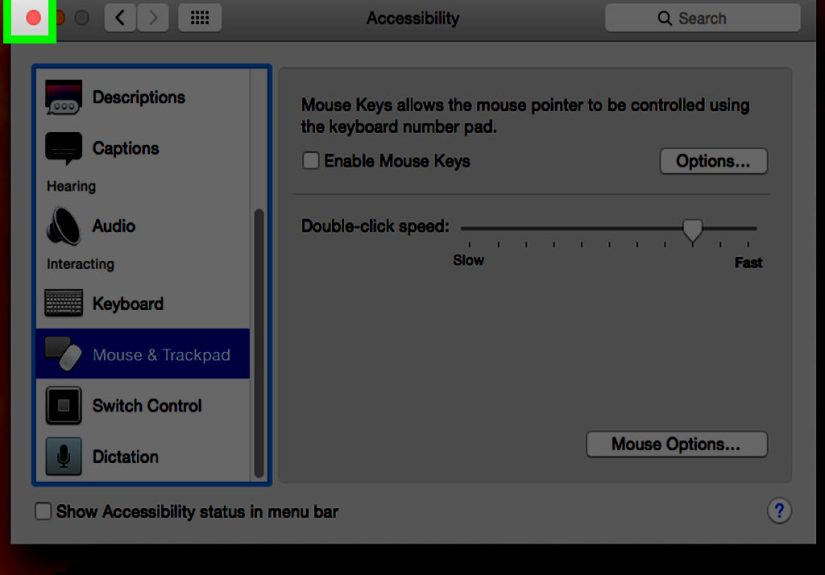
Step 14: Go to Accessibility for double-click and scrolling speed controls
Now return to System Settings, open Accessibility, then click Pointer Control. Here you can adjust Double-click speed and, on some setups, scrolling-related behavior. If your clicks are not registering the way you expect, this step matters more than most people realize.
Step 15: Re-test in the apps you actually use every day
Finally, try your new settings in real life: edit a document, move files, browse the web, crop a photo, or work in a spreadsheet. The best Mac trackpad sensitivity is not the most dramatic setting. It is the one that disappears into the background and lets you work without thinking, “Why is my cursor auditioning for an action movie?”
Best Mac Trackpad Settings for Different Types of Users
For students and general users
A medium-to-fast tracking speed, Tap to Click enabled, and two-finger secondary click usually create a comfortable everyday setup. It keeps the Mac easy to use in class, at work, or while doom-scrolling product reviews you absolutely did not plan to read for 45 minutes.
For designers, editors, and detail-heavy work
If precision matters, start with a medium tracking speed instead of maxing it out. Combine that with a click firmness setting that feels deliberate but not tiring. You want control, not chaos.
For users with hand fatigue or wrist discomfort
Try enabling Tap to Click and lowering click firmness. These changes can reduce the physical effort required during long sessions. Also review Accessibility settings, because slower double-click timing can make the trackpad feel much more forgiving.
For new Mac users coming from Windows
The biggest adjustment is often Natural scrolling. Some people love it because it matches phone and tablet behavior. Others try it for three minutes and feel like the universe has inverted. Switch it if needed. There is no prize for suffering through an upside-down scroll direction.
Common Problems When Changing Trackpad Sensitivity on a Mac
The cursor is still too fast
Lower the Tracking speed a little more and test again. Tiny changes can make a big difference. Also make sure you are judging it in your usual apps, not just in the settings screen.
Clicks feel inconsistent
Check the Click setting and decide whether Tap to Click is helping or creating accidental selections. If you use Force Click, disabling it can also reduce accidental deeper presses.
Scrolling feels weird, not the pointer
This often points to Natural scrolling rather than trackpad sensitivity itself. Toggle it once and test with a long web page. That single change solves the issue for a surprising number of people.
Double-clicking does not register properly
Visit Accessibility > Pointer Control and adjust the Double-click speed. If the timing is too strict, the trackpad may feel broken when it is really just impatient.
The trackpad feels off after updates
macOS updates can sometimes reset preferences or make familiar settings feel slightly different. Revisit Trackpad and Accessibility settings after a major system update to make sure everything still matches your preferences.
Extra Tips to Make Your Mac Trackpad Feel Better
Clean the trackpad surface regularly so skin oils and dust do not affect gliding. Use your fingertip rather than a flat finger pad for more precise movement. If you use an external display, consider slightly increasing tracking speed to compensate for the larger working area. And if you switch between a mouse and a trackpad, remember that the ideal speed for one may not feel right for the other.
It is also worth exploring the gesture previews in Trackpad settings. macOS shows animations for many gestures, which helps you understand what is enabled and what can be customized. Sometimes what feels like sensitivity trouble is really just an unwanted gesture being triggered.
Real-World Experiences With Changing Trackpad Sensitivity on a Mac
One of the most common experiences people report after changing Mac trackpad sensitivity is simple relief. Before the adjustment, the trackpad can feel either too twitchy or too stubborn, and both problems create low-grade frustration that builds over time. It is not dramatic enough to send most people running for help right away, but it is annoying enough to make every task feel just a little more difficult than it should be.
A student working on essays, for example, may notice that text selection becomes much easier after lowering the tracking speed slightly. Instead of overshooting the beginning of a paragraph or clicking the wrong toolbar icon, the pointer finally lands where intended. That kind of small improvement matters because it removes friction from repetitive tasks.
Office users often describe a different kind of change. Once Tap to Click is enabled and the click pressure is softened, long workdays can feel less tiring. Opening files, dragging folders, and switching between browser tabs stops feeling like a tiny thumb workout. The effect is subtle at first, but by the end of the day, many users notice less hand strain and fewer accidental hard presses.
Creative professionals usually care more about precision than speed. Someone editing photos, trimming video clips, or adjusting detailed layouts often prefers a more balanced tracking speed rather than a very fast one. In those cases, the best experience comes from making the pointer movement predictable. A slightly slower trackpad can actually feel faster in real work because it reduces correction movements.
New Mac users also tend to have a memorable first reaction to Natural scrolling. Some adapt instantly because it feels like using a phone or tablet. Others switch it off within seconds and never look back. That moment often teaches an important lesson: the “best” trackpad setting is deeply personal. There is no universal perfect slider position, only the one that makes your own workflow feel natural.
Another common experience involves Force Click. Some users love the extra feedback and quick preview options. Others find that they keep activating it when they only wanted a normal click. Turning it off can make the trackpad feel calmer and more predictable. Leaving it on can make the Mac feel more powerful and interactive. Both reactions are valid, and both are common.
What surprises most people is how quickly these settings affect their mood. When the trackpad is dialed in, the Mac feels polished, responsive, and easy to trust. When it is not, even basic navigation can feel clumsy. That is why spending a few minutes fine-tuning Tracking speed, click behavior, and scrolling options is one of those tiny tech chores that pays off far more than expected.
Conclusion
If you have been wondering how to change trackpad sensitivity on a Mac, the fix is not complicated once you know where Apple hides the controls. Start with Tracking speed in the Trackpad > Point & Click menu, then fine-tune click firmness, Tap to Click, Force Click, scrolling behavior, and Accessibility options if needed.
The real goal is not to make your trackpad faster just because you can. It is to make your Mac feel natural, comfortable, and accurate for the way you work. Once you find that sweet spot, the trackpad fades into the background, which is exactly what great tech is supposed to do.