Table of Contents >> Show >> Hide
- What Is a Dish Drawer Organizer?
- Why Store Dishes in Drawers Instead of Upper Cabinets?
- Types of Dish Drawer Organizers
- How to Choose the Right Dish Drawer Organizer
- Step-by-Step: How to Organize a Dish Drawer
- Best Layout Ideas for a Dish Drawer Organizer
- Common Mistakes to Avoid
- How to Keep a Dish Drawer Organizer Clean
- Budget-Friendly Dish Drawer Organizer Ideas
- When a Dish Drawer Organizer Is Worth the Upgrade
- Real-Life Experience: What Actually Works With a Dish Drawer Organizer
- Conclusion
If your plates are stacked like a leaning tower of ceramic danger, your bowls are hiding behind mugs, and every dishwasher unloading session feels like a tiny upper-body workout, it may be time to meet your new kitchen hero: the dish drawer organizer. It is not glamorous in the “marble island with designer pendant lights” way, but it is the quiet little system that can make your kitchen feel calmer, faster, and much less likely to produce the sound of plates clinking in panic.
A dish drawer organizer helps you store plates, bowls, saucers, serving dishes, and sometimes even lids or shallow pans inside a lower drawer instead of an upper cabinet. The idea is simple: bring daily dishware down to a comfortable level, keep stacks from sliding, and give every item a clear home. Whether you are organizing a small apartment kitchen, upgrading a family kitchen, or finally fixing that drawer everyone opens and immediately regrets, the right setup can make a big difference.
This guide explains how to choose, install, arrange, and maintain a dish drawer organizer without turning the project into a full kitchen remodel. You will learn what type of organizer fits your drawer, how to measure correctly, how to protect dishes from chips, and how to build a system that still makes sense three weeks laterbecause any organizer can look great on day one. The real magic is staying organized after taco night.
What Is a Dish Drawer Organizer?
A dish drawer organizer is a storage insert or layout system designed to keep dishware secure inside a kitchen drawer. The most common versions include adjustable peg systems, plate racks, bamboo dividers, non-slip liners, stackable holders, and custom drawer inserts. Some are built directly into cabinetry, while others are removable and budget-friendly.
The best dish drawer organizer does three things well. First, it stops plates and bowls from sliding when the drawer opens and closes. Second, it separates items so they are easy to grab. Third, it uses the depth and width of a drawer more efficiently than a messy stack. Think of it as a parking lot for your dishes: everyone gets a space, and nobody has to double-park behind the cereal bowls.
Why Store Dishes in Drawers Instead of Upper Cabinets?
Traditional upper cabinets work fine for many kitchens, but drawers offer some serious advantages. Lower drawers are easier to access, especially for children, older adults, shorter family members, or anyone tired of lifting heavy dinner plates above shoulder height. Drawers also let you see more of what you own at once. Instead of reaching into a dark cabinet and hoping you grabbed the salad plate, you can open a drawer and view the whole setup from above.
Dish drawers are especially useful in modern kitchens with fewer upper cabinets, open shelving, or large islands. They can also improve workflow. If your dishwasher is near a lower drawer, clean dishes can go straight from dishwasher to organizer with fewer steps. That may not sound dramatic, but kitchen convenience is built from tiny wins. One less awkward plate shuffle per day adds up.
Types of Dish Drawer Organizers
1. Adjustable Peg Drawer Organizers
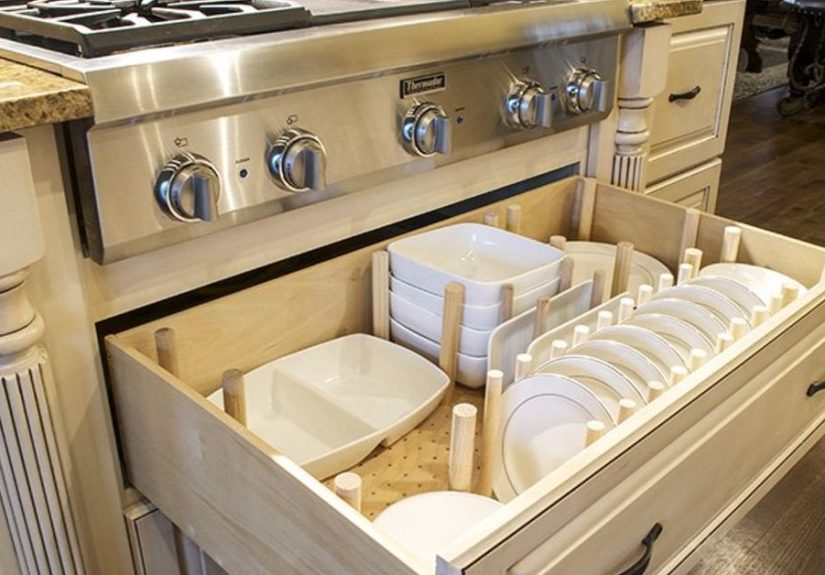
Adjustable peg systems are among the most popular options for deep dish drawers. They usually include a baseboard with removable pegs that can be repositioned around plates, bowls, or serving pieces. This flexibility makes them great for households with mixed dish sizes. If your dinner plates are round, your bowls are oddly deep, and your serving platter looks like it was designed by someone allergic to rectangles, adjustable pegs can handle the chaos.
Peg organizers are best for deep drawers that can support the weight of dishware. They help keep stacks stable and reduce side-to-side movement. They are also useful because you can change the layout later. Bought new pasta bowls? Move the pegs. Retired half your chipped plates? Move the pegs again. A good peg system grows with your kitchen habits.
2. Plate Racks and Vertical Holders
Plate racks store dishes upright or slightly angled, similar to a drying rack but sturdier for long-term storage. This can be helpful if you want to grab one plate without lifting an entire stack. Vertical storage works especially well for serving platters, cutting boards, shallow baking dishes, and large plates.
The key is choosing a rack strong enough for ceramic, porcelain, or stoneware. Lightweight racks may wobble under heavy dishes. Look for wide slots, a stable base, and enough spacing so plates do not scrape each other every time you pull one out.
3. Bamboo or Wood Drawer Dividers
Bamboo and wood dividers create clean compartments inside a drawer. They are attractive, sturdy, and often expandable. While they are more commonly used for utensils, they can work for smaller plates, saucers, lids, cloth napkins, or children’s dishware. For larger dishes, dividers are usually better when paired with a non-slip liner or another support system.
4. Non-Slip Drawer Liners
Non-slip liners are not technically organizers, but they are the unsung sidekick of dish drawer storage. A liner helps prevent dishes from sliding and protects the drawer bottom from scratches. It also makes cleaning easier because crumbs, dust, and mysterious kitchen grit can be removed with the liner instead of becoming part of your drawer’s personality.
5. Custom Built-In Dish Drawer Inserts
If you are remodeling or upgrading cabinets, custom inserts can create a polished, made-for-your-kitchen look. Cabinet makers can design deep drawers with peg systems, reinforced bottoms, and exact zones for dishes. This is the premium route, but it is also the most seamless. For many people, though, a removable organizer is enough to transform a drawer without calling a contractor.
How to Choose the Right Dish Drawer Organizer
Measure Before You Buy
Measuring is the step everyone wants to skip, which is exactly why so many organizers end up in the “I’ll return this eventually” pile. Measure the inside width, depth, and height of your drawer. Do not measure only the drawer front. The interior space is what matters.
Pay special attention to drawer height. Dinner plates often need a deep drawer, especially if you stack them. Bowls may need even more vertical clearance depending on shape. Also check whether the drawer has side rails, curved corners, or hardware that reduces usable space.
Check Weight Capacity
Dishes are heavier than they look. A full stack of stoneware plates can put real stress on a drawer. Before loading every plate you own into one drawer, check the cabinet or drawer slide weight rating if available. Deep drawers with full-extension slides are ideal because they pull out smoothly and let you access items in the back.
If the drawer feels flimsy, use it for lighter items such as melamine plates, kids’ bowls, napkins, or serving tools instead of heavy ceramic dinnerware. Organization should make life easier, not create a suspense movie every time you open a drawer.
Match the Organizer to Your Dish Style
Round plates, square plates, wide bowls, shallow bowls, mugs, saucers, and serving dishes all behave differently in storage. A peg system is usually the most flexible for mixed dishware. A vertical rack is excellent for platters and boards. Dividers are useful for smaller categories. If your dish collection is simple and uniform, you may not need anything fancy. If your dishes look like they were gathered across three apartments, two holidays, and one ambitious clearance sale, choose adjustability.
Step-by-Step: How to Organize a Dish Drawer
Step 1: Empty the Drawer Completely
Start with a blank slate. Remove everything from the drawer, including old liners, crumbs, mystery twist ties, and the random takeout sauce packet that somehow became a permanent resident. Wipe the drawer with a damp cloth and let it dry fully before adding organizers.
Step 2: Sort Your Dishes by Category
Group similar items together: dinner plates, salad plates, bowls, saucers, serving dishes, and everyday kids’ dishes. This helps you see what you actually use. You may discover that you own twelve soup bowls but only reach for four. This is not a moral failure. It is just kitchen math.
Step 3: Declutter Before You Arrange
Remove chipped, cracked, unused, or mismatched dishes that no longer serve your household. If an item is unsafe, let it go. If it is rarely used but still useful, move it to a higher cabinet, buffet, pantry shelf, or storage area. The dish drawer should be prime real estate for everyday items, not a museum for plates you might use during a dinner party that has been theoretically planned since 2019.
Step 4: Line the Drawer
Add a washable, non-slip liner to reduce movement and protect the drawer. Cut it carefully so it fits flat. Avoid bulky liners that bunch up under heavy stacks. A smooth, grippy surface makes the organizer feel more secure and keeps the drawer easier to clean.
Step 5: Place the Heaviest Items First
Put the heaviest dishes, such as dinner plates or large bowls, in the strongest part of the drawer. Usually, this means centered or slightly toward the back, depending on the drawer construction. Keep stacks manageable. Even if a drawer can technically hold twenty plates, your wrists may file a complaint.
Step 6: Adjust Pegs or Dividers Around Each Stack
If using a peg organizer, place pegs close enough to prevent sliding but not so tight that dishes scrape when lifted. Leave enough finger space to grab items comfortably. For bowls, use pegs to create a stable boundary around the stack. For plates, place pegs at several points around the edge to reduce shifting.
Step 7: Create Zones Based on Use
Store everyday plates and bowls in the easiest-to-reach area. Put less-used items toward the back or side. If kids help set the table, place their dishes in a front section they can reach safely. If you unload the dishwasher daily, position the most common dishes near the dishwasher side of the kitchen.
Step 8: Test the Drawer
Open and close the drawer slowly, then at normal speed. Listen for sliding, clinking, or wobbling. If dishes move, adjust the pegs, add a liner, reduce stack height, or redistribute weight. This test is important because a dish drawer must work in real life, not just in a perfectly still photo.
Best Layout Ideas for a Dish Drawer Organizer
The Everyday Family Drawer
Place dinner plates in one zone, salad plates in another, and cereal or soup bowls in a third. Add cups or kids’ dishes only if the drawer is wide enough. This layout works well near the dishwasher because it makes unloading quick and predictable.
The Small Kitchen Drawer
Use a compact peg organizer for plates and bowls, then store mugs or glasses elsewhere to avoid crowding. In a small kitchen, the goal is not to fit everything in one drawer. The goal is to make the most-used items easy to reach without creating a ceramic traffic jam.
The Entertainer’s Drawer
Store serving platters vertically in a sturdy rack and keep dinner plates in a separate peg zone. Add cloth napkins or placemats in a slim side compartment if space allows. This setup is helpful if you host often and want table-setting items grouped together.
The Kid-Friendly Drawer
Use a lower drawer for lightweight bowls, small plates, and snack dishes. Choose durable materials and avoid placing fragile or heavy stacks where young children might pull them out too quickly. A kid-friendly dish drawer can encourage independence while keeping breakable pieces in adult zones.
Common Mistakes to Avoid
Overloading the Drawer
The biggest mistake is trying to store too much in one place. A drawer packed to the edges may look efficient, but it becomes annoying fast. If you have to lift three stacks to reach one bowl, the organizer is not organizing. It is just hiding the problem in a nicer outfit.
Ignoring Drawer Depth
Shallow drawers are not ideal for full-size plates. Before buying a dish drawer organizer, confirm your drawer can close with dishes inside. This sounds obvious, but every home has at least one “how did I not check that?” purchase.
Skipping the Non-Slip Layer
Smooth drawer bottoms can allow dishes to slide even with dividers. A non-slip liner adds grip and reduces noise. It also gives the drawer a finished look.
Storing Rarely Used Dishes in the Best Spot
Holiday plates, special serving bowls, and extra place settings do not need the easiest-access drawer unless you use them often. Save the drawer for daily dishware. Store occasional pieces in higher cabinets, a dining room cabinet, or a protected storage bin.
How to Keep a Dish Drawer Organizer Clean
Dish drawers stay cleaner when dishes are completely dry before storage. Moisture can create musty smells, especially with bamboo or wood organizers. Wipe the drawer monthly, shake out or wash the liner, and clean around pegs where dust can collect. If you use bamboo, avoid soaking it. A lightly damp cloth followed by full drying is usually enough.
Every few months, reassess the drawer. Are the stacks still practical? Did new dishes arrive? Did someone start putting travel mugs in the plate zone because “there was space”? Small maintenance keeps the system from slowly turning into a junk drawer wearing a dish costume.
Budget-Friendly Dish Drawer Organizer Ideas
You do not need a luxury cabinet insert to organize dish drawers well. Start with a non-slip liner and a few adjustable dividers. Repurpose a sturdy plate rack if it fits the drawer. Use removable pegboard-style organizers when you need flexibility. For renters, choose organizers that do not require drilling or permanent installation.
Another affordable approach is to divide dishes by frequency of use. Keep only daily plates and bowls in the drawer, then move extras elsewhere. Sometimes the best organizer is not a productit is fewer things in the same space. Revolutionary? Maybe. Free? Absolutely.
When a Dish Drawer Organizer Is Worth the Upgrade
A dish drawer organizer is worth it if you unload the dishwasher often, struggle with upper cabinets, have deep lower drawers, or want a safer way to store heavy plates. It is also useful in kitchens with open shelving where you want fewer everyday dishes on display. A well-designed dish drawer can make your kitchen feel more custom even without a major renovation.
However, it may not be the right solution if your drawers are shallow, weak, narrow, or already needed for utensils and tools. In that case, consider cabinet risers, shelf dividers, vertical racks, or a pantry storage zone instead. The best organizing system is the one that fits your actual kitchen, not the fantasy kitchen living rent-free in your Pinterest board.
Real-Life Experience: What Actually Works With a Dish Drawer Organizer
After working through different dish storage setups, one lesson becomes very clear: convenience beats perfection. A dish drawer organizer can look beautiful, but it only succeeds when it matches the way people really move in the kitchen. For example, placing plates in a drawer across the room from the dishwasher may look balanced on a floor plan, but it becomes annoying during daily cleanup. The best location is usually near the dishwasher, near the table-setting area, or close to where meals are plated.
In a busy household, adjustable pegs tend to be more forgiving than fixed dividers. Dishes change over time. Someone buys larger pasta bowls. A few plates break. A new set arrives after a holiday sale that promised “limited-time savings” with suspicious urgency. With a peg system, the drawer can be reconfigured in minutes. Fixed slots may look tidy, but they can become frustrating when your dishes do not match the original plan.
Another practical experience: do not stack dishes too high just because they fit. A tall stack of plates may save horizontal space, but it can be heavy to lift and harder for kids or guests to use. Shorter stacks are easier and safer. If you own a large dinnerware set, split it into daily and occasional groups. Keep six to eight everyday plates in the drawer and store extras elsewhere. This one decision can make the drawer feel twice as functional.
Bowl storage also deserves attention. Bowls are awkward because they vary so much in shape. Wide shallow bowls may stack neatly, while deep cereal bowls can wobble like they are auditioning for a circus act. Pegs placed around the base of the stack help, but the real trick is grouping similar bowls together. Mixing different bowl shapes in one stack usually creates instability and mild emotional damage.
For renters, removable organizers are the safest choice. A non-slip liner, expandable rack, or freestanding peg organizer can dramatically improve a drawer without altering cabinetry. This is especially helpful in apartments where storage is limited and every drawer has to earn its keep. If the organizer can move with you, even better.
A final tip from real-life use: label only if it helps. Labels can be useful for kids, guests, or shared kitchens, but they are not always necessary. In many homes, the visual layout is enough. Plates go where the plates clearly fit. Bowls go where the bowl-shaped space exists. The goal is not to create a kitchen that looks like a professional organizing showroom. The goal is to make breakfast easier, dinner cleanup faster, and the drawer less likely to sound like a xylophone falling down the stairs.
Conclusion
A dish drawer organizer is one of those small kitchen upgrades that can quietly change your daily routine. By moving dishes into a lower drawer, using adjustable pegs or sturdy dividers, and arranging items by how often you use them, you can create a kitchen storage system that feels practical, safe, and surprisingly satisfying. The process is simple: measure carefully, declutter honestly, protect the drawer, arrange dishes by zone, and test the setup before calling it finished.
The best dish drawer organizer is not necessarily the most expensive one. It is the one that fits your drawer, supports your dishes, and makes your kitchen easier to use every day. When plates, bowls, and serving pieces have a reliable home, the whole kitchen feels calmer. And honestly, any system that reduces dish clatter before coffee deserves a standing ovation.