Table of Contents >> Show >> Hide
- Why Fly Matters So Much in Pokémon Yellow
- What You Need Before You Can Get Fly
- How to Get Fly on Pokémon Yellow in 8 Steps
- Step 1: Progress to Cerulean City and Help Bill
- Step 2: Board the S.S. Anne in Vermilion City
- Step 3: Teach Cut to a Compatible Pokémon
- Step 4: Beat Lt. Surge and Earn the Thunder Badge
- Step 5: Head Toward Celadon City
- Step 6: Leave Celadon City Through the West Exit
- Step 7: Use Cut on the Tree and Go Through the Upper Gatehouse
- Step 8: Talk to the Girl in the House and Get HM02 Fly
- Best Pokémon to Teach Fly to in Pokémon Yellow
- Common Mistakes Players Make
- What Getting Fly Feels Like in a Real Playthrough
- Conclusion
If you have been hoofing it across Kanto in Pokémon Yellow and wondering when your trainer is finally allowed to stop living like a long-distance hiker, the answer is Fly. HM02 is one of the most useful Hidden Machines in the whole game because it turns a slow, back-and-forth trek into a much smoother adventure. Suddenly, Cerulean City is not a distant memory. Lavender Town is not a weekend trip. And going back to heal no longer feels like filing travel paperwork.
The trick is that Fly is easy to miss if you do not know exactly where to look. The game does not shout, “Hey, the fast-travel upgrade is hidden behind that one tree over there.” Instead, it expects you to poke around Route 16, use Cut at the right spot, and talk to a girl hiding out in a secret little house. Classic Generation I behavior: charming, slightly rude, and absolutely convinced you enjoy wandering around until you accidentally discover progress.
This guide breaks down exactly how to get Fly on Pokémon Yellow in eight clear steps. You will also learn what you need beforehand, which Pokémon make the best Fly users, and what actually changes once you have HM02 in your bag. There is even a bonus section at the end about the experience of getting Fly, because if you played these games as a kid, this part of the journey probably lives in your brain rent-free.
Why Fly Matters So Much in Pokémon Yellow
Before Fly, every errand in Kanto can feel like an unpaid internship. Need to heal? Walk. Need to go back for an item? Walk. Need to revisit a city because you forgot something obvious? Walk some more. Once Fly is unlocked, travel becomes dramatically faster because you can return to towns and cities you have already visited without crossing every route again.
That matters even more in Pokémon Yellow because the middle stretch of the game sends you bouncing between Vermilion, Lavender, Celadon, Saffron, and beyond. You are not just moving forward in a straight line. You are revisiting old places, backtracking for items, and managing a party that sometimes needs a Pokémon Center right now, not after three routes, two caves, and one trainer who insists on locking eyes with you from another zip code.
What You Need Before You Can Get Fly
To get Fly, you need a few pieces already in place. First, you must have HM01 Cut. That is essential because the path to HM02 is blocked by a small tree on Route 16. No Cut, no shortcut, no Fly, no mercy.
Second, you should defeat Lt. Surge in Vermilion City and earn the Thunder Badge. You can technically pick up HM02 once you reach the hidden house, but the Thunder Badge is what lets you actually use Fly outside of battle. Without that badge, Fly is basically a very dramatic move sitting in your inventory, doing nothing for your commute.
Third, it helps to have a Pokémon ready that can learn Fly. In Pokémon Yellow, common practical options include Pidgeotto, Fearow, Farfetch’d, and later Charizard. If you have been ignoring Flying-types because Pikachu is the star of the show, this is the moment the game quietly suggests you reconsider that life choice.
How to Get Fly on Pokémon Yellow in 8 Steps
Step 1: Progress to Cerulean City and Help Bill
Your Fly journey really starts long before Route 16. First, keep advancing through the early game until you reach Cerulean City, beat Misty, and head north to meet Bill. Help him out at his seaside cottage, and he will reward you with the S.S. Ticket. This is the item that gets you aboard the S.S. Anne in Vermilion City, where your Cut problem is eventually solved.
This step matters because many players know they need Fly, but forget the game hides the real prerequisite one layer deeper. You do not just “go get Fly.” You unlock the ability to get Cut, then use Cut to reach Fly. Generation I loves nested errands like a grandmother who sends you to the store three times because she “just remembered one more thing.”
Step 2: Board the S.S. Anne in Vermilion City
Once you reach Vermilion City, board the S.S. Anne using Bill’s ticket. Work your way through the ship, battle the rival if you want the full dramatic cruise experience, and make your way to the captain’s room. The captain is seasick, because apparently running a luxury liner in the Pokémon world is stressful.
After helping him feel better, he gives you HM01 Cut. This is one of the most important utility moves in the early game, and it opens up several blocked paths immediately. It also means your trip to Route 16 is finally becoming real instead of theoretical.
Step 3: Teach Cut to a Compatible Pokémon
Now that you have HM01, teach Cut to a Pokémon that can use it. In many Yellow playthroughs, players hand Cut to something practical and slightly sacrificial, because HM management in the older games is basically a budget airline experience for your move slots.
You do not need your future Fly user to know Cut as well, though one Pokémon doing both can keep your team compact. Just remember that in Generation I, HMs are permanent for normal play, so teach them with at least a little thought. This is not the generation for carefree move experimentation.
Step 4: Beat Lt. Surge and Earn the Thunder Badge
After getting Cut, use it to enter Vermilion Gym and defeat Lt. Surge. In Pokémon Yellow, Surge’s big threat is a level 28 Raichu, and it can hit surprisingly hard for this stage of the game. Ground-type moves like Dig are especially helpful here, and this is one battle where Pikachu usually appreciates moral support more than actual field time.
Winning earns you the Thunder Badge. This is the badge that lets you use Fly in the field later, which is why it belongs in this guide and not buried in some vague “oh by the way” side note. If you skip Surge for too long, you may still collect HM02, but you will not get the full convenience you came for.
Step 5: Head Toward Celadon City
From here, continue the main story route toward Lavender Town and then go west. Since the Saffron guards still refuse to do their jobs without a drink, the normal way through at this stage is the Underground Path connecting Route 8 and Route 7. This takes you under Saffron City and brings you out near Celadon City.
If that sounds less direct than it should be, welcome to Pokémon Yellow. The midgame map is a giant puzzle box where every shortcut is locked behind an errand, and every errand is hidden behind another shortcut. The good news is that once you reach Celadon, Fly is very close.
Step 6: Leave Celadon City Through the West Exit
When you arrive in Celadon City, go to the west side and step onto Route 16. This is the route leading toward Cycling Road. Many players assume the Bicycle is the big issue here, but for getting HM02, the important part is actually the small cuttable tree near the start of the route.
Look carefully just outside Celadon. There is a tree blocking access to the upper section of Route 16. That is your entrance to the secret area. If you charge straight toward Cycling Road, you are thinking too big. Fly is found through a tiny detour, not a grand expedition.
Step 7: Use Cut on the Tree and Go Through the Upper Gatehouse
Use Cut on the small tree and walk into the northern section. Then pass through the upper part of the nearby gatehouse. Once you emerge on the other side, you will find a secluded little house tucked away from the main route. This is the spot. You are not looking for a trainer battle, a hidden item on the ground, or a suspicious wall. You are looking for a human being minding her own business in a secret hideout.
This is one of those classic Pokémon moments where the reward feels oddly personal. No big fanfare. No puzzle dungeon. Just a tucked-away NPC handing you one of the most useful HMs in the game because you were curious enough to wander off the obvious path.
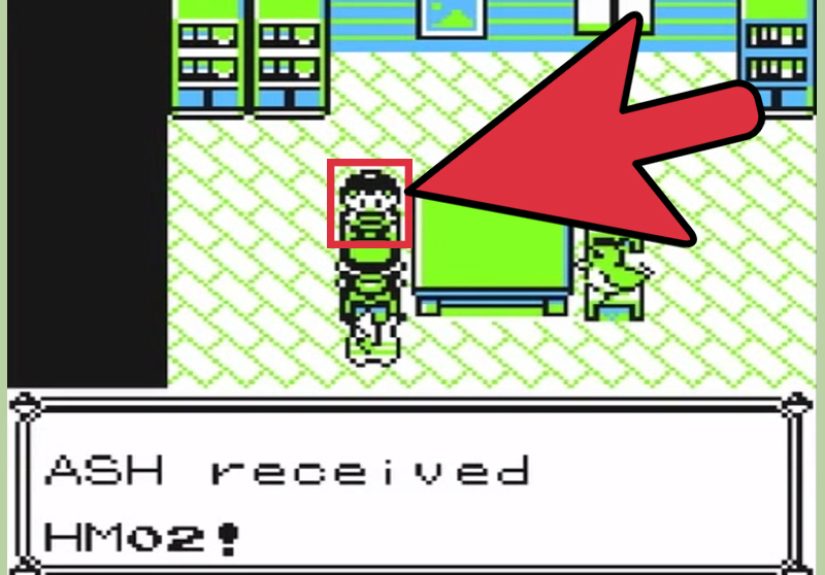
Step 8: Talk to the Girl in the House and Get HM02 Fly
Walk inside the house and speak to the girl. She gives you HM02 Fly. That is it. Congratulations: your shoes can finally retire.
Now teach Fly to a compatible Pokémon in your party. From that point on, as long as you have the Thunder Badge, you can use Fly outside of battle to return to places you have already visited. In practical terms, this means healing, shopping, quest cleanup, and backtracking all become far less annoying. In emotional terms, it means Kanto finally starts treating you like someone with places to be.
Best Pokémon to Teach Fly to in Pokémon Yellow
If you already have a Pidgeotto or Fearow, either one is a solid, easy answer. They are common, dependable, and available without weird side requirements. Fearow tends to feel a little sharper offensively, while Pidgeotto and eventually Pidgeot are perfectly fine if you have been carrying one since early game and do not feel like changing the family business now.
Farfetch’d is also an option if you like using something a little more unusual. It is not everyone’s first choice, but it absolutely gets the job done. And then there is Charizard, which is a fun choice if you picked up Charmander and evolved it. Letting a fire-breathing dragon-like lizard handle your air travel is objectively stylish, even if Generation I’s move management can be a little clunky.
If your only goal is utility, use the Pokémon you are most comfortable keeping in your active roster. If your goal is style, pick the one that makes you grin every time you open the party menu. This is Pokémon Yellow, not a corporate expense report.
Common Mistakes Players Make
The first common mistake is assuming Fly is on Cycling Road itself. It is not. The HM is in the secluded house off Route 16, accessed by using Cut on the small tree near Celadon’s west exit.
The second mistake is forgetting that Cut is required first. If you do not have HM01 from the S.S. Anne, Route 16’s little secret entrance stays shut. No amount of confidence changes that.
The third mistake is getting HM02 and then wondering why Fly still will not work outside battle. That is the Thunder Badge issue. Beat Lt. Surge first, or at least make sure you do it before expecting your new HM to function as fast travel.
The fourth mistake is teaching Fly to a Pokémon you do not actually want to carry. In older games, move management matters. If you stash your Fly user in the PC every time you reorganize your team, your “convenience” move suddenly becomes a minor administrative disaster.
What Getting Fly Feels Like in a Real Playthrough
There is a reason getting Fly sticks in people’s memory, especially in a first or childhood playthrough of Pokémon Yellow. It is not just because the HM is useful. It is because Fly arrives at the exact point where the game world starts to feel bigger than your legs. Early on, walking everywhere feels fine. Routes are short, the world is small, and every new town feels like a major event. But by the time you are bouncing between Lavender, Celadon, Vermilion, and back again, the novelty wears off. Kanto begins to feel less like a charming region and more like a city planner’s apology letter.
That is why unlocking Fly feels so satisfying. It is the moment the map stops bossing you around quite so much. Suddenly, your decisions feel lighter. Need to buy items in Celadon? Done. Want to heal in a favorite town? Easy. Forgot something embarrassingly important three cities back? Annoying, yes, but no longer tragic. Fly changes the rhythm of the game from slog to flow.
It also creates one of those tiny emotional milestones older Pokémon games were weirdly good at. You do not get a giant cutscene celebrating your mobility upgrade. No cinematic. No orchestral swell. Just a girl in a hidden house handing you a machine and trusting you to understand that your life has improved. And somehow, that makes the moment more memorable. You found it. You earned it. You noticed the suspiciously useful tree, took the odd side path, and got rewarded for being curious.
For a lot of players, Fly is also the first time the world feels truly connected. Until then, towns can seem like isolated checkpoints. After Fly, they become part of one usable network. Cerulean is not “that place from hours ago.” It is a destination you can choose on purpose. Lavender is not a detour. Fuchsia is not a commitment. The game starts respecting your time in a way that feels almost modern, which is funny because everything else around it is still gloriously old-school and mildly inconvenient.
There is also a practical team-building memory tied to it. Many players suddenly realize that the random bird they caught earlier is now one of the most valuable members of the party. That Pidgeotto or Fearow is not just filler anymore. It is transportation, utility, and in many cases a perfectly decent battler. Fly has a way of turning an average-looking team slot into the MVP of your afternoon.
And then there is the nostalgia factor. Getting Fly in Pokémon Yellow often feels like crossing an invisible line from “I am exploring” to “I know what I am doing.” It gives you confidence. The map shrinks a little, your choices expand a lot, and the adventure starts moving at your pace instead of the game’s. That is a small design trick, but it is one of the reasons the HM still feels important decades later.
Conclusion
If you want to get Fly on Pokémon Yellow, the formula is simple once you know the hidden chain: get Cut from the S.S. Anne, defeat Lt. Surge for the Thunder Badge, reach Celadon City, head west to Route 16, cut the small tree, and talk to the girl in the secret house. That one little detour unlocks one of the best quality-of-life upgrades in the entire game.
And honestly, once you have Fly, Kanto just feels better. Less marching. Less muttering. More actually playing. Which is exactly what an HM this useful should do.