Table of Contents >> Show >> Hide
- Why Make Your Own Cardboard Box?
- What You Need
- Before You Cut: Understand Box Measurements
- How to Make a Cardboard Box Step by Step
- Example: How to Make a Small Gift or Storage Box
- Common Mistakes to Avoid
- How to Make Your Box Stronger or Prettier
- Can You Make a Cardboard Box From an Old Shipping Box?
- Extra Experience: What You Learn After Making a Few Boxes
- Final Thoughts
If you have ever looked at an oddly shaped gift, a drawer full of chaos, or a random pile of craft supplies and thought, “You know what this situation needs? A box,” you are in the right place. Learning how to make a cardboard box is one of those delightfully practical DIY skills that feels suspiciously useful the second you know it. Suddenly, old shipping boxes stop being clutter and start looking like free building material.
This simple DIY tutorial walks you through how to make a cardboard box from scratch using basic tools, a little measuring, and zero fancy engineering credentials. You do not need a workshop, a laser cutter, or a dramatic background montage. You just need cardboard, a ruler, a cutting tool, and the patience to measure before cutting. That last part matters more than we would all like to admit.
Whether you want a custom cardboard box for storage, gifting, organizing, mailing, or wrangling a suspiciously specific household object, this guide will help you build one that is neat, sturdy, and far more polished than “tape it until it stops moving.”
Why Make Your Own Cardboard Box?
A homemade cardboard box is a smart solution when standard sizes do not work. Maybe the item is too long, too shallow, too delicate, or too weirdly shaped for a store-bought option. Maybe you are packaging handmade products, organizing a closet, or making a gift box on a budget. Maybe you are just stubborn in a charming, productive way.
Making your own box also gives you control over the exact size, flap style, strength, and finish. You can keep it simple for storage, reinforce it for shipping, or dress it up with kraft paper, paint, labels, or fabric tape if you want it to look less “garage corner” and more “small business with excellent taste.”
What You Need
- Corrugated cardboard or clean cardboard from an old box
- A measuring tape or ruler
- A pencil
- A straightedge or metal ruler
- A utility knife or craft knife
- A cutting mat or thick scrap board to protect your table
- Packing tape, paper tape, or strong glue
- Optional: bone folder, butter knife, or blunt tool for scoring folds
If you are making a light-duty gift or organizing box, ordinary recycled cardboard often works beautifully. If you want a sturdier DIY cardboard box for shipping or stacking, choose thicker corrugated cardboard in good condition. Avoid soggy, badly crushed, or heavily creased material. Cardboard remembers abuse, and it loves to bring up old trauma at the worst moment.
Before You Cut: Understand Box Measurements
The easiest way to make a custom cardboard box is to start with the finished size you want on the inside. In plain English, ask yourself: how much usable space should the box have once it is folded and closed?
Think in this order:
- Length: the longest side of the opening
- Width: the shorter side of the opening
- Height: how tall the box will be
For example, if you want a box that fits a candle set, small tools, or stationery, you might choose an inside size of 8 x 6 x 4 inches. That means 8 inches long, 6 inches wide, and 4 inches tall.
A Simple Formula for a Basic Four-Sided Box
For a classic rectangular box with top and bottom flaps that meet in the middle, you can sketch a flat template using four side panels in a row plus a glue tab.
Blank width:
Length + Width + Length + Width + glue tab
Blank height:
Box height + top flaps + bottom flaps
For a basic flap box, the top and bottom flaps are often each about half the box width. So if your width is 6 inches, each flap can be about 3 inches deep.
That gives you this rough layout for an 8 x 6 x 4-inch box:
- Panels across: 8 + 6 + 8 + 6 = 28 inches
- Glue tab: add about 1 inch
- Total flat width: 29 inches
- Height section: 4-inch box wall + 3-inch top flap + 3-inch bottom flap = 10 inches
So your cardboard blank would be about 29 x 10 inches.
This is the kind of math that looks intimidating for twelve seconds and then becomes very satisfying.
How to Make a Cardboard Box Step by Step
-
1. Flatten and inspect your cardboard
Start with a clean, flat piece of cardboard. If you are reusing an old shipping box, open all the seams and flatten it out. Pick the section with the fewest dents, labels, tears, and mystery stains. Mystery stains are not part of premium craftsmanship.
-
2. Draw the main box panels
On the back side of the cardboard, mark out your four side panels in a long strip. For the 8 x 6 x 4-inch example, the panel widths would be 8, 6, 8, and 6 inches. Add a 1-inch glue tab at one end. Use a straightedge so your lines stay square. A crooked line here becomes a wonky box later, and wonky boxes are emotionally exhausting.
-
3. Add the top and bottom flaps
Draw horizontal lines above and below the side panels to create the flaps. If your box width is 6 inches, make the flaps about 3 inches deep. The flaps on all four panels should line up neatly.
-
4. Score the fold lines
Before cutting the full shape, lightly score every fold line. Scoring means pressing a shallow line into the cardboard without cutting all the way through. You can use the back of a butter knife, a bone folder, or a blunt scoring tool. This helps the cardboard fold cleanly and keeps the edges sharper and more professional-looking.
-
5. Cut the outline
Use a utility knife and straightedge to cut around the outside of your template. Do not try to hack through the cardboard in one dramatic pass like you are auditioning for a hardware commercial. Make several light, controlled passes instead. It is safer, cleaner, and gives you straighter edges.
-
6. Cut flap notches
At the top and bottom of each panel seam, cut away the small sections that separate one flap from the next. This lets the flaps fold independently. Keep those cuts neat, especially near the corners, because sloppy corners can make the box twist out of square.
-
7. Fold the box into shape
Fold along all the scored lines. Wrap the four side panels into a rectangle. Then bring the glue tab behind the opposite end panel. Check that the edges align before taping or gluing anything permanently. Dry-fitting first saves a lot of regret.
-
8. Secure the side seam
Use strong glue or packing tape to attach the glue tab to the inside of the opposite panel. Hold it in place until it stays put. If you are using glue, clips or clothespins can help while it dries.
-
9. Close the bottom flaps
Fold the shorter flaps in first, then the longer flaps over them. Tape the seam securely. If this box will hold heavier items, reinforce the bottom with extra tape inside and out.
-
10. Fill it, then close the top
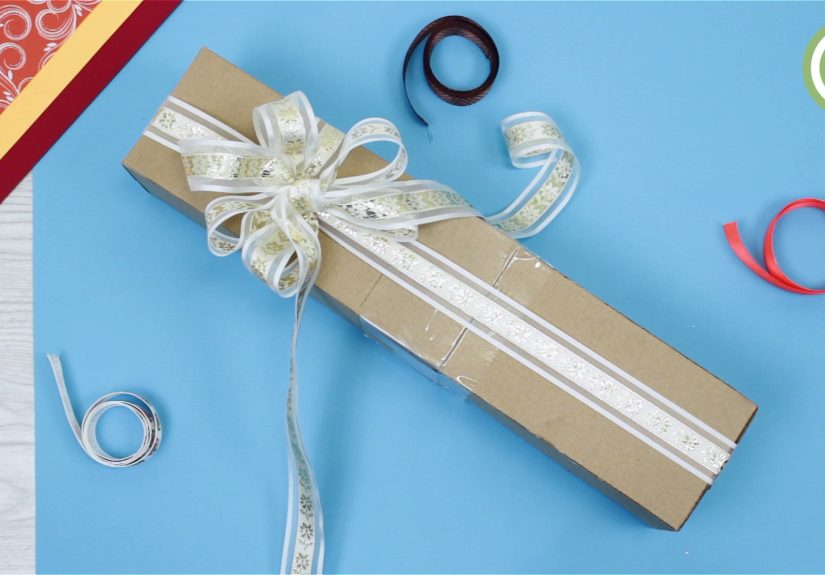
Once the box is loaded, fold and seal the top the same way. For a gift box, you can leave the top flaps untaped and use ribbon, a belly band, or decorative paper instead. For a shipping box, seal every seam thoroughly.
Example: How to Make a Small Gift or Storage Box
Let us say you want a simple cardboard box for greeting cards, seed packets, jewelry supplies, or a small handmade gift.
Finished inside size: 8 x 6 x 4 inches
Your flat cardboard layout:
- Panel 1: 8 inches
- Panel 2: 6 inches
- Panel 3: 8 inches
- Panel 4: 6 inches
- Glue tab: 1 inch
- Total width: 29 inches
- Total height: 10 inches
If you want the box a little roomier, add a tiny amount of extra tolerance, especially if the item has rounded corners or bulky wrapping. Cardboard is forgiving, but it is not psychic.
Common Mistakes to Avoid
Cutting before scoring
If you skip the scoring step, the folds can crack, bulge, or wander off line. Score first. Future you will be grateful.
Using damaged cardboard
If the cardboard is crushed or soft, your finished box will look tired before it even starts working. Pick the cleanest section possible.
Forgetting the glue tab
Without a side tab, you will end up improvising with tape in ways that feel creative but look deeply suspicious.
Making flaps too deep or too shallow
Flaps that are too long bunch up. Flaps that are too short leave a weak gap. Aim for a balanced flap depth that closes neatly.
Trying one giant knife pass
Use light passes and let the blade do the work. Cleaner cut, safer hands, less cardboard drama.
How to Make Your Box Stronger or Prettier
- Add a second cardboard layer to the bottom for heavier items.
- Reinforce inside corners with kraft tape or thin strips of cardboard.
- Wrap the outside in kraft paper or fabric tape for a cleaner look.
- Add dividers for bottles, ornaments, or fragile items.
- Use labels so your “temporary storage solution” does not become an archeological site.
- For shipping, cushion empty space so contents do not slide around.
Can You Make a Cardboard Box From an Old Shipping Box?
Absolutely. In fact, reused shipping boxes are one of the easiest and cheapest materials for this project. Just remove old labels, cut away damaged seams, and flatten the usable sections. If the cardboard has existing creases, work with them when possible. They can save time and help you create cleaner folds.
You can also trim down an oversized box instead of making one entirely from scratch. If the width and length already work, simply cut the corners down to a new height, score a fresh fold line, fold the walls inward, and create new top flaps. It is basically cardboard tailoring, which sounds niche but is surprisingly useful.
Extra Experience: What You Learn After Making a Few Boxes
The first time most people make a cardboard box, they assume the cutting is the hard part. It is not. The real challenge is respecting the measuring stage enough to slow down. The box usually goes wrong long before the knife comes out. One missing glue tab, one panel measured from the wrong line, or one flap drawn a half-inch too deep can turn a tidy project into something that looks like it lost a fight in the recycling bin.
After a few tries, though, a pattern emerges. The best boxes are rarely the ones made from the fanciest material. They are the ones made from the flattest, cleanest cardboard and the clearest plan. Reused corrugated cardboard from a decent shipping box often performs better than flimsy craft board because it already has enough structure to hold a fold and enough stiffness to keep its shape. In other words, the glamorous cardboard is not always the useful cardboard.
Another common lesson is that a box does not need to be perfect to be incredibly useful. A storage box for pantry packets, holiday lights, cables, or craft tools can be slightly rustic and still work beautifully. Once it has a label and slides neatly onto a shelf, nobody is examining the corners like a packaging critic. People care that it fits, closes, and stops the clutter from reproducing.
Gift boxes are where people usually become fussier, and understandably so. The moment the box is part of the presentation, every uneven cut suddenly feels personal. The trick there is not perfection; it is finish. Even a very simple cardboard box can look polished if the folds are crisp and the outside is wrapped in kraft paper, scrapbook paper, or a clean paper sleeve. A plain DIY box can go from “leftover shipping supply” to “intentionally handmade” very quickly with a neat exterior.
Practical use teaches one more important thing: cardboard has limits, and knowing them makes you better at this. Thin cardboard is great for lightweight storage, party favors, and decorative packaging. Heavier items need reinforcement at the bottom and often at the corners. Fragile items need padding. Shippable boxes need strong seams. The box is not just a container; it is part of the protection system. That realization changes how you build it.
Most experienced DIYers also learn to save templates. Once you make one box that works well for a product, drawer, or repeated gift size, keep the flattened pattern. Write the dimensions on it. Mark where the folds go. Note whether the flaps were perfect or needed tweaking. The second box becomes faster, the third gets cleaner, and by the fourth you start acting like a person who casually says things like, “Oh, I’ll just make a box for that.” It is a dangerously empowering skill.
And maybe the nicest part of the whole process is how satisfying it feels to turn something overlooked into something useful. A cardboard box begins as packing waste, then becomes order, protection, and sometimes even a nice presentation piece. That is a pretty good return on one ruler, one pencil, and a moderate amount of tape.
Final Thoughts
If you want to learn how to make a cardboard box, the good news is that the process is far simpler than it looks. Measure the inside size you need, draw a clean template, score the folds, cut carefully, and secure the seams well. That is really the whole game.
Once you understand the basic pattern, you can make custom cardboard boxes for almost anything: gifts, mailers, drawer organizers, pantry storage, craft kits, seasonal decorations, and all the strange little objects that never fit where they are supposed to. A homemade cardboard box is inexpensive, adaptable, beginner-friendly, and weirdly satisfying to make.
Not bad for something most people were about to throw away.